Creating an employee handbook is a vital step for any business operating in Oregon. This document serves as a guide for employees, outlining the company's policies, procedures, and expectations. It covers essential topics such as workplace conduct, benefits, leave policies, and safety regulations. An effective handbook not only helps to clarify the rights and responsibilities of both the employer and employees but also fosters a positive work environment. By addressing issues like anti-discrimination policies and grievance procedures, the handbook can promote fairness and transparency. Additionally, it should reflect the unique culture of the organization while adhering to state and federal laws. A well-crafted employee handbook can be a valuable tool for communication and can help prevent misunderstandings and disputes in the workplace.
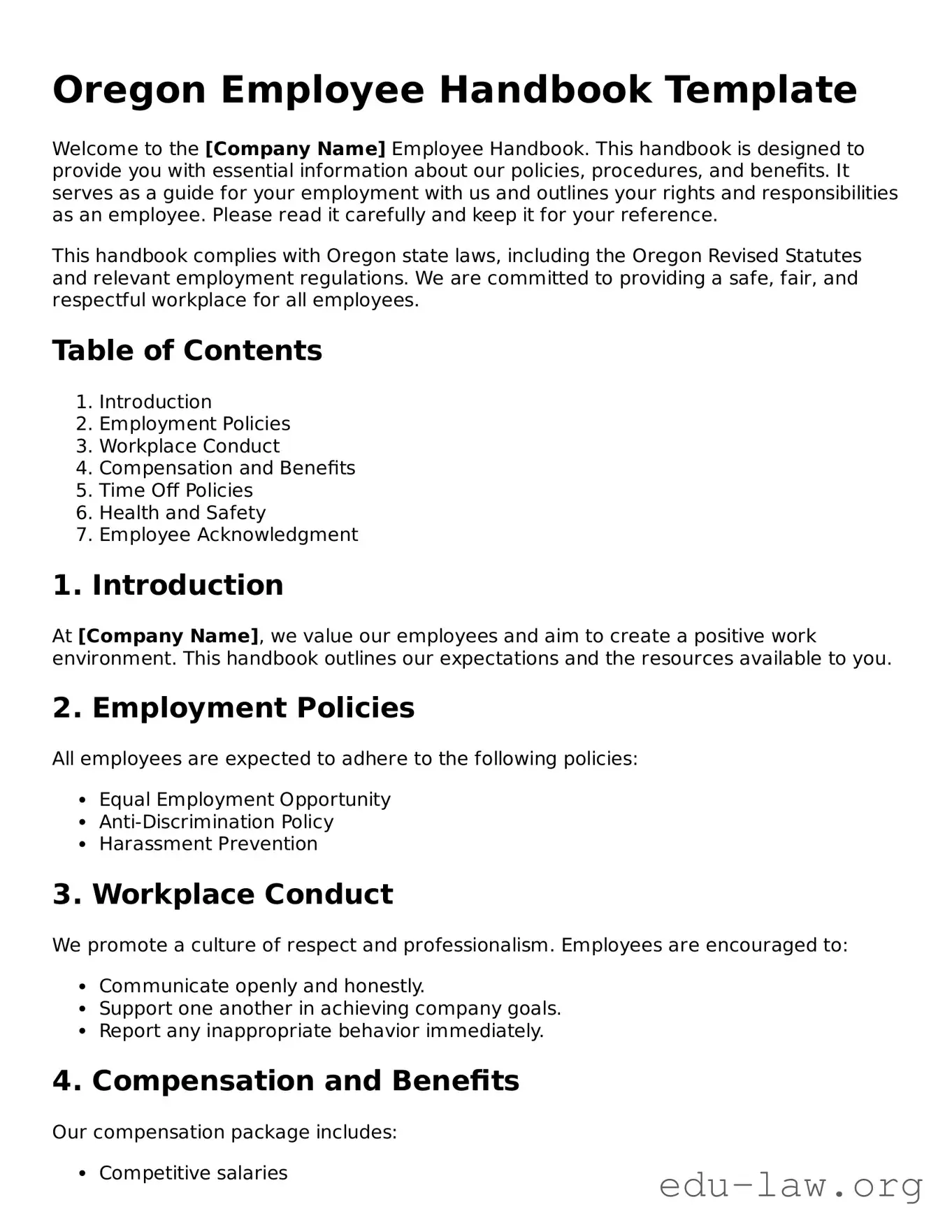
Oregon Employee Handbook Template
Welcome to the [Company Name] Employee Handbook. This handbook is designed to provide you with essential information about our policies, procedures, and benefits. It serves as a guide for your employment with us and outlines your rights and responsibilities as an employee. Please read it carefully and keep it for your reference.
This handbook complies with Oregon state laws, including the Oregon Revised Statutes and relevant employment regulations. We are committed to providing a safe, fair, and respectful workplace for all employees.
Table of Contents
1. Introduction
At [Company Name], we value our employees and aim to create a positive work environment. This handbook outlines our expectations and the resources available to you.
2. Employment Policies
All employees are expected to adhere to the following policies:
3. Workplace Conduct
We promote a culture of respect and professionalism. Employees are encouraged to:
4. Compensation and Benefits
Our compensation package includes:
5. Time Off Policies
Employees are entitled to various forms of leave, including:
6. Health and Safety
Your safety is our priority. We adhere to all Oregon health and safety regulations. Employees are expected to:
7. Employee Acknowledgment
By signing below, you acknowledge that you have received, read, and understood the [Company Name] Employee Handbook.
Employee Name: [Employee Name]
Signature: [Signature]
Date: [Date]
| Fact Name | Details |
|---|---|
| Purpose | The Oregon Employee Handbook serves as a guide for employees regarding company policies and procedures. |
| Governing Law | The handbook is governed by Oregon state employment laws, including ORS 653 and ORS 659A. |
| Mandatory Policies | Employers are required to include certain policies, such as anti-discrimination and harassment policies. |
| At-Will Employment | The handbook should clearly state the at-will employment relationship, meaning either party can terminate employment at any time. |
| Updates | Employers must regularly update the handbook to reflect changes in laws or company policies. |
| Employee Acknowledgment | Employees should sign an acknowledgment form indicating they have received and understood the handbook. |
| Confidentiality | The handbook should address confidentiality expectations regarding company information and employee records. |
| Disciplinary Procedures | Clear disciplinary procedures should be outlined to ensure fairness and consistency in addressing employee conduct. |
| Health and Safety | Employers are encouraged to include health and safety policies to promote a safe working environment. |
Completing the Oregon Employee Handbook form is essential for ensuring that all employees are informed about the policies and procedures of their workplace. Following these steps will help you accurately fill out the form.
What is the purpose of the Oregon Employee Handbook?
The Oregon Employee Handbook serves as a crucial document for both employers and employees. It outlines workplace policies, procedures, and expectations. This handbook helps ensure that everyone is on the same page regarding company culture, employee rights, and responsibilities. By providing clear guidelines, it can also help reduce misunderstandings and potential disputes.
Who should have access to the Employee Handbook?
All employees should have access to the Employee Handbook. It is essential for new hires to receive a copy during their onboarding process. Current employees should also have access to the most up-to-date version, as policies may change over time. This transparency fosters a culture of openness and ensures that everyone is informed about their rights and obligations.
What key topics should be included in the Employee Handbook?
Several important topics should be covered in an Employee Handbook. These include workplace conduct, anti-discrimination policies, harassment policies, attendance requirements, benefits, and leave policies. Additionally, it’s wise to include information on grievance procedures and disciplinary actions. By addressing these areas, the handbook can provide a comprehensive overview of workplace expectations.
How often should the Employee Handbook be updated?
Regular updates to the Employee Handbook are vital. It is generally recommended to review the handbook at least once a year. However, updates may be necessary sooner if there are changes in state or federal laws, company policies, or industry standards. Keeping the handbook current ensures that it remains a reliable resource for employees.
What should an employer do if an employee has questions about the handbook?
If an employee has questions about the handbook, the employer should encourage open communication. It’s important to address any concerns promptly and thoroughly. Employers can schedule one-on-one meetings, provide additional resources, or hold group discussions to clarify policies. This proactive approach can enhance understanding and foster a positive work environment.
Is it necessary to have employees sign an acknowledgment of the handbook?
Yes, it is highly advisable for employers to have employees sign an acknowledgment form. This form indicates that the employee has received, read, and understood the handbook. Having a signed acknowledgment can provide protection for the employer in case of disputes, as it demonstrates that the employee was informed of the policies and expectations.
Can the Employee Handbook be used in legal disputes?
Yes, the Employee Handbook can play a significant role in legal disputes. If a conflict arises, the handbook can serve as evidence of the company’s policies and procedures. Courts often refer to handbooks to understand what guidelines were in place at the time of the dispute. Therefore, it is crucial for the handbook to be clear, consistent, and compliant with applicable laws.
Failing to read the entire handbook thoroughly. Many employees skim through the document, missing important policies and procedures.
Not providing accurate personal information. Errors in names, addresses, or contact details can lead to issues in communication and payroll.
Overlooking signature requirements. Some individuals forget to sign the form, which can delay the onboarding process.
Ignoring the deadlines for submission. Each employee must submit the form by a specific date, and late submissions can cause complications.
Misunderstanding the company's policies. Employees often misinterpret guidelines related to attendance, dress code, or workplace behavior.
Neglecting to ask questions. When unclear about certain sections, some individuals hesitate to seek clarification, leading to confusion.
Failing to update the form when personal circumstances change. Life events such as marriage or relocation require updates to contact information.
Not checking for spelling or grammatical errors. Mistakes can create an unprofessional impression and may lead to misunderstandings.
Assuming that all policies apply equally to all employees. Different roles may have unique requirements that need to be understood.
Forgetting to keep a copy of the completed form. Retaining a personal copy can be helpful for future reference and accountability.
When developing a comprehensive employee handbook in Oregon, it is essential to accompany it with several other documents. These additional forms and documents help clarify policies, ensure compliance, and support a positive work environment. Below is a list of commonly used forms that complement the Oregon Employee Handbook.
Incorporating these documents alongside the Oregon Employee Handbook not only ensures compliance with state regulations but also fosters a transparent and supportive workplace culture. Each document plays a vital role in enhancing communication and understanding between employees and management.
The Oregon Employee Handbook is similar to the Employee Handbook form used in California. Both documents serve as a comprehensive guide for employees, outlining company policies, procedures, and expectations. They address topics such as workplace conduct, benefits, and grievance procedures. The California version, however, may include additional sections relevant to state-specific labor laws, such as paid sick leave and anti-discrimination policies, reflecting the state's unique legal landscape.
Another comparable document is the Employee Handbook template from New York. Like the Oregon version, it provides essential information about workplace rules and employee rights. However, the New York handbook often emphasizes regulations regarding minimum wage, overtime pay, and employee rights under the New York State Human Rights Law. This ensures that employees are well-informed about their rights and protections under local laws.
The Texas Employee Handbook is also similar, focusing on workplace policies and employee responsibilities. This handbook may include sections on at-will employment and the absence of mandatory paid leave, which are significant in Texas labor law. Employees in Texas benefit from clear guidance on the company's expectations and their rights, much like those in Oregon.
In Florida, the Employee Handbook serves a similar purpose, detailing company policies and employee benefits. However, Florida's version often includes specific information about the state's "Right to Work" laws and guidelines on workplace safety, which are particularly relevant in the context of Florida's diverse workforce. This ensures that employees are aware of their rights and responsibilities in the workplace.
The Illinois Employee Handbook is another document that parallels the Oregon version. It outlines company policies, employee benefits, and workplace expectations. Illinois handbooks often include information on the Illinois Human Rights Act, which protects employees from discrimination based on various factors. This focus on employee rights aligns with the intent of the Oregon handbook to foster a fair and respectful workplace.
In Massachusetts, the Employee Handbook provides similar guidance, detailing workplace policies and employee rights. Massachusetts handbooks often emphasize the state's paid family leave laws and anti-bullying policies. This addition ensures that employees understand their rights to family leave and a safe work environment, reflecting the state's commitment to employee welfare.
The Washington Employee Handbook is also comparable, focusing on company policies and employee expectations. This handbook may include specific sections on the state's paid sick leave laws and protections for whistleblowers. By addressing these important topics, the Washington handbook aims to create a supportive work environment, similar to the goals of the Oregon handbook.
The Virginia Employee Handbook shares similarities with the Oregon version, providing an overview of workplace policies and employee rights. Virginia's handbook may highlight the state's employment-at-will doctrine and regulations regarding workplace harassment. This ensures that employees are informed about their rights and the company's commitment to maintaining a respectful workplace.
Finally, the Colorado Employee Handbook is akin to the Oregon handbook, detailing workplace policies and employee benefits. Colorado's version often includes information on the state's unique laws regarding marijuana use in the workplace and protections for employees with disabilities. This ensures that employees are aware of their rights and the company's policies, promoting a fair and inclusive workplace environment.
When filling out the Oregon Employee Handbook form, it’s important to approach the task with care. Here are some key things to keep in mind:
By following these guidelines, you can ensure that your experience with the Employee Handbook form is smooth and efficient.
Many people have misunderstandings about the Oregon Employee Handbook form. Here are seven common misconceptions and clarifications regarding them:
This is not true. While having an employee handbook is beneficial, it is not a legal requirement for all businesses in Oregon. However, it is highly recommended for clarity and communication.
This misconception arises often. An employee handbook is not a contract unless explicitly stated. It serves as a guideline for policies and procedures but does not create enforceable legal obligations.
Policies and laws change frequently. Therefore, an employee handbook should be reviewed and updated regularly to reflect current practices and legal requirements.
This is incorrect. Each employee handbook should be tailored to the specific needs of the business. Policies can vary widely depending on the industry and company culture.
Small businesses can benefit from having an employee handbook just as much as large companies. It helps establish clear expectations and reduces misunderstandings.
While not legally required, having employees acknowledge receipt of the handbook can be useful. A signed acknowledgment helps ensure that employees understand the policies outlined.
This is a misconception. An employee handbook remains relevant throughout employment. It should be a living document that employees can refer to for guidance on workplace policies.
Filling out and using the Oregon Employee Handbook form is a critical process for employers and employees alike. Here are key takeaways to consider:
These takeaways emphasize the importance of a well-structured employee handbook in fostering a positive work environment and maintaining legal compliance.