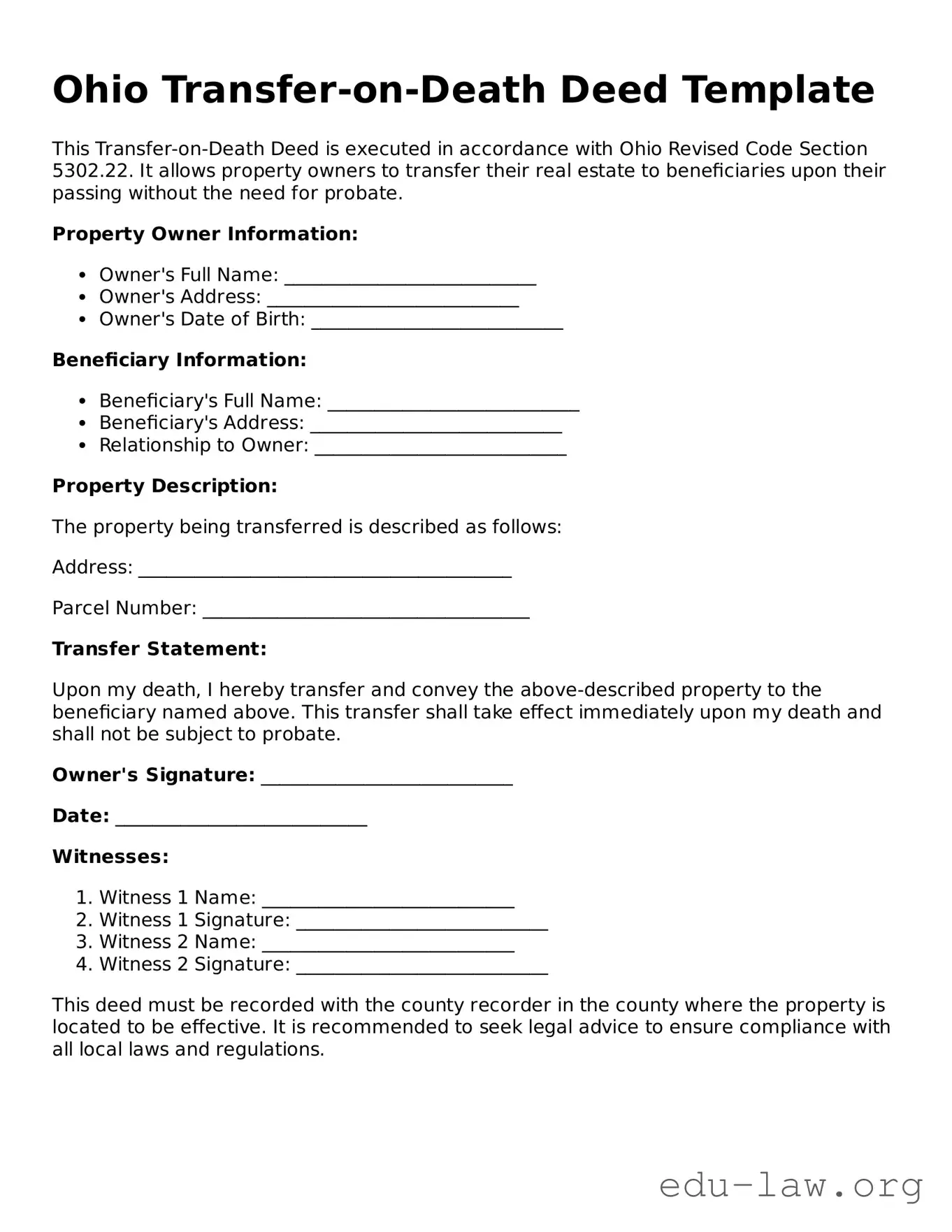
The Ohio Transfer-on-Death Deed form is a valuable tool for property owners who wish to transfer their real estate to designated beneficiaries without the need for probate. This form allows individuals to retain full control of their property during their lifetime while designating who will receive it upon their passing. One of the key features of this deed is that it can be revoked or modified at any time, providing flexibility to the property owner. By using this form, individuals can simplify the transfer process, potentially saving their beneficiaries time and money. The form requires specific information, including the names of the beneficiaries and a legal description of the property. Additionally, it must be properly executed and recorded to be effective. Understanding the nuances of the Ohio Transfer-on-Death Deed is essential for anyone considering this option for estate planning.
Ohio Transfer-on-Death Deed Template
This Transfer-on-Death Deed is executed in accordance with Ohio Revised Code Section 5302.22. It allows property owners to transfer their real estate to beneficiaries upon their passing without the need for probate.
Property Owner Information:
Beneficiary Information:
Property Description:
The property being transferred is described as follows:
Address: ________________________________________
Parcel Number: ___________________________________
Transfer Statement:
Upon my death, I hereby transfer and convey the above-described property to the beneficiary named above. This transfer shall take effect immediately upon my death and shall not be subject to probate.
Owner's Signature: ___________________________
Date: ___________________________
Witnesses:
This deed must be recorded with the county recorder in the county where the property is located to be effective. It is recommended to seek legal advice to ensure compliance with all local laws and regulations.
| Fact Name | Description |
|---|---|
| Definition | An Ohio Transfer-on-Death Deed allows property owners to transfer real estate to beneficiaries upon their death without going through probate. |
| Governing Law | The Transfer-on-Death Deed is governed by Ohio Revised Code Section 5302.22. |
| Eligibility | Any individual who owns real property in Ohio can create a Transfer-on-Death Deed. |
| Revocation | The deed can be revoked at any time before the owner's death by executing a new deed or a revocation document. |
| Beneficiary Designation | Property owners can designate one or more beneficiaries in the deed, and they can also specify alternate beneficiaries. |
| Filing Requirements | The completed Transfer-on-Death Deed must be recorded with the county recorder in the county where the property is located. |
After you have gathered all necessary information and documents, you can begin filling out the Ohio Transfer-on-Death Deed form. This deed allows you to transfer property to a beneficiary upon your death without the need for probate. Follow these steps to complete the form accurately.
What is a Transfer-on-Death Deed in Ohio?
A Transfer-on-Death Deed (TOD Deed) is a legal document that allows property owners in Ohio to transfer their real estate directly to designated beneficiaries upon their death. This type of deed bypasses the probate process, making it a simpler and often quicker way for your loved ones to inherit property. It’s important to note that the property remains under your control while you are alive, meaning you can sell, mortgage, or change your mind about the beneficiaries at any time.
How do I create a Transfer-on-Death Deed?
Creating a Transfer-on-Death Deed in Ohio involves a few straightforward steps. First, you need to fill out the deed form with your information, the property details, and the names of the beneficiaries. Once completed, the deed must be signed in front of a notary public. After notarization, it must be filed with the county recorder's office where the property is located. It’s crucial to ensure that the deed is properly recorded to be valid.
Can I change the beneficiaries after the deed is created?
Yes, you can change the beneficiaries of a Transfer-on-Death Deed at any time while you are still alive. To do this, you will need to create a new TOD Deed that lists the new beneficiaries and record it with the county recorder's office. Alternatively, you can revoke the existing deed entirely. Just remember, any changes should be properly documented and recorded to avoid confusion later on.
What happens if I sell the property before I pass away?
If you decide to sell the property before your death, the Transfer-on-Death Deed becomes void. This means that the beneficiaries named in the deed will not inherit the property since it no longer exists in your estate. However, you can always create a new deed for a different property if you choose to acquire one after the sale.
Are there any limitations on who can be a beneficiary?
In Ohio, you can designate almost anyone as a beneficiary in your Transfer-on-Death Deed, including individuals, trusts, or even charities. However, keep in mind that if a beneficiary is a minor at the time of your death, the property may need to go through a guardianship process until they reach adulthood. It’s always a good idea to consult with a legal professional if you have specific concerns about your beneficiaries.
Not Including the Legal Description: Many people forget to include a complete legal description of the property. This is crucial for identifying the property accurately.
Incorrect Names: Ensure that all names are spelled correctly. Even a small typo can lead to complications later.
Missing Signatures: All required parties must sign the deed. Failing to do so can invalidate the document.
Not Notarizing the Document: A Transfer-on-Death Deed must be notarized to be legally binding. Skipping this step can cause issues.
Improper Witnesses: Some states require witnesses when signing. Check if Ohio has this requirement and ensure compliance.
Filing in the Wrong County: The deed should be filed in the county where the property is located. Filing it elsewhere can create problems.
Not Understanding the Consequences: People often overlook the implications of a Transfer-on-Death Deed. It's important to understand how it affects estate planning.
Failing to Update the Deed: Life changes, such as marriage or divorce, may require updates to the deed. Neglecting this can lead to confusion.
Not Consulting a Professional: Many individuals attempt to fill out the form without seeking advice. Consulting a legal professional can help avoid mistakes.
When dealing with property transfers in Ohio, several forms and documents may accompany the Transfer-on-Death Deed. Each of these documents serves a specific purpose in ensuring a smooth transition of ownership. Below is a list of commonly used forms and documents.
Having these documents prepared and organized can help facilitate a smoother property transfer process. It is advisable to consult with a professional if there are any questions or concerns regarding these forms.
The Ohio Transfer-on-Death Deed (TOD) form is similar to a Last Will and Testament in that both documents allow individuals to dictate how their property will be distributed after their death. A Last Will and Testament outlines the wishes of the deceased regarding asset distribution, guardianship of minors, and other important matters. However, unlike a will, the TOD deed takes effect immediately upon signing and does not require probate, making it a more straightforward option for transferring property directly to beneficiaries without the lengthy court process.
Another document comparable to the Ohio Transfer-on-Death Deed is a Living Trust. A Living Trust allows individuals to place their assets into a trust during their lifetime, with instructions on how those assets should be managed and distributed after death. Both the TOD deed and Living Trust facilitate the transfer of property outside of probate. However, a Living Trust typically requires more complex management and can include provisions for the trustor’s incapacity, while the TOD deed is simpler and solely focuses on transferring property upon death.
The Ohio Transfer-on-Death Deed also shares similarities with a Beneficiary Designation form, commonly used for financial accounts like life insurance policies and retirement accounts. Both documents allow individuals to name beneficiaries who will receive assets directly upon death. The key difference lies in the types of assets they cover; the TOD deed is specifically for real estate, while beneficiary designations apply to various financial accounts and insurance policies. Each document streamlines the transfer process and avoids probate, benefiting the designated heirs.
Finally, a Joint Tenancy with Right of Survivorship agreement is another document that resembles the Ohio Transfer-on-Death Deed. This arrangement allows two or more individuals to own property together, with the surviving owner automatically receiving the deceased owner's share upon death. Like the TOD deed, this method bypasses probate. However, joint tenancy can complicate ownership and may not be suitable for all situations, especially if one owner wishes to sell their share during their lifetime. The TOD deed provides a more flexible option for individuals who want to retain control over their property until their passing.
When filling out the Ohio Transfer-on-Death Deed form, it’s important to be careful and thorough. Here are some essential dos and don’ts to keep in mind:
Taking the time to follow these guidelines can help ensure a smooth process. If you have any questions, consider reaching out to a legal professional for assistance.
Misconception 1: The Transfer-on-Death Deed automatically transfers property upon death.
This is not accurate. The deed allows for the transfer of property to a designated beneficiary only after the owner’s death. Until that time, the owner retains full control and ownership of the property.
Misconception 2: A Transfer-on-Death Deed avoids probate entirely.
While it does allow for the property to pass outside of probate, it does not eliminate the need for probate in all situations. Other assets may still require probate, and debts of the deceased must be settled before distribution.
Misconception 3: Anyone can create a Transfer-on-Death Deed without legal assistance.
Although it is possible to fill out the form without an attorney, seeking legal advice is recommended. Proper execution and understanding of the implications can prevent future disputes or issues.
Misconception 4: The Transfer-on-Death Deed can be used for any type of property.
This is misleading. The deed is typically applicable to real estate, but not all types of property can be transferred this way. Personal property and certain assets may require different legal instruments.
Misconception 5: Once a Transfer-on-Death Deed is filed, it cannot be changed.
This is incorrect. The owner can revoke or modify the deed at any time before their death. This flexibility allows for changes in beneficiaries or circumstances without significant legal hurdles.
Filling out and using the Ohio Transfer-on-Death Deed form can be straightforward if you keep a few important points in mind. Here are some key takeaways:
By following these guidelines, you can effectively use the Ohio Transfer-on-Death Deed form to secure your property transfer wishes.