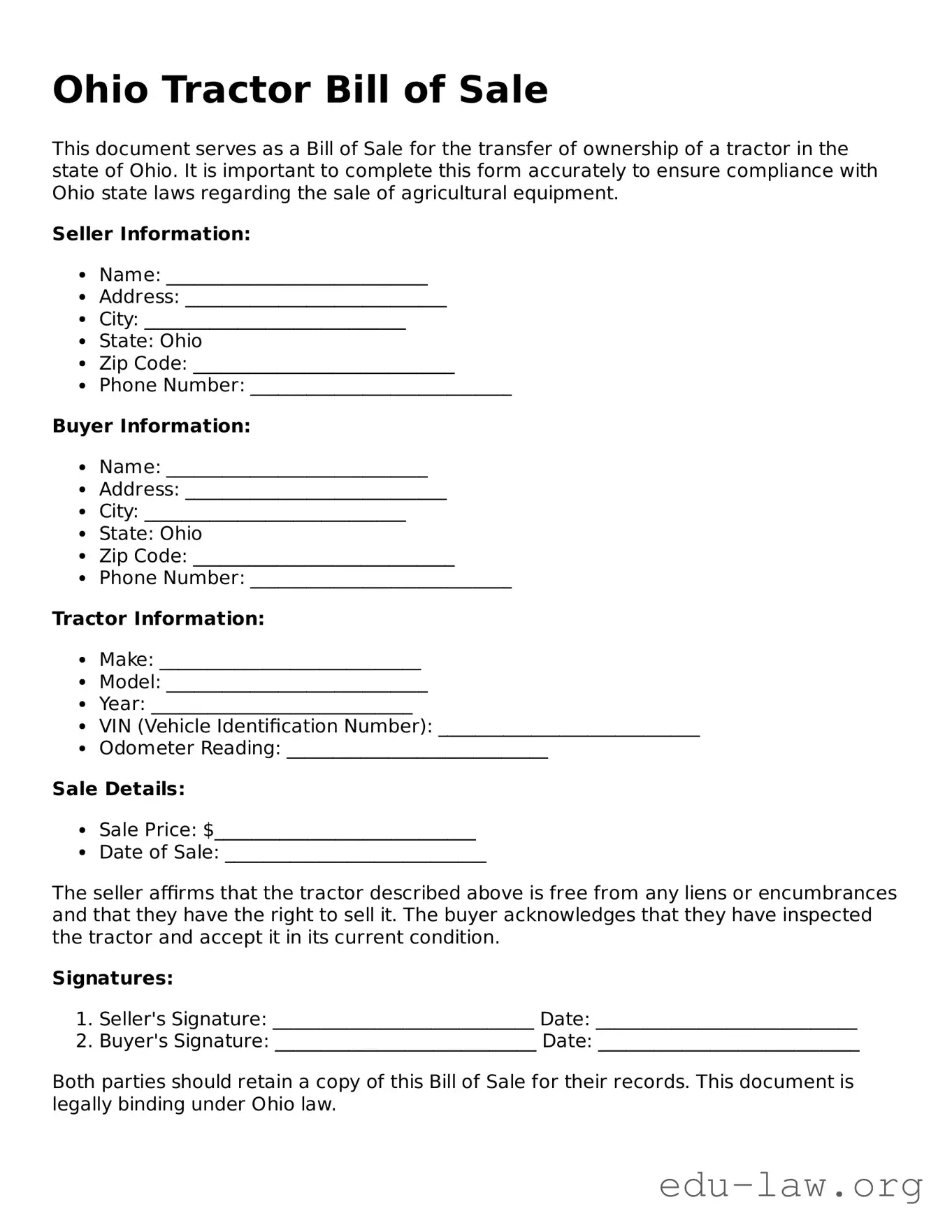
The Ohio Tractor Bill of Sale form serves as a crucial document in the transfer of ownership for tractors within the state. This form captures essential details, including the names and addresses of both the seller and buyer, ensuring that both parties are clearly identified. It includes specific information about the tractor, such as its make, model, year, and Vehicle Identification Number (VIN), which helps to avoid any confusion regarding the item being sold. Additionally, the form outlines the sale price and the date of the transaction, establishing a clear record of the agreement. Signatures from both parties are required to validate the transaction, and while not mandatory, notarization can add an extra layer of authenticity. Understanding the importance of this form is vital for anyone involved in buying or selling a tractor in Ohio, as it not only facilitates a smooth transfer of ownership but also serves as a legal safeguard for both parties involved.
Ohio Tractor Bill of Sale
This document serves as a Bill of Sale for the transfer of ownership of a tractor in the state of Ohio. It is important to complete this form accurately to ensure compliance with Ohio state laws regarding the sale of agricultural equipment.
Seller Information:
Buyer Information:
Tractor Information:
Sale Details:
The seller affirms that the tractor described above is free from any liens or encumbrances and that they have the right to sell it. The buyer acknowledges that they have inspected the tractor and accept it in its current condition.
Signatures:
Both parties should retain a copy of this Bill of Sale for their records. This document is legally binding under Ohio law.
| Fact Name | Description |
|---|---|
| Purpose | The Ohio Tractor Bill of Sale form serves as a legal document to record the sale of a tractor between a buyer and a seller. |
| Governing Law | This form is governed by Ohio Revised Code Section 4505.06, which outlines requirements for vehicle sales and transfers. |
| Required Information | The form typically requires details such as the buyer's and seller's names, addresses, tractor identification number, and sale price. |
| Signatures | Both the buyer and seller must sign the form to validate the transaction and confirm the transfer of ownership. |
Once you have the Ohio Tractor Bill of Sale form in hand, it's essential to ensure all necessary information is accurately filled out. This will facilitate a smooth transaction and help avoid any potential issues in the future. Follow these steps carefully to complete the form correctly.
After completing the form, it’s advisable to keep a copy for your records. This document serves as proof of the transaction and can be useful for future reference, especially if any disputes arise. Additionally, consider checking with local authorities to ensure all necessary steps are taken for registration and titling.
What is the Ohio Tractor Bill of Sale form?
The Ohio Tractor Bill of Sale form is a legal document used to record the sale of a tractor in the state of Ohio. This form outlines the details of the transaction, including the buyer and seller's information, the tractor's description, and the sale price. It serves as proof of ownership transfer and can be crucial for registration and taxation purposes.
Why is a Bill of Sale important when buying or selling a tractor?
A Bill of Sale is essential because it provides a written record of the transaction. This document protects both the buyer and the seller by clearly stating the terms of the sale. It can help prevent disputes regarding ownership and is often required for registration with the Ohio Bureau of Motor Vehicles.
What information should be included in the Ohio Tractor Bill of Sale?
The form should include the full names and addresses of both the buyer and seller, the tractor's make, model, year, and Vehicle Identification Number (VIN). Additionally, the sale price and the date of the transaction should be documented. Any warranties or conditions of the sale can also be noted in the form.
Is the Ohio Tractor Bill of Sale form required to register a tractor?
Yes, the Ohio Tractor Bill of Sale is typically required for registration. When you register the tractor with the Ohio Bureau of Motor Vehicles, you will need to provide proof of ownership. The Bill of Sale serves as that proof, ensuring that the registration process goes smoothly.
Can I create my own Bill of Sale for a tractor?
Yes, you can create your own Bill of Sale, but it must include all the necessary information to be valid. Ensure that it meets Ohio's requirements and includes details about the transaction. Using a template can help ensure that you don't miss any critical elements.
Do I need a notary for the Ohio Tractor Bill of Sale?
A notary is not required for the Bill of Sale to be valid in Ohio. However, having the document notarized can add an extra layer of protection for both parties. It verifies the identities of the buyer and seller and can be helpful in case of future disputes.
What if the tractor has a lien on it?
If there is a lien on the tractor, it is crucial to disclose this information in the Bill of Sale. The seller must ensure that the lien is paid off before the sale is completed. Buyers should always check for any existing liens to avoid complications in ownership transfer.
How long should I keep a copy of the Bill of Sale?
It is advisable to keep a copy of the Bill of Sale for at least as long as you own the tractor. This documentation can be important for future transactions, potential disputes, or tax purposes. Having a record of the sale can also assist in proving ownership if needed.
What happens if I lose the Bill of Sale?
If you lose the Bill of Sale, you may need to contact the seller to obtain a duplicate. If that is not possible, you might have to create a new document detailing the sale, including all relevant information. However, this may not hold the same legal weight as the original Bill of Sale.
Where can I find the Ohio Tractor Bill of Sale form?
The Ohio Tractor Bill of Sale form can be found online through various legal document websites or state resources. It is also possible to create one from scratch or use a template that meets Ohio's requirements. Always ensure that any form you use is up to date and compliant with state laws.
Not including the full name and address of both the buyer and seller. This information is crucial for establishing ownership and ensuring that the transaction is legally binding.
Failing to provide the vehicle identification number (VIN). The VIN is essential for identifying the tractor and preventing any potential disputes over ownership.
Omitting the purchase price of the tractor. This figure is important for tax purposes and should be clearly stated on the form.
Not specifying the date of sale. Including the date helps to establish when the transaction occurred and can be important for record-keeping.
Using incorrect or outdated tractor details. Ensure that the make, model, and year are accurate to avoid future issues.
Neglecting to have both parties sign the document. A signature is a critical part of the agreement and without it, the bill of sale may not be considered valid.
Not keeping a copy of the completed form. Both the buyer and seller should retain a copy for their records to protect their interests.
Overlooking any additional terms or conditions that may apply to the sale. If there are warranties or specific agreements, they should be clearly stated to avoid misunderstandings.
When engaging in the sale or transfer of a tractor in Ohio, it is essential to consider several documents that complement the Tractor Bill of Sale form. These documents help ensure a smooth transaction and provide necessary legal protections for both the buyer and seller. Below is a list of commonly used forms and documents associated with the sale of a tractor.
Each of these documents plays a crucial role in the transaction process. They help protect the interests of both the buyer and the seller, ensuring that the sale is conducted legally and transparently. By preparing and reviewing these forms carefully, individuals can navigate the complexities of tractor sales with confidence.
The Ohio Vehicle Bill of Sale is a document that serves a similar purpose to the Tractor Bill of Sale. Both forms are used to facilitate the transfer of ownership from one party to another. They require essential information such as the buyer's and seller's names, addresses, and signatures. Additionally, both documents typically include details about the vehicle or equipment being sold, including the make, model, year, and identification number. This ensures that the transaction is clear and legally binding, providing protection for both parties involved.
The Ohio Boat Bill of Sale also shares similarities with the Tractor Bill of Sale. Like the tractor sale, the boat sale document records the transfer of ownership. It contains critical information about the buyer and seller, as well as specifics about the boat, such as its hull identification number and registration details. Both documents serve to protect the interests of the buyer and seller, ensuring that the transaction is documented and recognized by authorities.
The Ohio Motorcycle Bill of Sale is another document that parallels the Tractor Bill of Sale. Both forms are essential for confirming the sale of a vehicle. They require the same type of information, including the names and addresses of the parties involved and a description of the motorcycle. This documentation is crucial for registering the motorcycle with the state and for proving ownership in case of disputes.
When filling out the Ohio Tractor Bill of Sale form, it's important to follow certain guidelines to ensure the process goes smoothly. Here’s a list of things you should and shouldn’t do:
By adhering to these guidelines, you can ensure that your Tractor Bill of Sale is completed properly and legally binding.
When it comes to the Ohio Tractor Bill of Sale form, several misconceptions can lead to confusion. Here are seven common misunderstandings:
This is not true. The Ohio Tractor Bill of Sale is required for both new and used tractors. It serves as proof of ownership regardless of the tractor's age.
Anyone can use the Ohio Tractor Bill of Sale form. Private sellers and buyers can both complete and sign this document to ensure a smooth transaction.
Notarization is not a requirement for the Ohio Tractor Bill of Sale. However, having it notarized can add an extra layer of security and authenticity.
While it is called a Tractor Bill of Sale, the form can also be used for other types of agricultural equipment. It’s important to clarify the details in the document.
While signing the form indicates agreement, both parties should understand that additional steps may be needed to complete the sale, such as transferring the title.
It is essential for both the buyer and seller to keep a copy of the Ohio Tractor Bill of Sale for their records. This can help resolve any future disputes.
The Ohio Tractor Bill of Sale form can often be found online. Many websites provide easy access to download and print the form for convenience.
When filling out and using the Ohio Tractor Bill of Sale form, it's essential to understand its components and implications. Here are seven key takeaways to consider:
By following these guidelines, individuals can ensure a smooth transaction when buying or selling a tractor in Ohio.