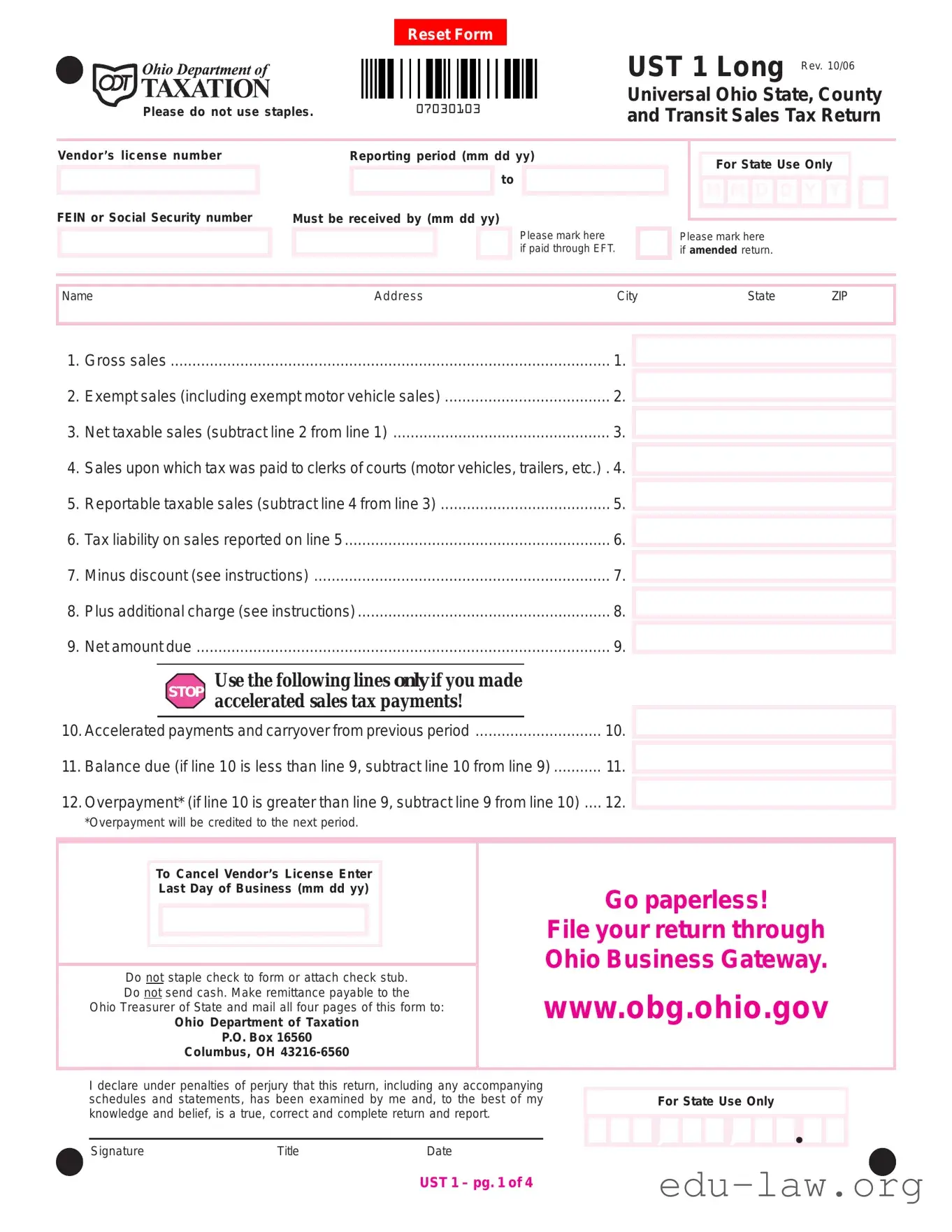
The Ohio Sales Tax UST 1 form is a crucial document for businesses operating within the state, as it facilitates the reporting and payment of sales tax to the Ohio Department of Taxation. This form must be filled out accurately and submitted by a specific deadline to avoid penalties. It requires essential information, such as the vendor's license number, the Federal Employer Identification Number (FEIN) or Social Security number, and the reporting period. Businesses must detail their gross sales, exempt sales, and net taxable sales, allowing the state to determine the correct tax liability. Additionally, the form includes sections for reporting any accelerated payments and potential overpayments. A supporting schedule is necessary, where businesses list taxable sales and corresponding tax liabilities on a county-by-county basis. The UST 1 form also provides options for electronic filing through the Ohio Business Gateway, promoting a more efficient and paperless process. Careful attention to detail is required, as inaccuracies can lead to complications, including the need for amended returns. Completing this form correctly is essential for compliance and maintaining good standing with state tax authorities.

|
|
|
|
|
|
|
|
|
Reset Form |
|
|
|
|
|
|
|
|
|
|
|
|||||||||||||||
|
|
|
|
|
|
|
|
|
|
|
|
|
|
|
|
|
|
|
|
|
|
|
|
|
|
|
|
|
|
|
|
|
|
|
UST 1 Long Rev. 10/06 |
|
|
|
|
|
|
|
|
|
|
|
|
|
|
|
|
|
|
|
|
|
|
|
|
|
|
|
|
|
|
||||||
|
|
|
|
|
|
|
|
|
|
|
|
|
|
|
|
|
|
|
|
|
|
|
|
|
|
|
|
|
|
|
|
|
|
|
Universal Ohio State, County |
|
07030103 |
|
|
|
|
|
|
||||||||||||||||||||||||||||
Please do not use staples. |
|
|
|
|
|
|
|
|
|
|
|
and Transit Sales Tax Return |
|||||||||||||||||||||||
|
|
|
|
|
|
|
|
|
|
|
|
|
|
|
|
|
|
|
|
|
|
|
|
|
|
|
|
|
|
|
|
|
|
||
Vendor’s license number
FEIN or Social Security number
Reporting period (mm dd yy)
to
Must be received by (mm dd yy)
Please mark here if paid through EFT.
For State Use Only
MM D D Y Y
Please mark here if amended return.
NameAddressCityState ZIP
1. |
Gross sales |
1. |
2. |
Exempt sales (including exempt motor vehicle sales) |
2. |
3. |
Net taxable sales (subtract line 2 from line 1) |
3. |
4. |
Sales upon which tax was paid to clerks of courts (motor vehicles, trailers, etc.) . 4. |
|
5. |
Reportable taxable sales (subtract line 4 from line 3) |
5. |
6. |
Tax liability on sales reported on line 5 |
6. |
7. |
Minus discount (see instructions) |
7. |
8. |
Plus additional charge (see instructions) |
8. |
9. |
Net amount due |
9. |
|
Use the following lines only if you made |
|
|
|
STOP accelerated sales tax payments! |
|
|
10. Accelerated payments and carryover from previous period |
10. |
||
11. Balance due (if line 10 is less than line 9, subtract line 10 from line 9) |
11. |
||
12. Overpayment* (if line 10 is greater than line 9, subtract line 9 from line 10) .... |
12. |
||
*Overpayment will be credited to the next period.
To Cancel Vendor’s License Enter
Last Day of Business (mm dd yy)
Do not staple check to form or attach check stub. Do not send cash. Make remittance payable to the
Ohio Treasurer of State and mail all four pages of this form to:
Ohio Department of Taxation
P.O. Box 16560
Columbus, OH
Go paperless!
File your return through Ohio Business Gateway.
www.obg.ohio.gov
I declare under penalties of perjury that this return, including any accompanying schedules and statements, has been examined by me and, to the best of my knowledge and belief, is a true, correct and complete return and report.
Signature |
Title |
Date |
For State Use Only
, ,
UST 1 – pg. 1 of 4

Please do not use staples. Vendor’s license number
UST 1 Long Rev. 10/06
Universal Ohio State, County and Transit Sales Tax Return
Supporting schedule must be completed showing taxable sales and the combined state, county and transit authority taxes on a
County Name |
County Number |
|
|
Taxable Sales* |
|
|
Tax Liability* |
|||
*If this amount is a negative, please mark an “X” in the box provided. |
||||||||||
|
|
|||||||||
Adams |
01 |
|
|
|
|
|
|
|
|
|
Allen |
02 |
|
|
|
|
|
|
|
|
|
|
|
|
|
|
|
|
|
|||
Ashland |
03 |
|
|
|
|
|
|
|
|
|
|
|
|
|
|
|
|
|
|||
Ashtabula |
04 |
|
|
|
|
|
|
|
|
|
|
|
|
|
|
|
|
|
|||
|
|
|
|
|
|
|
|
|
|
|
Athens |
05 |
|
|
|
|
|
|
|
|
|
|
|
|
|
|
|
|
|
|||
|
|
|
|
|
|
|
|
|
|
|
Auglaize |
06 |
|
|
|
|
|
|
|
|
|
|
|
|
|
|
|
|
|
|||
|
|
|
|
|
|
|
|
|
|
|
Belmont |
07 |
|
|
|
|
|
|
|
|
|
|
|
|
|
|
|
|
|
|||
Brown |
08 |
|
|
|
|
|
|
|
|
|
|
|
|
|
|
|
|
|
|||
Butler |
09 |
|
|
|
|
|
|
|
|
|
|
|
|
|
|
|
|
|
|||
|
|
|
|
|
|
|
|
|
|
|
Carroll |
10 |
|
|
|
|
|
|
|
|
|
|
|
|
|
|
|
|
|
|||
|
|
|
|
|
|
|
|
|
|
|
Champaign |
11 |
|
|
|
|
|
|
|
|
|
|
|
|
|
|
|
|
|
|||
Clark |
12 |
|
|
|
|
|
|
|
|
|
|
|
|
|
|
|
|
|
|||
Clermont |
13 |
|
|
|
|
|
|
|
|
|
|
|
|
|
|
|
|
|
|||
|
|
|
|
|
|
|
|
|
|
|
Clinton |
14 |
|
|
|
|
|
|
|
|
|
|
|
|
|
|
|
|
|
|||
Columbiana |
15 |
|
|
|
|
|
|
|
|
|
|
|
|
|
|
|
|
|
|||
Coshocton |
16 |
|
|
|
|
|
|
|
|
|
|
|
|
|
|
|
|
|
|||
|
|
|
|
|
|
|
|
|
|
|
Crawford |
17 |
|
|
|
|
|
|
|
|
|
|
|
|
|
|
|
|
|
|||
Cuyahoga |
18 |
|
|
|
|
|
|
|
|
|
|
|
|
|
|
|
|
|
|||
|
|
|
|
|
|
|
|
|
|
|
Darke |
19 |
|
|
|
|
|
|
|
|
|
|
|
|
|
|
|
|
|
|||
|
|
|
|
|
|
|
|
|
|
|
Defiance |
20 |
|
|
|
|
|
|
|
|
|
|
|
|
|
|
|
|
|
|||
|
|
|
|
|
|
|
|
|
|
|
Delaware |
21 |
|
|
|
|
|
|
|
|
|
|
|
|
|
|
|
|
|
|||
|
|
|
|
|
|
|
|
|
|
|
Delaware (COTA) |
96 |
|
|
|
|
|
|
|
|
|
|
|
|
|
|
|
|
|
|||
|
|
|
|
|
|
|
|
|
|
|
Erie |
22 |
|
|
|
|
|
|
|
|
|
|
|
|
|
|
|
|
|
|||
|
|
|
|
|
|
|
|
|
|
|
Fairfield |
23 |
|
|
|
|
|
|
|
|
|
|
|
|
|
|
|
|
|
|||
|
|
|
|
|
|
|
|
|
|
|
Fairfield (COTA) |
93 |
|
|
|
|
|
|
|
|
|
|
|
|
|
|
|
|
|
|||
|
|
|
|
|
|
|
|
|
|
|
Fayette |
24 |
|
|
|
|
|
|
|
|
|
|
|
|
|
|
|
|
|
|||
|
|
|
|
|
|
|
|
|
|
|
Franklin |
25 |
|
|
|
|
|
|
|
|
|
|
|
|
|
|
|
|
|
|||
|
|
|
|
|
|
|
|
|
|
|
Fulton |
26 |
|
|
|
|
|
|
|
|
|
|
|
|
|
|
|
|
|
|||
|
|
|
|
|
|
|
|
|
|
|
Gallia |
27 |
|
|
|
|
|
|
|
|
|
|
|
|
|
|
|
|
|
|||
|
|
|
|
|
|
|
|
|
|
|
Geauga |
28 |
|
|
|
|
|
|
|
|
|
|
|
|
|
|
|
|
|
|||
|
|
|
|
|
|
|
|
|
|
|
Greene |
29 |
|
|
|
|
|
|
|
|
|
|
|
|
|
|
|
|
|
|||
|
|
|
|
|
|
|
|
|
|
|
Guernsey |
30 |
|
|
|
|
|
|
|
|
|
|
|
|
|
|
|
|
|
|||
|
|
|
|
|
|
|
|
|
|
|
Hamilton |
31 |
|
|
|
|
|
|
|
|
|
|
|
|
|
|
|
|
|
|||
|
|
|
|
|
|
|
|
|
|
|
|
|
|
|
|
|
|
|
|
|
|
Page 2 subtotal
UST 1 – pg. 2 of 4

Please do not use staples. Vendor’s license number
UST 1 Long Rev. 10/06
Universal Ohio State, County and Transit Sales Tax Return
Supporting schedule must be completed showing taxable sales and the combined state, county and transit authority taxes on a
County Name |
County Number |
|
|
Taxable Sales* |
|
|
Tax Liability* |
|||
*If this amount is a negative, please mark an “X” in the box provided. |
||||||||||
|
|
|||||||||
Hancock |
32 |
|
|
|
|
|
|
|
|
|
|
|
|
|
|
|
|
|
|||
Hardin |
33 |
|
|
|
|
|
|
|
|
|
|
|
|
|
|
|
|
|
|||
|
|
|
|
|
|
|
|
|
|
|
Harrison |
34 |
|
|
|
|
|
|
|
|
|
|
|
|
|
|
|
|
|
|||
Henry |
35 |
|
|
|
|
|
|
|
|
|
|
|
|
|
|
|
|
|
|||
|
|
|
|
|
|
|
|
|
|
|
Highland |
36 |
|
|
|
|
|
|
|
|
|
|
|
|
|
|
|
|
|
|||
|
|
|
|
|
|
|
|
|
|
|
Hocking |
37 |
|
|
|
|
|
|
|
|
|
|
|
|
|
|
|
|
|
|||
|
|
|
|
|
|
|
|
|
|
|
Holmes |
38 |
|
|
|
|
|
|
|
|
|
|
|
|
|
|
|
|
|
|||
Huron |
39 |
|
|
|
|
|
|
|
|
|
|
|
|
|
|
|
|
|
|||
Jackson |
40 |
|
|
|
|
|
|
|
|
|
|
|
|
|
|
|
|
|
|||
|
|
|
|
|
|
|
|
|
|
|
Jefferson |
41 |
|
|
|
|
|
|
|
|
|
|
|
|
|
|
|
|
|
|||
|
|
|
|
|
|
|
|
|
|
|
Knox |
42 |
|
|
|
|
|
|
|
|
|
|
|
|
|
|
|
|
|
|||
Lake |
43 |
|
|
|
|
|
|
|
|
|
|
|
|
|
|
|
|
|
|||
Lawrence |
44 |
|
|
|
|
|
|
|
|
|
|
|
|
|
|
|
|
|
|||
Licking |
45 |
|
|
|
|
|
|
|
|
|
|
|
|
|
|
|
|
|
|||
Licking (COTA) |
94 |
|
|
|
|
|
|
|
|
|
|
|
|
|
|
|
|
|
|||
|
|
|
|
|
|
|
|
|
|
|
Logan |
46 |
|
|
|
|
|
|
|
|
|
|
|
|
|
|
|
|
|
|||
|
|
|
|
|
|
|
|
|
|
|
Lorain |
47 |
|
|
|
|
|
|
|
|
|
|
|
|
|
|
|
|
|
|||
Lucas |
48 |
|
|
|
|
|
|
|
|
|
|
|
|
|
|
|
|
|
|||
|
|
|
|
|
|
|
|
|
|
|
Madison |
49 |
|
|
|
|
|
|
|
|
|
|
|
|
|
|
|
|
|
|||
|
|
|
|
|
|
|
|
|
|
|
Mahoning |
50 |
|
|
|
|
|
|
|
|
|
|
|
|
|
|
|
|
|
|||
|
|
|
|
|
|
|
|
|
|
|
Marion |
51 |
|
|
|
|
|
|
|
|
|
|
|
|
|
|
|
|
|
|||
|
|
|
|
|
|
|
|
|
|
|
Medina |
52 |
|
|
|
|
|
|
|
|
|
|
|
|
|
|
|
|
|
|||
|
|
|
|
|
|
|
|
|
|
|
Meigs |
53 |
|
|
|
|
|
|
|
|
|
|
|
|
|
|
|
|
|
|||
|
|
|
|
|
|
|
|
|
|
|
Mercer |
54 |
|
|
|
|
|
|
|
|
|
|
|
|
|
|
|
|
|
|||
|
|
|
|
|
|
|
|
|
|
|
Miami |
55 |
|
|
|
|
|
|
|
|
|
|
|
|
|
|
|
|
|
|||
|
|
|
|
|
|
|
|
|
|
|
Monroe |
56 |
|
|
|
|
|
|
|
|
|
|
|
|
|
|
|
|
|
|||
|
|
|
|
|
|
|
|
|
|
|
Montgomery |
57 |
|
|
|
|
|
|
|
|
|
|
|
|
|
|
|
|
|
|||
|
|
|
|
|
|
|
|
|
|
|
Morgan |
58 |
|
|
|
|
|
|
|
|
|
|
|
|
|
|
|
|
|
|||
|
|
|
|
|
|
|
|
|
|
|
Morrow |
59 |
|
|
|
|
|
|
|
|
|
|
|
|
|
|
|
|
|
|||
|
|
|
|
|
|
|
|
|
|
|
Muskingum |
60 |
|
|
|
|
|
|
|
|
|
|
|
|
|
|
|
|
|
|||
|
|
|
|
|
|
|
|
|
|
|
Noble |
61 |
|
|
|
|
|
|
|
|
|
|
|
|
|
|
|
|
|
|||
|
|
|
|
|
|
|
|
|
|
|
Ottawa |
62 |
|
|
|
|
|
|
|
|
|
|
|
|
|
|
|
|
|
|||
|
|
|
|
|
|
|
|
|
|
|
Paulding |
63 |
|
|
|
|
|
|
|
|
|
|
|
|
|
|
|
|
|
|||
|
|
|
|
|
|
|
|
|
|
|
Page 3 subtotal
UST 1 – pg. 3 of 4

|
|
|
|
|
|
|
|
|
|
|
Reset Form |
||||||||||||||
Please do not use staples. |
|
|
|
|
|
|
|
|
|
|
|
|
|
|
|
|
|
|
|
|
|
|
|
|
|
|
|
|
|
|
|
|
|
|
|
|
|
|
|
|
|
|
|
|
|
|
|
|
|
||
07030403 |
|
||||||||||||||||||||||||
Vendor’s license number |
Reporting period (mm dd yy) |
||||||||||||||||||||||||
to
UST 1 Long Rev. 10/06
Universal Ohio State, County and Transit Sales Tax Return
Supporting schedule must be completed showing taxable sales and the combined state, county and transit authority taxes on a
County Name |
County Number |
|
|
Taxable Sales* |
|
|
Tax Liability* |
|||
*If this amount is a negative, please mark an “X” in the box provided. |
||||||||||
|
|
|||||||||
|
|
|
|
|
|
|
|
|
|
|
Perry |
64 |
|
|
|
|
|
|
|
|
|
Pickaway |
65 |
|
|
|
|
|
|
|
|
|
|
|
|
|
|
|
|
|
|||
|
|
|
|
|
|
|
|
|
|
|
Pike |
66 |
|
|
|
|
|
|
|
|
|
|
|
|
|
|
|
|
|
|||
|
|
|
|
|
|
|
|
|
|
|
Portage |
67 |
|
|
|
|
|
|
|
|
|
|
|
|
|
|
|
|
|
|||
|
|
|
|
|
|
|
|
|
|
|
Preble |
68 |
|
|
|
|
|
|
|
|
|
|
|
|
|
|
|
|
|
|||
|
|
|
|
|
|
|
|
|
|
|
Putnam |
69 |
|
|
|
|
|
|
|
|
|
|
|
|
|
|
|
|
|
|||
|
|
|
|
|
|
|
|
|
|
|
Richland |
70 |
|
|
|
|
|
|
|
|
|
|
|
|
|
|
|
|
|
|||
Ross |
71 |
|
|
|
|
|
|
|
|
|
|
|
|
|
|
|
|
|
|||
Sandusky |
72 |
|
|
|
|
|
|
|
|
|
|
|
|
|
|
|
|
|
|||
|
|
|
|
|
|
|
|
|
|
|
Scioto |
73 |
|
|
|
|
|
|
|
|
|
|
|
|
|
|
|
|
|
|||
|
|
|
|
|
|
|
|
|
|
|
Seneca |
74 |
|
|
|
|
|
|
|
|
|
|
|
|
|
|
|
|
|
|||
Shelby |
75 |
|
|
|
|
|
|
|
|
|
|
|
|
|
|
|
|
|
|||
Stark |
76 |
|
|
|
|
|
|
|
|
|
|
|
|
|
|
|
|
|
|||
|
|
|
|
|
|
|
|
|
|
|
Summit |
77 |
|
|
|
|
|
|
|
|
|
|
|
|
|
|
|
|
|
|||
|
|
|
|
|
|
|
|
|
|
|
Trumbull |
78 |
|
|
|
|
|
|
|
|
|
|
|
|
|
|
|
|
|
|||
|
|
|
|
|
|
|
|
|
|
|
Tuscarawas |
79 |
|
|
|
|
|
|
|
|
|
|
|
|
|
|
|
|
|
|||
|
|
|
|
|
|
|
|
|
|
|
Union |
80 |
|
|
|
|
|
|
|
|
|
|
|
|
|
|
|
|
|
|||
Van Wert |
81 |
|
|
|
|
|
|
|
|
|
|
|
|
|
|
|
|
|
|||
|
|
|
|
|
|
|
|
|
|
|
Vinton |
82 |
|
|
|
|
|
|
|
|
|
|
|
|
|
|
|
|
|
|||
|
|
|
|
|
|
|
|
|
|
|
Warren |
83 |
|
|
|
|
|
|
|
|
|
|
|
|
|
|
|
|
|
|||
|
|
|
|
|
|
|
|
|
|
|
Washington |
84 |
|
|
|
|
|
|
|
|
|
|
|
|
|
|
|
|
|
|||
|
|
|
|
|
|
|
|
|
|
|
Wayne |
85 |
|
|
|
|
|
|
|
|
|
|
|
|
|
|
|
|
|
|||
|
|
|
|
|
|
|
|
|
|
|
Williams |
86 |
|
|
|
|
|
|
|
|
|
|
|
|
|
|
|
|
|
|||
|
|
|
|
|
|
|
|
|
|
|
Wood |
87 |
|
|
|
|
|
|
|
|
|
|
|
|
|
|
|
|
|
|||
|
|
|
|
|
|
|
|
|
|
|
Wyandot |
88 |
|
|
|
|
|
|
|
|
|
|
|
|
|
|
|
|
|
|||
|
|
|
|
|
|
|
|
|
|
|
|
|
|
|
|
|
|
|
|
|
|
|
|
|
|
|
|
|
|
|
|
|
|
|
|
|
|
|
|
|
|
|
|
|
|
|
|
|
|
|
|
|
|
|
|
|
|
|
|
|
|
|
|
|
|
|
|
|
|
|
|
|
|
|
|
|
|
|
|
|
|
|
|
|
|
|
|
|
|
|
|
|
|
|
|
|
|
|
|
|
|
|
|
|
|
|
|
|
|
|
|
|
|
|
|
|
|
|
|
|
|
|
|
|
|
|
|
|
|
|
|
Subtotal this page
Page 2 subtotal
Page 3 subtotal
Grand total*
*Enter totals on lines 5 and 6 on the front page of this return.
UST 1 – pg. 4 of 4
| Fact Name | Description |
|---|---|
| Form Purpose | The UST 1 form is used for reporting Ohio State, County, and Transit Sales Tax. |
| Vendor Information | Vendors must provide their license number and either FEIN or Social Security number on the form. |
| Reporting Period | The form requires the reporting period to be specified in the format mm/dd/yy. |
| Submission Deadline | Returns must be received by the Ohio Department of Taxation by a specified deadline, also in mm/dd/yy format. |
| Payment Method | Vendors can indicate if payment was made through Electronic Funds Transfer (EFT) by marking the appropriate box. |
| Amended Returns | If applicable, vendors should mark the box indicating that the return is amended. |
| Governing Laws | This form is governed by Ohio Revised Code Section 5739, which outlines sales tax regulations. |
Completing the Ohio Sales Tax UST 1 form is essential for reporting sales tax accurately. Following the steps outlined below will help ensure that all necessary information is provided correctly, allowing for timely submission and compliance with state requirements.
What is the Ohio Sales Tax UST 1 form used for?
The Ohio Sales Tax UST 1 form is a crucial document for businesses operating in Ohio. It is used to report sales tax collected on taxable sales during a specific reporting period. This form allows businesses to calculate their tax liability, report exempt sales, and make any necessary adjustments for overpayments or discounts. Submitting this form ensures compliance with state tax regulations and facilitates the proper distribution of sales tax revenues to local governments.
Who needs to file the UST 1 form?
Any business that has a vendor's license and makes taxable sales in Ohio is required to file the UST 1 form. This includes retail businesses, service providers, and any other entities that sell goods or services subject to sales tax. If a business has made sales during the reporting period, regardless of whether it collected tax, it must complete and submit this form to the Ohio Department of Taxation.
How often must the UST 1 form be filed?
The frequency of filing the UST 1 form depends on the volume of sales a business generates. Most businesses file on a monthly basis, while some may qualify for quarterly or annual filing. The Ohio Department of Taxation typically assigns filing frequency based on the estimated sales tax liability. It's important for businesses to adhere to their assigned schedule to avoid penalties and interest for late submissions.
What information is required on the UST 1 form?
When completing the UST 1 form, businesses must provide several key pieces of information. This includes the vendor's license number, federal employer identification number (FEIN) or Social Security number, and the reporting period. Additionally, businesses need to report gross sales, exempt sales, net taxable sales, and tax liability, among other figures. Accurate reporting is essential to ensure the correct calculation of taxes owed.
What should a business do if it overpays its sales tax?
If a business discovers that it has overpaid its sales tax, it can indicate this on the UST 1 form. The form includes a section for reporting overpayments, which will be credited to the next reporting period. This process helps businesses manage their cash flow and ensures they do not lose out on funds that are rightfully theirs. Proper documentation and timely submission of the form are critical in this situation.
Can the UST 1 form be filed electronically?
Yes, businesses have the option to file the UST 1 form electronically through the Ohio Business Gateway. This online platform simplifies the filing process, allowing for quicker submissions and reducing the risk of errors. Electronic filing is encouraged, as it streamlines the process and provides immediate confirmation of submission, making it a convenient choice for many businesses.
What happens if the UST 1 form is filed late?
Filing the UST 1 form late can result in penalties and interest charges imposed by the Ohio Department of Taxation. The amount of the penalty may vary based on how late the filing is and the amount of tax owed. To avoid these consequences, it is advisable for businesses to keep track of their filing deadlines and ensure timely submission of the form. In some cases, businesses may be able to request a waiver of penalties if they can demonstrate reasonable cause for the delay.
Not including the vendor’s license number. This number is essential for identifying your business and ensuring accurate processing.
Forgetting to fill in the reporting period. This information helps clarify the time frame for the sales being reported.
Using staples to attach documents. Instead, use paper clips or rubber bands, as staples can complicate processing.
Neglecting to mark if the return is amended. If changes were made to a previously submitted return, it’s crucial to indicate this clearly.
Failing to accurately calculate net taxable sales. This is done by subtracting exempt sales from gross sales, and errors can lead to incorrect tax amounts.
Not including all required supporting schedules. These documents provide necessary details about taxable sales and tax liabilities.
Misreporting the tax liability. Ensure that the calculations on sales reported are correct to avoid penalties or overpayments.
Ignoring the discounts and additional charges. These can affect the net amount due, so they must be reported accurately.
Not submitting the form by the due date. Late submissions can incur penalties, so it’s important to be timely.
Sending cash or not following payment instructions correctly. Always make checks payable to the Ohio Treasurer of State and avoid sending cash.
The Ohio Sales Tax UST 1 form is a crucial document for businesses to report their sales tax liabilities. However, several other forms and documents are often used in conjunction with this form to ensure compliance with state tax regulations. Below is a list of related forms that may be necessary for businesses operating in Ohio.
Using these forms in conjunction with the Ohio Sales Tax UST 1 form helps ensure that businesses remain compliant with tax regulations. Proper documentation not only aids in accurate reporting but also protects businesses in the event of an audit or inquiry from tax authorities.
The Ohio Sales Tax UST 1 form is similar to the IRS Form 1040, which is used for individual income tax returns. Both documents require individuals or businesses to report their financial activities over a specified period. Just as the UST 1 form collects data on gross and exempt sales to calculate tax liabilities, the Form 1040 gathers information about income, deductions, and credits to determine the taxpayer's overall tax obligation. Each form serves as a critical tool for compliance with tax regulations, ensuring that accurate financial information is submitted to the respective authorities.
Another document similar to the Ohio Sales Tax UST 1 form is the IRS Form 941, which employers use to report income taxes, Social Security tax, and Medicare tax withheld from employee paychecks. Both forms require detailed reporting of financial transactions, with the UST 1 focusing on sales and the Form 941 on wages. Each form plays a vital role in maintaining compliance with tax laws, as they ensure that the correct amounts are reported and paid to the government on a regular basis.
The Ohio Sales Tax UST 1 form also resembles the IRS Form 1120, which corporations use to report their income, gains, losses, deductions, and credits. Like the UST 1, the Form 1120 requires a thorough breakdown of financial activities. Both forms ultimately aim to determine the tax liability for the reporting period, providing a clear picture of the entity's financial standing and tax obligations.
Additionally, the Ohio Sales Tax UST 1 form is akin to the IRS Form 1065, which partnerships use to report their income, deductions, and credits. Both documents require a detailed account of financial transactions to assess tax liabilities. While the UST 1 focuses on sales tax, the Form 1065 is designed for partnership income, yet both serve the purpose of ensuring transparency and compliance with tax regulations.
The UST 1 form shares similarities with the Ohio Employer Withholding Tax Annual Reconciliation (Form IT-3). Both forms are used to report tax-related information, with the UST 1 focusing on sales tax and the IT-3 on employee withholding taxes. Each form requires accurate reporting of financial data to calculate the total tax owed, reinforcing the importance of compliance in tax reporting.
Another related document is the Ohio Commercial Activity Tax (CAT) Annual Return (Form CAT 1). Like the UST 1, the CAT return requires businesses to report their financial activities over a specific period. While the UST 1 centers on sales tax, the CAT return focuses on gross receipts, yet both documents are essential for determining tax obligations and ensuring compliance with state tax laws.
The UST 1 form is also similar to the Ohio Use Tax Return, which businesses use to report and pay use tax on goods purchased for use in Ohio. Both forms involve reporting taxable transactions and calculating the respective tax liabilities. They share the common goal of ensuring that businesses fulfill their tax obligations accurately and on time.
Furthermore, the UST 1 form resembles the Ohio Franchise Tax Return, which is used by certain businesses to report their franchise tax liability. Both documents require a detailed account of financial activities, and they are designed to ensure that businesses comply with state tax requirements. Each form plays a crucial role in the overall tax reporting process.
Finally, the UST 1 form is comparable to the Ohio Sales Tax Exemption Certificate. While the UST 1 is used for reporting sales tax collected, the exemption certificate is utilized by purchasers to claim exemption from sales tax on qualifying purchases. Both documents are integral to the sales tax process in Ohio, facilitating compliance and proper tax administration.
When completing the Ohio Sales Tax UST 1 form, it is essential to follow specific guidelines to ensure accuracy and compliance. Below are key dos and don’ts to consider:
Adhering to these guidelines will help avoid delays or issues with your sales tax return.
Misconception 1: The UST 1 form is only for large businesses.
This is incorrect. The UST 1 form is required for all vendors selling taxable goods or services in Ohio, regardless of their size. Small businesses must also comply with sales tax reporting requirements.
Misconception 2: You can file the UST 1 form anytime.
There are specific deadlines for filing the UST 1 form. It must be received by the Ohio Department of Taxation by the due date for the reporting period. Late submissions may incur penalties.
Misconception 3: Only physical sales are reported on the UST 1 form.
This is not true. The UST 1 form requires reporting of all taxable sales, including online and remote sales. All sales made during the reporting period must be accounted for.
Misconception 4: You don’t need to report exempt sales.
Exempt sales must be reported on the UST 1 form. You must indicate the amount of exempt sales in the designated section. This helps maintain accurate records and ensures compliance with tax laws.
When completing the Ohio Sales Tax UST 1 form, consider the following key points:
By keeping these points in mind, you can navigate the Ohio Sales Tax UST 1 form more effectively.