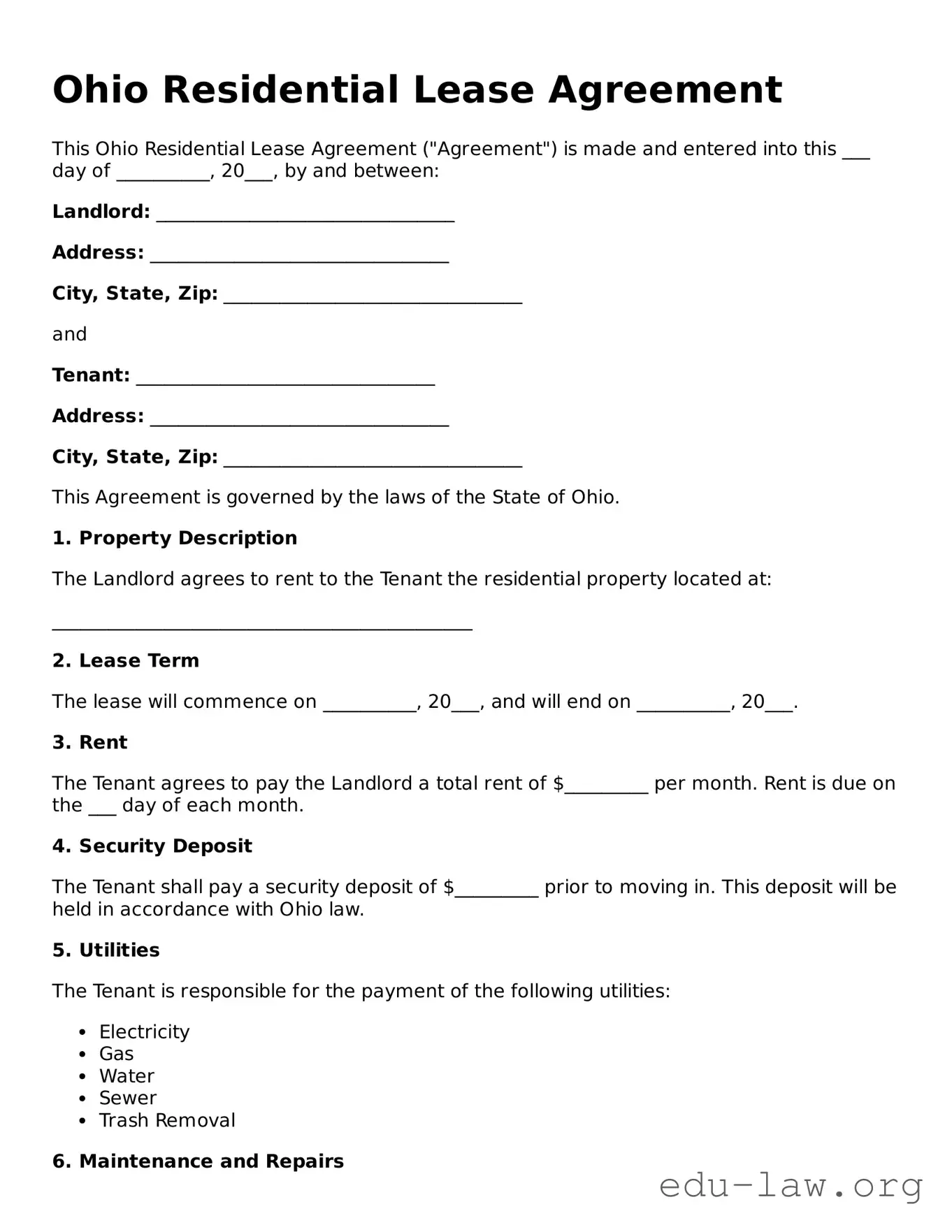
When renting a property in Ohio, understanding the Residential Lease Agreement form is crucial for both landlords and tenants. This document serves as a legally binding contract that outlines the rights and responsibilities of each party involved in the rental process. Key aspects of the agreement include the duration of the lease, rental payment terms, and security deposit requirements. Additionally, the form addresses maintenance responsibilities, rules regarding pets, and the procedures for terminating the lease. By clearly defining these elements, the Ohio Residential Lease Agreement helps to prevent misunderstandings and disputes, ensuring a smoother rental experience for everyone involved. Whether you are a first-time renter or an experienced landlord, familiarizing yourself with this form can lead to a more positive and informed leasing relationship.
Ohio Residential Lease Agreement
This Ohio Residential Lease Agreement ("Agreement") is made and entered into this ___ day of __________, 20___, by and between:
Landlord: ________________________________
Address: ________________________________
City, State, Zip: ________________________________
and
Tenant: ________________________________
Address: ________________________________
City, State, Zip: ________________________________
This Agreement is governed by the laws of the State of Ohio.
1. Property Description
The Landlord agrees to rent to the Tenant the residential property located at:
_____________________________________________
2. Lease Term
The lease will commence on __________, 20___, and will end on __________, 20___.
3. Rent
The Tenant agrees to pay the Landlord a total rent of $_________ per month. Rent is due on the ___ day of each month.
4. Security Deposit
The Tenant shall pay a security deposit of $_________ prior to moving in. This deposit will be held in accordance with Ohio law.
5. Utilities
The Tenant is responsible for the payment of the following utilities:
6. Maintenance and Repairs
The Landlord is responsible for maintaining the property in a habitable condition. The Tenant agrees to notify the Landlord of any necessary repairs.
7. Termination
This Agreement may be terminated by either party with a written notice of ___ days prior to the intended termination date.
8. Governing Law
This Agreement shall be governed by the laws of the State of Ohio.
9. Signatures
By signing below, both parties agree to the terms outlined in this Agreement.
______________________________
Landlord Signature
Date: ______________________
______________________________
Tenant Signature
Date: ______________________
| Fact Name | Details |
|---|---|
| Governing Law | The Ohio Residential Lease Agreement is governed by Ohio Revised Code Chapter 5321. |
| Duration | Typically, leases can be for a fixed term, such as one year, or on a month-to-month basis. |
| Security Deposit | Landlords can require a security deposit, which cannot exceed one month's rent, according to Ohio law. |
| Tenant Rights | Tenants have specific rights, including the right to a habitable living environment and protection against unlawful eviction. |
Filling out the Ohio Residential Lease Agreement form requires careful attention to detail. The process is straightforward, but each section must be completed accurately to ensure that both parties are protected. After you have gathered the necessary information, you will be ready to begin the filling process.
What is an Ohio Residential Lease Agreement?
An Ohio Residential Lease Agreement is a legal document that outlines the terms and conditions between a landlord and a tenant regarding the rental of a residential property. This agreement specifies important details such as the duration of the lease, rent amount, security deposit, and responsibilities of both parties. It serves to protect the rights of both the landlord and the tenant throughout the rental period.
How long is a typical lease term in Ohio?
In Ohio, a residential lease can vary in length. Most commonly, leases are for one year, but they can also be month-to-month or for shorter periods. The specific duration should be clearly stated in the lease agreement. It's important for both parties to understand the lease term to avoid any misunderstandings regarding the rental period.
What should I include in an Ohio Residential Lease Agreement?
A comprehensive Ohio Residential Lease Agreement should include the following key components: names of the landlord and tenant, property address, lease term, rent amount, payment due dates, security deposit details, maintenance responsibilities, and any rules or restrictions regarding the property. Including these elements helps ensure clarity and minimizes potential disputes.
Can a landlord increase rent during a lease term?
Generally, a landlord cannot increase rent during the term of a fixed lease unless the lease agreement specifically allows for it. For month-to-month leases, landlords may raise the rent, but they must provide proper notice, typically 30 days, before the increase takes effect. Tenants should review their lease terms to understand their rights regarding rent increases.
What happens if a tenant wants to break the lease early?
If a tenant wishes to break the lease early, they may face penalties as outlined in the lease agreement. Common consequences include forfeiting the security deposit or being responsible for rent until a new tenant is found. It is advisable for tenants to communicate with their landlord and review the lease terms to understand the potential repercussions and explore possible solutions.
Are there any tenant rights protected under Ohio law?
Yes, tenants in Ohio are protected by various laws. These include the right to a habitable living environment, the right to privacy, and protection against retaliation for exercising their rights. Tenants should be aware of their rights and responsibilities as outlined in the lease agreement and Ohio law to ensure they are treated fairly.
What should I do if there is a dispute between the landlord and tenant?
In the event of a dispute, it is advisable for both parties to first attempt to resolve the issue through open communication. If that fails, mediation services may be available to help facilitate a resolution. Should the dispute escalate, legal action may be necessary. Consulting with a legal professional can provide guidance on the best course of action based on the specific circumstances.
Inaccurate Personal Information: One common mistake is failing to provide accurate names and contact information for all tenants. This can lead to confusion and potential legal issues down the line.
Missing Dates: Forgetting to include the lease start and end dates is another frequent error. Without these dates, both parties may have different expectations about the lease term.
Neglecting to Specify Rent Amount: It's essential to clearly state the monthly rent amount. Omitting this detail can result in disputes regarding payment expectations.
Ignoring Security Deposit Terms: Many people overlook the section about the security deposit. It's crucial to outline the amount, conditions for its return, and any deductions that may apply.
Not Including Maintenance Responsibilities: Failing to define who is responsible for maintenance and repairs can lead to misunderstandings. Clearly outlining these responsibilities helps avoid conflict.
Overlooking Pet Policies: If pets are allowed or prohibited, this must be clearly stated. Not addressing pet policies can create tension between landlords and tenants later on.
Forgetting Signatures: Finally, one of the simplest yet most significant mistakes is neglecting to obtain signatures from all parties involved. Without signatures, the lease may not be legally binding.
When entering into a rental agreement in Ohio, several additional forms and documents may be necessary to ensure clarity and protection for both landlords and tenants. Below is a list of common documents often used alongside the Ohio Residential Lease Agreement.
These documents play a crucial role in establishing clear expectations and responsibilities for both landlords and tenants. By utilizing them, parties can foster a more transparent and amicable rental relationship.
The Ohio Residential Lease Agreement is similar to the Rental Agreement, which outlines the terms of renting a property for a specific period. Both documents detail the responsibilities of landlords and tenants, including payment terms, maintenance obligations, and rules regarding the use of the property. While a lease typically covers a longer duration, a rental agreement may be more flexible, often used for month-to-month arrangements. This flexibility can benefit both parties, allowing for adjustments based on changing circumstances.
Another document that shares similarities is the Commercial Lease Agreement. This type of lease is used for renting business premises rather than residential properties. Like the Ohio Residential Lease Agreement, it defines the terms of occupancy, payment details, and maintenance responsibilities. However, commercial leases often include additional clauses related to business operations, zoning regulations, and liability, reflecting the unique needs of business tenants.
The Sublease Agreement is another document akin to the Ohio Residential Lease Agreement. A sublease occurs when a tenant rents out their leased property to another person, with the landlord's permission. This agreement must include the original lease's terms and conditions, ensuring that the subtenant understands their rights and responsibilities. Both documents emphasize the importance of adhering to the original lease terms, maintaining clear communication between all parties involved.
The Lease Termination Notice is also similar, as it outlines the process for ending a lease agreement. This document is crucial for both landlords and tenants, providing a formal method to communicate the intent to terminate the lease. It specifies the notice period required and may include reasons for termination. Understanding this document is vital for ensuring compliance with the lease terms and avoiding potential disputes.
The Rental Application is another document that parallels the Ohio Residential Lease Agreement. This application is typically submitted by prospective tenants and includes personal information, rental history, and references. It serves as a tool for landlords to assess potential tenants before entering into a lease agreement. The information gathered helps ensure that both parties are making informed decisions about the rental arrangement.
The Move-In Checklist is similar as well, as it documents the condition of the property at the start of the lease. This checklist protects both landlords and tenants by providing a record of the property's state upon move-in. It can help prevent disputes regarding security deposits and property damage at the end of the lease term. By establishing clear expectations, both parties can foster a positive rental experience.
Lastly, the Security Deposit Agreement is akin to the Ohio Residential Lease Agreement. This document outlines the terms regarding the security deposit, including the amount, acceptable uses, and conditions for its return. It ensures that tenants understand their financial obligations while also protecting landlords’ interests. Clear communication about the security deposit can help build trust and prevent misunderstandings throughout the lease term.
When filling out the Ohio Residential Lease Agreement form, it's important to follow certain guidelines to ensure accuracy and compliance. Here are six things to keep in mind:
Following these guidelines can help prevent misunderstandings and ensure a smooth leasing experience.
Understanding the Ohio Residential Lease Agreement form is crucial for both landlords and tenants. However, several misconceptions can lead to confusion. Here are seven common misconceptions explained:
Understanding these misconceptions can help both landlords and tenants navigate their agreements more effectively. Clear communication and knowledge of the lease can lead to a better rental experience for everyone involved.
When filling out and using the Ohio Residential Lease Agreement form, consider the following key takeaways:
Following these guidelines can help ensure a smoother rental experience for both landlords and tenants.