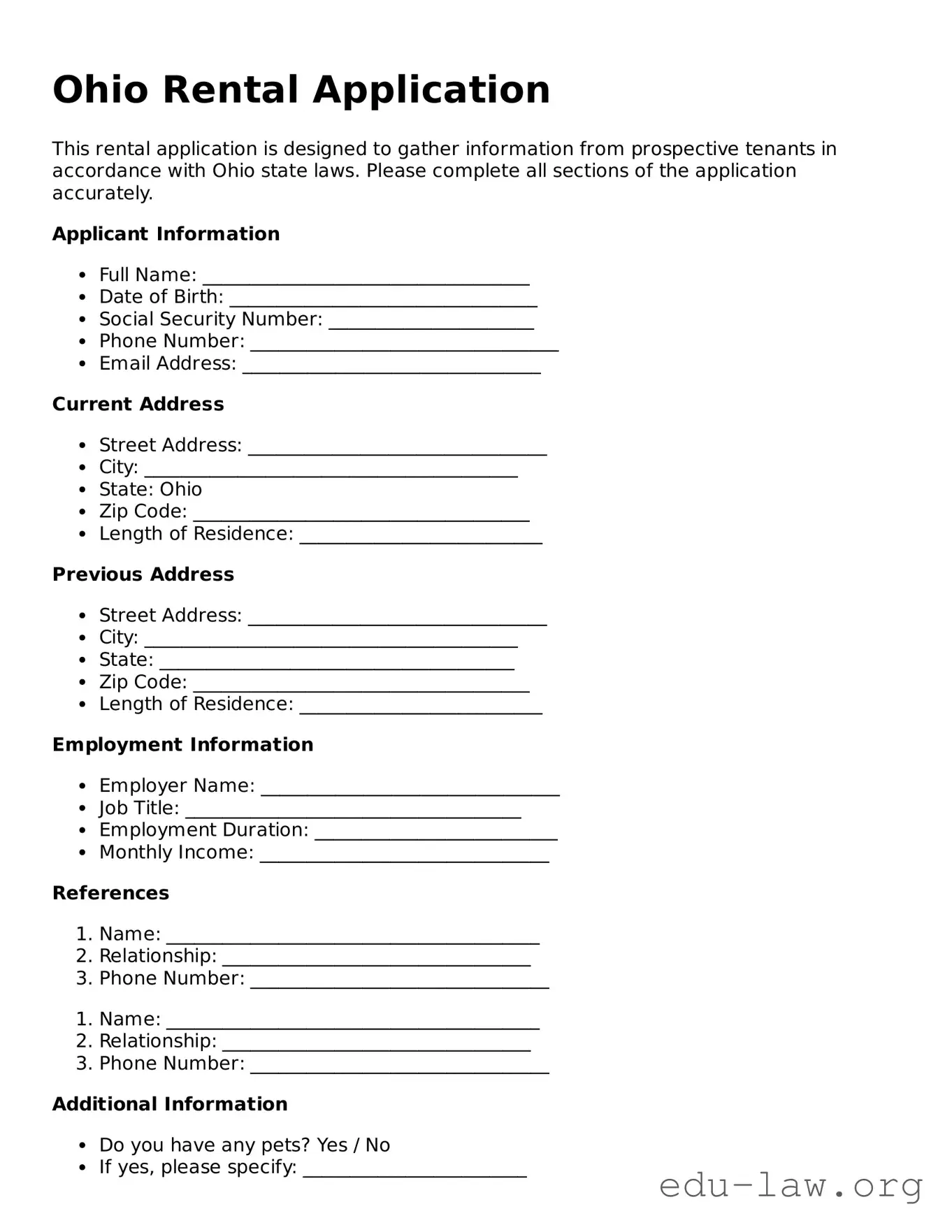
When seeking a rental property in Ohio, prospective tenants will encounter the Ohio Rental Application form, a crucial step in the leasing process. This form serves multiple purposes: it helps landlords assess the qualifications of potential tenants, while also providing applicants an opportunity to present their rental history, employment status, and financial stability. Key components typically include personal information such as name, contact details, and Social Security number, as well as sections dedicated to employment verification, income details, and references. Additionally, applicants may be required to disclose any past evictions or criminal history, which landlords often consider during their evaluation. Understanding the nuances of this application can significantly enhance a tenant's chances of securing their desired rental property, making it essential for individuals to approach the process with care and attention to detail.
Ohio Rental Application
This rental application is designed to gather information from prospective tenants in accordance with Ohio state laws. Please complete all sections of the application accurately.
Applicant Information
Current Address
Previous Address
Employment Information
References
Additional Information
By signing this application, you certify that the information provided is true and complete to the best of your knowledge.
Signature: ______________________________________
Date: __________________________________________
| Fact Name | Description |
|---|---|
| Purpose | The Ohio Rental Application form is used by landlords to screen potential tenants. |
| Required Information | Applicants must provide personal details, rental history, and employment information. |
| Governing Law | Ohio Revised Code § 5321 governs the rental application process and tenant rights. |
| Application Fee | Landlords may charge a non-refundable application fee to cover background checks. |
Filling out the Ohio Rental Application form is an important step in securing your new home. Once completed, you will submit it to the landlord or property management company for review. It’s crucial to provide accurate information to avoid any delays in the approval process.
After you have filled out the form, submit it along with any required fees or documentation. Be prepared for a potential interview or follow-up questions from the landlord or property management team. Good luck!
What is the purpose of the Ohio Rental Application form?
The Ohio Rental Application form is designed to collect essential information from prospective tenants. Landlords use this form to evaluate applicants and make informed decisions about renting their properties. The application typically requests details such as personal information, employment history, rental history, and references. By gathering this information, landlords can assess the suitability of applicants based on their financial stability and rental behavior.
What information do I need to provide on the application?
When filling out the Ohio Rental Application, you will need to provide various details. Expect to share your full name, contact information, and Social Security number. You will also be asked about your current and previous addresses, employment status, and income. Additionally, the application may require references from previous landlords or personal contacts. It’s important to provide accurate information to avoid delays in the application process.
How long does the application process take?
The length of the application process can vary depending on several factors. Generally, landlords may take anywhere from a few hours to several days to review applications. This timeframe can be influenced by how quickly they can verify your information, such as employment and rental history. If you have provided all necessary details and references, the process may be quicker. It’s advisable to follow up with the landlord or property manager after submitting your application for any updates.
What happens if my application is denied?
If your application is denied, you should receive a notification explaining the reasons for the decision. Common reasons for denial include insufficient income, poor rental history, or negative credit reports. You have the right to request a copy of the report used in the decision-making process. If you believe the denial was made in error, you can discuss it with the landlord or seek clarification. Understanding the reasons behind the denial can help you address any issues for future applications.
Incomplete Information: Many applicants fail to fill out all required fields. This can lead to delays or even rejection of the application.
Incorrect Contact Information: Providing wrong phone numbers or email addresses can hinder communication with the landlord or property manager.
Failure to Disclose Income: Some applicants do not provide accurate details about their income, which is crucial for assessing financial stability.
Omitting Rental History: Not including previous rental addresses or failing to mention past landlords can raise red flags for potential landlords.
Not Providing References: Many forget to include personal or professional references, which can help support their application.
Neglecting to Sign the Application: Some applicants overlook the importance of signing the application, which can render it invalid.
Submitting Without Reviewing: Failing to double-check for errors or omissions can lead to mistakes that may affect approval.
Ignoring Application Fees: Some applicants forget to include the required application fee, which can delay processing.
Not Being Honest About Background: Omitting or misrepresenting criminal history can lead to immediate disqualification.
Rushing the Process: Many applicants hurry through the form, which often results in careless mistakes.
When applying for a rental property in Ohio, several forms and documents may accompany the Ohio Rental Application. These documents help landlords assess potential tenants and streamline the rental process. Below is a list of commonly used forms and documents.
Having these documents ready can help facilitate the rental application process and ensure that both landlords and tenants are well-informed about their rights and responsibilities.
The Ohio Rental Application form shares similarities with the Tenant Screening Authorization form. Both documents require potential tenants to provide personal information, such as their name, contact details, and social security number. This information is crucial for landlords to conduct background checks and verify the applicant’s identity. While the Rental Application focuses more on the applicant’s rental history and financial stability, the Tenant Screening Authorization specifically grants permission to landlords to access the applicant's credit and criminal history. Together, they create a comprehensive view of the applicant's suitability for tenancy.
Another document that resembles the Ohio Rental Application is the Lease Agreement. While the Rental Application is a preliminary step in the rental process, the Lease Agreement is a binding contract that outlines the terms of the rental arrangement. Both documents require information about the tenant and the property, but the Lease Agreement also details the rights and responsibilities of both parties. This includes the duration of the lease, payment terms, and rules regarding property use. Essentially, the Rental Application sets the stage for what will be formalized in the Lease Agreement.
The Rental History Verification form is another document closely related to the Ohio Rental Application. This form is often used by landlords to confirm the rental history provided by the applicant. It typically includes questions about previous addresses, payment history, and any issues that may have arisen during past tenancies. While the Rental Application collects this information from the applicant, the Rental History Verification form seeks to validate it through direct communication with previous landlords. This helps landlords make informed decisions based on the applicant's past behavior as a tenant.
Similarly, the Employment Verification form aligns with the Ohio Rental Application in its focus on financial stability. This document is used to confirm an applicant's employment status, income level, and job stability. Both forms require the applicant to disclose their employment details, but the Employment Verification form is specifically designed to provide landlords with a reliable source of information regarding the applicant's ability to pay rent. By verifying income, landlords can assess whether the applicant meets their income requirements for renting the property.
Lastly, the Guarantor Agreement is another document that bears resemblance to the Ohio Rental Application. While the Rental Application assesses the applicant's qualifications, the Guarantor Agreement is used when a third party agrees to take responsibility for the lease if the tenant fails to meet their obligations. Both documents require personal information from the tenant and any guarantors, ensuring that landlords have a complete picture of all parties involved. This agreement provides an additional layer of security for landlords, especially when the primary applicant may not have a strong rental history or sufficient income.
When filling out the Ohio Rental Application form, it's important to approach the process carefully. Here are some dos and don'ts to keep in mind.
When it comes to the Ohio Rental Application form, many people hold misconceptions that can lead to confusion or mistakes during the application process. Here are seven common misunderstandings:
This is not true. Each landlord may have different requirements based on their own policies. While most applications ask for basic information, some may request additional documentation or details.
Submitting an application does not guarantee that you will be approved for the rental. Landlords evaluate applications based on various criteria, including credit history and rental history.
In reality, even applicants with good credit can be denied if they do not meet other criteria set by the landlord, such as income requirements or rental history.
This is a misconception. Current tenants may also need to fill out a rental application if they are renewing their lease or if there are changes in their living situation.
Providing inaccurate information can have serious consequences. If a landlord discovers discrepancies, it could lead to immediate denial or eviction.
Application fees are typically non-refundable. It’s important to understand the landlord’s policy regarding fees before submitting your application.
This is incorrect. Rental applications can vary significantly from one landlord to another, and even from one city to another within Ohio.
Understanding these misconceptions can help potential renters navigate the application process more effectively and increase their chances of securing a rental property.
When filling out and using the Ohio Rental Application form, several key points should be kept in mind to ensure a smooth process. Here are some important takeaways: