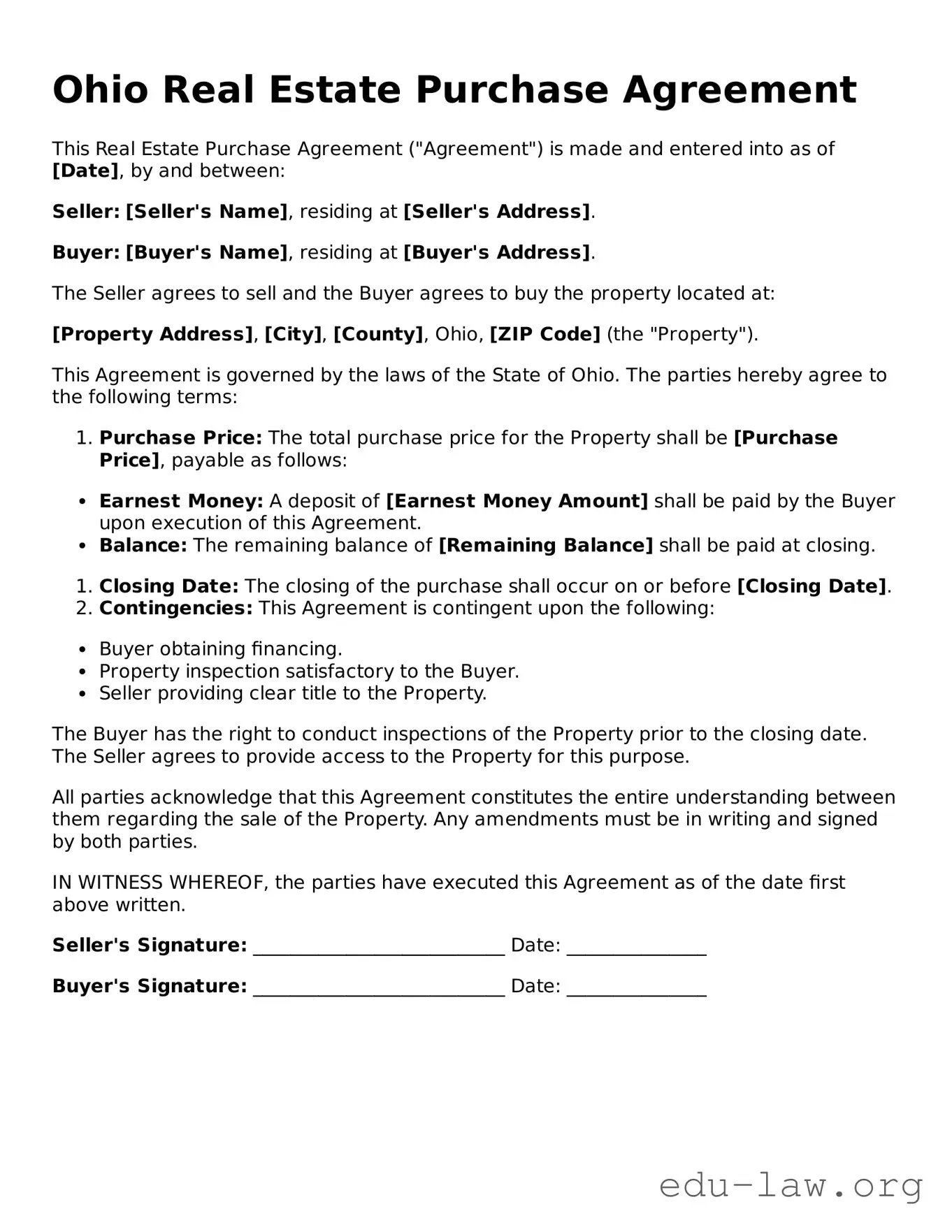
The Ohio Real Estate Purchase Agreement form serves as a crucial document in the home buying and selling process, facilitating a smooth transaction between buyers and sellers. This form outlines essential details, including the purchase price, property description, and any contingencies that may apply. It also specifies the closing date, which is the final step in transferring ownership. Both parties will find provisions for earnest money, ensuring that the buyer demonstrates serious intent to purchase. Additionally, the agreement addresses potential repairs and inspections, protecting the interests of both the buyer and seller. By providing a clear framework, this form helps prevent misunderstandings and disputes, making it an invaluable tool for anyone involved in real estate transactions in Ohio.
Ohio Real Estate Purchase Agreement
This Real Estate Purchase Agreement ("Agreement") is made and entered into as of [Date], by and between:
Seller: [Seller's Name], residing at [Seller's Address].
Buyer: [Buyer's Name], residing at [Buyer's Address].
The Seller agrees to sell and the Buyer agrees to buy the property located at:
[Property Address], [City], [County], Ohio, [ZIP Code] (the "Property").
This Agreement is governed by the laws of the State of Ohio. The parties hereby agree to the following terms:
The Buyer has the right to conduct inspections of the Property prior to the closing date. The Seller agrees to provide access to the Property for this purpose.
All parties acknowledge that this Agreement constitutes the entire understanding between them regarding the sale of the Property. Any amendments must be in writing and signed by both parties.
IN WITNESS WHEREOF, the parties have executed this Agreement as of the date first above written.
Seller's Signature: ___________________________ Date: _______________
Buyer's Signature: ___________________________ Date: _______________
| Fact Name | Description |
|---|---|
| Governing Law | The Ohio Real Estate Purchase Agreement is governed by Ohio state law. |
| Parties Involved | The agreement typically involves a buyer and a seller. |
| Property Description | A detailed description of the property must be included in the agreement. |
| Purchase Price | The total purchase price must be clearly stated in the agreement. |
| Earnest Money | Earnest money is often required to demonstrate the buyer's commitment. |
| Contingencies | Common contingencies include financing, inspections, and appraisal conditions. |
| Closing Date | The agreement should specify a closing date for the transaction. |
| Disclosures | Sellers are required to provide disclosures about the property's condition. |
| Signatures | Both parties must sign the agreement for it to be legally binding. |
Completing the Ohio Real Estate Purchase Agreement form is a critical step in the home buying process. Once you have filled out the form accurately, you will be ready to present it to the seller, which can lead to negotiations and ultimately, the purchase of your new home.
After completing these steps, review the form for accuracy and clarity. It is essential to double-check all entries to avoid any misunderstandings later on. Once you are satisfied, you can present the completed form to the seller or their agent.
What is the Ohio Real Estate Purchase Agreement form?
The Ohio Real Estate Purchase Agreement is a legal document that outlines the terms and conditions under which a buyer agrees to purchase a property from a seller. This agreement serves as a binding contract once both parties have signed it, detailing the obligations of each party throughout the transaction process.
Who needs to use the Ohio Real Estate Purchase Agreement?
Both buyers and sellers involved in a real estate transaction in Ohio should utilize this form. It is essential for ensuring that all parties have a clear understanding of the terms of the sale, including price, contingencies, and timelines.
What key elements are included in the Ohio Real Estate Purchase Agreement?
This agreement typically includes essential details such as the purchase price, property description, earnest money deposit, closing date, and any contingencies, such as financing or inspection requirements. These elements help protect the interests of both the buyer and seller.
Is the Ohio Real Estate Purchase Agreement legally binding?
Yes, once both parties sign the agreement, it becomes a legally binding contract. This means that both the buyer and seller are obligated to adhere to the terms outlined in the document, provided that all legal requirements are met.
Can the Ohio Real Estate Purchase Agreement be modified?
Yes, modifications can be made to the agreement, but they must be documented in writing and signed by both parties. Verbal agreements or informal changes are not legally enforceable, so it is crucial to ensure that any alterations are properly recorded.
What happens if either party breaches the Ohio Real Estate Purchase Agreement?
If either party fails to fulfill their obligations under the agreement, it may be considered a breach of contract. The non-breaching party may have the right to seek legal remedies, which could include damages or specific performance, depending on the circumstances of the breach.
Are there any contingencies that can be included in the Ohio Real Estate Purchase Agreement?
Yes, buyers often include contingencies to protect their interests. Common contingencies include financing, home inspections, and the sale of the buyer's current home. These contingencies allow buyers to back out of the agreement without penalty if certain conditions are not met.
How is earnest money handled in the Ohio Real Estate Purchase Agreement?
Earnest money is a deposit made by the buyer to demonstrate their serious intent to purchase the property. The agreement will specify the amount of earnest money and how it will be handled. Typically, it is held in escrow and applied to the purchase price at closing or returned to the buyer if the sale does not proceed due to contingencies.
Is it necessary to have an attorney review the Ohio Real Estate Purchase Agreement?
While it is not legally required, having an attorney review the agreement is highly recommended. An attorney can ensure that the document complies with Ohio law and adequately protects the interests of the parties involved, providing peace of mind throughout the transaction.
Where can I obtain an Ohio Real Estate Purchase Agreement form?
Ohio Real Estate Purchase Agreement forms can be obtained from various sources, including real estate agents, online legal resources, or local real estate associations. It is important to use a form that is up-to-date and compliant with current Ohio laws to ensure its validity.
Incomplete Information: One common mistake is not filling out all required fields. Buyers and sellers often overlook sections like the property description or the purchase price. Ensure every section is completed to avoid delays.
Not Understanding Contingencies: Many people misunderstand the contingencies included in the agreement. Failing to specify conditions, such as financing or inspection contingencies, can lead to issues later on.
Missing Signatures: It’s essential that all parties involved sign the agreement. Sometimes, one party forgets to sign, which can render the contract invalid. Double-check that every necessary signature is present.
Ignoring Deadlines: Each part of the agreement has specific deadlines. Buyers and sellers may overlook these timelines, leading to missed opportunities or contract breaches. Keep track of all important dates.
When engaging in a real estate transaction in Ohio, several important documents accompany the Real Estate Purchase Agreement. These documents help clarify the terms of the sale, protect the interests of both parties, and ensure compliance with state laws. Below is a list of commonly used forms in conjunction with the Real Estate Purchase Agreement.
These documents work together to facilitate a successful real estate transaction. Each form plays a vital role in protecting the interests of both buyers and sellers, promoting a clear understanding of the sale's terms and conditions.
The Ohio Real Estate Purchase Agreement is similar to the Residential Purchase Agreement commonly used in many states. Both documents outline the terms and conditions under which a buyer agrees to purchase a residential property. They typically include details such as the purchase price, financing terms, and contingencies, ensuring that both parties have a clear understanding of their obligations. Just like the Ohio form, the Residential Purchase Agreement serves as a legally binding contract that protects the interests of both the buyer and the seller throughout the transaction.
Another document that shares similarities is the Commercial Real Estate Purchase Agreement. This agreement is tailored for commercial properties, such as office buildings or retail spaces. While the core elements, like purchase price and contingencies, remain consistent, this document often includes additional clauses relevant to commercial transactions, such as zoning regulations and tenant leases. Both agreements aim to facilitate a smooth transfer of property ownership while addressing the unique aspects of their respective real estate markets.
The Offer to Purchase Real Estate is yet another document that aligns closely with the Ohio Real Estate Purchase Agreement. This initial offer is typically submitted by a buyer to express their intent to purchase a property. While it may not be as comprehensive as the purchase agreement, it often includes essential terms like the offered price and any contingencies. Once both parties agree on the terms, this offer can evolve into a formal purchase agreement, making it a crucial first step in the buying process.
The Lease Purchase Agreement is also similar, particularly in situations where a buyer wants to rent a property with the option to purchase it later. This document outlines the terms of the lease while incorporating a purchase option. Like the Ohio Real Estate Purchase Agreement, it details the purchase price and conditions, ensuring that both the landlord and tenant are clear on their rights and responsibilities. This agreement serves as a bridge between renting and owning, providing flexibility for buyers who may need time to secure financing.
The Land Contract, or Contract for Deed, is another relevant document. This arrangement allows a buyer to make payments directly to the seller over time, with the seller retaining legal title until the purchase price is fully paid. Similar to the Ohio Real Estate Purchase Agreement, it specifies the payment terms, interest rate, and other conditions. This type of agreement can be beneficial for buyers who may not qualify for traditional financing, offering an alternative pathway to property ownership.
Lastly, the Addendum to Purchase Agreement is a document that complements the Ohio Real Estate Purchase Agreement. It allows parties to modify or add specific terms after the initial agreement has been drafted. This could include changes to the closing date, additional contingencies, or disclosures that were not initially included. Like the primary purchase agreement, the addendum is legally binding and helps ensure that both parties are on the same page regarding any changes to the transaction.
When filling out the Ohio Real Estate Purchase Agreement form, it's important to approach the task with care. This document plays a crucial role in any real estate transaction. Here are some key do's and don'ts to keep in mind:
By following these guidelines, you can help ensure that the purchase agreement is completed accurately and effectively. This attention to detail can make a significant difference in the success of the transaction.
Understanding the Ohio Real Estate Purchase Agreement form is crucial for anyone involved in a real estate transaction. However, several misconceptions often arise. Here are five common misunderstandings:
Many believe that signing the agreement immediately creates a binding contract. In reality, the agreement becomes binding only when both parties have signed and all conditions are met.
Some people think that every real estate transaction must include a purchase agreement. While it's highly recommended, certain informal transactions might not require a formal agreement.
There is a misconception that one standard form applies to all properties. In truth, the agreement may vary depending on the type of property, local laws, and specific terms negotiated by the parties.
Some individuals believe that the terms of the agreement are set in stone once signed. However, amendments can be made if both parties agree to the changes in writing.
While real estate agents play a significant role, they do not handle every detail. Buyers and sellers must understand the terms and their implications to ensure their interests are protected.
When filling out and using the Ohio Real Estate Purchase Agreement form, it is essential to understand several key aspects to ensure a smooth transaction. Here are some important takeaways:
By following these key takeaways, individuals can navigate the process of completing the Ohio Real Estate Purchase Agreement with greater confidence and clarity.