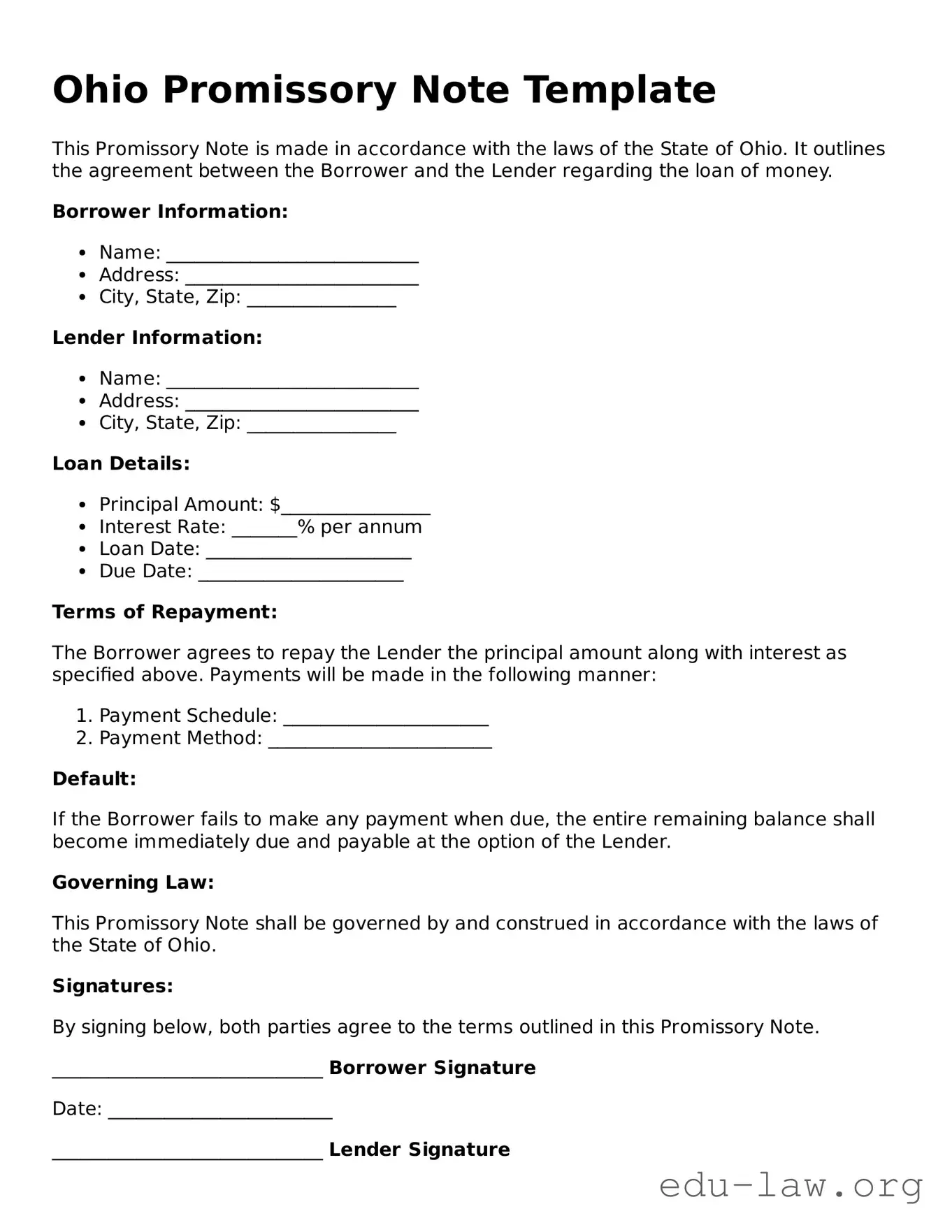
In Ohio, a promissory note serves as a vital financial instrument that outlines the terms of a loan agreement between a borrower and a lender. This legally binding document includes essential details such as the principal amount borrowed, the interest rate, and the repayment schedule. Additionally, it often specifies the consequences of defaulting on the loan, ensuring both parties understand their rights and obligations. The Ohio Promissory Note form is designed to be straightforward, making it accessible for individuals and businesses alike. By clearly stating the terms, it helps to prevent misunderstandings and disputes down the line. Whether you are lending money to a friend or entering into a more formal business arrangement, understanding the components of this form can provide peace of mind and security in your financial dealings.
Ohio Promissory Note Template
This Promissory Note is made in accordance with the laws of the State of Ohio. It outlines the agreement between the Borrower and the Lender regarding the loan of money.
Borrower Information:
Lender Information:
Loan Details:
Terms of Repayment:
The Borrower agrees to repay the Lender the principal amount along with interest as specified above. Payments will be made in the following manner:
Default:
If the Borrower fails to make any payment when due, the entire remaining balance shall become immediately due and payable at the option of the Lender.
Governing Law:
This Promissory Note shall be governed by and construed in accordance with the laws of the State of Ohio.
Signatures:
By signing below, both parties agree to the terms outlined in this Promissory Note.
_____________________________ Borrower Signature
Date: ________________________
_____________________________ Lender Signature
Date: ________________________
| Fact Name | Description |
|---|---|
| Definition | A promissory note is a written promise to pay a specific amount of money to a designated person or entity at a specified time. |
| Governing Law | Ohio Revised Code, Chapter 1303 governs promissory notes in Ohio. |
| Parties Involved | The note typically involves two parties: the maker (the person who promises to pay) and the payee (the person who receives the payment). |
| Interest Rate | The interest rate can be specified in the note. If not stated, Ohio law allows for a default rate of 5% per annum. |
| Payment Terms | Payment terms should clearly outline when and how payments will be made, including any due dates and methods of payment. |
| Enforceability | For a promissory note to be enforceable, it must be signed by the maker and contain all essential terms, including the amount and payment schedule. |
| Default Consequences | If the maker defaults on the note, the payee may pursue legal action to recover the owed amount, including any applicable interest and fees. |
After obtaining the Ohio Promissory Note form, it's essential to complete it accurately to ensure all parties involved understand the terms of the agreement. Follow these steps carefully to fill out the form correctly.
Once the form is filled out, review it thoroughly for any errors or omissions. Both parties should keep a copy for their records after signing. This ensures that everyone has access to the agreed-upon terms moving forward.
What is a promissory note in Ohio?
A promissory note is a written promise to pay a specific amount of money to a designated person or entity at a specified time. In Ohio, this document serves as a legal agreement between a borrower and a lender. It outlines the terms of the loan, including the interest rate, repayment schedule, and any consequences for late payments or default. Essentially, it’s a way to formalize a loan and protect both parties involved.
What are the essential components of an Ohio promissory note?
For a promissory note to be valid in Ohio, it should include several key components. First, it must clearly state the amount of money being borrowed. Next, it should specify the interest rate, if applicable. The repayment terms should be laid out, including due dates and the total repayment period. Additionally, both the borrower and lender’s names and signatures are necessary. Finally, including a clause about what happens if the borrower fails to repay can help avoid future disputes.
Do I need a lawyer to create a promissory note in Ohio?
While it’s not legally required to have a lawyer draft a promissory note, it can be a wise choice, especially for larger loans or complex agreements. A legal professional can ensure that the document complies with Ohio laws and protects your interests. However, many people successfully create their own notes using templates or online resources, as long as they include all the necessary components.
What happens if a borrower defaults on a promissory note?
If a borrower defaults, meaning they fail to make payments as agreed, the lender has several options. They can attempt to work out a new payment plan or negotiate a settlement. If that doesn’t work, the lender may choose to take legal action to recover the owed amount. This could involve filing a lawsuit, which may lead to a judgment against the borrower. It's important for both parties to understand the consequences of defaulting before entering into the agreement.
Can a promissory note be modified after it is signed?
Yes, a promissory note can be modified after it is signed, but both parties must agree to the changes. It’s best to document any modifications in writing and have both parties sign the updated agreement. This helps prevent misunderstandings and provides a clear record of the new terms. Always keep a copy of the original note and any amendments for your records.
Inaccurate Information: One common mistake is providing incorrect personal information. This includes names, addresses, or contact details. Double-checking this information is crucial to avoid confusion later.
Missing Signatures: Some individuals forget to sign the document. Without a signature, the note may not be legally binding. Ensure that all required parties sign the form before submission.
Omitting Terms: Failing to clearly outline the repayment terms is another frequent error. This includes the interest rate, payment schedule, and total amount due. Be specific to prevent misunderstandings.
Not Dating the Document: A date is essential for any legal document. Some people neglect to include the date when signing the note. This can lead to complications regarding the timeline of payments.
When creating a Promissory Note in Ohio, several other forms and documents may be useful to ensure clarity and legal compliance. Below is a list of commonly used documents that often accompany a Promissory Note.
Using these documents alongside the Ohio Promissory Note can help protect both the lender and borrower, ensuring that all aspects of the loan are clear and legally binding.
A loan agreement is a document that outlines the terms of a loan between a borrower and a lender. Like a promissory note, it specifies the amount of money borrowed, the interest rate, and the repayment schedule. However, a loan agreement often includes additional details such as collateral, default conditions, and the rights and responsibilities of both parties. This makes it more comprehensive than a standard promissory note.
A mortgage is a legal document that secures a loan for the purchase of real estate. Similar to a promissory note, it includes the borrower's promise to repay the loan. However, a mortgage also involves the property itself as collateral. If the borrower fails to make payments, the lender can take possession of the property through foreclosure, which is not a feature of a typical promissory note.
A secured note is a type of promissory note that is backed by collateral. This means that if the borrower defaults, the lender has the right to claim the collateral to recover the owed amount. While a standard promissory note may not include collateral, a secured note provides additional security for the lender, making it similar but with more protection for the lender.
An unsecured note, on the other hand, is a promise to pay that is not backed by collateral. It is similar to a promissory note in that it outlines the borrower's commitment to repay a debt. However, without collateral, the lender takes on more risk. If the borrower defaults, the lender has limited options for recovery, distinguishing it from secured loans.
A personal guarantee is a document in which an individual agrees to be responsible for a debt or obligation of another party. This is similar to a promissory note in that it involves a commitment to pay. However, a personal guarantee typically comes into play when a business borrows money, and the owner agrees to be personally liable for the debt, adding a layer of personal responsibility.
A business loan agreement is a document that outlines the terms of a loan specifically for business purposes. It is similar to a promissory note in that it details the loan amount, interest rate, and repayment terms. However, it often includes additional clauses that address business-specific concerns, such as financial covenants and use of funds, making it more tailored to business needs.
An installment loan agreement is a contract that specifies the terms under which a borrower will repay a loan in regular installments. Like a promissory note, it includes details about the loan amount and repayment schedule. The key difference lies in the structure of payments, as installment loans typically require fixed payments over time, while a promissory note may allow for more flexible terms.
A lease agreement can resemble a promissory note when it involves rental payments. It outlines the terms under which one party rents property from another. While a promissory note focuses on a loan, a lease agreement focuses on the rental of property. Both documents include payment terms, but a lease may also specify conditions for use of the property and responsibilities for maintenance.
A credit agreement is a document that outlines the terms under which a lender extends credit to a borrower. Similar to a promissory note, it details the amount of credit, interest rates, and repayment terms. However, credit agreements often cover a broader range of financial arrangements and may include revolving credit options, which are not typically found in a standard promissory note.
When filling out the Ohio Promissory Note form, it is important to follow certain guidelines to ensure accuracy and compliance. Here is a list of things you should and shouldn't do:
By following these guidelines, you can ensure that your Promissory Note is filled out correctly and is legally binding.
Understanding the Ohio Promissory Note form is essential for anyone looking to engage in lending or borrowing money. However, several misconceptions can lead to confusion. Here are five common misconceptions about the Ohio Promissory Note form:
By understanding these misconceptions, individuals can navigate the complexities of the Ohio Promissory Note form more effectively and ensure their agreements are secure and enforceable.
When filling out and using the Ohio Promissory Note form, consider the following key takeaways: