In Ohio, a prenuptial agreement serves as a valuable tool for couples planning to marry, allowing them to outline their financial rights and responsibilities before tying the knot. This agreement can address a variety of important aspects, such as the division of property acquired during the marriage, the management of debts, and the handling of spousal support in the event of a divorce. By discussing these matters upfront, couples can foster open communication and reduce potential conflicts in the future. The Ohio Prenuptial Agreement form is designed to facilitate this process, ensuring that both parties have a clear understanding of their agreements and obligations. Additionally, it is crucial for the document to comply with state laws to be enforceable, which means that both partners should be fully informed and ideally represented by legal counsel. This proactive approach can help couples protect their individual assets and establish a solid foundation for their marriage, making it an essential consideration for many. Understanding the key elements of this form can empower couples to make informed decisions that align with their unique circumstances and goals.
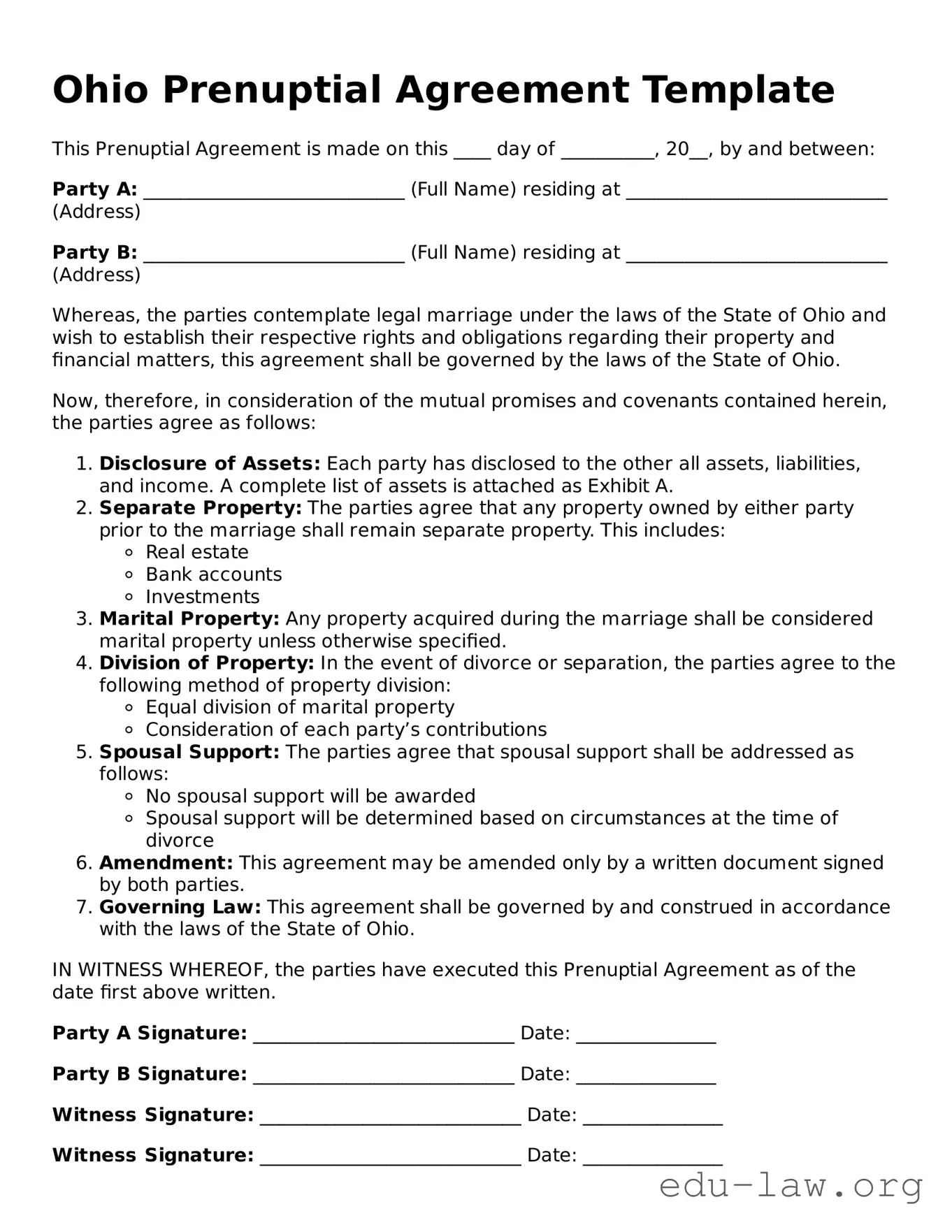
Ohio Prenuptial Agreement Template
This Prenuptial Agreement is made on this ____ day of __________, 20__, by and between:
Party A: ____________________________ (Full Name) residing at ____________________________ (Address)
Party B: ____________________________ (Full Name) residing at ____________________________ (Address)
Whereas, the parties contemplate legal marriage under the laws of the State of Ohio and wish to establish their respective rights and obligations regarding their property and financial matters, this agreement shall be governed by the laws of the State of Ohio.
Now, therefore, in consideration of the mutual promises and covenants contained herein, the parties agree as follows:
IN WITNESS WHEREOF, the parties have executed this Prenuptial Agreement as of the date first above written.
Party A Signature: ____________________________ Date: _______________
Party B Signature: ____________________________ Date: _______________
Witness Signature: ____________________________ Date: _______________
Witness Signature: ____________________________ Date: _______________
| Fact Name | Description |
|---|---|
| Definition | An Ohio prenuptial agreement is a legal document that outlines the distribution of assets and responsibilities in the event of divorce or separation. |
| Governing Law | The agreement is governed by Ohio Revised Code Section 3103.05. |
| Requirements | Both parties must voluntarily enter into the agreement, and it must be in writing and signed by both individuals. |
| Enforceability | The agreement is enforceable in Ohio as long as it is fair and does not violate public policy. |
| Disclosure | Full financial disclosure by both parties is recommended to ensure fairness and avoid future disputes. |
Filling out the Ohio Prenuptial Agreement form requires careful attention to detail. It is important to ensure that all information is accurate and complete to avoid any potential disputes in the future. Follow the steps below to successfully complete the form.
After completing the form, both parties should keep a copy for their records. It may be beneficial to consult with a legal professional to ensure that all aspects of the agreement are enforceable and meet state requirements.
What is a prenuptial agreement in Ohio?
A prenuptial agreement, often called a prenup, is a legal document that couples create before getting married. It outlines how assets and debts will be handled in the event of divorce or separation. This agreement can cover a variety of topics, including property division, spousal support, and even debt responsibilities. In Ohio, prenups must adhere to specific legal standards to be enforceable, making it important for couples to understand their rights and obligations under state law.
Why should couples consider a prenuptial agreement?
Couples may choose to create a prenuptial agreement for several reasons. It can provide clarity and security regarding financial matters. This is particularly important for individuals entering a marriage with significant assets, business interests, or children from previous relationships. A prenup can help protect those assets and ensure that both parties have a clear understanding of their financial rights and responsibilities. Additionally, discussing these matters openly can strengthen communication and trust between partners.
What should be included in a prenuptial agreement?
A well-drafted prenuptial agreement typically includes provisions related to property division, spousal support, and the management of debts. Couples can specify how they want to handle their assets acquired before and during the marriage. It’s also possible to address how to manage finances in case of separation or divorce. However, it’s important to note that certain topics, such as child custody and child support, cannot be included in a prenup, as these matters are determined based on the best interests of the child at the time of divorce.
How do we create a prenuptial agreement in Ohio?
Creating a prenuptial agreement in Ohio involves several steps. First, both parties should openly discuss their financial situations and what they want the agreement to cover. It’s advisable for each person to seek independent legal counsel to ensure their interests are protected. Once the terms are agreed upon, the prenup should be drafted in writing and signed by both parties. It’s crucial to ensure that the agreement is executed voluntarily, without coercion, and with full disclosure of assets to avoid future disputes.
Are prenuptial agreements enforceable in Ohio?
Yes, prenuptial agreements are generally enforceable in Ohio, provided they meet certain legal requirements. To be valid, the agreement must be in writing, signed by both parties, and executed voluntarily. Additionally, both parties should have had the opportunity to review the agreement and seek independent legal advice. If a prenup is challenged in court, it may be scrutinized for fairness and whether both parties fully understood the terms at the time of signing.
Can a prenuptial agreement be modified or revoked?
Yes, a prenuptial agreement can be modified or revoked after marriage. Both parties must agree to any changes, and it’s recommended that modifications be made in writing to ensure clarity and enforceability. If a couple decides to revoke the prenup entirely, they should also do so in writing. It’s important to keep in mind that any changes or revocations should be executed with the same level of care and legal consideration as the original agreement to avoid future complications.
Inadequate Disclosure of Assets: One of the most common mistakes is failing to fully disclose all assets and debts. Transparency is crucial; omitting significant financial information can lead to disputes later.
Not Considering Future Changes: Individuals often overlook potential future changes in financial circumstances. It’s important to consider how income, property, and debts may evolve over time.
Using Ambiguous Language: Clarity is key. Vague terms can lead to misinterpretations. Each provision should be clearly defined to avoid confusion down the line.
Failing to Seek Legal Advice: Many people attempt to draft their own agreements without professional help. Consulting an attorney ensures that the agreement complies with Ohio laws and addresses all necessary aspects.
Not Updating the Agreement: Life events such as the birth of children or significant financial changes necessitate a review of the prenuptial agreement. Failing to update can render the document less effective.
Ignoring State Laws: Each state has specific laws governing prenuptial agreements. Ignoring these can lead to an unenforceable agreement. Familiarity with Ohio’s requirements is essential.
Pressure or Coercion: Creating an agreement under duress can invalidate it. Both parties should feel comfortable and agree to the terms freely.
Neglecting to Sign and Date: A common oversight is failing to properly sign and date the document. Without signatures, the agreement may not hold up in court.
A prenuptial agreement is an important document for couples planning to marry. It outlines the distribution of assets and responsibilities in the event of a divorce. Along with this agreement, several other forms and documents may be necessary to ensure a comprehensive understanding of the couple's financial situation and legal obligations. Below is a list of commonly used forms that accompany a prenuptial agreement in Ohio.
These documents can enhance the effectiveness of a prenuptial agreement and provide clarity and security for both partners. It is advisable to consult with a legal professional to ensure that all necessary documents are properly drafted and executed.
A Cohabitation Agreement shares similarities with a Prenuptial Agreement, as both documents aim to outline the rights and responsibilities of partners in a relationship. A Cohabitation Agreement is typically used by unmarried couples who live together, allowing them to define how assets and debts will be managed during the relationship and what will happen if they separate. Like a Prenuptial Agreement, it can address issues such as property division, financial support, and even child custody arrangements, making it a useful tool for partners who want to clarify their intentions before entering a long-term commitment.
A Postnuptial Agreement is another document closely related to a Prenuptial Agreement. While a Prenuptial Agreement is established before marriage, a Postnuptial Agreement is created after the couple is already married. Both agreements serve similar purposes in terms of asset protection and outlining financial responsibilities. They can help couples navigate their financial landscape, especially if their circumstances change, such as a significant increase in income or the acquisition of new assets.
A Marital Settlement Agreement is similar to a Prenuptial Agreement in that it addresses the division of assets and responsibilities, but it is specifically used during divorce proceedings. This agreement outlines how the couple will divide their marital property, debts, and any other financial obligations. Just like a Prenuptial Agreement, it aims to prevent disputes and establish clear terms that both parties can agree upon, ultimately facilitating a smoother divorce process.
A Trust Agreement can also bear resemblance to a Prenuptial Agreement, especially when it comes to asset protection. A Trust Agreement allows individuals to place their assets in a trust, which can help manage how those assets are distributed during marriage or after death. Similar to a Prenuptial Agreement, it can safeguard assets from being classified as marital property, thus protecting them from division in the event of divorce.
A Will is another important document that, while not directly similar, serves a complementary purpose to a Prenuptial Agreement. A Will outlines how an individual's assets will be distributed upon their death. Both documents are essential for estate planning and can work together to ensure that an individual’s wishes regarding their assets are honored. A Prenuptial Agreement can specify how certain assets should be treated during marriage, while a Will will dictate their distribution after death.
An Estate Plan encompasses a broader range of documents, including Wills, Trusts, and Powers of Attorney, and can share goals with a Prenuptial Agreement in terms of asset protection and management. An Estate Plan helps individuals prepare for the future, ensuring that their wishes are carried out regarding their financial and medical decisions. Like a Prenuptial Agreement, it seeks to prevent disputes among heirs and protect the interests of loved ones.
A Financial Agreement, which may be used in various contexts, can also be likened to a Prenuptial Agreement. This document outlines the financial responsibilities and rights of each party, which can include income, expenses, and asset management. Both agreements aim to create clarity and prevent misunderstandings regarding financial matters, whether in a marriage or other committed relationships.
When filling out the Ohio Prenuptial Agreement form, it's important to approach the process with care and attention to detail. Here are some essential dos and don'ts to keep in mind:
Understanding prenuptial agreements in Ohio can be challenging due to various misconceptions. Here are nine common misunderstandings that people often have:
Recognizing these misconceptions can lead to better decision-making when considering a prenuptial agreement in Ohio.
When considering a prenuptial agreement in Ohio, it is essential to understand the key aspects of the process. Here are ten important takeaways:
Understanding these elements can help ensure that the prenuptial agreement serves its intended purpose effectively.