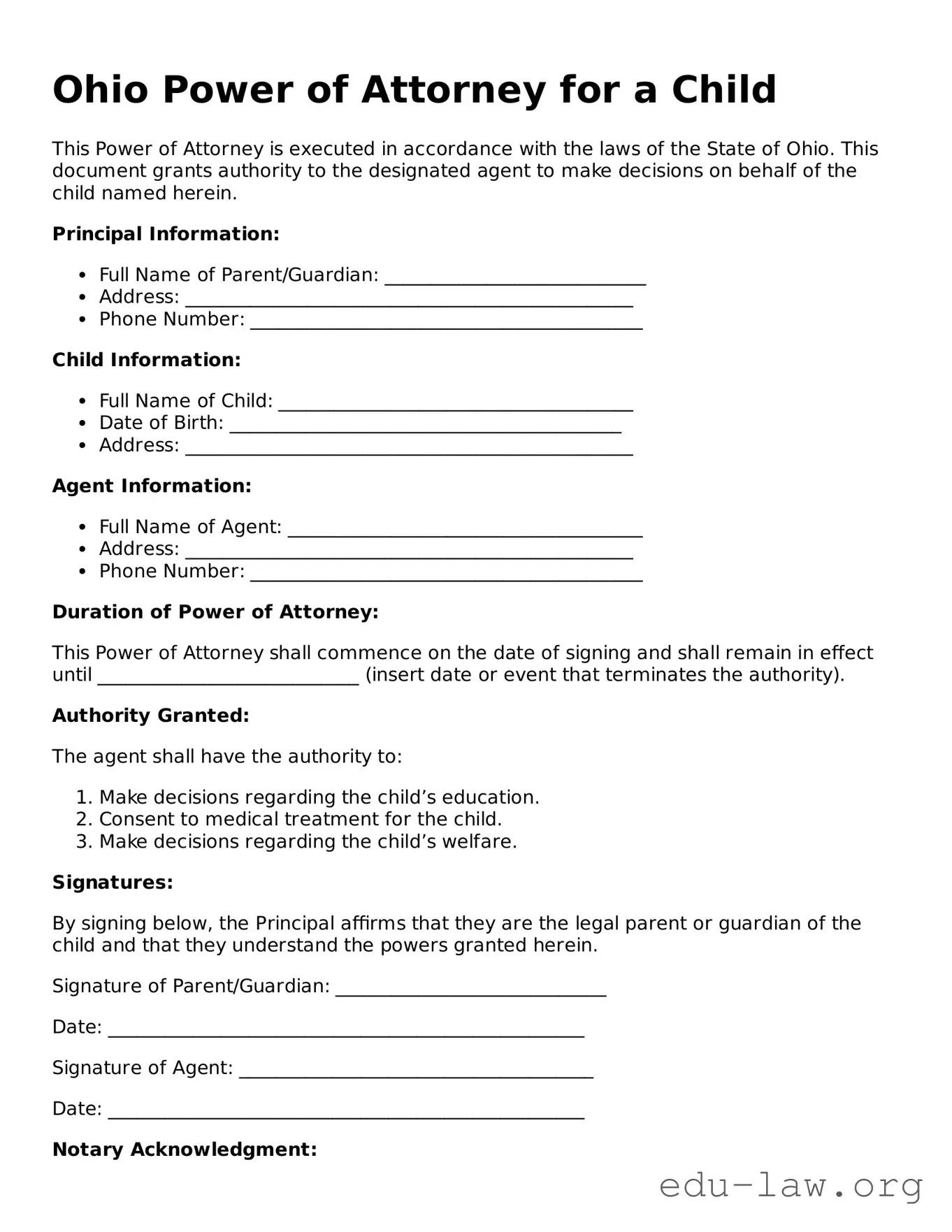
The Ohio Power of Attorney for a Child form serves as an important legal tool for parents and guardians who need to delegate authority for the care and decision-making of their child. This form allows a parent or legal guardian to appoint another trusted adult to act on their behalf in various matters concerning the child’s welfare. It typically covers areas such as medical care, educational decisions, and general day-to-day responsibilities. By completing this form, parents can ensure that their child’s needs are met, especially in situations where they may be temporarily unavailable, such as during travel or medical emergencies. The form is designed to be straightforward, providing clarity on the powers granted and the duration of those powers. It is essential to understand the implications of signing this document, as it establishes a legal relationship between the child and the appointed individual. Properly executed, the Power of Attorney for a Child form helps to safeguard the child's well-being while providing peace of mind to parents and guardians.
Ohio Power of Attorney for a Child
This Power of Attorney is executed in accordance with the laws of the State of Ohio. This document grants authority to the designated agent to make decisions on behalf of the child named herein.
Principal Information:
Child Information:
Agent Information:
Duration of Power of Attorney:
This Power of Attorney shall commence on the date of signing and shall remain in effect until ____________________________ (insert date or event that terminates the authority).
Authority Granted:
The agent shall have the authority to:
Signatures:
By signing below, the Principal affirms that they are the legal parent or guardian of the child and that they understand the powers granted herein.
Signature of Parent/Guardian: _____________________________
Date: ___________________________________________________
Signature of Agent: ______________________________________
Date: ___________________________________________________
Notary Acknowledgment:
State of Ohio
County of ____________________________
Subscribed and sworn to before me this _____ day of ____________, 20__.
Notary Public: ___________________________________________
My Commission Expires: _________________________________
| Fact Name | Details |
|---|---|
| Definition | The Ohio Power of Attorney for a Child form allows a parent or legal guardian to grant another adult the authority to make decisions for their child. |
| Purpose | This form is typically used when parents are unavailable or wish to delegate decision-making authority temporarily. |
| Governing Law | The Ohio Revised Code, specifically Section 3109.52, governs the use of Power of Attorney for minors. |
| Duration | The authority granted can be limited to a specific time frame or until revoked by the parent or guardian. |
| Eligibility | Any adult can be appointed as an agent, provided they are trustworthy and capable of making decisions in the child's best interest. |
| Health Care Decisions | The form can include provisions for health care decisions, allowing the agent to make medical choices for the child. |
| Revocation | The parent or guardian can revoke the Power of Attorney at any time, as long as they provide notice to the agent. |
| Notarization | In Ohio, the form must be signed in the presence of a notary public to be considered valid. |
| Limitations | The Power of Attorney cannot be used to delegate certain rights, such as the right to consent to marriage or adoption of the child. |
| Importance | Having this document in place can provide peace of mind, ensuring that a child’s needs are met even when parents are away. |
Filling out the Ohio Power of Attorney for a Child form is an important step in designating someone to care for your child in your absence. Once completed, this document allows you to ensure that your child's needs are met by a trusted individual. Below are the steps to guide you through the process of filling out the form.
After completing these steps, the form should be ready for use. Ensure that the designated individual understands their responsibilities and has a copy of the signed document.
What is a Power of Attorney for a Child in Ohio?
A Power of Attorney for a Child is a legal document that allows a parent or legal guardian to give another adult the authority to make decisions on behalf of their child. This can include decisions about education, healthcare, and general welfare. It is often used when a parent is temporarily unavailable due to work, travel, or other circumstances.
Who can be designated as an agent in the Power of Attorney for a Child?
Any responsible adult can be designated as an agent in the Power of Attorney for a Child. This could be a relative, family friend, or trusted neighbor. It is important to choose someone who is willing and able to take on this responsibility and who has the child’s best interests at heart.
How long does the Power of Attorney for a Child remain in effect?
The Power of Attorney for a Child can be set for a specific duration or until a certain event occurs, such as the return of the parent. If not specified, it generally remains in effect until the child reaches the age of 18 or until it is revoked by the parent or guardian.
Do I need to have the Power of Attorney for a Child notarized?
Yes, in Ohio, the Power of Attorney for a Child must be signed in the presence of a notary public. This adds a layer of legal validity to the document and ensures that it is recognized by schools, healthcare providers, and other entities.
Can I revoke the Power of Attorney for a Child?
Yes, the parent or legal guardian can revoke the Power of Attorney at any time, as long as they are of sound mind. This revocation should be done in writing and should be communicated to the agent and any institutions that were relying on the original document.
What decisions can the agent make on behalf of the child?
The agent can make a variety of decisions regarding the child’s education, healthcare, and general welfare. This may include enrolling the child in school, consenting to medical treatment, and making decisions about extracurricular activities. However, the scope of authority can be limited by the parent in the Power of Attorney document.
Is it necessary to consult a lawyer to create a Power of Attorney for a Child?
While it is not legally required to consult a lawyer, it is often advisable. A legal professional can help ensure that the document is completed correctly and that it meets all necessary legal requirements. This can prevent potential issues in the future and provide peace of mind for the parent or guardian.
Not Specifying the Duration: Many people forget to indicate how long the power of attorney will be in effect. Without a clear end date, it may lead to confusion and potential legal issues.
Missing Signatures: Failing to obtain all required signatures can invalidate the document. Both the parent and the agent must sign the form for it to be legally binding.
Not Identifying the Child Clearly: Some individuals do not provide sufficient details about the child, such as full name and date of birth. This information is crucial for avoiding any misunderstandings.
Inadequate Description of Powers: It’s important to clearly outline what powers are being granted. Vague language can lead to disputes about what the agent can or cannot do.
Ignoring Witness Requirements: Some people overlook the need for witnesses when signing the document. Not adhering to these requirements can render the power of attorney ineffective.
Failure to Update the Document: Life changes, such as relocation or changes in family dynamics, can affect the validity of the power of attorney. Regular updates are essential to ensure it reflects current circumstances.
Not Keeping Copies: After filling out the form, it’s vital to keep copies for all parties involved. Without copies, it may be difficult to enforce the power of attorney when needed.
When creating a Power of Attorney for a Child in Ohio, several other forms and documents may be necessary to ensure that all legal bases are covered. These documents help clarify responsibilities and provide additional legal authority as needed. Below is a list of some commonly used forms that often accompany the Power of Attorney for a Child.
Using these forms in conjunction with the Power of Attorney for a Child can help ensure that all aspects of a child's welfare and legal needs are addressed. It's essential to consult with a legal professional to determine which documents are necessary for your specific situation.
The Ohio Power of Attorney for a Child form shares similarities with the General Power of Attorney. Both documents grant authority to an agent to make decisions on behalf of another person. In the case of the General Power of Attorney, this can apply to a wide range of financial and legal matters for adults. Conversely, the Ohio Power of Attorney for a Child specifically focuses on the care and welfare of a minor, allowing the designated agent to make decisions related to the child's education, health care, and general well-being.
Another related document is the Medical Power of Attorney. This document allows an individual to appoint someone to make medical decisions on their behalf if they become incapacitated. Like the Ohio Power of Attorney for a Child, it is essential for ensuring that someone trusted can act in the best interest of another person. However, the Medical Power of Attorney is primarily concerned with health care decisions, while the Power of Attorney for a Child encompasses broader responsibilities regarding a child's upbringing.
The Child Custody Agreement is another document that bears resemblance to the Ohio Power of Attorney for a Child. Both documents address the welfare and care of a minor. However, a Child Custody Agreement is typically established during a divorce or separation to determine where the child will live and who will make decisions about their upbringing. In contrast, the Power of Attorney for a Child provides temporary authority to a caregiver without altering custody arrangements.
The Guardianship Agreement is also similar, as it involves the appointment of a responsible adult to care for a minor. However, guardianship usually requires court approval and is more permanent. The Ohio Power of Attorney for a Child allows parents to delegate authority temporarily and can be revoked at any time, making it a more flexible option for short-term situations.
A Foster Care Agreement also shares similarities with the Ohio Power of Attorney for a Child. Both documents are designed to ensure that a child is cared for by a responsible adult. However, a Foster Care Agreement is typically established through state agencies and involves legal oversight, while the Power of Attorney for a Child is a private arrangement between parents and caregivers without the need for court intervention.
The Adoption Agreement is another relevant document. While an Adoption Agreement permanently transfers parental rights from birth parents to adoptive parents, the Ohio Power of Attorney for a Child does not sever parental rights. Instead, it allows a parent to temporarily delegate authority to another adult, maintaining the original parental relationship.
Temporary Custody Orders also bear some resemblance to the Ohio Power of Attorney for a Child. Both documents allow another adult to take responsibility for a child. However, Temporary Custody Orders are issued by a court and are often used in situations involving legal disputes, whereas the Power of Attorney for a Child is a private agreement that can be created without court involvement.
The Consent for Treatment form is another document that is similar. This form allows a parent or guardian to give permission for medical treatment for a child. The Ohio Power of Attorney for a Child includes this authority as part of the broader powers granted to the agent, enabling them to make health care decisions on behalf of the child.
The Educational Power of Attorney is also relevant. This document allows a parent to designate someone to make educational decisions for their child. Like the Ohio Power of Attorney for a Child, it ensures that someone trusted can handle matters related to a child's education, such as enrolling them in school or making decisions about special education services.
Finally, the Travel Consent form is similar in that it allows a parent to authorize another adult to travel with their child. This document is often used for school trips or vacations. The Ohio Power of Attorney for a Child can encompass travel-related decisions, making it a more comprehensive option for parents who want to ensure their child is cared for while they are away.
When filling out the Ohio Power of Attorney for a Child form, it is important to be careful and thorough. Here are some key things to remember:
There are several misconceptions regarding the Ohio Power of Attorney for a Child form. Understanding these can help clarify its purpose and use.
When filling out and using the Ohio Power of Attorney for a Child form, keep these key takeaways in mind: