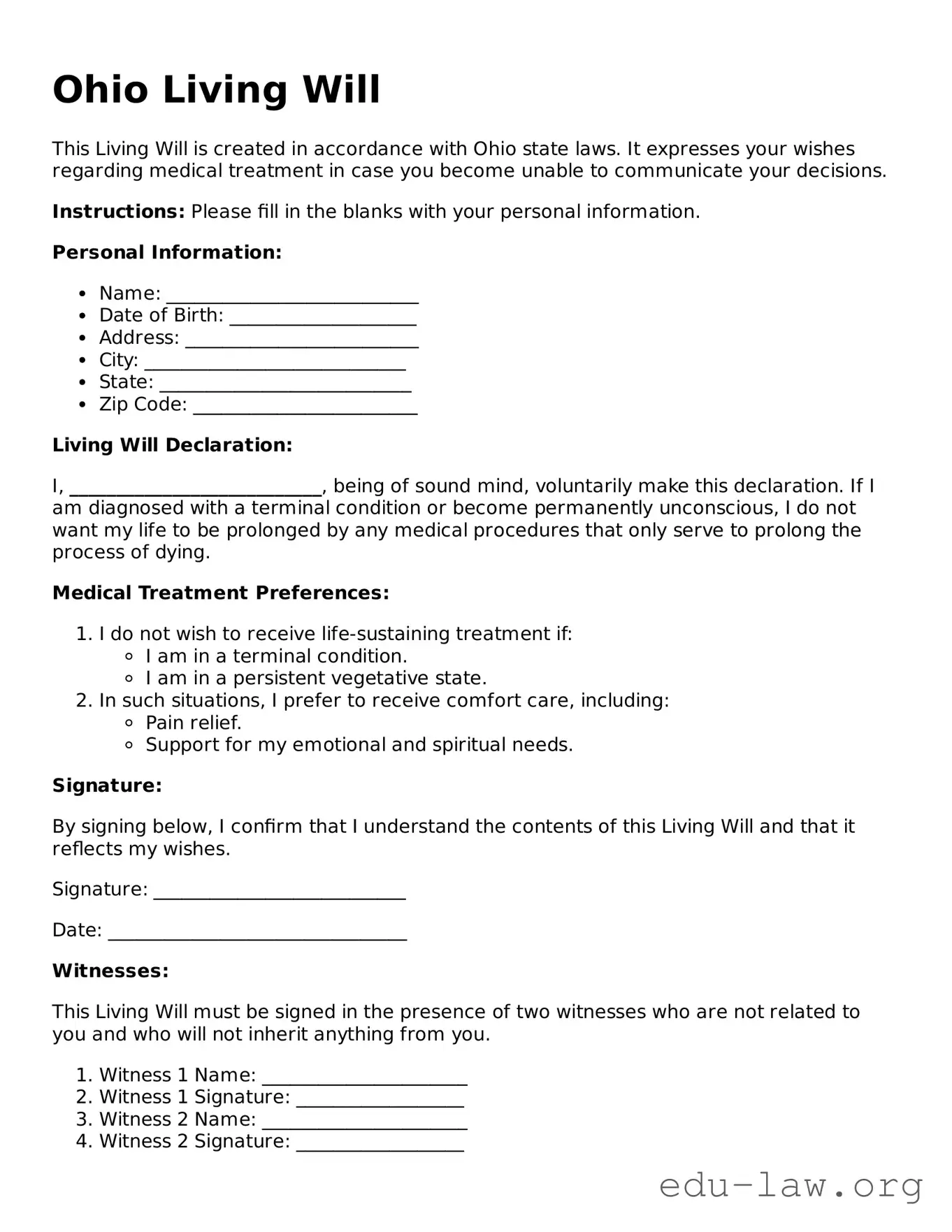
In Ohio, the Living Will form plays a crucial role in ensuring that individuals' healthcare wishes are respected when they can no longer communicate them. This document allows a person to specify their preferences regarding medical treatment in situations where they are terminally ill or permanently unconscious. Key aspects of the form include the ability to express desires about life-sustaining treatments, such as resuscitation efforts, mechanical ventilation, and tube feeding. Additionally, it empowers individuals to appoint a healthcare proxy, someone who can make decisions on their behalf if they are unable to do so. Understanding the Living Will form is essential for anyone who wants to take control of their medical care and ensure that their values and wishes are honored during critical times. By completing this form, individuals can provide clarity to their families and healthcare providers, alleviating the burden of decision-making during emotionally challenging moments.
Ohio Living Will
This Living Will is created in accordance with Ohio state laws. It expresses your wishes regarding medical treatment in case you become unable to communicate your decisions.
Instructions: Please fill in the blanks with your personal information.
Personal Information:
Living Will Declaration:
I, ___________________________, being of sound mind, voluntarily make this declaration. If I am diagnosed with a terminal condition or become permanently unconscious, I do not want my life to be prolonged by any medical procedures that only serve to prolong the process of dying.
Medical Treatment Preferences:
Signature:
By signing below, I confirm that I understand the contents of this Living Will and that it reflects my wishes.
Signature: ___________________________
Date: ________________________________
Witnesses:
This Living Will must be signed in the presence of two witnesses who are not related to you and who will not inherit anything from you.
Keep this document in a safe place and share copies with your family and healthcare providers.
| Fact Name | Description |
|---|---|
| Purpose | The Ohio Living Will form allows individuals to express their wishes regarding medical treatment in case they become unable to communicate their preferences. |
| Governing Law | This form is governed by Ohio Revised Code Section 2133, which outlines the requirements and validity of living wills in the state. |
| Signing Requirements | To be valid, the living will must be signed by the individual and witnessed by two people or notarized. |
| Revocation | An individual can revoke their living will at any time, either verbally or in writing, as long as they are competent to do so. |
Filling out the Ohio Living Will form is an important step in expressing your healthcare wishes. Once you have completed the form, it’s essential to share it with your healthcare providers and loved ones to ensure everyone understands your preferences.
What is a Living Will in Ohio?
A Living Will is a legal document that allows individuals to express their wishes regarding medical treatment in case they become unable to communicate those wishes themselves. It specifically addresses end-of-life care, detailing the types of medical interventions a person does or does not want if they are terminally ill or in a persistent vegetative state.
Who can create a Living Will in Ohio?
Any adult who is at least 18 years old and of sound mind can create a Living Will in Ohio. It is important that the individual understands the implications of the decisions they are making regarding their healthcare.
How do I create a Living Will in Ohio?
To create a Living Will, you must complete the Ohio Living Will Declaration form. This form can be obtained online or through healthcare providers. After filling out the form, it must be signed in the presence of two witnesses or notarized to ensure its validity.
What should I include in my Living Will?
Your Living Will should clearly state your preferences regarding medical treatments, such as resuscitation, mechanical ventilation, and tube feeding. It is also beneficial to include any specific instructions about pain relief and other comfort measures. Consider discussing your wishes with family members and healthcare providers for clarity.
Can I change or revoke my Living Will?
Yes, you can change or revoke your Living Will at any time as long as you are of sound mind. To revoke it, you can destroy the document or create a new one that states your current wishes. It is advisable to inform your healthcare providers and loved ones about any changes you make.
Do I need a lawyer to create a Living Will?
No, you do not need a lawyer to create a Living Will in Ohio. However, consulting with a legal professional can provide additional guidance and ensure that your document meets all legal requirements and accurately reflects your wishes.
What happens if I do not have a Living Will?
If you do not have a Living Will, your healthcare providers will make decisions based on what they believe is in your best interest, often involving family members. This can lead to uncertainty and potential conflicts among family members regarding your care preferences.
Is a Living Will the same as a Power of Attorney for Healthcare?
No, a Living Will and a Power of Attorney for Healthcare are different documents. A Living Will outlines your medical treatment preferences, while a Power of Attorney for Healthcare designates someone to make medical decisions on your behalf if you are unable to do so. It is advisable to have both documents to ensure your wishes are honored.
Where should I keep my Living Will?
It is important to keep your Living Will in a safe but accessible place. Inform your family members, healthcare proxy, and primary care physician about its location. Some individuals choose to carry a card in their wallet indicating that they have a Living Will and where it can be found.
How can I ensure my Living Will is honored?
To ensure that your Living Will is honored, share it with your healthcare providers and family members. Discuss your wishes with them to promote understanding and support. Additionally, consider providing copies to your primary care physician and any specialists involved in your care.
Not Understanding the Purpose: Many people fill out the Ohio Living Will form without fully grasping its purpose. A Living Will is meant to outline your wishes regarding medical treatment in case you become unable to communicate them. Without this understanding, individuals may not express their true preferences.
Leaving Sections Blank: Some individuals mistakenly leave sections of the form blank, thinking it won’t matter. However, this can lead to confusion for healthcare providers. It’s essential to provide clear instructions about your wishes.
Using Ambiguous Language: Vague terms can create uncertainty. For example, saying “I don’t want any treatment” may not specify what types of treatment you are refusing. Clear, specific language helps ensure your wishes are followed.
Not Updating the Document: Life circumstances change, and so do preferences. Failing to update your Living Will can lead to situations where your current wishes are not reflected. Regular reviews of the document are important.
Forgetting to Sign and Date: A common oversight is neglecting to sign and date the form. Without your signature, the document may not be considered valid. Always ensure that your Living Will is properly executed.
Not Discussing with Family: Some individuals fill out the form without discussing their wishes with family members. This can lead to confusion and conflict during critical moments. Open conversations about your preferences can help ensure everyone is on the same page.
Failing to Designate a Healthcare Proxy: While the Living Will outlines your treatment preferences, it’s also important to appoint someone to make decisions on your behalf if you cannot. Neglecting this step can leave your loved ones uncertain about how to proceed.
When considering end-of-life decisions, individuals often utilize various legal documents to ensure their wishes are respected. In Ohio, the Living Will form is a crucial component, but it is frequently accompanied by other important documents that provide further clarity and guidance. Below is a list of five forms commonly used alongside the Ohio Living Will.
Understanding these documents can empower individuals to make informed decisions about their healthcare and end-of-life preferences. By utilizing a combination of these forms, you can create a robust plan that reflects your wishes and provides peace of mind for both you and your loved ones.
The Ohio Living Will form is similar to the Advance Directive. Both documents allow individuals to outline their preferences for medical treatment in the event they become unable to communicate their wishes. Advance Directives can include both living wills and healthcare power of attorney, giving a broader scope for expressing healthcare preferences and appointing someone to make decisions on behalf of the individual.
Another document similar to the Ohio Living Will is the Healthcare Power of Attorney. This document specifically designates a person to make healthcare decisions for someone if they are incapacitated. While a living will focuses on specific treatment preferences, the healthcare power of attorney provides a trusted person the authority to make decisions that may not be covered in a living will.
The Do Not Resuscitate (DNR) order is also comparable. A DNR instructs medical personnel not to perform CPR if a person stops breathing or their heart stops. While a living will can address a range of medical treatments, a DNR is specific to resuscitation efforts, making it a critical part of end-of-life planning.
The Physician Orders for Life-Sustaining Treatment (POLST) form shares similarities as well. POLST is a medical order that translates a patient’s wishes regarding life-sustaining treatments into actionable medical orders. It is often used for patients with serious illnesses or those nearing the end of life, providing clear guidance for healthcare providers.
The Five Wishes document is another relevant form. It combines elements of a living will and a healthcare power of attorney. This document allows individuals to express their wishes about medical treatment, as well as personal, emotional, and spiritual needs. It provides a comprehensive approach to end-of-life care, addressing not just medical decisions but also personal values.
The Durable Power of Attorney for Healthcare is similar in that it grants someone the authority to make healthcare decisions on behalf of another person. Unlike a living will, which specifies treatment preferences, this document allows the appointed individual to make decisions based on the circumstances at hand, providing flexibility in uncertain situations.
The Advance Care Plan is another document that aligns closely with the Ohio Living Will. This plan involves discussions about healthcare preferences and can include a living will and healthcare power of attorney. It emphasizes the importance of communication among family members and healthcare providers about an individual's wishes for medical care.
Finally, the Medical Directive is akin to the Ohio Living Will. This document outlines a person's preferences regarding medical treatment and interventions. While a living will may be more focused on specific treatments, a medical directive can encompass a broader range of healthcare decisions, ensuring that the individual's values and wishes are respected in various medical situations.
When filling out the Ohio Living Will form, it's important to approach the process with care. Here are some essential do's and don'ts to keep in mind:
Following these guidelines can help ensure that your wishes are clearly communicated and respected. Taking the time to fill out the Ohio Living Will form correctly is a vital step in planning for your future healthcare needs.
When it comes to Ohio's Living Will form, there are several misconceptions that can lead to confusion. Understanding these can help ensure that your wishes regarding medical treatment are honored. Here are four common misconceptions:
This is not true. Anyone over the age of 18 can create a Living Will. It’s a proactive way to express your healthcare preferences, regardless of age.
While both documents deal with end-of-life care, they serve different purposes. A Living Will outlines your wishes regarding medical treatment, while a DNR specifically instructs medical personnel not to perform CPR.
This is incorrect. You can update or revoke your Living Will at any time, as long as you are of sound mind. It’s important to review your wishes periodically, especially after major life changes.
While family members may have input, they cannot legally make healthcare decisions for you without a Living Will or other advance directives in place. Having a Living Will clarifies your wishes and reduces potential conflicts.
Creating a Living Will in Ohio is an important step in ensuring your healthcare wishes are respected. Here are some key takeaways to keep in mind:
By keeping these points in mind, you can navigate the process of filling out and using the Ohio Living Will form with confidence.