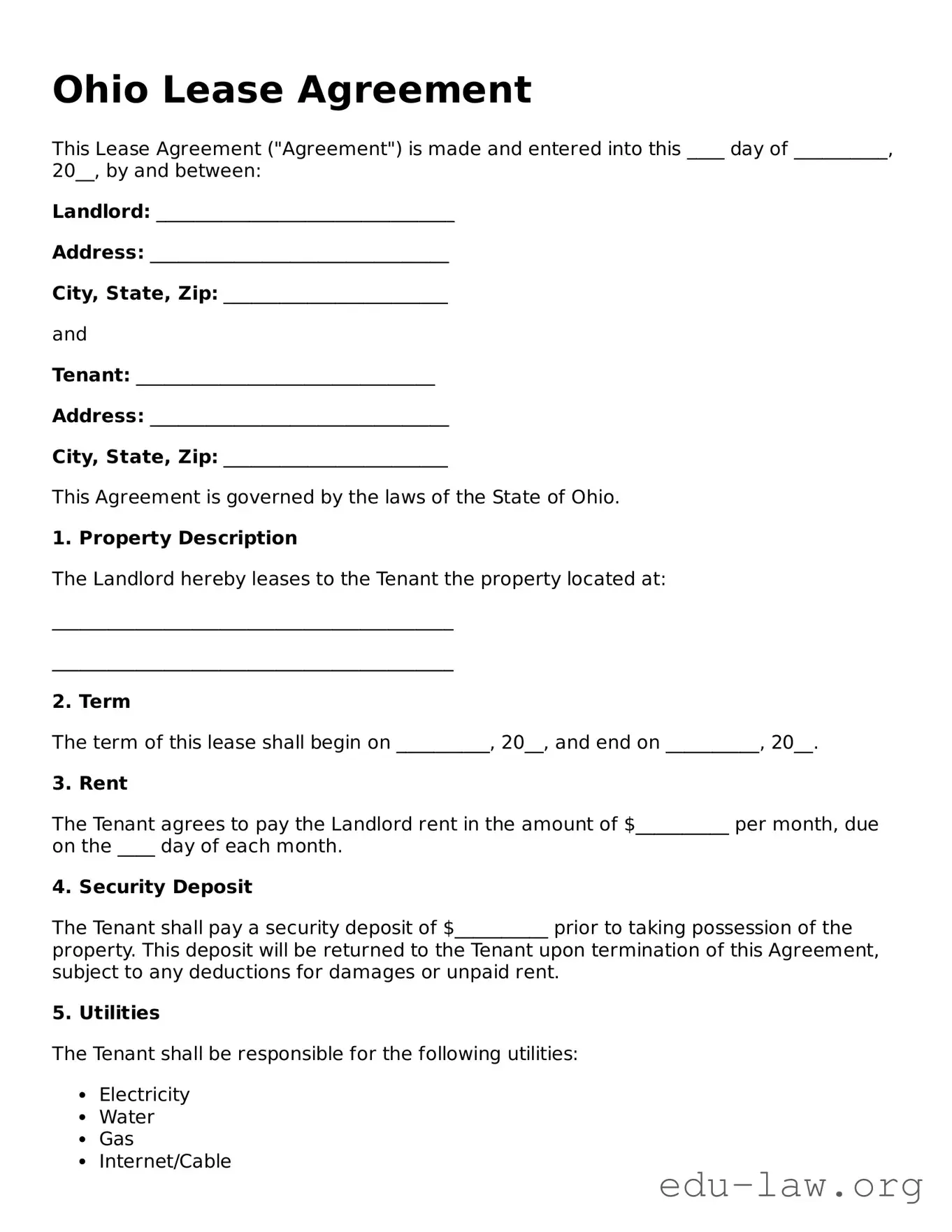
When renting a property in Ohio, understanding the Lease Agreement form is crucial for both landlords and tenants. This document outlines the terms and conditions of the rental arrangement, ensuring that both parties are clear on their rights and responsibilities. Key aspects of the Ohio Lease Agreement include the rental amount, payment due dates, and the duration of the lease. Additionally, it addresses security deposits, maintenance responsibilities, and rules regarding pets or alterations to the property. It also specifies the process for terminating the lease, ensuring that both parties know how to proceed should the need arise. Having a well-structured lease agreement protects your interests and fosters a positive rental experience.
Ohio Lease Agreement
This Lease Agreement ("Agreement") is made and entered into this ____ day of __________, 20__, by and between:
Landlord: ________________________________
Address: ________________________________
City, State, Zip: ________________________
and
Tenant: ________________________________
Address: ________________________________
City, State, Zip: ________________________
This Agreement is governed by the laws of the State of Ohio.
1. Property Description
The Landlord hereby leases to the Tenant the property located at:
___________________________________________
___________________________________________
2. Term
The term of this lease shall begin on __________, 20__, and end on __________, 20__.
3. Rent
The Tenant agrees to pay the Landlord rent in the amount of $__________ per month, due on the ____ day of each month.
4. Security Deposit
The Tenant shall pay a security deposit of $__________ prior to taking possession of the property. This deposit will be returned to the Tenant upon termination of this Agreement, subject to any deductions for damages or unpaid rent.
5. Utilities
The Tenant shall be responsible for the following utilities:
6. Maintenance and Repairs
The Tenant agrees to keep the property in good condition. Any necessary repairs must be reported to the Landlord promptly.
7. Termination
Either party may terminate this Agreement by providing written notice at least ____ days prior to the intended termination date.
8. Governing Law
This Agreement shall be governed by the laws of the State of Ohio. Any disputes arising from this Agreement shall be resolved in the appropriate court in __________ County, Ohio.
9. Signatures
By signing below, both parties agree to the terms and conditions of this Lease Agreement.
______________________________
Landlord Signature
Date: ________________________
______________________________
Tenant Signature
Date: ________________________
| Fact Name | Description |
|---|---|
| Governing Law | The Ohio Lease Agreement is governed by the Ohio Revised Code, specifically Chapter 5321. |
| Duration | Lease agreements can be for a fixed term or month-to-month, as specified in the document. |
| Security Deposit | Landlords may require a security deposit, typically not exceeding one month's rent, according to state law. |
| Tenant Rights | Tenants have the right to a habitable living environment, which includes necessary repairs and maintenance. |
Filling out the Ohio Lease Agreement form is an important step in formalizing a rental arrangement. Completing this form accurately helps ensure that both the landlord and tenant understand their rights and responsibilities. The following steps will guide you through the process of filling out the form.
After completing the form, ensure that both parties receive a copy for their records. This helps maintain clarity and accountability throughout the rental period.
What is an Ohio Lease Agreement form?
An Ohio Lease Agreement form is a legal document that outlines the terms and conditions under which a landlord rents property to a tenant. This agreement typically includes details such as the rental amount, duration of the lease, responsibilities of both parties, and any rules regarding the property. It serves to protect the rights of both the landlord and the tenant by clearly defining expectations and obligations.
What are the key components of an Ohio Lease Agreement?
Several important components should be included in an Ohio Lease Agreement. First, the names of both the landlord and tenant must be clearly stated. Next, the property address and a description of the rental unit should be provided. The lease should specify the duration, whether it’s a month-to-month lease or a fixed-term lease, such as one year. Additionally, details about rent payment, including the amount, due date, and acceptable payment methods, are crucial. It’s also important to outline any rules regarding maintenance, repairs, and the handling of security deposits.
How does a tenant terminate an Ohio Lease Agreement?
Terminating an Ohio Lease Agreement can vary depending on the type of lease. For month-to-month leases, tenants typically need to provide a written notice to the landlord at least 30 days before they plan to move out. For fixed-term leases, tenants may be required to fulfill the entire lease term unless there are specific provisions allowing for early termination. It's essential to review the lease for any clauses that detail the process for termination, as well as any potential penalties for breaking the lease early.
What happens if a tenant does not pay rent on time?
If a tenant fails to pay rent on time, the landlord has specific rights and options. Typically, the lease will outline a grace period, after which late fees may apply. If the rent remains unpaid, the landlord may issue a notice to the tenant, informing them of the overdue payment. If the situation does not resolve, the landlord can initiate eviction proceedings. However, it’s important to note that landlords must follow legal procedures to evict a tenant, ensuring that the tenant's rights are respected throughout the process.
Incomplete Information: Many individuals fail to fill out all required fields. Missing details such as the names of all tenants or the property address can lead to confusion or disputes later.
Incorrect Dates: Entering the wrong lease start or end dates is a common error. This can affect the tenant's rights and obligations, as well as the landlord's expectations.
Not Reviewing Terms: Some people do not read the lease terms thoroughly. Important clauses regarding security deposits, maintenance responsibilities, and termination conditions may be overlooked.
Failure to Sign: It is essential for all parties to sign the lease. Without signatures, the agreement may not be legally binding, which can lead to issues in enforcement.
When entering into a lease agreement in Ohio, several additional forms and documents may be required or beneficial for both landlords and tenants. These documents help clarify responsibilities, protect rights, and ensure a smooth leasing process. Below is a list of commonly used forms that accompany the Ohio Lease Agreement.
Utilizing these additional documents can significantly enhance the leasing experience for both landlords and tenants. By ensuring that all parties are informed and protected, potential misunderstandings and conflicts can be minimized, leading to a more harmonious rental relationship.
The Ohio Rental Agreement is similar to the Ohio Lease Agreement in that both documents outline the terms of renting a property. They detail the responsibilities of both the landlord and the tenant, including payment terms, duration of the rental period, and maintenance obligations. While a lease typically covers a longer time frame, a rental agreement may be more flexible, often used for shorter-term arrangements. This makes both documents essential for establishing clear expectations in a landlord-tenant relationship.
The Ohio Month-to-Month Lease Agreement serves a similar purpose but offers more flexibility. This type of lease automatically renews each month until either party decides to terminate it. Like the standard lease agreement, it outlines rent, security deposits, and maintenance responsibilities. However, it allows tenants to move out with relatively short notice, making it a popular choice for those who may need to relocate quickly.
The Ohio Commercial Lease Agreement is akin to the residential lease agreement but is tailored for business properties. It includes terms specific to commercial use, such as zoning regulations and permitted business activities. Both documents require clarity on rent, duration, and responsibilities, but the commercial lease often involves more complex considerations like maintenance of common areas and liability insurance.
The Ohio Sublease Agreement is another document similar to the lease agreement. This is used when a tenant wishes to rent out their rented space to another person, known as a subtenant. It requires the original tenant to ensure that the subtenant understands the terms of the primary lease, including payment obligations and property rules. This agreement helps maintain the original landlord-tenant relationship while allowing for flexibility in occupancy.
The Ohio Roommate Agreement is closely related to the lease agreement, especially when multiple individuals share a rental unit. It outlines how rent and utilities will be split, responsibilities for cleaning, and rules for shared spaces. While not a lease itself, this document complements the lease agreement by clarifying expectations among roommates, ensuring a harmonious living environment.
The Ohio Lease Addendum is another important document that can be attached to a lease agreement. It serves to modify or add specific terms to the original lease without requiring a complete rewrite. For example, it might include pet policies or rules regarding smoking. This addendum ensures that all parties are aware of additional conditions while maintaining the integrity of the original lease.
Finally, the Ohio Eviction Notice is a document that may arise from issues related to a lease agreement. While it serves a different purpose, it is crucial for both landlords and tenants to understand. This notice informs a tenant that they are being asked to vacate the property, typically due to non-payment of rent or violation of lease terms. Knowing the eviction process can help tenants protect their rights and ensure landlords follow proper procedures.
When filling out the Ohio Lease Agreement form, it is important to follow certain guidelines to ensure accuracy and legality. Here are eight things you should and shouldn't do:
When dealing with the Ohio Lease Agreement form, several misconceptions can arise. It's important to clarify these to ensure that both landlords and tenants understand their rights and responsibilities.
While it's strongly recommended to have a written lease for clarity, oral agreements can also be legally binding in Ohio. However, proving the terms of an oral agreement can be challenging.
Lease agreements can vary widely. Each agreement can be tailored to fit the specific needs of the landlord and tenant. It's crucial to read and understand the terms of each individual lease.
Many leases include a clause for renewal, but not all do. If a lease does not specify renewal terms, it may terminate at the end of the lease period, requiring the tenant to vacate the property.
Tenants have rights that are protected by law, even during the lease term. These rights include the right to a habitable living environment and protection from unlawful eviction.
When filling out and using the Ohio Lease Agreement form, keep these key takeaways in mind: