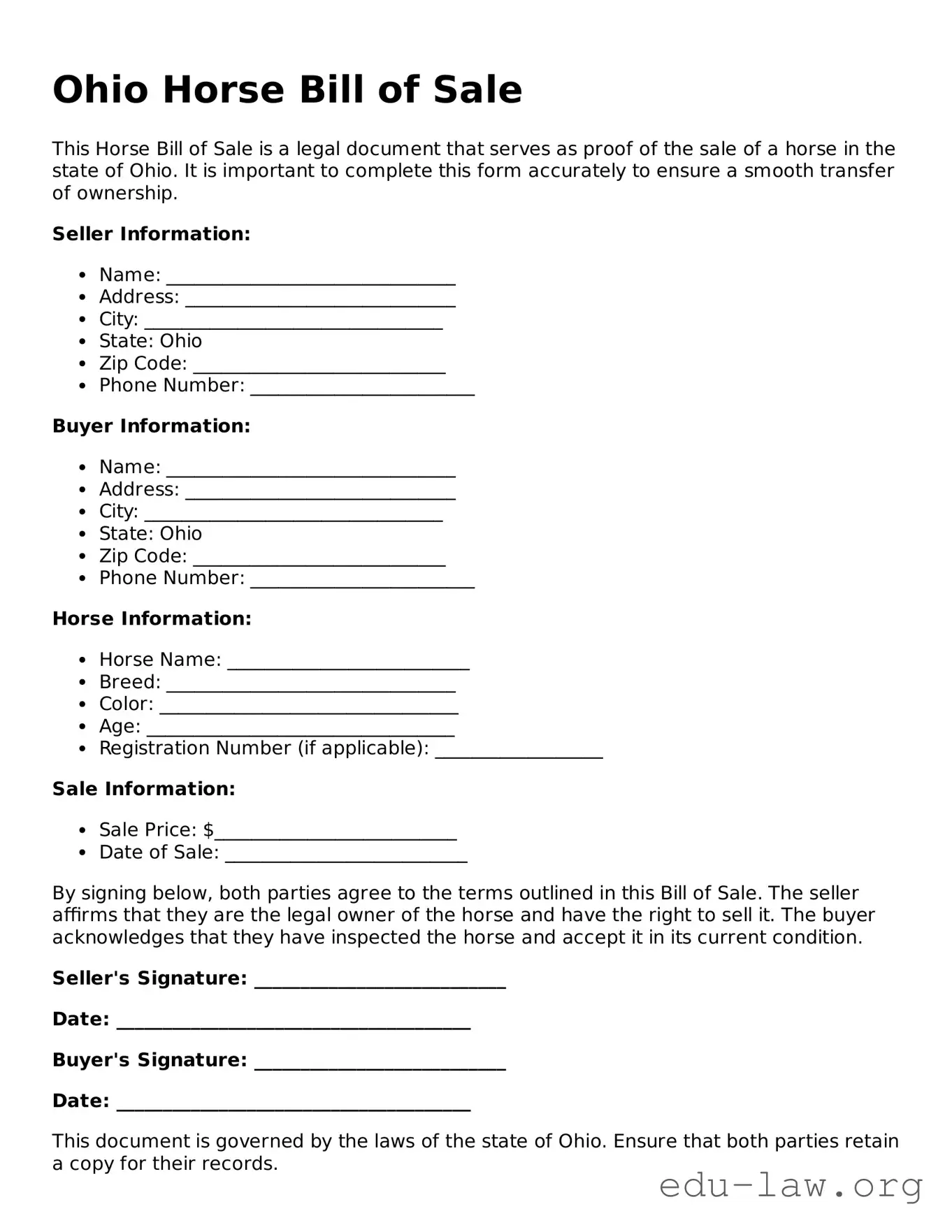
When buying or selling a horse in Ohio, having a Horse Bill of Sale form is essential for both parties involved in the transaction. This document serves as a legal record of the sale, outlining critical details such as the buyer's and seller's names, the horse's description, and the agreed-upon purchase price. Additionally, it may include any warranties or guarantees related to the horse's health and soundness, which can protect both the buyer and seller from future disputes. The form also typically requires signatures from both parties, ensuring that the agreement is binding. A well-completed Horse Bill of Sale not only facilitates a smooth transaction but also provides peace of mind, confirming that all necessary information is documented clearly and accurately.
Ohio Horse Bill of Sale
This Horse Bill of Sale is a legal document that serves as proof of the sale of a horse in the state of Ohio. It is important to complete this form accurately to ensure a smooth transfer of ownership.
Seller Information:
Buyer Information:
Horse Information:
Sale Information:
By signing below, both parties agree to the terms outlined in this Bill of Sale. The seller affirms that they are the legal owner of the horse and have the right to sell it. The buyer acknowledges that they have inspected the horse and accept it in its current condition.
Seller's Signature: ___________________________
Date: ______________________________________
Buyer's Signature: ___________________________
Date: ______________________________________
This document is governed by the laws of the state of Ohio. Ensure that both parties retain a copy for their records.
| Fact Name | Description |
|---|---|
| Purpose | The Ohio Horse Bill of Sale form serves as a legal document to transfer ownership of a horse from one party to another. |
| Governing Law | This form is governed by the Ohio Revised Code, specifically sections related to the sale of personal property. |
| Required Information | Essential details include the buyer's and seller's names, the horse's description, and the sale price. |
| Signatures | Both the buyer and seller must sign the form to validate the transaction and confirm the transfer of ownership. |
| Record Keeping | It is advisable for both parties to keep a copy of the signed bill of sale for their records, which may be useful for future reference. |
Completing the Ohio Horse Bill of Sale form is an essential step when transferring ownership of a horse. This document serves as proof of the transaction and protects both the buyer and seller. After filling out the form, ensure that both parties retain a copy for their records.
What is a Horse Bill of Sale in Ohio?
A Horse Bill of Sale is a legal document used to record the sale of a horse. It includes important details about the horse, such as its breed, age, and any identifying marks. This document serves as proof of ownership transfer from the seller to the buyer. Having a written record can help avoid disputes in the future and ensures both parties have clear terms of the sale.
What information should be included in the Ohio Horse Bill of Sale?
The Ohio Horse Bill of Sale should include several key pieces of information. This typically consists of the names and addresses of both the buyer and seller, a detailed description of the horse, the sale price, and the date of the sale. Additionally, it may be helpful to include any warranties or guarantees about the horse's health or condition. Both parties should sign the document to make it official.
Is a Horse Bill of Sale required in Ohio?
Can I create my own Horse Bill of Sale?
Yes, you can create your own Horse Bill of Sale in Ohio. It is important to ensure that all necessary information is included and that both parties sign the document. There are also templates available online that can help guide you in drafting the bill of sale. Just make sure the template you choose meets Ohio's requirements for clarity and completeness.
Incomplete Information: One common mistake is failing to fill out all required fields. It's essential to provide complete details about both the buyer and the seller, including names, addresses, and contact information. Missing any of this information can lead to confusion or disputes later on.
Incorrect Horse Description: Accurately describing the horse is crucial. This includes the horse's name, breed, age, color, and any unique identifying features. Omitting this information or providing incorrect details can create issues regarding ownership and authenticity.
Failure to Sign: Both parties must sign the bill of sale for it to be valid. Neglecting to obtain signatures can render the document ineffective. Without proper signatures, proving the sale may become difficult.
Not Keeping Copies: After completing the bill of sale, it’s important for both parties to retain a copy. Failing to do so can lead to problems if questions arise about the transaction in the future. Keeping a record ensures that both parties have proof of the sale.
When buying or selling a horse in Ohio, the Horse Bill of Sale form is an essential document. However, several other forms and documents can help ensure a smooth transaction and provide additional legal protection for both parties involved. Here’s a list of commonly used documents that complement the Horse Bill of Sale.
Using these documents alongside the Horse Bill of Sale can help protect both the buyer and seller, ensuring that the transaction is clear and legally sound. Each document serves a specific purpose, and together they create a comprehensive framework for the sale of a horse in Ohio.
The Ohio Horse Bill of Sale form shares similarities with a Vehicle Bill of Sale. Both documents serve as proof of transfer of ownership. They typically include details such as the buyer's and seller's names, the description of the item being sold, and the sale price. Just as a Vehicle Bill of Sale may require a vehicle identification number (VIN), the Horse Bill of Sale includes specific identifiers for the horse, such as breed, age, and registration number, if applicable. This ensures that both parties have a clear understanding of what is being transferred.
A Pet Adoption Agreement is another document that resembles the Horse Bill of Sale. While it is often used in the context of adopting a pet, it also outlines the transfer of ownership. This agreement includes information about the animal, similar to how the Horse Bill of Sale details the horse. Both documents aim to protect the interests of both the buyer and seller or adopter, ensuring that the new owner understands their responsibilities regarding the care and well-being of the animal.
The Real Estate Purchase Agreement shares some features with the Horse Bill of Sale, particularly in the aspect of detailing the terms of the sale. While one pertains to property and the other to livestock, both documents outline the responsibilities of the buyer and seller. They include information such as the purchase price, the closing date, and any contingencies that may apply. This ensures that both parties have a clear understanding of the terms of the transaction.
A Business Bill of Sale is another document similar to the Horse Bill of Sale. This type of bill of sale is used when transferring ownership of a business or its assets. Like the Horse Bill of Sale, it includes details about the item being sold, such as its value and any liabilities. Both documents serve to provide a record of the transaction and protect the interests of both the buyer and seller.
The Personal Property Bill of Sale is also akin to the Horse Bill of Sale. This document is used for the sale of personal items, such as furniture or electronics. Similar to the Horse Bill of Sale, it includes information about the item, the sale price, and the parties involved in the transaction. Both documents serve to legally document the transfer of ownership and provide a record for future reference.
Finally, the Livestock Bill of Sale is closely related to the Horse Bill of Sale, as it specifically pertains to the sale of livestock. This document includes similar information, such as the description of the animal, the sale price, and the names of the buyer and seller. Both documents are essential for establishing ownership and ensuring that the transaction is legally recognized.
When filling out the Ohio Horse Bill of Sale form, it’s important to follow certain guidelines to ensure accuracy and legality. Here is a list of things you should and shouldn't do.
The Ohio Horse Bill of Sale form is an important document for anyone involved in buying or selling horses. However, several misconceptions surround this form. Here are seven common misunderstandings:
Some people believe that a verbal agreement is sufficient. However, having a written Bill of Sale protects both the buyer and seller by documenting the transaction details.
Regardless of the horse's value, a Bill of Sale is important. It provides proof of ownership and can help resolve disputes, no matter the price.
Each state has its own requirements and forms. The Ohio Horse Bill of Sale is specific to Ohio and may differ from those in other states.
While it's best to have all details correct before signing, amendments can be made if both parties agree. Always document any changes in writing.
This form can also cover related items, such as tack or equipment sold with the horse. Including these details can prevent misunderstandings later.
While the form can include health disclosures, it does not guarantee the horse's condition. Buyers should conduct their own inspections or obtain vet reports.
Both the buyer and seller should sign the document. This mutual agreement ensures that both parties acknowledge the terms of the sale.
Understanding these misconceptions can help ensure a smooth transaction when buying or selling a horse in Ohio. Always take the time to complete the Bill of Sale correctly and keep a copy for your records.
When it comes to buying or selling a horse in Ohio, completing the Horse Bill of Sale form is an essential step. This document serves as a record of the transaction and can protect both the buyer and the seller. Here are some key takeaways to keep in mind:
Understanding these key points can help ensure a smooth transaction when buying or selling a horse in Ohio. Properly completing the Horse Bill of Sale form protects the interests of both parties involved.