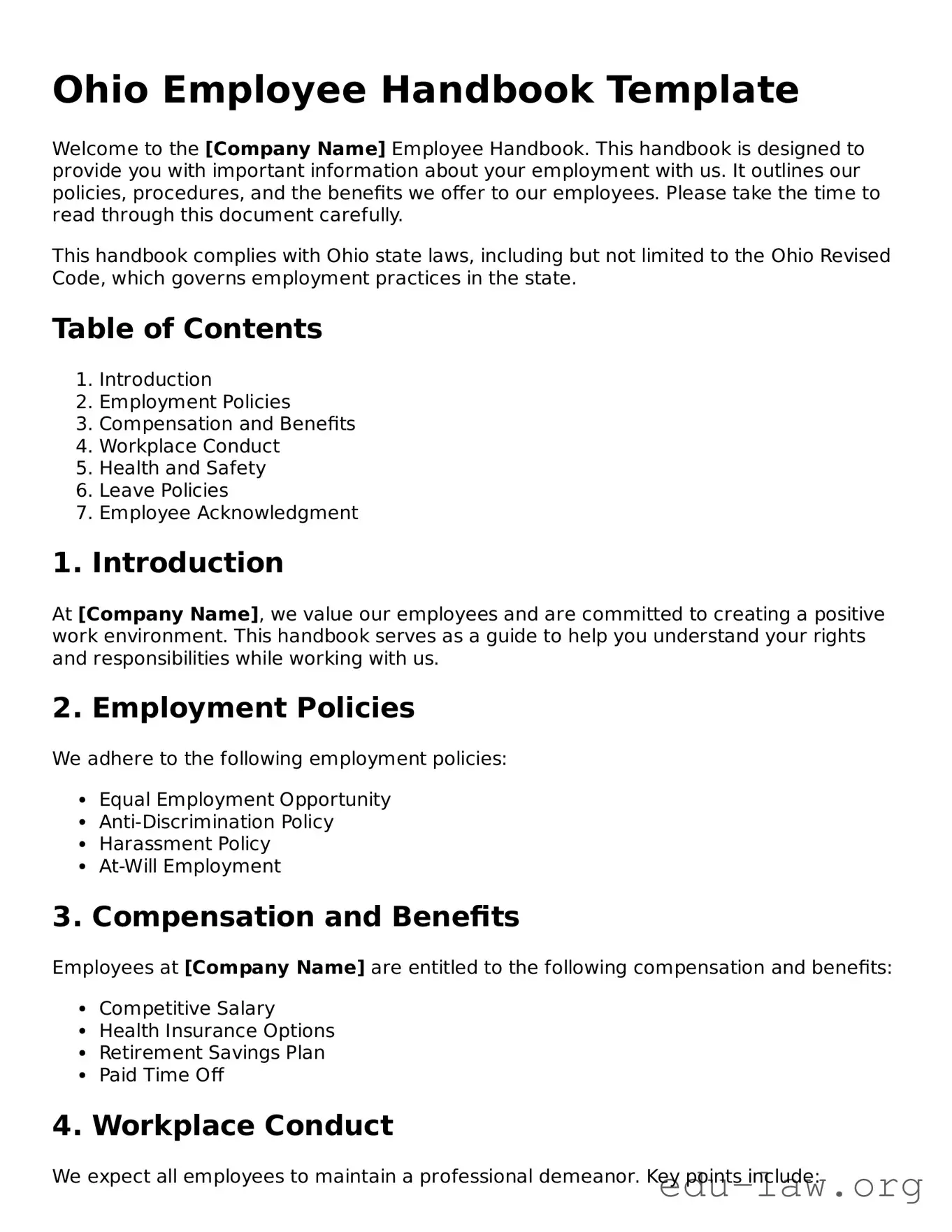
Creating a comprehensive employee handbook is a vital step for any organization in Ohio. This document serves as a foundational tool for establishing clear expectations and guidelines for both employers and employees. It outlines essential policies regarding workplace conduct, anti-discrimination measures, and safety protocols. Furthermore, the handbook addresses employee benefits, including leave policies, health insurance options, and retirement plans. Additionally, it provides information on grievance procedures, ensuring that employees understand their rights and the steps to take if issues arise. By incorporating these elements, the Ohio Employee Handbook form not only fosters a positive workplace culture but also helps organizations remain compliant with state and federal regulations.
Ohio Employee Handbook Template
Welcome to the [Company Name] Employee Handbook. This handbook is designed to provide you with important information about your employment with us. It outlines our policies, procedures, and the benefits we offer to our employees. Please take the time to read through this document carefully.
This handbook complies with Ohio state laws, including but not limited to the Ohio Revised Code, which governs employment practices in the state.
Table of Contents
1. Introduction
At [Company Name], we value our employees and are committed to creating a positive work environment. This handbook serves as a guide to help you understand your rights and responsibilities while working with us.
2. Employment Policies
We adhere to the following employment policies:
3. Compensation and Benefits
Employees at [Company Name] are entitled to the following compensation and benefits:
4. Workplace Conduct
We expect all employees to maintain a professional demeanor. Key points include:
5. Health and Safety
Your safety is our priority. Please familiarize yourself with our health and safety guidelines, which include:
6. Leave Policies
Employees are entitled to various types of leave, including:
7. Employee Acknowledgment
By signing below, you acknowledge that you have received and read the [Company Name] Employee Handbook and understand the policies outlined within.
Employee Name: [Employee Name]
Employee Signature: [Signature]
Date: [Date]
| Fact Name | Description |
|---|---|
| Purpose | The Ohio Employee Handbook serves as a guide for employees, outlining company policies, procedures, and expectations. |
| Legal Requirement | While not legally mandated, having an employee handbook is strongly recommended for compliance and clarity. |
| Governing Laws | Relevant state laws include the Ohio Revised Code and federal employment laws such as the Fair Labor Standards Act. |
| Content Areas | Typical sections include workplace conduct, benefits, leave policies, and disciplinary procedures. |
| Distribution | Handbooks should be distributed to all employees, ensuring they acknowledge receipt and understanding of the policies. |
| Updates | Regular updates are essential to reflect changes in laws or company policies, maintaining relevance and compliance. |
Filling out the Ohio Employee Handbook form is a straightforward process. Once you have completed the form, it will be submitted to your HR department for review. Make sure to follow the steps carefully to ensure all necessary information is provided.
What is the purpose of the Ohio Employee Handbook form?
The Ohio Employee Handbook form serves as a crucial document for employers in Ohio. It outlines the company's policies, procedures, and expectations for employees. This handbook helps ensure that employees understand their rights and responsibilities within the workplace. It can also protect employers by providing clear guidelines that help prevent misunderstandings and disputes. By having a well-structured handbook, employers can foster a positive work environment and promote compliance with state and federal laws.
What key sections should be included in the Ohio Employee Handbook?
An effective Ohio Employee Handbook should contain several essential sections. These include an introduction to the company, a statement of employment policies, and details about workplace conduct. Additionally, it should cover topics such as anti-discrimination policies, harassment prevention, attendance expectations, and leave policies. Benefits information, disciplinary procedures, and termination policies are also important. Including these sections helps ensure that employees have a comprehensive understanding of the workplace culture and legal obligations.
How often should the Ohio Employee Handbook be updated?
Is it necessary to provide employees with a copy of the Ohio Employee Handbook?
Yes, it is essential to provide employees with a copy of the Ohio Employee Handbook. Employers should distribute the handbook to all employees upon hiring and whenever significant updates occur. This practice ensures that employees have access to important information regarding their rights and responsibilities. Additionally, obtaining an acknowledgment from employees that they have received and understood the handbook can further protect the employer in case of disputes.
Failing to read the entire handbook before signing. Understanding the policies is crucial.
Not providing accurate personal information. Incorrect details can lead to issues with payroll and benefits.
Overlooking the acknowledgment section. This section confirms that the employee has received and understood the handbook.
Missing the deadline for submission. Timely submission is often required for compliance.
Neglecting to ask questions about unclear policies. Clarification can prevent misunderstandings later.
Assuming all policies are the same as previous handbooks. Changes may have occurred that need attention.
Not keeping a copy of the signed form for personal records. Having a copy can be helpful for future reference.
Ignoring the importance of the code of conduct. Understanding expected behavior is essential for workplace harmony.
Failing to update personal information when circumstances change. Life events can affect contact details and emergency contacts.
Not being aware of the consequences of violating policies. Understanding potential repercussions is vital for compliance.
When managing employee relations and ensuring compliance with workplace regulations, organizations often utilize a variety of documents alongside the Ohio Employee Handbook. Each of these forms serves a specific purpose, helping to clarify policies, protect both the employer and employees, and maintain a positive work environment. Below is a list of commonly used forms and documents that complement the Employee Handbook.
Utilizing these forms in conjunction with the Ohio Employee Handbook helps create a structured and supportive workplace. Each document plays a vital role in ensuring that both employees and employers are aligned in their expectations and responsibilities. By fostering clear communication and understanding, organizations can enhance their work culture and promote a positive environment for everyone involved.
The Ohio Employee Handbook is similar to the Employee Manual commonly used in many workplaces. An Employee Manual outlines the policies, procedures, and expectations of the organization. Both documents serve as a guide for employees, helping them understand their rights and responsibilities. They cover topics such as workplace conduct, dress code, and performance evaluations, ensuring that everyone is on the same page regarding company standards.
Another document comparable to the Ohio Employee Handbook is the Company Policy Guide. This guide specifically details the rules and regulations that govern workplace behavior and operations. While the Employee Handbook may provide a broader overview, the Company Policy Guide dives deeper into specific policies, such as anti-discrimination measures and safety protocols. Both documents aim to foster a positive work environment and clarify employee expectations.
The Onboarding Manual is another similar document that shares some characteristics with the Ohio Employee Handbook. This manual is often provided to new hires to help them acclimate to the workplace. It typically includes essential information about the company culture, job responsibilities, and initial training schedules. While the Employee Handbook serves as a comprehensive reference for all employees, the Onboarding Manual focuses specifically on the early stages of employment.
The Code of Conduct is closely related to the Ohio Employee Handbook as well. This document outlines the ethical standards and behaviors expected of employees. It often addresses issues such as conflicts of interest, confidentiality, and acceptable communication. Both the Code of Conduct and the Employee Handbook work together to promote a respectful and professional workplace atmosphere.
Another document that parallels the Ohio Employee Handbook is the Benefits Guide. This guide provides detailed information about the benefits offered by the employer, including health insurance, retirement plans, and paid time off. While the Employee Handbook may touch on benefits, the Benefits Guide typically offers more in-depth explanations, helping employees understand their options and how to enroll in various programs.
The Training Manual is also similar to the Ohio Employee Handbook. This document focuses on the training and development opportunities available to employees. It often includes information on required training sessions, professional development resources, and performance improvement plans. While the Employee Handbook may mention training policies, the Training Manual provides a more comprehensive view of the learning resources available within the organization.
The Safety Manual is another important document that shares similarities with the Ohio Employee Handbook. This manual outlines safety protocols and procedures to ensure a safe working environment. It typically includes emergency procedures, reporting accidents, and guidelines for using equipment safely. While the Employee Handbook may address safety in a general sense, the Safety Manual provides specific instructions and measures that employees must follow.
The Employee Agreement is also comparable to the Ohio Employee Handbook. This document is a formal contract between the employer and employee that outlines the terms of employment. It typically includes job responsibilities, compensation details, and grounds for termination. While the Employee Handbook serves as a general guide, the Employee Agreement provides a legally binding framework for the employment relationship.
Lastly, the Performance Review Document can be seen as similar to the Ohio Employee Handbook. This document outlines the process for evaluating employee performance, including criteria for assessment and feedback mechanisms. While the Employee Handbook may describe the overall performance evaluation process, the Performance Review Document provides specific guidelines and forms used during evaluations, ensuring that employees understand how their performance will be assessed.
When filling out the Ohio Employee Handbook form, it's essential to approach the task with care. Here are some important dos and don'ts to keep in mind:
By following these guidelines, you can ensure that your submission is thorough and accurate. This not only reflects well on you but also helps maintain a smooth onboarding process with your employer.
When it comes to the Ohio Employee Handbook, there are several common misconceptions that can lead to confusion for both employers and employees. Here’s a list of seven of those misconceptions, along with explanations to clarify the truth.
Understanding these misconceptions can help both employers and employees navigate workplace policies more effectively. A well-crafted employee handbook is a valuable tool, but it’s important to recognize its limitations and purpose.
Filling out and utilizing the Ohio Employee Handbook form is an important step for both employers and employees. Here are some key takeaways to keep in mind: