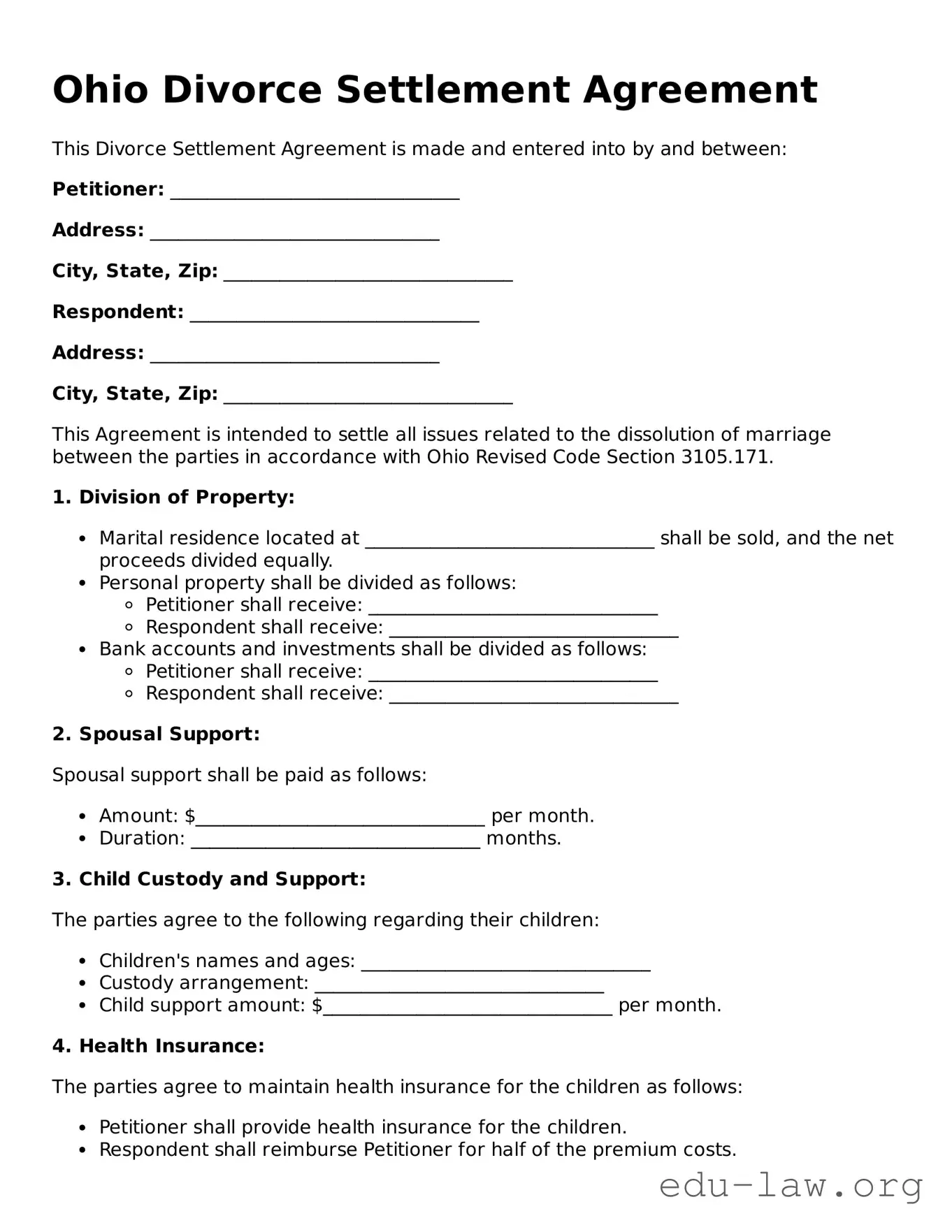
When navigating the complexities of divorce, the Ohio Divorce Settlement Agreement form serves as a crucial tool for couples seeking to reach a fair and amicable resolution. This document outlines the terms and conditions of the divorce, covering essential aspects such as the division of assets and debts, child custody arrangements, and spousal support. Each section of the form is designed to ensure that both parties have a clear understanding of their rights and responsibilities moving forward. By addressing critical issues like property division and child support, the agreement aims to minimize potential conflicts and provide a solid foundation for the next chapter of each individual's life. Completing this form accurately is vital, as it not only reflects the mutual decisions made by both parties but also becomes a legally binding document once signed. Understanding the significance of this agreement can help couples approach their divorce with clarity and purpose, paving the way for a smoother transition into their new realities.
Ohio Divorce Settlement Agreement
This Divorce Settlement Agreement is made and entered into by and between:
Petitioner: _______________________________
Address: _______________________________
City, State, Zip: _______________________________
Respondent: _______________________________
Address: _______________________________
City, State, Zip: _______________________________
This Agreement is intended to settle all issues related to the dissolution of marriage between the parties in accordance with Ohio Revised Code Section 3105.171.
1. Division of Property:
2. Spousal Support:
Spousal support shall be paid as follows:
3. Child Custody and Support:
The parties agree to the following regarding their children:
4. Health Insurance:
The parties agree to maintain health insurance for the children as follows:
5. Miscellaneous:
IN WITNESS WHEREOF, the parties hereto have executed this Divorce Settlement Agreement on this _____ day of ____________, 20__.
Petitioner Signature: _______________________________
Date: _______________________________
Respondent Signature: _______________________________
Date: _______________________________
| Fact Name | Details |
|---|---|
| Purpose | The Ohio Divorce Settlement Agreement form outlines the terms of a divorce, including asset division, child custody, and support obligations. |
| Governing Law | This form is governed by the Ohio Revised Code, specifically Chapter 3105, which covers divorce and dissolution of marriage. |
| Filing Requirement | The completed form must be filed with the court as part of the divorce proceedings to finalize the agreement. |
| Mutual Agreement | Both parties must agree to the terms outlined in the form for it to be legally binding. |
| Legal Advice | It is advisable for both parties to seek legal counsel before signing the agreement to ensure their rights are protected. |
Filling out the Ohio Divorce Settlement Agreement form is an important step in finalizing a divorce. This document outlines the agreements made between both parties regarding various aspects of their separation. After completing the form, it will be submitted to the court for review. Here are the steps to fill out the form correctly.
Once the form is completed, it should be reviewed for accuracy before submission. Both parties should keep a copy for their records. After filing, the court will schedule a hearing to finalize the divorce based on the agreements made in this document.
What is a Divorce Settlement Agreement in Ohio?
A Divorce Settlement Agreement is a legal document that outlines the terms and conditions agreed upon by both spouses during a divorce. This agreement typically covers important aspects such as property division, child custody, child support, and alimony. It serves as a binding contract that helps to ensure both parties understand their rights and responsibilities post-divorce.
How do I create a Divorce Settlement Agreement?
Creating a Divorce Settlement Agreement involves several steps. First, both parties should openly discuss their preferences and needs regarding the divorce terms. It may be helpful to consult with a mediator or attorney to facilitate these discussions. Once an agreement is reached, it should be documented in writing, detailing each party's obligations. Both spouses must sign the agreement for it to be valid.
Is a Divorce Settlement Agreement required in Ohio?
While a Divorce Settlement Agreement is not legally required in Ohio, it is highly recommended. Having a written agreement can prevent misunderstandings and disputes in the future. If the spouses cannot reach an agreement, the court will make decisions regarding the divorce, which may not align with either party's wishes.
Can a Divorce Settlement Agreement be modified?
Yes, a Divorce Settlement Agreement can be modified after it has been finalized, but only under certain circumstances. Changes in life circumstances, such as job loss, relocation, or changes in income, may warrant a modification. To make changes legally binding, both parties must agree to the modifications, and the revised agreement should be filed with the court.
What happens if one party does not comply with the Divorce Settlement Agreement?
If one party fails to comply with the terms of the Divorce Settlement Agreement, the other party has legal options. They may file a motion with the court to enforce the agreement. The court can take various actions, including ordering compliance or imposing penalties on the non-compliant party. It is essential to document any violations to support your case in court.
Do I need a lawyer to draft a Divorce Settlement Agreement?
While it is not mandatory to hire a lawyer to draft a Divorce Settlement Agreement, it is advisable. A legal professional can ensure that the agreement is comprehensive and complies with Ohio laws. They can also help protect your interests and provide guidance on potential issues that may arise during the divorce process.
Incomplete Information: Many individuals fail to provide all necessary details. This can include missing names, addresses, or financial information. Ensure that every section is filled out completely.
Incorrect Financial Disclosure: Some people underestimate or overestimate their income and assets. Providing accurate financial information is crucial for a fair settlement.
Ignoring State Guidelines: Ohio has specific laws regarding divorce settlements. Not adhering to these guidelines can lead to delays or rejection of the agreement.
Failing to Address All Assets: It’s common to overlook certain assets, such as retirement accounts or real estate. All marital property must be accounted for to avoid future disputes.
Not Considering Tax Implications: Some individuals neglect to think about how the settlement will affect their taxes. Understanding tax consequences can impact financial decisions.
Skipping Legal Review: Many people fill out the form without consulting a legal professional. A review can help catch mistakes and ensure the agreement is fair and legally sound.
When navigating the divorce process in Ohio, several forms and documents may accompany the Divorce Settlement Agreement. Each of these documents serves a specific purpose and helps ensure that all aspects of the divorce are addressed comprehensively. Below is a list of common forms and documents used alongside the Divorce Settlement Agreement.
Understanding these documents can simplify the divorce process and help ensure that all necessary legal requirements are met. Each form plays a vital role in protecting the rights and interests of both parties during this challenging time.
The Ohio Divorce Settlement Agreement form shares similarities with the Marital Settlement Agreement. Both documents serve as a comprehensive outline of the terms agreed upon by spouses during a divorce. They cover critical issues such as asset division, spousal support, and child custody arrangements. The Marital Settlement Agreement is often used in contested divorces, ensuring that both parties have a clear understanding of their rights and responsibilities post-divorce.
Another comparable document is the Separation Agreement. This document is typically utilized when couples decide to live apart but are not yet ready to divorce. Like the Divorce Settlement Agreement, it addresses issues such as property division and support obligations. The key difference lies in its temporary nature, as it may be revised or replaced once a divorce is finalized.
The Child Custody Agreement is also similar, focusing specifically on the arrangements for children. This document outlines parenting plans, visitation schedules, and decision-making responsibilities. While the Divorce Settlement Agreement may include child custody provisions, the Child Custody Agreement hones in solely on the welfare and upbringing of children, ensuring their best interests are prioritized.
The Parenting Plan is another relevant document. It details the specific day-to-day responsibilities of each parent regarding their children. While it can be part of a Divorce Settlement Agreement, a standalone Parenting Plan may provide a more in-depth look at how parents will work together post-divorce. This document emphasizes cooperation and communication between parents, which is crucial for effective co-parenting.
The Property Settlement Agreement is closely related, focusing on the division of marital assets and debts. It outlines how property will be divided, including real estate, bank accounts, and personal belongings. While the Divorce Settlement Agreement encompasses broader aspects of the divorce, the Property Settlement Agreement zeroes in on financial matters, ensuring clarity and fairness in asset division.
The Spousal Support Agreement is another document that aligns with the Divorce Settlement Agreement. It specifically addresses financial support one spouse may provide to the other after separation. This agreement can detail the amount, duration, and conditions of support, ensuring both parties understand their financial obligations moving forward.
The Domestic Relations Affidavit is similar in that it provides the court with essential information regarding the marriage and any children involved. This document often accompanies the Divorce Settlement Agreement during court proceedings. It contains details about the parties’ assets, liabilities, and income, which helps the court make informed decisions regarding the divorce settlement.
Lastly, the Qualified Domestic Relations Order (QDRO) is relevant when dividing retirement benefits during a divorce. While the Divorce Settlement Agreement may outline the division of these benefits, a QDRO is a specific court order that ensures the proper transfer of retirement assets. This document is crucial for ensuring compliance with federal laws governing retirement plans, making it a vital component of a complete divorce settlement.
When filling out the Ohio Divorce Settlement Agreement form, it’s important to keep certain things in mind. Here’s a helpful list of dos and don’ts to guide you through the process.
By following these guidelines, you can help ensure that your Divorce Settlement Agreement is filled out correctly and efficiently.
When navigating the complexities of a divorce, many individuals in Ohio may encounter the Divorce Settlement Agreement form. Unfortunately, several misconceptions can cloud understanding of this important document. Here are five common misunderstandings:
Understanding these misconceptions can lead to a more informed approach when dealing with the Divorce Settlement Agreement in Ohio. Clarity on these points can help individuals make better decisions during a challenging time.
When navigating the Ohio Divorce Settlement Agreement form, several important aspects should be kept in mind to ensure a smooth process. Here are some key takeaways:
By focusing on these elements, individuals can better navigate the complexities of the divorce settlement process in Ohio.