When entering into a commercial lease in Ohio, understanding the Ohio Commercial Lease Agreement form is crucial for both landlords and tenants. This document outlines the terms and conditions governing the rental of commercial property, ensuring clarity and protection for both parties involved. Key aspects include the lease duration, rental payment details, and maintenance responsibilities. The agreement also specifies permitted uses of the property, any modifications that may be allowed, and the process for renewing or terminating the lease. Additionally, it addresses security deposits and the consequences of defaulting on the lease terms. By carefully reviewing and negotiating the provisions within this form, both landlords and tenants can foster a positive and productive business relationship, minimizing potential disputes down the line.
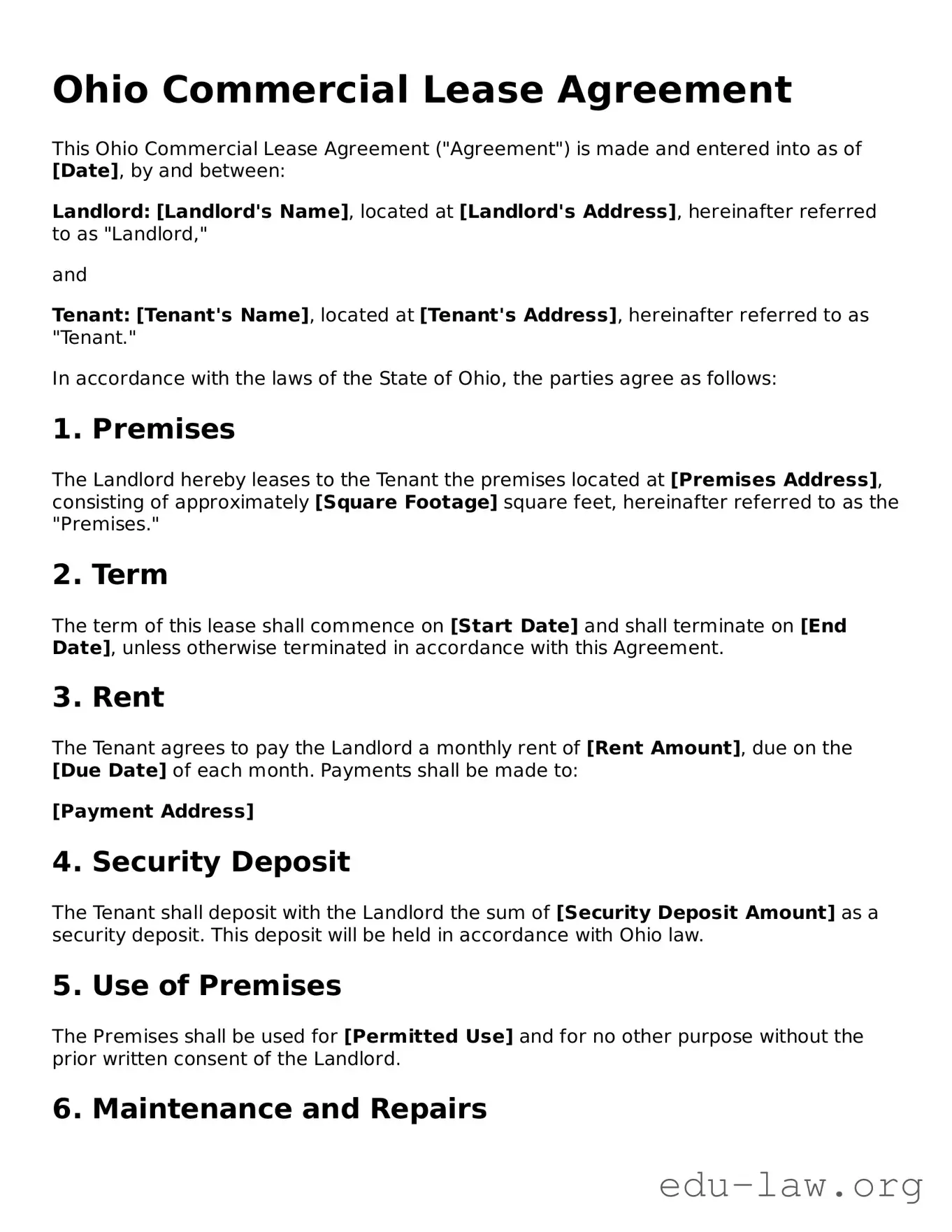
Ohio Commercial Lease Agreement
This Ohio Commercial Lease Agreement ("Agreement") is made and entered into as of [Date], by and between:
Landlord: [Landlord's Name], located at [Landlord's Address], hereinafter referred to as "Landlord,"
and
Tenant: [Tenant's Name], located at [Tenant's Address], hereinafter referred to as "Tenant."
In accordance with the laws of the State of Ohio, the parties agree as follows:
1. Premises
The Landlord hereby leases to the Tenant the premises located at [Premises Address], consisting of approximately [Square Footage] square feet, hereinafter referred to as the "Premises."
2. Term
The term of this lease shall commence on [Start Date] and shall terminate on [End Date], unless otherwise terminated in accordance with this Agreement.
3. Rent
The Tenant agrees to pay the Landlord a monthly rent of [Rent Amount], due on the [Due Date] of each month. Payments shall be made to:
[Payment Address]
4. Security Deposit
The Tenant shall deposit with the Landlord the sum of [Security Deposit Amount] as a security deposit. This deposit will be held in accordance with Ohio law.
5. Use of Premises
The Premises shall be used for [Permitted Use] and for no other purpose without the prior written consent of the Landlord.
6. Maintenance and Repairs
The Tenant shall maintain the Premises in good condition and shall be responsible for all repairs, except for those that are the responsibility of the Landlord as outlined in Ohio law.
7. Insurance
The Tenant shall obtain and maintain insurance coverage for liability and property damage in amounts satisfactory to the Landlord.
8. Governing Law
This Agreement shall be governed by and construed in accordance with the laws of the State of Ohio.
9. Additional Provisions
10. Signatures
IN WITNESS WHEREOF, the parties hereto have executed this Agreement as of the day and year first above written.
Landlord's Signature: ________________________ Date: _______________
Tenant's Signature: ________________________ Date: _______________
| Fact Name | Details |
|---|---|
| Governing Law | The Ohio Commercial Lease Agreement is governed by the laws of the State of Ohio. |
| Purpose | This form is used to outline the terms and conditions under which a commercial property is leased. |
| Parties Involved | The agreement typically involves a landlord (lessor) and a tenant (lessee). |
| Lease Duration | The lease term can vary, but it is essential to specify the start and end dates in the agreement. |
Filling out the Ohio Commercial Lease Agreement form requires careful attention to detail. Each section of the form must be completed accurately to ensure that both parties understand their rights and responsibilities. Below are the steps to guide you through the process.
Once the form is completed, both parties should retain a copy for their records. It is advisable to review the agreement thoroughly before signing to ensure that all terms are understood and agreed upon.
What is an Ohio Commercial Lease Agreement?
An Ohio Commercial Lease Agreement is a legally binding document between a landlord and a tenant for the rental of commercial property. This agreement outlines the terms and conditions under which the tenant can use the property for business purposes. It typically includes details such as the lease duration, rental payments, maintenance responsibilities, and any specific rules regarding the use of the space.
What should be included in the lease agreement?
Essential elements of an Ohio Commercial Lease Agreement include the names of the parties involved, a description of the property, the lease term, rent amount and payment schedule, security deposit details, maintenance obligations, and termination conditions. Additionally, any special provisions or restrictions related to the use of the property should be clearly stated to avoid future disputes.
How long does a commercial lease typically last?
The duration of a commercial lease can vary widely based on the needs of the tenant and the landlord. Common lease terms range from one to five years, but some leases can be longer or shorter. It is crucial to negotiate a term that aligns with your business goals while also considering potential changes in the market or your business needs.
Can the lease be modified after signing?
Yes, a commercial lease can be modified after it has been signed, but both parties must agree to any changes. It is advisable to document any modifications in writing and have both parties sign the amended agreement. This helps ensure that all changes are legally enforceable and reduces the risk of misunderstandings in the future.
What happens if the lease is breached?
If either party breaches the lease agreement, it can lead to various consequences. The landlord may have the right to terminate the lease, seek damages, or take legal action to enforce the terms of the lease. Conversely, tenants may have rights to remedy the situation, depending on the specifics of the lease and the nature of the breach. It is essential to review the lease terms to understand the remedies available to both parties in case of a breach.
Failing to read the entire lease agreement thoroughly. Many people skim through the document, missing important clauses that could affect their rights and responsibilities.
Not specifying the correct rental amount. It's crucial to ensure that the rent is clearly stated and reflects any agreed-upon terms.
Ignoring the lease term. Clearly defining the start and end dates of the lease is essential to avoid misunderstandings later.
Overlooking maintenance responsibilities. Parties should clarify who is responsible for repairs and upkeep of the property to prevent disputes.
Neglecting to include any additional fees. If there are extra costs such as utilities or maintenance fees, these should be explicitly stated in the agreement.
Not addressing renewal options. It's important to specify whether the lease can be renewed and under what conditions.
Failing to include a termination clause. This clause should outline the conditions under which either party can terminate the lease early.
Not verifying the property description. Ensure that the address and any specific details about the property are accurate to avoid confusion.
Ignoring local laws and regulations. Familiarizing oneself with Ohio's commercial leasing laws can prevent legal issues down the line.
Not seeking legal advice. Consulting with a legal expert can provide valuable insights and help avoid costly mistakes.
When entering into a commercial lease agreement in Ohio, several other forms and documents may be necessary to ensure all parties are adequately protected and informed. These documents help clarify the terms of the lease, outline responsibilities, and provide essential legal protections.
Each of these documents plays a critical role in the leasing process. They help establish clear communication between landlords and tenants, ensuring that both parties understand their rights and obligations. Proper documentation can prevent misunderstandings and disputes down the line.
The Ohio Residential Lease Agreement is similar to the Commercial Lease Agreement in that both documents outline the terms and conditions under which a property is rented. While the Commercial Lease focuses on business properties, the Residential Lease pertains to homes and apartments. Both agreements detail the responsibilities of the landlord and tenant, including payment of rent, maintenance obligations, and rules regarding the use of the property. They also provide a framework for resolving disputes, ensuring that both parties understand their rights and obligations.
The Ohio Sublease Agreement shares similarities with the Commercial Lease Agreement as it allows a tenant to rent out their leased space to another party. This document details the terms under which the subtenant can occupy the property, including rent amount and duration of the sublease. Just like a Commercial Lease, it requires the original tenant to uphold their obligations to the landlord while allowing for flexibility in occupancy. This agreement is particularly useful for businesses that may need to downsize temporarily or share space with another entity.
The Ohio Lease Option Agreement is another document that resembles the Commercial Lease Agreement. This type of agreement gives a tenant the option to purchase the property at a later date while they are leasing it. Similar to a Commercial Lease, it outlines the terms of rental payments and property use, but it adds a layer of potential ownership. This can be appealing for businesses that want to test a location before committing to a purchase, providing both parties with clarity and security in their arrangement.
The Ohio Triple Net Lease Agreement is closely related to the Commercial Lease Agreement, particularly in commercial real estate. In a Triple Net Lease, the tenant agrees to pay not only rent but also property taxes, insurance, and maintenance costs. This arrangement shifts more financial responsibility to the tenant, similar to how a Commercial Lease can specify various obligations. Both agreements aim to protect the interests of the landlord while providing a clear understanding of the financial commitments required from the tenant.
When filling out the Ohio Commercial Lease Agreement form, it's important to be thorough and accurate. Here are six things to keep in mind to ensure a smooth process:
Understanding the Ohio Commercial Lease Agreement form is crucial for both landlords and tenants. However, several misconceptions can lead to misunderstandings or legal issues. Here are eight common misconceptions:
By addressing these misconceptions, both landlords and tenants can engage more effectively in the leasing process, ensuring a smoother and more transparent experience.
When filling out and using the Ohio Commercial Lease Agreement form, it's essential to be thorough and precise. Here are some key takeaways to keep in mind:
By keeping these takeaways in mind, you can navigate the Ohio Commercial Lease Agreement form with confidence and clarity.