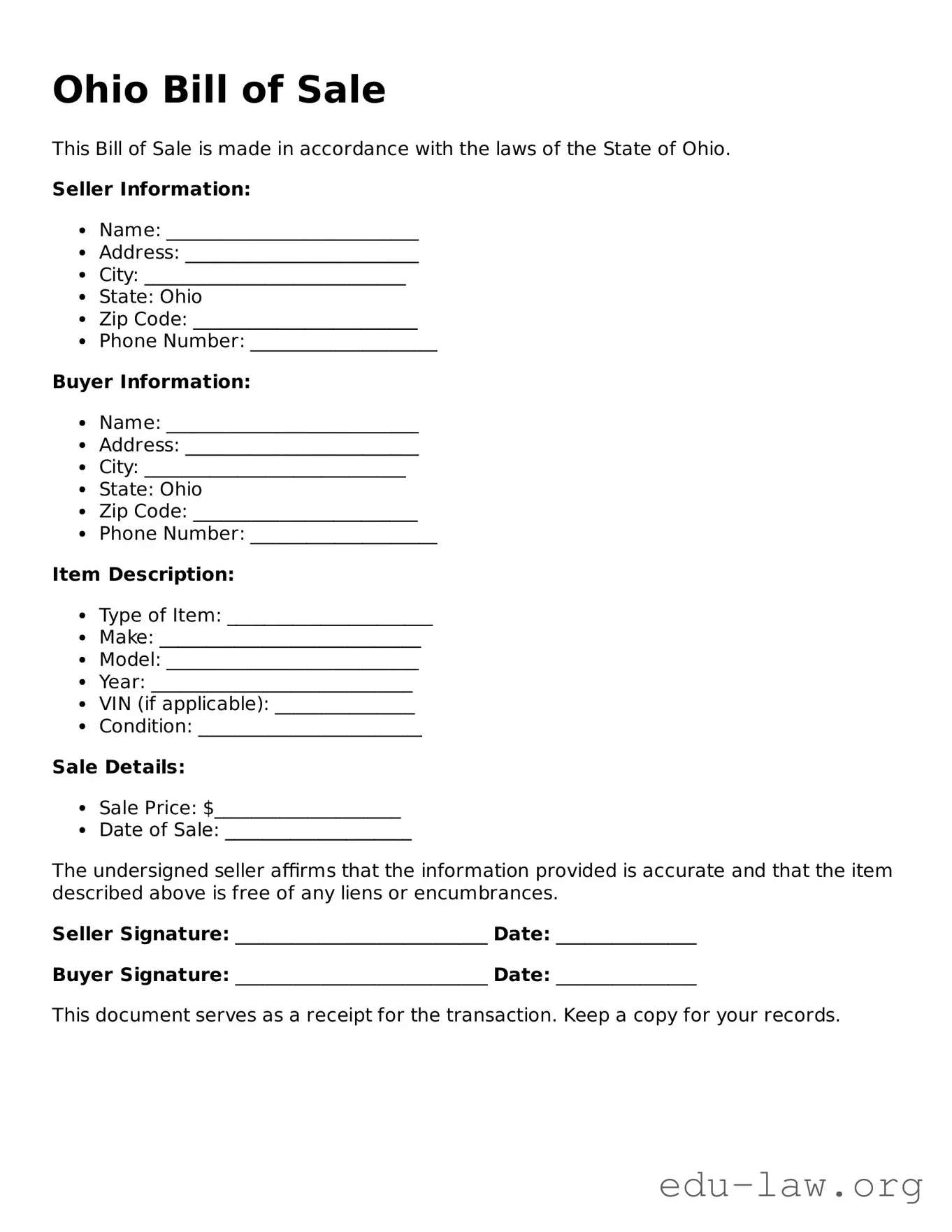
In Ohio, the Bill of Sale form serves as a crucial document in the transfer of ownership for various types of personal property, including vehicles, boats, and other goods. This form not only provides a written record of the transaction but also protects both the buyer and the seller by detailing essential information such as the purchase price, the date of the sale, and a description of the item being sold. Signatures from both parties are required, ensuring that the agreement is mutually acknowledged. Additionally, the form may include clauses that address warranties or the absence thereof, further clarifying the responsibilities of each party involved. Understanding the nuances of this document is vital for anyone engaging in a sale, as it can help prevent disputes and establish clear expectations. Whether you are buying or selling, familiarity with the Ohio Bill of Sale form can streamline the process and provide peace of mind.
Ohio Bill of Sale
This Bill of Sale is made in accordance with the laws of the State of Ohio.
Seller Information:
Buyer Information:
Item Description:
Sale Details:
The undersigned seller affirms that the information provided is accurate and that the item described above is free of any liens or encumbrances.
Seller Signature: ___________________________ Date: _______________
Buyer Signature: ___________________________ Date: _______________
This document serves as a receipt for the transaction. Keep a copy for your records.
| Fact Name | Description |
|---|---|
| Purpose | The Ohio Bill of Sale form is used to document the transfer of ownership of personal property from one party to another. |
| Governing Law | The Bill of Sale in Ohio is governed by the Ohio Revised Code, specifically sections related to personal property transactions. |
| Types of Property | This form can be used for various types of personal property, including vehicles, boats, and equipment. |
| Notarization | While notarization is not mandatory, it is recommended to add an extra layer of authenticity to the document. |
| Information Required | Essential details include the names and addresses of both the buyer and seller, a description of the property, and the sale price. |
| As-Is Condition | The form often includes a clause indicating that the property is sold "as-is," meaning the seller is not responsible for defects. |
| Transfer of Title | For vehicles, a Bill of Sale is often required to facilitate the transfer of the title at the Bureau of Motor Vehicles. |
| Record Keeping | Both parties should keep a copy of the Bill of Sale for their records, as it serves as proof of the transaction. |
| Use in Disputes | The Bill of Sale can be critical in resolving disputes over ownership or condition of the property post-sale. |
Filling out the Ohio Bill of Sale form is a straightforward process. Once you have completed the form, it serves as a record of the transaction between the buyer and seller. This document can be useful for both parties, providing proof of ownership and details about the sale.
What is a Bill of Sale in Ohio?
A Bill of Sale is a legal document that records the transfer of ownership of personal property from one party to another. In Ohio, it serves as proof of the transaction and can be used for various items, including vehicles, boats, and equipment.
Is a Bill of Sale required in Ohio?
No, a Bill of Sale is not legally required in Ohio for every transaction. However, it is highly recommended, especially for significant purchases. It provides a written record that can protect both the buyer and the seller in case of disputes.
What information should be included in an Ohio Bill of Sale?
An Ohio Bill of Sale should include the names and addresses of both the buyer and seller, a description of the item being sold (including make, model, and VIN for vehicles), the sale price, and the date of the transaction. Both parties should sign the document to validate it.
Can a Bill of Sale be used for vehicles in Ohio?
Yes, a Bill of Sale is commonly used for vehicle transactions in Ohio. It helps establish ownership and can be required when registering the vehicle with the Ohio Bureau of Motor Vehicles (BMV).
Do I need to have the Bill of Sale notarized?
Notarization is not required for a Bill of Sale in Ohio, but having it notarized can add an extra layer of protection. It verifies the identities of the parties involved and confirms that both have agreed to the terms of the sale.
What happens if I lose my Bill of Sale?
If you lose your Bill of Sale, it may be challenging to prove ownership of the item. You can create a new Bill of Sale if both parties agree and sign it again. However, having a copy of the original document is always advisable.
Can I create my own Bill of Sale?
Yes, you can create your own Bill of Sale in Ohio. There are templates available online, or you can draft one from scratch. Just ensure that it includes all necessary information and is signed by both parties.
Is a Bill of Sale legally binding?
Yes, a Bill of Sale is legally binding once both parties sign it. It serves as a contract that outlines the terms of the sale. If one party fails to uphold their end of the agreement, the other party may have legal recourse.
What should I do if there are issues after the sale?
If issues arise after the sale, refer to the Bill of Sale for the terms agreed upon. Attempt to resolve the matter directly with the other party. If that fails, you may need to seek legal advice or consider small claims court, depending on the situation.
Where can I find an Ohio Bill of Sale form?
You can find Ohio Bill of Sale forms online through various legal websites or local government resources. Ensure that the form you choose complies with Ohio laws and includes all necessary information for your specific transaction.
Incomplete Information: Failing to provide all required details can lead to complications. Ensure that the names, addresses, and contact information of both the buyer and seller are fully filled out.
Incorrect Vehicle Identification Number (VIN): The VIN is crucial for identifying the vehicle. Double-check that this number matches the one on the vehicle title and registration to avoid future disputes.
Not Including Sale Price: The sale price must be clearly stated. Omitting this information can create confusion and may affect tax assessments.
Failure to Sign: Both parties must sign the document for it to be valid. A missing signature can render the Bill of Sale ineffective.
Not Keeping Copies: After filling out the form, it is essential to make copies for both the buyer and seller. This documentation serves as proof of the transaction and protects both parties.
When completing a transaction involving the sale of personal property in Ohio, the Bill of Sale form is a crucial document. However, several other forms and documents often accompany it to ensure a smooth and legally sound transfer of ownership. Here are five commonly used documents that can enhance the process.
Using these additional forms can help clarify the terms of the transaction and protect both parties involved. Ensuring all necessary documentation is in order can lead to a more straightforward and secure transfer of ownership.
The Ohio Bill of Sale form is similar to the Vehicle Bill of Sale, which is specifically designed for the transfer of ownership of a motor vehicle. This document captures essential details such as the vehicle's make, model, year, and VIN, along with the buyer and seller's information. Just like the general Bill of Sale, it serves as a legal proof of the transaction and can be used for registration purposes with the state’s Department of Motor Vehicles.
Another related document is the Personal Property Bill of Sale. This form is used for the sale of tangible personal items, such as furniture, electronics, or collectibles. It outlines the terms of the sale, including the item description, sale price, and the parties involved. Both forms aim to protect the interests of both the buyer and the seller by providing a written record of the transaction.
The Real Estate Bill of Sale is also similar, as it is used to transfer ownership of personal property that may be included in a real estate transaction, such as appliances or furniture. This document specifies what items are included in the sale of the property. Like the Ohio Bill of Sale, it serves to clarify the terms and conditions agreed upon by both parties.
The Equipment Bill of Sale serves a similar purpose for the sale of business equipment or machinery. This document provides details about the equipment being sold, including its condition and any warranties. It protects both the buyer and seller by documenting the transaction, much like the Ohio Bill of Sale does for general personal property.
The Firearm Bill of Sale is another document that shares similarities with the Ohio Bill of Sale. This form is specifically tailored for the sale of firearms and includes information about the gun, such as its make, model, and serial number. It ensures compliance with state and federal laws regarding firearm transactions, while also providing a record of the sale for both parties involved.
The Boat Bill of Sale is relevant for the transfer of ownership of a boat or watercraft. This document includes details such as the boat's make, model, and hull identification number. Just like the Ohio Bill of Sale, it serves as proof of ownership transfer and can be used for registration with the appropriate authorities.
Lastly, the Mobile Home Bill of Sale is similar in that it is used for the sale of mobile homes. This document includes specific information about the mobile home, such as its make, model, and identification number. It protects both the buyer and seller by providing a clear record of the transaction, similar to the Ohio Bill of Sale.
When filling out the Ohio Bill of Sale form, it’s important to follow specific guidelines to ensure accuracy and legality. Here’s a list of things you should and shouldn’t do:
When it comes to the Ohio Bill of Sale form, several misconceptions can lead to confusion for individuals buying or selling personal property. Understanding these misconceptions is crucial for ensuring a smooth transaction. Here are eight common misunderstandings:
By clarifying these misconceptions, individuals can better navigate the process of buying and selling property in Ohio, ensuring that their transactions are both legal and secure.
When filling out and using the Ohio Bill of Sale form, consider the following key takeaways: