In the ever-evolving landscape of healthcare, the decision to resign from a nursing position can be both a personal and professional milestone. A Nurse Resignation Letter serves as a formal notice to employers, signaling an employee's intent to leave their current role. This document typically includes essential components such as the nurse's contact information, the date of the letter, and the recipient's details. It is crucial for the letter to clearly state the intended last working day, allowing for a smooth transition and adequate notice for staffing adjustments. Additionally, expressing gratitude for the opportunities and experiences gained during employment can foster positive relationships, which may be beneficial for future references. A well-crafted resignation letter not only adheres to professional standards but also reflects the nurse's dedication to their career and respect for the workplace. As such, understanding the key elements of this form can empower nurses to navigate their resignation process with confidence and professionalism.
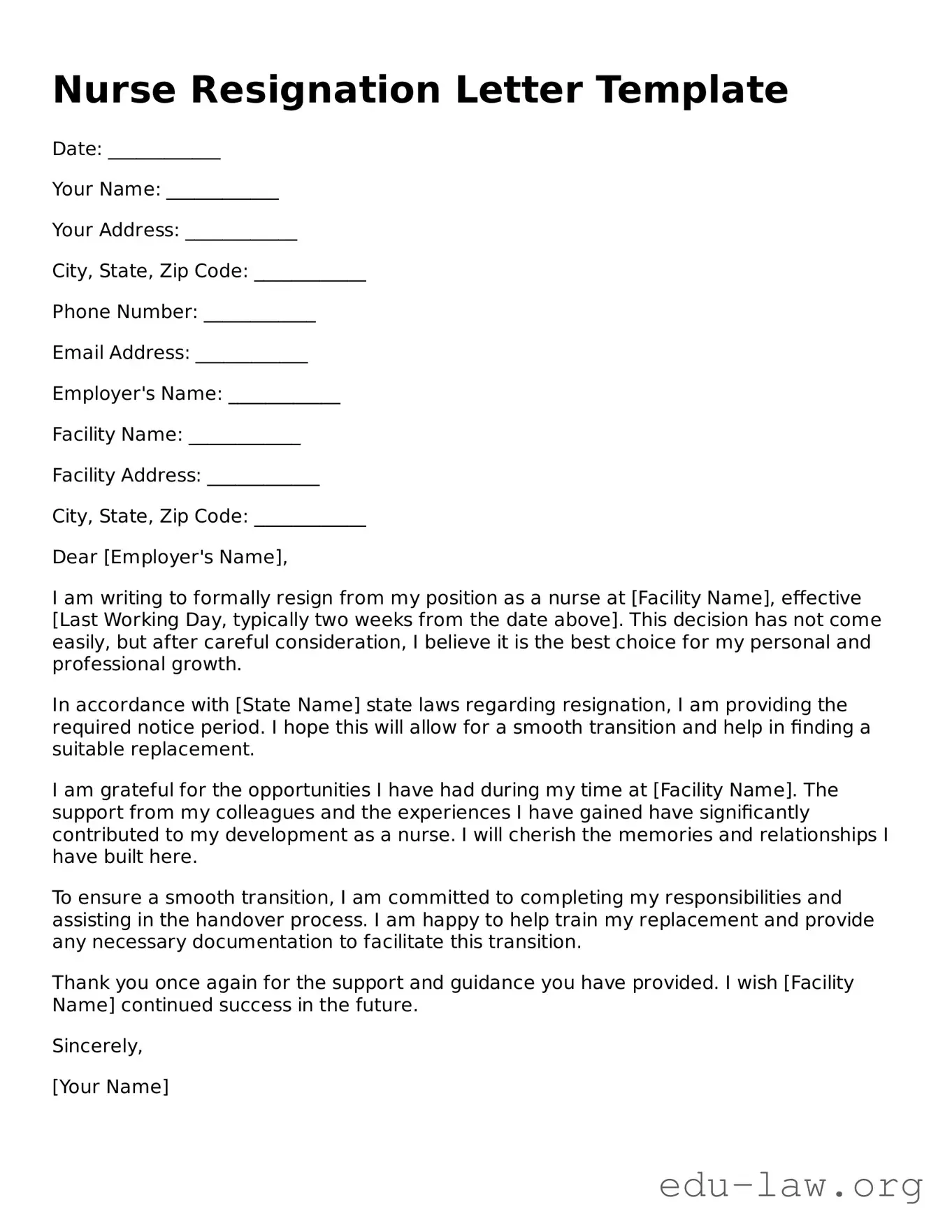
Nurse Resignation Letter Template
Date: ____________
Your Name: ____________
Your Address: ____________
City, State, Zip Code: ____________
Phone Number: ____________
Email Address: ____________
Employer's Name: ____________
Facility Name: ____________
Facility Address: ____________
City, State, Zip Code: ____________
Dear [Employer's Name],
I am writing to formally resign from my position as a nurse at [Facility Name], effective [Last Working Day, typically two weeks from the date above]. This decision has not come easily, but after careful consideration, I believe it is the best choice for my personal and professional growth.
In accordance with [State Name] state laws regarding resignation, I am providing the required notice period. I hope this will allow for a smooth transition and help in finding a suitable replacement.
I am grateful for the opportunities I have had during my time at [Facility Name]. The support from my colleagues and the experiences I have gained have significantly contributed to my development as a nurse. I will cherish the memories and relationships I have built here.
To ensure a smooth transition, I am committed to completing my responsibilities and assisting in the handover process. I am happy to help train my replacement and provide any necessary documentation to facilitate this transition.
Thank you once again for the support and guidance you have provided. I wish [Facility Name] continued success in the future.
Sincerely,
[Your Name]
| Fact Name | Details |
|---|---|
| Purpose | A Nurse Resignation Letter form is used by nurses to formally notify their employer of their intention to resign from their position. |
| Format | The letter should be clear and concise, typically including the nurse's last working day and reasons for leaving, if appropriate. |
| State-Specific Laws | In some states, like California, employers may require a notice period as per the California Labor Code. |
| Submission | The resignation letter should be submitted to the immediate supervisor or human resources department, and a copy may be kept for personal records. |
Once you have decided to resign from your nursing position, it's essential to communicate your decision professionally. Filling out the Nurse Resignation Letter form is a straightforward process that helps ensure a smooth transition. Follow these steps to complete the form effectively.
After completing the form, ensure that you keep a copy for your records. Submit the resignation letter to your supervisor and follow any additional procedures your workplace may have in place. This will help you leave on good terms and maintain your professional reputation.
What is a Nurse Resignation Letter form?
A Nurse Resignation Letter form is a document that a nurse uses to formally announce their decision to leave their position. This letter serves as a professional way to communicate the resignation to their employer and can help ensure a smooth transition. It typically includes the nurse's last working day and may express gratitude for the opportunities provided during their employment.
Why is it important to submit a resignation letter?
Submitting a resignation letter is important for several reasons. First, it provides official notice to your employer, allowing them to prepare for your departure. Second, it maintains professionalism and helps preserve relationships. Lastly, it can serve as a record of your resignation date, which may be important for future employment references or benefits.
What should be included in a Nurse Resignation Letter?
A Nurse Resignation Letter should include key elements such as your name, position, and the date of the letter. Clearly state your intention to resign and specify your last working day. It is also advisable to express appreciation for the experiences and support received during your time at the facility. Keeping the tone positive and professional is essential.
How much notice should I give before resigning?
Typically, a notice period of two weeks is standard in the nursing profession. However, check your employment contract or company policy, as some employers may require more notice. Providing adequate notice allows your employer time to find a replacement and helps maintain a good relationship, which can be beneficial for future job references.
Can I withdraw my resignation after submitting the letter?
Withdrawing a resignation is possible, but it can be complicated. If you change your mind after submitting your resignation letter, promptly communicate your desire to stay with your employer. Keep in mind that the decision ultimately rests with your employer, and they may have already begun the process of finding a replacement. Be prepared for any outcome.
Neglecting to Include a Clear Reason for Resignation: Many individuals forget to state why they are resigning. While it is not mandatory, providing a brief explanation can help maintain a positive relationship with the employer.
Failing to Specify the Last Working Day: It is crucial to mention the intended last day of work. This helps the employer plan for the transition and ensures clarity on your departure timeline.
Using an Unprofessional Tone: A resignation letter should remain professional and respectful. Avoid using informal language or expressing negative feelings about the workplace.
Not Proofreading the Letter: Spelling and grammatical errors can undermine the professionalism of the letter. Take the time to review the document before submission to ensure it reflects your best effort.
Omitting Contact Information: Including your contact details is essential. This allows for any follow-up communication regarding your resignation or future references.
When a nurse decides to resign, several documents may accompany the Nurse Resignation Letter. Each document serves a specific purpose in ensuring a smooth transition for both the employee and the employer.
These documents help facilitate a respectful and organized resignation process. Ensuring all necessary paperwork is completed can prevent misunderstandings and maintain professional relationships.
The Employee Resignation Letter is quite similar to the Nurse Resignation Letter. Both documents serve the same purpose: to formally announce an employee's decision to leave their job. They typically include the employee's last working day and may express gratitude for the opportunities provided by the employer. The tone is usually professional and respectful, ensuring a smooth transition and maintaining a positive relationship.
A Voluntary Resignation Letter is another document that shares similarities with the Nurse Resignation Letter. This type of letter is used by employees in various fields to indicate their choice to resign. Like the Nurse Resignation Letter, it outlines the effective date of resignation and can include a brief explanation for leaving. Both letters aim to communicate the decision clearly and professionally.
The Two Weeks Notice Letter is a common document that resembles the Nurse Resignation Letter. It is often used by employees to inform their employer of their intention to resign, typically with a two-week notice period. This letter emphasizes the employee's commitment to a smooth transition, similar to how a nurse would want to ensure continuity of care for patients before leaving their position.
The Retirement Letter also shares some features with the Nurse Resignation Letter. While a resignation letter indicates a departure for various reasons, a retirement letter specifically states that the employee is retiring from their career. Both letters communicate the finality of the decision and often express appreciation for the experiences gained during employment.
A Job Transfer Request Letter can be seen as similar in that it also involves a change in employment status, although not necessarily resignation. Nurses may use this document when seeking to transfer to a different department or facility. Both letters require a professional tone and clear communication about the desired changes in employment.
The Leave of Absence Letter may also bear some resemblance to the Nurse Resignation Letter. While this letter is used to request time away from work rather than a complete resignation, both documents require a formal approach. They communicate important information about the employee’s status and intentions, ensuring that the employer is informed and can plan accordingly.
Lastly, the Job Offer Acceptance Letter is similar in that it signifies a change in employment status, albeit in the opposite direction. This letter is sent when an individual accepts a job offer. Like the Nurse Resignation Letter, it is a formal document that outlines key details and expresses appreciation, but it marks the beginning of a new role instead of the end of an existing one.
When it comes to filling out a Nurse Resignation Letter form, it’s important to approach the task with care and consideration. Here are seven key things you should and shouldn't do:
Following these guidelines will help you resign gracefully and maintain a positive relationship with your employer and colleagues.
Misconceptions about the Nurse Resignation Letter form can lead to confusion and unnecessary stress. Here are nine common misunderstandings, along with clarifications to help you navigate the process more effectively.
Many believe that a verbal resignation is sufficient. However, a written letter provides a formal record of your decision and helps maintain professionalism.
Some think that a resignation letter needs to be elaborate. In reality, a concise letter is often more effective and appreciated.
While it is legally permissible to resign immediately, most employers appreciate a notice period. This courtesy helps maintain relationships and ensures a smoother transition.
Though there are common elements, there is flexibility in how you structure your letter. Personalizing it can make your message more genuine.
Some feel pressured to explain their departure. While it can be helpful, it is not mandatory. You can keep your reasons private if you choose.
Part-time and per diem nurses also benefit from submitting a resignation letter. It reflects professionalism, regardless of employment status.
While it is best to be certain before resigning, circumstances can change. Communicating openly with your employer can sometimes lead to a reconsideration.
Some nurses believe that resignation letters are only applicable when leaving the profession. However, they can also be used when transitioning to a different role within the same organization.
On the contrary, expressing appreciation for your experiences can leave a positive impression. Acknowledging your time at the facility can foster goodwill.
When filling out and using the Nurse Resignation Letter form, several key points should be considered to ensure a smooth transition. Below are important takeaways: