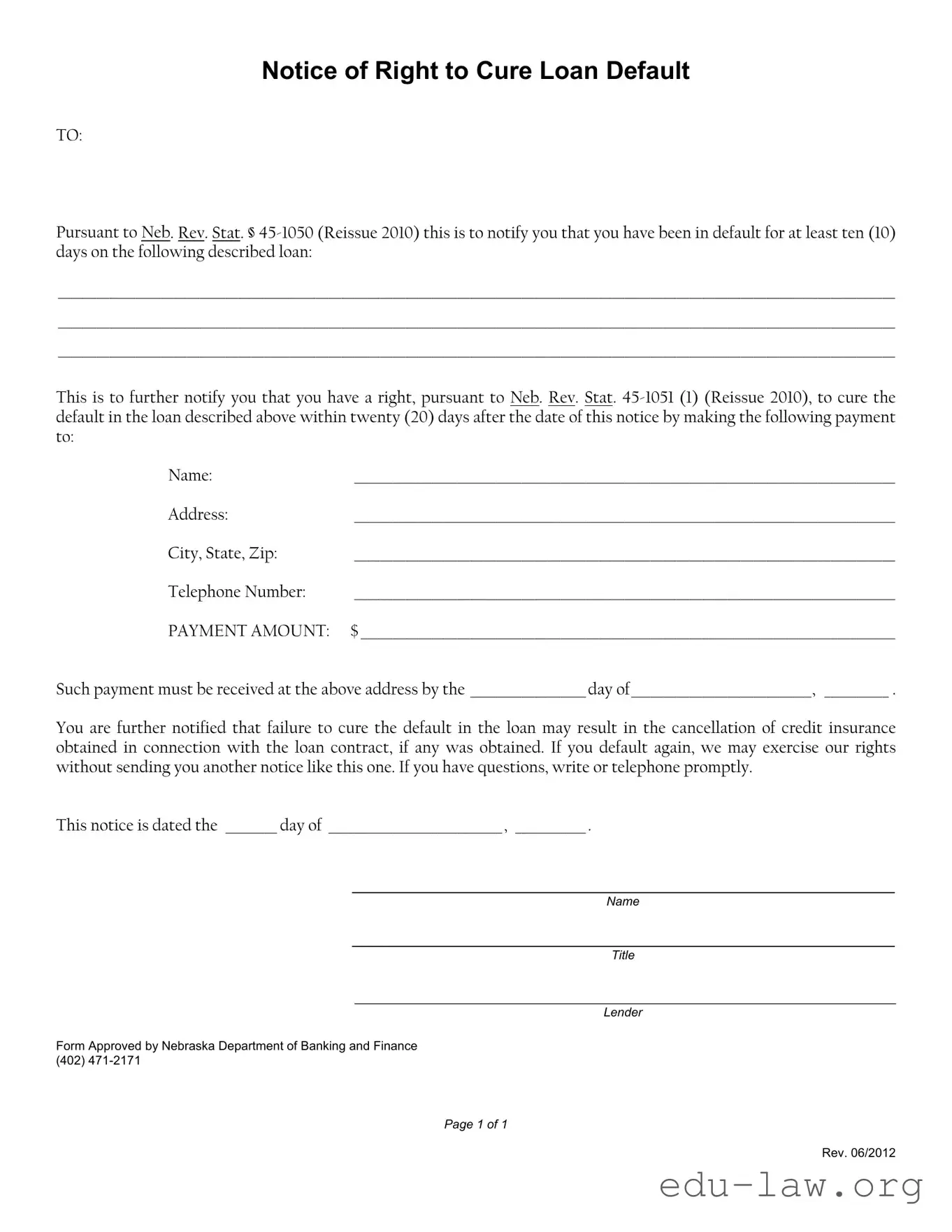
The Notice of Right to Cure Auto Loan Letter serves as a crucial communication tool between lenders and borrowers when a loan default occurs. This form outlines the details of the default, specifying that the borrower has been in default for at least ten days. It highlights the borrower's right to remedy the situation within twenty days, providing a clear path to resolve the issue. Key information is included, such as the payment amount needed to cure the default and the address where this payment must be sent. Additionally, the form warns that failure to address the default may lead to the cancellation of any associated credit insurance. It is also important to note that if the borrower defaults again, the lender may take action without issuing another notice. Clear instructions and contact information are provided, ensuring that borrowers have the opportunity to seek clarification or assistance if needed. This letter is not just a formality; it plays a vital role in protecting both the lender's interests and the borrower's rights.
Notice of Right to Cure Loan Default
TO:
Pursuant to Neb. Rev. Stat. §
__________________________________________________________________________________________________________________________________
__________________________________________________________________________________________________________________________________
__________________________________________________________________________________________________________________________________
This is to further notify you that you have a right, pursuant to Neb. Rev. Stat.
Name: |
____________________________________________________________________________________ |
Address: |
____________________________________________________________________________________ |
City, State, Zip: |
____________________________________________________________________________________ |
Telephone Number: |
____________________________________________________________________________________ |
PAYMENT AMOUNT: |
$ ___________________________________________________________________________________ |
Such payment must be received at the above address by the __________________ day of____________________________, __________ .
You are further notified that failure to cure the default in the loan may result in the cancellation of credit insurance obtained in connection with the loan contract, if any was obtained. If you default again, we may exercise our rights without sending you another notice like this one. If you have questions, write or telephone promptly.
This notice is dated the ________ day of ___________________________, ___________ .
_________________________________________________________
Name
_________________________________________________________
Title
__________________________________________________________
Lender
Form Approved by Nebraska Department of Banking and Finance (402)
Page 1 of 1
Rev. 06/2012
| Fact Name | Description |
|---|---|
| Purpose | This letter notifies borrowers of their right to cure a default on an auto loan. |
| Governing Law | The form is governed by Nebraska Revised Statutes § 45-1050 and § 45-1051 (Reissue 2010). |
| Default Period | Borrowers must have been in default for at least ten (10) days to receive this notice. |
| Cure Period | Borrowers have twenty (20) days from the date of the notice to cure the default. |
| Payment Requirement | The notice specifies the payment amount needed to cure the default. |
| Consequences of Non-Cure | Failure to cure the default may lead to cancellation of any associated credit insurance. |
After completing the Notice of Right to Cure Auto Loan Letter form, the next step involves sending it to the borrower. Ensure that all information is accurate and complete. The borrower will have a specified period to address the default before any further action is taken.
What is the Notice of Right to Cure Auto Loan Letter?
The Notice of Right to Cure Auto Loan Letter is a formal notification sent to borrowers who have defaulted on their auto loan payments. This letter informs the borrower that they have been in default for at least ten days and outlines their right to remedy the situation. Under Nebraska law, borrowers have a specific timeframe in which they can make the necessary payment to cure the default and avoid further consequences.
What does it mean to be in default on an auto loan?
Being in default on an auto loan means that the borrower has failed to make the required payments as outlined in the loan agreement. In this context, default typically occurs after a borrower has missed payments for a certain period, which is at least ten days according to the Notice of Right to Cure. Once in default, the lender has the right to take specific actions, which may include sending a notice or pursuing collection efforts.
How can a borrower cure the default?
A borrower can cure the default by making the specified payment to the lender within twenty days of receiving the notice. The payment amount and the address where it should be sent are detailed in the letter. It is crucial for the borrower to ensure that the payment is received by the lender by the deadline indicated in the notice to avoid further penalties or actions.
What happens if the borrower does not cure the default?
If the borrower fails to cure the default within the specified timeframe, they may face serious consequences. These can include the cancellation of any credit insurance associated with the loan and potential legal actions by the lender. Additionally, if the borrower defaults again in the future, the lender may not be required to send another notice before taking action.
Who should a borrower contact if they have questions about the notice?
The borrower should contact the lender directly if they have questions regarding the Notice of Right to Cure Auto Loan Letter. The letter provides the lender's name, address, and telephone number for inquiries. Prompt communication is encouraged to address any concerns or to discuss options for curing the default.
Not providing complete loan information. It is essential to fill in all relevant details about the loan to avoid confusion.
Missing the payment amount. Ensure the payment amount is clearly stated to indicate what is required to cure the default.
Failing to include the correct recipient information. Verify that the name, address, and contact details of the lender are accurate.
Not adhering to the deadline. Payments must be received by the specified date to cure the default.
Neglecting to sign the notice. A signature is necessary to validate the document and confirm its authenticity.
Overlooking the notification date. The date of the notice is crucial for determining the timeline for curing the default.
Ignoring the consequences of non-compliance. Understanding that failure to cure the default may lead to further actions is important.
When dealing with auto loan defaults, several important documents often accompany the Notice of Right to Cure Auto Loan Letter. Understanding these forms can help you navigate the process more effectively. Here are five key documents that you may encounter:
Each of these documents plays a crucial role in the process of addressing an auto loan default. Familiarizing yourself with them can empower you to take the necessary steps to protect your financial future. If you're facing challenges, act quickly and seek the appropriate assistance.
The Notice of Default Letter is a document that informs a borrower about their failure to meet the payment obligations of a loan. Similar to the Notice of Right to Cure Auto Loan Letter, it outlines the specific terms of the default and provides the borrower with a set timeframe to rectify the situation. This letter typically includes details such as the amount overdue and the consequences of failing to respond. Both documents serve as formal notifications, emphasizing the importance of addressing the default to avoid further legal action.
The Demand for Payment Letter is another document that shares similarities with the Notice of Right to Cure Auto Loan Letter. This letter is sent when a borrower has missed payments and is required to pay the outstanding balance. Like the Notice of Right to Cure, it specifies the amount owed and the deadline for payment. The primary goal of both letters is to prompt the borrower to take action before more severe measures, such as repossession or foreclosure, are initiated.
The Loan Modification Request Letter is relevant in this context as well. While the Notice of Right to Cure focuses on curing a default, the Loan Modification Request Letter seeks to change the terms of the loan agreement to make payments more manageable. Both documents involve communication between the borrower and lender, emphasizing the need for timely action to prevent negative consequences. They share a common purpose of finding a resolution before escalating the situation further.
The Foreclosure Notice is another document that parallels the Notice of Right to Cure Auto Loan Letter. It serves as a formal warning that the lender intends to initiate foreclosure proceedings due to a default. Like the Notice of Right to Cure, it provides the borrower with a specific timeframe to address the default. Both notices highlight the serious implications of failing to act, underscoring the urgency for the borrower to respond and rectify the situation.
The Payment Reminder Letter also bears similarities to the Notice of Right to Cure Auto Loan Letter. This document is typically sent prior to a default and serves as a gentle reminder of upcoming payments. While the Notice of Right to Cure addresses an existing default, both documents aim to maintain open communication between the borrower and lender. They encourage timely payments to prevent further complications and foster a positive relationship.
The Right to Reinstate Notice is another document that aligns with the Notice of Right to Cure Auto Loan Letter. This notice informs the borrower of their right to reinstate the loan after a default, typically by making a payment or fulfilling specific conditions. Both documents empower the borrower by outlining their rights and the necessary steps to avoid more severe consequences, such as repossession or foreclosure.
The Bankruptcy Notice is relevant in this context as well. When a borrower files for bankruptcy, they receive a notice that outlines their rights and obligations under bankruptcy law. Similar to the Notice of Right to Cure, it provides information on how to address debts and the potential consequences of inaction. Both documents aim to inform borrowers of their options and the importance of taking proactive steps to manage their financial situation.
Lastly, the Repossession Notice is similar to the Notice of Right to Cure Auto Loan Letter in that it informs the borrower of impending repossession due to default. This notice typically outlines the reasons for repossession and the steps the borrower can take to avoid it. Both documents emphasize the importance of addressing defaults and provide borrowers with the opportunity to rectify their situation before facing more severe consequences.
When filling out the Notice Of Right To Cure Auto Loan Letter form, it is essential to approach the task with care. Below are some important dos and don'ts to keep in mind:
Understanding the Notice of Right to Cure Auto Loan Letter is crucial for borrowers facing loan defaults. However, several misconceptions exist about this form. Here are seven common misunderstandings:
Being aware of these misconceptions can help borrowers navigate their rights and responsibilities more effectively.
When dealing with the Notice of Right to Cure Auto Loan Letter form, it is essential to understand its significance and how to use it effectively. Here are some key takeaways: