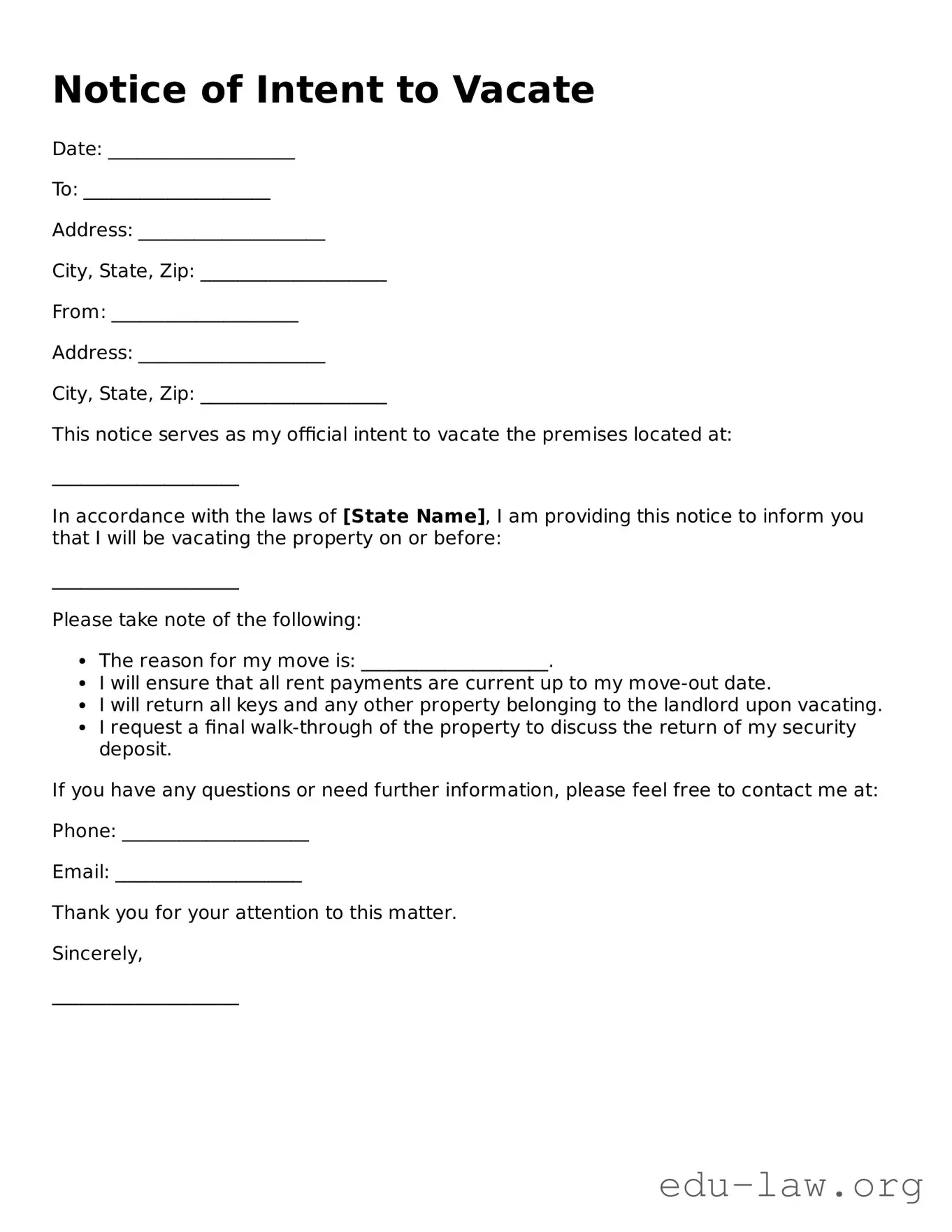
When a tenant decides to move out of a rental property, one of the first steps is to communicate this intention to the landlord or property manager. This is where the Notice of Intent to Vacate form comes into play. This form serves as a formal notification that a tenant plans to leave the premises, providing essential details such as the intended move-out date and any specific reasons for the departure, if applicable. It is crucial for both parties to understand the terms of the lease agreement, as the notice period may vary depending on local laws and the lease itself. By submitting this notice in writing, tenants can ensure they have a documented record of their intent, which can help avoid potential disputes over security deposits or lease violations. The form typically requires the tenant's signature, reinforcing the seriousness of the notification. Timely submission of this form can facilitate a smoother transition, allowing landlords to prepare for the vacancy and potential new tenants.
Notice of Intent to Vacate
Date: ____________________
To: ____________________
Address: ____________________
City, State, Zip: ____________________
From: ____________________
Address: ____________________
City, State, Zip: ____________________
This notice serves as my official intent to vacate the premises located at:
____________________
In accordance with the laws of [State Name], I am providing this notice to inform you that I will be vacating the property on or before:
____________________
Please take note of the following:
If you have any questions or need further information, please feel free to contact me at:
Phone: ____________________
Email: ____________________
Thank you for your attention to this matter.
Sincerely,
____________________
| Fact Name | Description |
|---|---|
| Purpose | The Notice of Intent to Vacate form is used by tenants to formally notify their landlord of their intention to leave the rental property. |
| Notice Period | Most states require tenants to provide a specific notice period, often ranging from 30 to 60 days, depending on the lease agreement and local laws. |
| State-Specific Forms | Each state may have its own version of the Notice of Intent to Vacate form, tailored to comply with local regulations. |
| Governing Laws | In California, for example, the governing law is found in California Civil Code Section 1946, which outlines the requirements for giving notice. |
| Delivery Methods | Tenants can usually deliver the notice via mail, email, or in person, but it’s important to follow the method specified in the lease agreement. |
Once you have decided to move out of your rental property, it’s important to formally notify your landlord. Completing the Notice of Intent to Vacate form is a crucial step in this process. After submitting the form, your landlord will have the opportunity to prepare for your departure and address any final details regarding your lease.
What is a Notice of Intent to Vacate form?
A Notice of Intent to Vacate form is a written document that a tenant provides to their landlord to inform them of their intention to move out of a rental property. This notice typically includes the date the tenant plans to vacate and may outline any other relevant details regarding the move-out process.
Why do I need to submit a Notice of Intent to Vacate?
Submitting a Notice of Intent to Vacate is essential for several reasons. It formally communicates your plans to the landlord, ensuring that both parties are on the same page. It also helps to establish a timeline for the move-out process, which can facilitate the return of your security deposit and any necessary inspections of the property.
How much notice do I need to give?
The amount of notice required varies by state and the terms of your lease agreement. Generally, a notice period of 30 days is common, but it can be shorter or longer depending on local laws or specific lease terms. Always check your lease and local regulations to ensure compliance.
What should I include in the Notice of Intent to Vacate?
Your Notice of Intent to Vacate should include your name, the address of the rental property, the date you plan to vacate, and any other relevant details, such as requests for a final inspection or information about the return of your security deposit. Keeping it clear and concise is key.
Do I need to send the Notice of Intent to Vacate by certified mail?
While it is not always required, sending the Notice of Intent to Vacate by certified mail can be a smart move. This method provides proof that the landlord received your notice and establishes a clear record of communication. Alternatively, you may deliver it in person, but ensure you keep a copy for your records.
What happens if I don’t submit a Notice of Intent to Vacate?
If you fail to submit a Notice of Intent to Vacate, you may be held responsible for rent until you formally notify your landlord. Depending on your lease agreement, you could also face penalties or complications regarding the return of your security deposit. It’s best to follow the proper procedures to avoid any misunderstandings.
Can I change my mind after submitting the Notice of Intent to Vacate?
Once you submit the Notice of Intent to Vacate, it may be difficult to retract it without consequences. However, communication is crucial. If you decide to stay, reach out to your landlord as soon as possible to discuss your situation. They may be willing to accommodate your request, depending on the circumstances.
What if I have a dispute with my landlord regarding the Notice of Intent to Vacate?
If a dispute arises, it’s important to document all communications and keep copies of your notice. You may also want to refer to your lease agreement and local tenant laws for guidance. If necessary, seeking assistance from a local tenant’s rights organization or legal expert can help resolve the issue effectively.
Neglecting to provide the correct address: One of the most common mistakes is failing to include the full and accurate address of the rental property. This can lead to confusion and delays in processing the notice.
Missing the required notice period: Many leases specify a notice period, often 30 days. Not adhering to this timeframe can result in complications or even financial penalties.
Failing to sign the form: It might seem obvious, but forgetting to sign the Notice of Intent to Vacate can render the document invalid. Always double-check for your signature before submission.
Not providing a forwarding address: Including a new mailing address is essential for receiving any future correspondence or security deposit refunds. Omitting this information can lead to complications later.
Using vague language: Being unclear about the intended move-out date can cause misunderstandings. Specify the exact date to ensure everyone is on the same page.
Overlooking lease terms: Review your lease agreement carefully. Some leases may have specific requirements or clauses related to vacating that must be followed to avoid issues.
Not keeping a copy: After submitting the form, it’s wise to retain a copy for your records. This can serve as proof of your intent and protect you if disputes arise.
Failing to communicate with the landlord: Simply sending the notice isn’t always enough. Engaging in a conversation with your landlord can clarify expectations and foster a smoother transition.
The Notice of Intent to Vacate form is an important document for tenants planning to leave a rental property. However, there are several other forms and documents that may be used in conjunction with this notice. Understanding these related documents can help ensure a smooth transition for both tenants and landlords.
Each of these documents plays a role in the moving process, helping to clarify responsibilities and ensure a smooth transition for everyone involved. Being aware of these forms can assist tenants in managing their move effectively.
The Notice of Intent to Vacate form is similar to a Lease Termination Notice. Both documents serve as formal communications from a tenant to a landlord, indicating the tenant's intention to end their lease agreement. A Lease Termination Notice typically specifies the date by which the tenant will vacate the property, allowing the landlord to prepare for the transition. The key difference lies in the context; a Lease Termination Notice is often used when a tenant is exercising their right to end the lease early, while the Notice of Intent to Vacate may be used at the end of a lease term.
Another document that shares similarities is the Move-Out Notice. This notice is generally used to inform the landlord of the tenant’s planned move-out date. Like the Notice of Intent to Vacate, it provides essential information about when the tenant will leave the property. The Move-Out Notice may also include details about the condition of the property upon leaving, which can help in facilitating the return of the security deposit.
A Security Deposit Return Request is also comparable. After giving a Notice of Intent to Vacate, tenants often submit this request to recover their security deposit. Both documents involve communication with the landlord regarding the end of the tenancy. However, while the Notice of Intent to Vacate states the tenant's intention to leave, the Security Deposit Return Request focuses on the financial aspect of the tenancy's conclusion.
The Eviction Notice is another document that bears resemblance. While it is issued by the landlord to the tenant, both documents signify a change in the tenant's living situation. An Eviction Notice typically indicates that a tenant must leave the property due to a breach of the lease, whereas the Notice of Intent to Vacate is initiated by the tenant voluntarily choosing to leave. Both documents are important in managing the transition of occupancy.
A Rent Payment Reminder can also be considered similar. This document serves as a notification to tenants about upcoming rent due dates. Both the Rent Payment Reminder and the Notice of Intent to Vacate are proactive communications aimed at ensuring clarity regarding tenancy. While one focuses on payments, the other addresses the tenant’s plans to vacate.
The Lease Renewal Notice has similarities as well. This document is sent by the landlord to inform tenants about the option to renew their lease. In contrast to the Notice of Intent to Vacate, which signifies a tenant’s decision to leave, the Lease Renewal Notice encourages tenants to stay. Both documents are part of the lease management process and require timely responses from tenants.
A Maintenance Request can also be compared to the Notice of Intent to Vacate. While a Maintenance Request addresses issues within the property, both documents involve communication between the tenant and landlord. They both require attention and action from the landlord, although they serve different purposes in the tenant-landlord relationship.
Lastly, a Tenant Feedback Form can be seen as similar. This document allows tenants to provide feedback about their living experience. Both the Tenant Feedback Form and the Notice of Intent to Vacate can be used to communicate important information to the landlord. However, the former focuses on the tenant’s experience, while the latter addresses the tenant’s plans to vacate.
When filling out the Notice of Intent to Vacate form, it is important to approach the task with care. Here are six key actions to consider, both what to do and what to avoid.
By following these guidelines, you can ensure a smoother transition as you prepare to move from your current residence.
Understanding the Notice of Intent to Vacate form can be crucial for both tenants and landlords. However, several misconceptions can lead to confusion and potential disputes. Here’s a closer look at six common misunderstandings:
By dispelling these misconceptions, both tenants and landlords can navigate the process more effectively, fostering better communication and reducing the likelihood of misunderstandings.
When filling out and using the Notice of Intent to Vacate form, consider the following key takeaways: