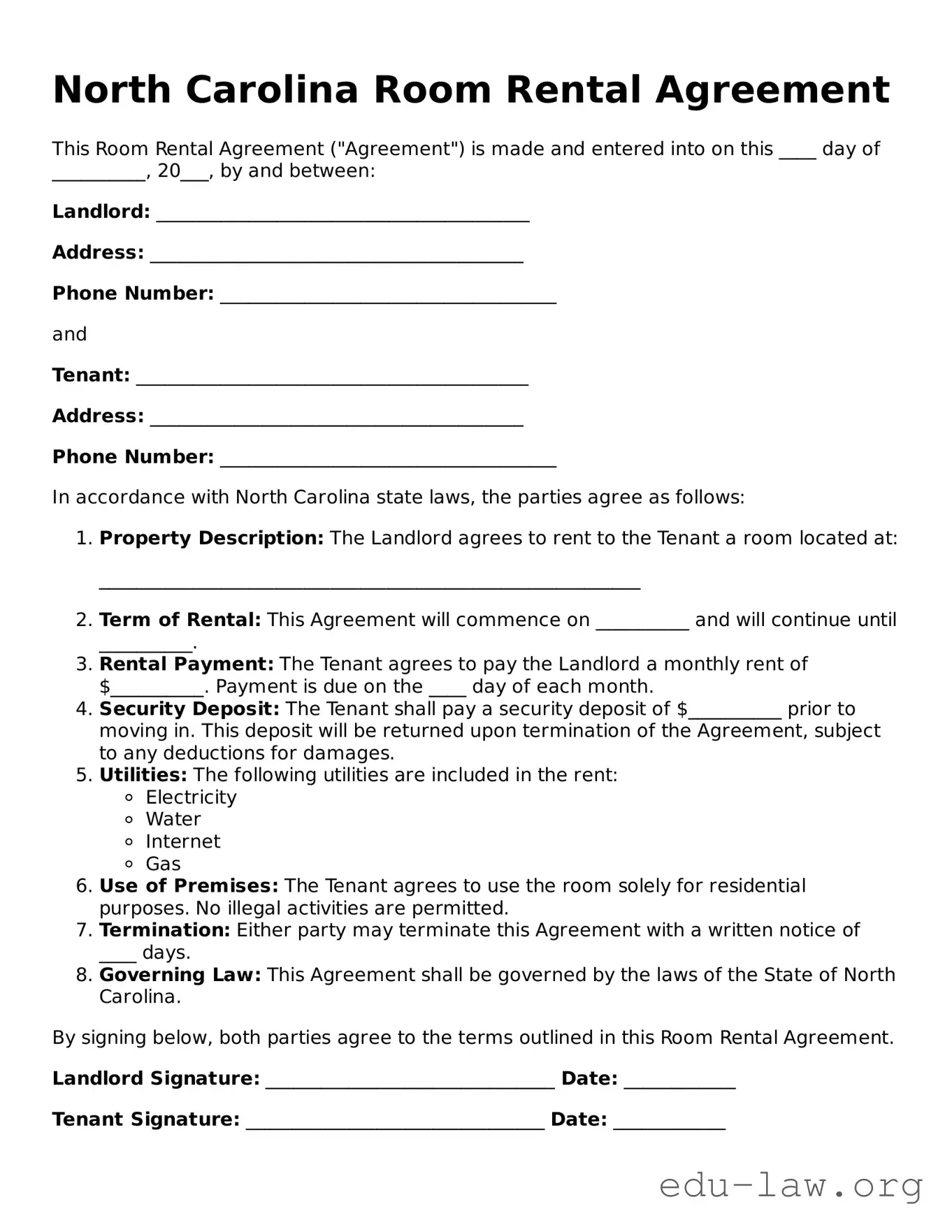
In the realm of property rentals, clarity and mutual understanding between landlords and tenants are paramount, particularly in North Carolina where the Room Rental Agreement form plays a crucial role. This document serves as a foundational tool that outlines the terms and conditions governing the rental of a room within a residential property. Key aspects covered include the duration of the rental period, the agreed-upon rental amount, and the responsibilities of both parties regarding maintenance and utilities. Additionally, it addresses security deposits, outlining the conditions under which they may be withheld or returned. By delineating rules related to occupancy, notice periods for termination, and any restrictions on use, this form not only protects the rights of both landlords and tenants but also fosters a transparent relationship. Understanding these elements is essential for anyone engaged in a room rental agreement, ensuring that expectations are clearly set from the outset.
North Carolina Room Rental Agreement
This Room Rental Agreement ("Agreement") is made and entered into on this ____ day of __________, 20___, by and between:
Landlord: ________________________________________
Address: ________________________________________
Phone Number: ____________________________________
and
Tenant: __________________________________________
Address: ________________________________________
Phone Number: ____________________________________
In accordance with North Carolina state laws, the parties agree as follows:
__________________________________________________________
By signing below, both parties agree to the terms outlined in this Room Rental Agreement.
Landlord Signature: _______________________________ Date: ____________
Tenant Signature: ________________________________ Date: ____________
| Fact Name | Description |
|---|---|
| Purpose | The North Carolina Room Rental Agreement form is used to outline the terms and conditions for renting a room in a residential property. |
| Governing Law | This agreement is governed by the North Carolina General Statutes, particularly Chapter 42, which covers landlord-tenant relationships. |
| Parties Involved | The agreement identifies the landlord and the tenant, ensuring clarity on who is responsible for the terms outlined. |
| Rental Amount | The form specifies the rental amount due, including the frequency of payments, such as monthly or weekly. |
| Security Deposit | It outlines the conditions regarding the security deposit, including the amount and the circumstances under which it may be withheld. |
| Duration of Agreement | The agreement states the length of the rental term, which can be fixed or periodic, depending on the arrangement. |
| Maintenance Responsibilities | Responsibilities for maintenance and repairs are detailed, clarifying what the landlord and tenant must manage. |
| Termination Conditions | The form describes the conditions under which either party may terminate the agreement, including notice requirements. |
Filling out the North Carolina Room Rental Agreement form is an important step in establishing the terms of a rental arrangement. Following these steps will help ensure that all necessary information is accurately recorded, paving the way for a smooth rental experience.
Once the form is completed and signed, keep copies for all parties involved. This ensures everyone has access to the agreed-upon terms and can refer back to them if needed.
What is the North Carolina Room Rental Agreement form?
The North Carolina Room Rental Agreement form is a legal document used when renting a room in a residential property. It outlines the terms and conditions of the rental, including the duration of the rental, payment details, and responsibilities of both the landlord and tenant. This form helps protect the rights of both parties and ensures everyone understands their obligations during the rental period.
What should be included in the Room Rental Agreement?
A comprehensive Room Rental Agreement should include several key components. First, it should specify the names of the landlord and tenant, along with their contact information. Next, it should detail the address of the rental property and the specific room being rented. Payment terms, including the amount of rent, due dates, and acceptable payment methods, should also be clearly stated. Additionally, the agreement should outline the duration of the rental, any security deposit requirements, and rules regarding maintenance and repairs.
How can I modify the Room Rental Agreement?
If you need to modify the Room Rental Agreement, it's important to do so in writing. Both parties should agree to any changes and sign the revised document. This ensures that everyone is on the same page and helps avoid misunderstandings later on. Common modifications might include changes to the rental amount, duration, or specific rules regarding the use of shared spaces.
What happens if either party violates the agreement?
If either the landlord or tenant violates the terms of the Room Rental Agreement, it can lead to various consequences. The first step is typically communication. Both parties should discuss the issue to see if it can be resolved amicably. If the violation continues, the affected party may have the right to terminate the agreement or seek legal action. It’s crucial for both parties to understand their rights and responsibilities as outlined in the agreement to minimize potential disputes.
Incomplete Information: Many individuals forget to fill out all required fields, such as names, addresses, or dates. Leaving any section blank can lead to delays or disputes later.
Incorrect Dates: Entering the wrong rental period can cause confusion. It’s essential to double-check the start and end dates to ensure they are accurate.
Neglecting Signatures: Some people overlook the necessity of signatures from all parties involved. Without proper signatures, the agreement may not be enforceable.
Misunderstanding Terms: Failing to read and comprehend the terms of the agreement can lead to misunderstandings. Take the time to review each section carefully.
Forgetting to Include Payment Details: It's crucial to specify the rent amount and payment schedule. Omitting this information can result in disputes over payments.
Ignoring Additional Fees: Some individuals forget to mention any additional fees, such as utilities or maintenance costs. Be sure to clarify all financial obligations.
Not Keeping Copies: Failing to make copies of the signed agreement can be problematic. Always retain a copy for personal records and ensure all parties have one as well.
Overlooking Local Laws: Some renters may not be aware of specific local laws or regulations that apply to rental agreements. Familiarizing oneself with these can prevent future issues.
When engaging in a room rental agreement in North Carolina, several other forms and documents can be essential for a smooth transaction. These documents help clarify responsibilities and protect both parties involved. Below is a list of commonly used forms that complement the Room Rental Agreement.
Utilizing these documents alongside the North Carolina Room Rental Agreement can help ensure a clear understanding between landlords and tenants. It is crucial to have everything documented to avoid misunderstandings and ensure a positive rental experience.
The North Carolina Room Rental Agreement is similar to a Lease Agreement, which is commonly used for longer-term rentals. Both documents outline the terms and conditions under which a tenant can occupy a property. They typically include information such as the rental amount, duration of the agreement, and responsibilities of both the landlord and tenant. While a Lease Agreement often covers a longer time frame, a Room Rental Agreement may focus on short-term arrangements, such as renting a room in a shared house.
Another document akin to the Room Rental Agreement is the Sublease Agreement. This agreement allows a tenant to rent out their leased space to another individual. Similar to a Room Rental Agreement, it details the rental terms, including the duration and payment obligations. However, a Sublease Agreement is usually established between an existing tenant and a new tenant, whereas a Room Rental Agreement is directly between the landlord and the tenant.
A Vacation Rental Agreement is also comparable to the Room Rental Agreement. This document is used for short-term rentals, often in tourist areas. Like the Room Rental Agreement, it specifies the rental period, payment details, and house rules. However, a Vacation Rental Agreement may include additional clauses specific to short stays, such as cleaning fees or security deposits, which are less common in standard room rentals.
The Rental Application is another related document. While it does not govern the rental terms, it is an essential step in the rental process. This application collects personal information from prospective tenants, such as employment history and references. Once approved, the details from the application often inform the subsequent Room Rental Agreement.
A Roommate Agreement is similar in that it governs the living arrangement between individuals sharing a space. This document typically outlines responsibilities for utilities, cleaning, and other shared expenses. While a Room Rental Agreement is usually between a landlord and a tenant, a Roommate Agreement focuses on the dynamics between individuals living together.
The Commercial Lease Agreement is another document that shares similarities with the Room Rental Agreement. This type of agreement is used for renting commercial properties. Both agreements specify rental terms, payment amounts, and responsibilities. However, a Commercial Lease may include clauses related to business operations, such as zoning and permitted uses, which are not typically found in residential agreements.
A Rental Termination Notice is also relevant. This document is used to formally notify a tenant or landlord of the intent to end a rental agreement. Similar to a Room Rental Agreement, it requires clear communication of the terms and conditions, such as the notice period. Both documents are crucial in ensuring that all parties understand their rights and obligations when ending a rental arrangement.
The Move-In/Move-Out Checklist is another important document that complements the Room Rental Agreement. This checklist helps both landlords and tenants assess the condition of the property at the beginning and end of the rental period. It serves as a record that can prevent disputes over security deposits, similar to how a Room Rental Agreement outlines expectations for property care.
Lastly, the Security Deposit Agreement is related to the Room Rental Agreement. This document details the terms under which a security deposit is collected and returned. Both agreements work together to protect the landlord's property while ensuring the tenant understands their financial responsibilities. The Security Deposit Agreement often includes specifics about what circumstances may lead to deductions from the deposit.
When filling out the North Carolina Room Rental Agreement form, attention to detail is crucial. Here’s a helpful list of dos and don’ts to guide you through the process.
By following these guidelines, you can ensure a smoother rental experience. Remember, clarity and thoroughness are key!
Understanding the North Carolina Room Rental Agreement form can be challenging. Here are six common misconceptions about this important document:
By clarifying these misconceptions, both landlords and tenants can better navigate the rental process in North Carolina.
When filling out and using the North Carolina Room Rental Agreement form, consider the following key takeaways: