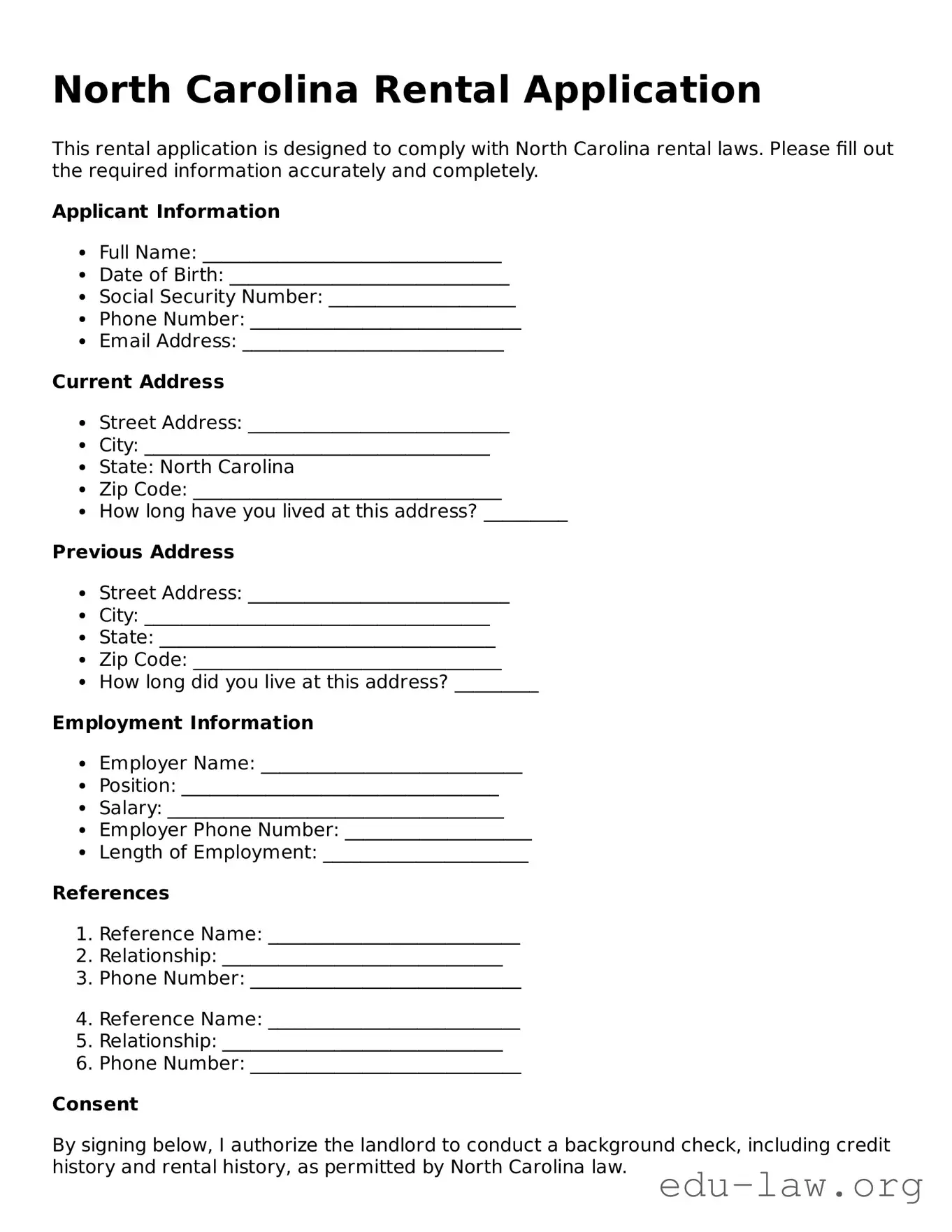
In North Carolina, the rental application form serves as a crucial tool for both landlords and prospective tenants, facilitating the rental process while ensuring that all parties are adequately informed. This form typically collects essential information about the applicant, including personal details such as name, contact information, and employment history. Additionally, it may require the applicant to disclose their rental history, references, and financial information, which helps landlords assess the suitability of potential tenants. The application often includes a section for the applicant to authorize a background check, providing landlords with insight into the applicant's creditworthiness and rental behavior. Furthermore, it is important to note that the rental application form may also outline any associated fees, such as application processing charges, which are typically non-refundable. Understanding the components of this form is vital for anyone navigating the rental market in North Carolina, as it lays the groundwork for a transparent and fair rental relationship.
North Carolina Rental Application
This rental application is designed to comply with North Carolina rental laws. Please fill out the required information accurately and completely.
Applicant Information
Current Address
Previous Address
Employment Information
References
Consent
By signing below, I authorize the landlord to conduct a background check, including credit history and rental history, as permitted by North Carolina law.
Signature: ___________________________ Date: _______________
| Fact Name | Description |
|---|---|
| Purpose | The North Carolina Rental Application form is used by landlords to screen potential tenants. |
| Governing Law | This form is governed by the North Carolina General Statutes, specifically Chapter 42, which covers landlord-tenant laws. |
| Information Required | Applicants must provide personal information, including their name, contact details, and rental history. |
| Credit Check | Landlords often conduct a credit check as part of the application process to assess financial reliability. |
| Application Fee | Landlords may charge a non-refundable application fee to cover the costs of screening applicants. |
| Equal Housing Opportunity | The application process must comply with the Fair Housing Act, ensuring no discrimination based on race, color, religion, sex, or national origin. |
| Signature Requirement | Applicants must sign the form to certify that the information provided is accurate and complete. |
| Processing Time | Typically, landlords will process applications within a few days, depending on the volume of applications received. |
| Approval Notification | Once a decision is made, landlords will notify applicants of their approval or denial status. |
Filling out the North Carolina Rental Application form is an important step in securing a rental property. Once you have completed the form, it will be submitted to the landlord or property management company for review. This process helps them assess your suitability as a tenant. Follow the steps below to ensure your application is filled out correctly.
Once your application is submitted, the landlord will typically review it and may contact you for further information or to schedule a meeting. Stay prepared for any follow-up questions they might have.
What is the purpose of the North Carolina Rental Application form?
The North Carolina Rental Application form is designed to help landlords screen potential tenants. It collects important information about the applicant, such as their employment history, rental history, and creditworthiness. By reviewing this information, landlords can make informed decisions about who to rent their properties to, ensuring a good fit for both parties.
What information do I need to provide on the application?
When filling out the application, you will typically need to provide personal details such as your name, address, and contact information. Additionally, be prepared to share your employment details, including your job title and income. Landlords may also ask for references from previous landlords or personal contacts. It's important to provide accurate and complete information to avoid any delays in the application process.
How long does the application process take?
The duration of the application process can vary. Generally, it may take anywhere from a few hours to a couple of days. Factors that can influence this timeline include how quickly the landlord can verify your information and whether they need to conduct background checks. To expedite the process, make sure to provide all requested documents and information promptly.
What happens if my application is denied?
If your application is denied, the landlord is required to inform you of the decision and the reasons behind it. Common reasons for denial include poor credit history, insufficient income, or negative rental history. You have the right to ask for a copy of your credit report and any other relevant information. Understanding the reasons for denial can help you address any issues before applying for another rental.
Incomplete Information: Many applicants fail to fill out all required fields. Leaving out crucial details can delay the application process.
Incorrect Contact Information: Providing wrong phone numbers or email addresses can lead to missed communication from landlords.
Failure to Disclose Rental History: Not mentioning past rental experiences or evictions can raise red flags for landlords.
Not Including References: Applicants often forget to list personal or professional references, which can strengthen their application.
Neglecting to Sign the Application: Forgetting to sign the form is a common mistake. An unsigned application is typically considered invalid.
Inaccurate Income Information: Misreporting income can lead to disqualification. It's important to be honest about financial situations.
Ignoring Background Check Consent: Some applicants overlook the section that allows landlords to conduct background checks. This consent is often necessary.
Not Following Instructions: Each rental application may have specific instructions. Ignoring these can result in an incomplete or rejected application.
When applying for a rental property in North Carolina, several documents may accompany the Rental Application form. These additional forms help landlords assess the suitability of potential tenants and ensure a smooth leasing process. Here are some commonly used documents:
These documents work together to create a comprehensive picture of the applicant, facilitating informed decisions for both landlords and tenants. Ensuring that all necessary forms are completed accurately can lead to a more efficient rental process.
The North Carolina Rental Application form shares similarities with the standard Lease Agreement. Both documents serve as essential tools in the rental process, establishing the terms and conditions of a rental arrangement. While the Lease Agreement outlines the responsibilities of both the landlord and tenant, the Rental Application focuses on gathering information about the prospective tenant, including their rental history and financial background. Both documents aim to protect the interests of the parties involved and ensure a clear understanding of the rental relationship.
Another document comparable to the North Carolina Rental Application is the Tenant Screening Report. This report provides a detailed analysis of a potential tenant's credit history, rental history, and criminal background. Like the Rental Application, it aims to assess the suitability of an applicant. Landlords often use both documents together to make informed decisions about whom to rent to, ensuring that they select tenants who are likely to fulfill their lease obligations.
The Rental Agreement is another document that bears resemblance to the North Carolina Rental Application. While the Rental Application is primarily concerned with tenant qualifications, the Rental Agreement formalizes the rental terms once a tenant is approved. Both documents require accurate information and can influence the landlord’s decision-making process. They work in tandem to create a comprehensive understanding of the rental arrangement.
Similarly, the Background Check Authorization form is akin to the North Carolina Rental Application. This form allows landlords to obtain permission from applicants to conduct background checks. Both documents are crucial in evaluating a tenant's reliability and trustworthiness. The Rental Application gathers initial information, while the Background Check Authorization provides a means to verify that information through third-party services.
The Employment Verification form is also similar to the North Carolina Rental Application. This document is used to confirm a tenant's employment status and income, which are critical factors in assessing their ability to pay rent. Both forms collect relevant information that helps landlords evaluate the financial stability of prospective tenants. They serve to ensure that applicants can meet their financial obligations under the lease.
Another document that aligns with the North Carolina Rental Application is the Rental History Verification form. This form is used to confirm the rental history provided by the applicant. It helps landlords verify the accuracy of the information submitted in the Rental Application. Both documents are essential for assessing a tenant's past behavior as a renter, which can be indicative of future conduct.
The Guarantor Agreement is also comparable to the North Carolina Rental Application. In situations where an applicant may not meet the financial criteria, a guarantor can provide additional security for the landlord. While the Rental Application assesses the primary tenant, the Guarantor Agreement ensures that there is a backup source of payment if the tenant defaults. Both documents work together to provide a safety net for landlords.
The Pet Application form is another document that shares similarities with the North Carolina Rental Application. This form is used when tenants wish to keep pets in the rental property. Both documents require detailed information about the applicant, including their history and intentions. Landlords may use both forms to assess the suitability of tenants, especially in properties with specific pet policies.
The Move-In Checklist also resembles the North Carolina Rental Application in that it documents the condition of the rental unit prior to occupancy. While the Rental Application focuses on tenant qualifications, the Move-In Checklist ensures that both parties agree on the state of the property. This document is important for preventing disputes regarding property conditions later on.
Lastly, the Security Deposit Agreement is similar to the North Carolina Rental Application in that it outlines the financial commitments of the tenant. This agreement details the amount of the security deposit and the conditions under which it may be withheld. Both documents are integral to the rental process, ensuring that tenants understand their financial responsibilities before moving in.
When filling out the North Carolina Rental Application form, it's important to ensure that you present yourself in the best light possible. Here are some helpful tips on what to do and what to avoid.
By following these guidelines, you can increase your chances of securing your desired rental property in North Carolina.
When it comes to the North Carolina Rental Application form, several misconceptions can lead to confusion for both landlords and tenants. Understanding these can help streamline the rental process and ensure a smoother experience for everyone involved.
Some believe that landlords can choose whether or not to use a rental application. In reality, most landlords require a completed application to assess potential tenants' qualifications and ensure they are a good fit for the property.
Many applicants think that submitting a rental application automatically secures them a lease. However, approval depends on various factors, including credit history, income verification, and rental history.
Not all rental applications are created equal. Different landlords may have different requirements and forms. It’s essential to read each application carefully and provide the requested information accurately.
Some applicants assume that rental applications are free. In many cases, landlords charge a fee to cover the costs of background checks and processing the application. It’s important to inquire about any fees upfront.
When filling out and using the North Carolina Rental Application form, it is essential to understand the following key points: