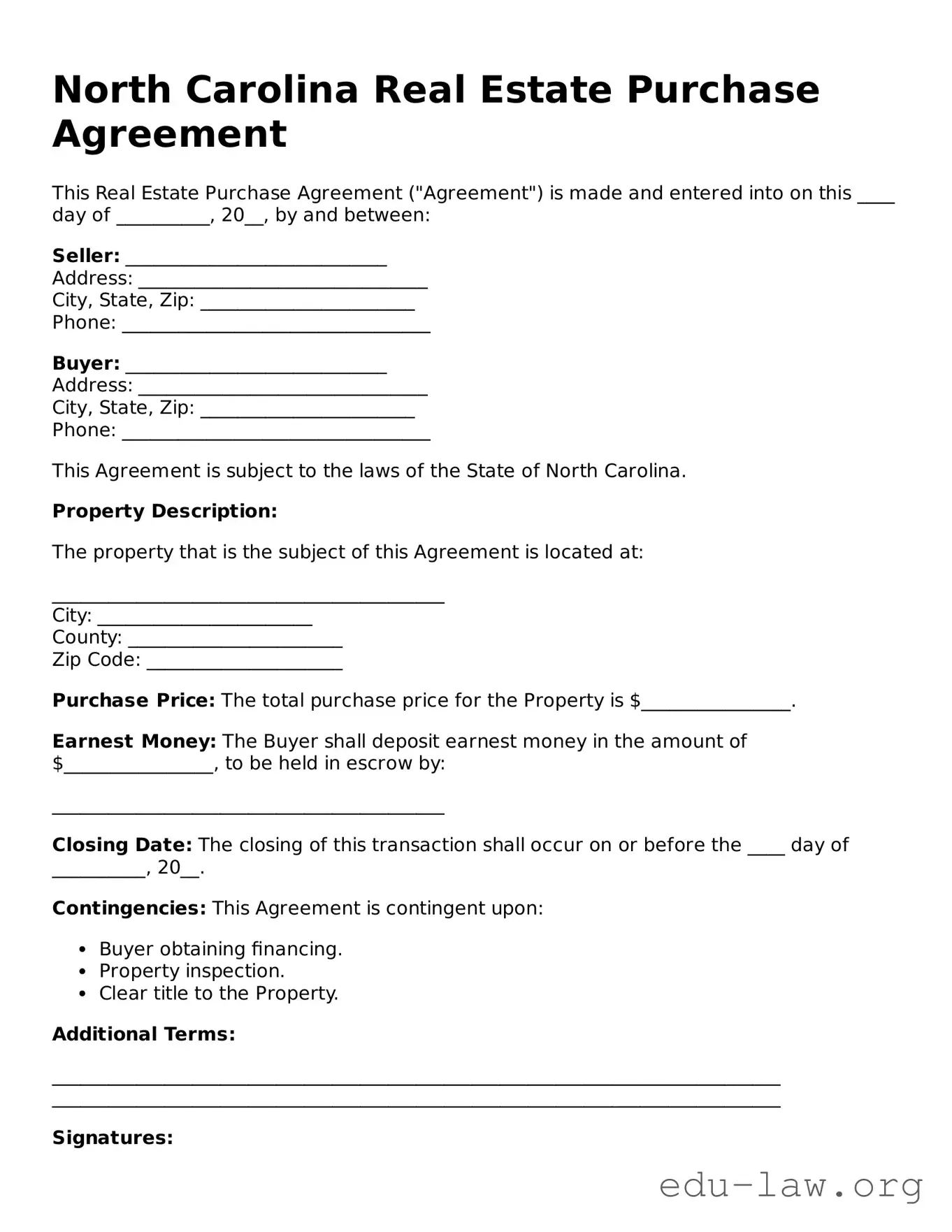
The North Carolina Real Estate Purchase Agreement form serves as a critical tool for buyers and sellers engaged in real estate transactions. This comprehensive document outlines the essential terms of the sale, including the purchase price, property description, and closing date. It also addresses contingencies, such as financing and inspections, ensuring that both parties have a clear understanding of their obligations. Key elements like earnest money deposits and the allocation of closing costs are specified, protecting the interests of both the buyer and the seller. Additionally, the agreement includes provisions for dispute resolution, which can help avoid potential conflicts down the line. Familiarity with this form is vital for anyone involved in the real estate market in North Carolina, as it lays the groundwork for a successful transaction.
North Carolina Real Estate Purchase Agreement
This Real Estate Purchase Agreement ("Agreement") is made and entered into on this ____ day of __________, 20__, by and between:
Seller: ____________________________
Address: _______________________________
City, State, Zip: _______________________
Phone: _________________________________
Buyer: ____________________________
Address: _______________________________
City, State, Zip: _______________________
Phone: _________________________________
This Agreement is subject to the laws of the State of North Carolina.
Property Description:
The property that is the subject of this Agreement is located at:
__________________________________________
City: _______________________
County: _______________________
Zip Code: _____________________
Purchase Price: The total purchase price for the Property is $________________.
Earnest Money: The Buyer shall deposit earnest money in the amount of $________________, to be held in escrow by:
__________________________________________
Closing Date: The closing of this transaction shall occur on or before the ____ day of __________, 20__.
Contingencies: This Agreement is contingent upon:
Additional Terms:
______________________________________________________________________________
______________________________________________________________________________
Signatures:
In witness whereof, the parties have executed this Agreement as of the date first above written.
Seller's Signature: ________________________________
Date: ___________________
Buyer's Signature: ________________________________
Date: ___________________
This Agreement constitutes the entire agreement between the parties. Any amendments must be in writing and signed by both parties.
| Fact Name | Description |
|---|---|
| Governing Law | The North Carolina Real Estate Purchase Agreement is governed by North Carolina General Statutes. |
| Parties Involved | The agreement typically involves a buyer and a seller, each of whom must be clearly identified. |
| Property Description | A detailed description of the property being sold is required, including its address and legal description. |
| Purchase Price | The total purchase price must be clearly stated, along with any earnest money deposit details. |
| Contingencies | Buyers may include contingencies, such as financing or inspection, which must be explicitly outlined. |
| Closing Date | The agreement should specify a closing date, which is the date when ownership is transferred. |
| Disclosures | North Carolina law requires certain disclosures, such as lead-based paint information for homes built before 1978. |
| Signatures | The agreement must be signed by both parties to be legally binding, indicating their acceptance of the terms. |
Filling out the North Carolina Real Estate Purchase Agreement form requires careful attention to detail. Once completed, this form will facilitate the transaction between the buyer and seller, outlining the terms and conditions of the sale.
After completing the form, review it carefully for accuracy. Each party should retain a copy for their records. Once both parties have signed, the agreement is binding.
What is the North Carolina Real Estate Purchase Agreement form?
The North Carolina Real Estate Purchase Agreement form is a legal document used in real estate transactions within the state. It outlines the terms and conditions under which a buyer agrees to purchase a property from a seller. This agreement typically includes details such as the purchase price, closing date, and any contingencies that must be met before the sale can proceed. It serves to protect both parties by clearly defining their rights and obligations throughout the transaction process.
Who should use the North Carolina Real Estate Purchase Agreement form?
This form is designed for use by individuals or entities involved in buying or selling real estate in North Carolina. Buyers and sellers, whether they are first-time homeowners or seasoned investors, can utilize this document to formalize their agreement. Real estate agents often assist in drafting this agreement to ensure that all necessary details are included and that it complies with state laws.
What are some key components of the North Carolina Real Estate Purchase Agreement?
Several important elements are typically included in the North Carolina Real Estate Purchase Agreement. These components often encompass the purchase price, the legal description of the property, the closing date, and any contingencies, such as financing or inspections. Additionally, the agreement may outline the responsibilities of both the buyer and seller regarding repairs, disclosures, and the handling of earnest money. Each section is crucial for ensuring clarity and mutual understanding between both parties.
Is it necessary to have a lawyer review the North Carolina Real Estate Purchase Agreement?
Incomplete Information: Many people forget to fill out all required fields. Leaving blanks can lead to confusion or delays in the transaction.
Incorrect Dates: Failing to enter accurate dates can create misunderstandings. Ensure that the date of the agreement and any deadlines are correct.
Misunderstanding Contingencies: Some buyers do not fully grasp what contingencies are necessary. It’s important to specify conditions like financing or inspections.
Neglecting to Include Earnest Money: Omitting details about earnest money can lead to issues. Clearly state the amount and how it will be handled.
Ignoring Property Descriptions: A vague description of the property can cause problems. Be specific about the property’s address and any included fixtures.
Not Consulting with Professionals: Some people fill out the form without seeking advice. Consulting a real estate agent or attorney can help avoid mistakes.
Overlooking Signatures: Forgetting to sign the agreement is a common error. Ensure that all necessary parties have signed before submission.
Failing to Review Terms: Many overlook the fine print. Carefully read all terms and conditions to understand what you are agreeing to.
Not Keeping Copies: After submission, some forget to keep a copy of the agreement. Always retain a signed copy for your records.
The North Carolina Real Estate Purchase Agreement form is a critical document in real estate transactions. However, several other forms and documents are commonly used alongside it to ensure a smooth and legally compliant process. Below is a list of these documents, each serving a specific purpose in the transaction.
Understanding these documents is essential for both buyers and sellers in a real estate transaction. Each plays a significant role in protecting the interests of the parties involved and facilitating a successful transfer of property ownership.
The North Carolina Real Estate Purchase Agreement form shares similarities with the Residential Purchase Agreement. Both documents outline the terms and conditions under which a buyer agrees to purchase residential property from a seller. Key elements such as purchase price, financing details, and contingencies are typically included in both forms. The Residential Purchase Agreement is often used in various states, adapting to local laws while maintaining a similar structure to facilitate the transaction process.
Another document akin to the North Carolina Real Estate Purchase Agreement is the Commercial Purchase Agreement. This form is used for transactions involving commercial properties. Like the residential version, it details the purchase price and terms but may also include clauses specific to commercial transactions, such as zoning laws and business use considerations. Both documents serve to protect the interests of buyers and sellers in real estate transactions.
The Offer to Purchase and Contract is also similar to the North Carolina Real Estate Purchase Agreement. This document is often used in North Carolina and serves as an initial offer from the buyer to the seller. It outlines essential terms like price and contingencies. Once both parties agree, it can evolve into a more formal purchase agreement, making it a critical step in the real estate transaction process.
The Lease Agreement is another related document, particularly when the property is being rented prior to sale. While primarily focused on rental terms, it may include clauses about the eventual sale of the property. Both agreements require clear terms and conditions to protect the rights of both parties, whether in a lease or a purchase scenario.
The Buyer Representation Agreement bears similarities as well. This document establishes a relationship between a buyer and a real estate agent. It outlines the agent's responsibilities and the buyer's obligations. Both the Buyer Representation Agreement and the Real Estate Purchase Agreement aim to clarify roles and expectations in the real estate process, ensuring a smoother transaction.
The Seller Disclosure Statement is another document that complements the Real Estate Purchase Agreement. This statement requires sellers to disclose known issues or defects with the property. It is crucial for buyers to have this information before finalizing the purchase. Both documents work together to ensure transparency and informed decision-making in real estate transactions.
The Title Commitment is also relevant. This document outlines the terms under which a title insurance policy will be issued. It provides information about the property’s legal status and any liens or encumbrances. Like the Real Estate Purchase Agreement, it is essential for protecting the interests of the buyer and ensuring a clear title upon purchase.
The Closing Disclosure is similar as well. This document provides a detailed breakdown of the final costs associated with the real estate transaction. It includes information about the loan, closing costs, and other fees. Both the Closing Disclosure and the Real Estate Purchase Agreement ensure that all parties are aware of the financial aspects of the transaction before closing.
The Escrow Agreement also shares similarities. This document outlines the terms under which funds are held in escrow until the transaction is completed. It ensures that both the buyer and seller fulfill their obligations before the funds are released. Both agreements are crucial for providing security and trust in real estate transactions.
Finally, the Construction Contract can be compared to the North Carolina Real Estate Purchase Agreement. While primarily used for new builds or renovations, it details the terms of construction work on a property. Both contracts define the scope of work, payment terms, and timelines, ensuring that all parties are clear about their responsibilities and expectations.
When filling out the North Carolina Real Estate Purchase Agreement form, it's important to be thorough and accurate. Here are some essential dos and don'ts to keep in mind:
By following these guidelines, you can help ensure that your Real Estate Purchase Agreement is completed correctly and efficiently.
When dealing with the North Carolina Real Estate Purchase Agreement form, it is important to clarify some common misconceptions that may arise. Understanding these can help ensure a smoother transaction process. Here are five misconceptions:
While it is highly recommended to have legal representation, it is not a legal requirement for every transaction. Buyers and sellers can choose to navigate the process independently, but having a lawyer can provide valuable guidance.
Many people believe that the terms outlined in the Purchase Agreement are set in stone. In reality, both parties can negotiate terms before finalizing the agreement, allowing for adjustments that suit their needs.
Some individuals think that a signed agreement is permanent. However, amendments can be made if both parties agree to the changes. It is essential to document any modifications properly.
This misconception overlooks the fact that the agreement is designed to protect both parties. It includes provisions that address the rights and obligations of both the buyer and the seller.
Contingencies can vary significantly based on the specific situation. Buyers and sellers can tailor these clauses to reflect their unique circumstances, which may include financing, inspections, and other conditions.
Understanding these misconceptions can empower individuals in their real estate transactions. It is always advisable to seek clarification and support when needed.
When engaging in a real estate transaction in North Carolina, understanding the Real Estate Purchase Agreement form is crucial. Here are some key takeaways to consider:
By following these takeaways, individuals can navigate the North Carolina Real Estate Purchase Agreement with greater confidence and clarity.