When starting a business in North Carolina, having a solid foundation is crucial, and the Operating Agreement plays a key role in that process. This essential document outlines the management structure, operational procedures, and financial arrangements of a limited liability company (LLC). It clearly defines the roles and responsibilities of members, ensuring everyone understands their contributions and expectations. Additionally, the agreement addresses how profits and losses will be shared, as well as the process for adding new members or handling member departures. By establishing rules for decision-making and dispute resolution, the Operating Agreement helps prevent misunderstandings and conflicts down the line. Whether you’re a seasoned entrepreneur or a first-time business owner, understanding the importance of this document is vital for the success and longevity of your LLC in North Carolina.
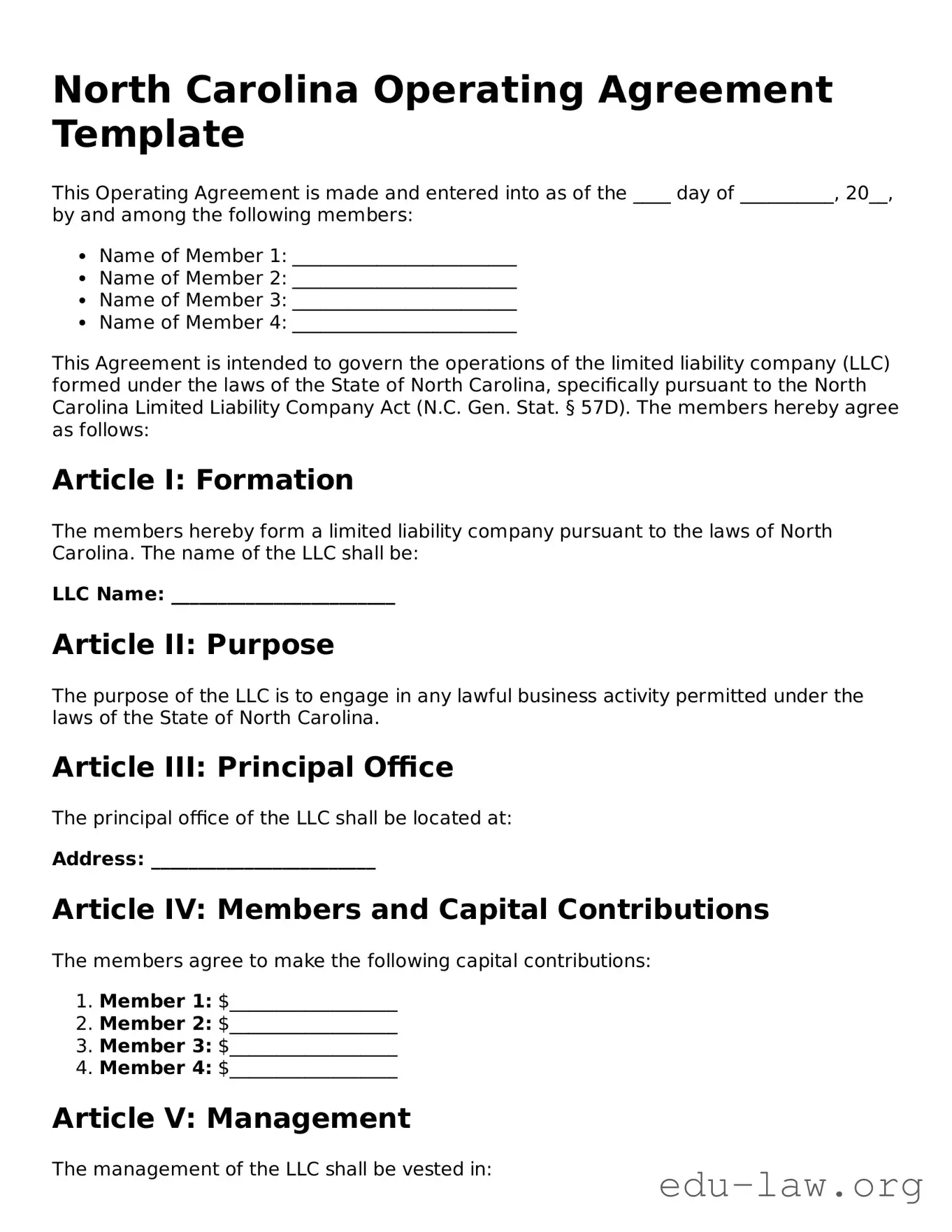
North Carolina Operating Agreement Template
This Operating Agreement is made and entered into as of the ____ day of __________, 20__, by and among the following members:
This Agreement is intended to govern the operations of the limited liability company (LLC) formed under the laws of the State of North Carolina, specifically pursuant to the North Carolina Limited Liability Company Act (N.C. Gen. Stat. § 57D). The members hereby agree as follows:
Article I: Formation
The members hereby form a limited liability company pursuant to the laws of North Carolina. The name of the LLC shall be:
LLC Name: ________________________
Article II: Purpose
The purpose of the LLC is to engage in any lawful business activity permitted under the laws of the State of North Carolina.
Article III: Principal Office
The principal office of the LLC shall be located at:
Address: ________________________
Article IV: Members and Capital Contributions
The members agree to make the following capital contributions:
Article V: Management
The management of the LLC shall be vested in:
If the LLC is manager-managed, the following individuals shall serve as managers:
Article VI: Distributions
Distributions of profits and losses shall be made to the members in proportion to their respective capital contributions, unless otherwise agreed upon in writing.
Article VII: Amendment
This Operating Agreement may be amended only by a written agreement signed by all members.
Article VIII: Governing Law
This Agreement shall be governed by and construed in accordance with the laws of the State of North Carolina.
IN WITNESS WHEREOF, the members have executed this Operating Agreement as of the date first above written.
Member 1 Signature: ________________________
Member 2 Signature: ________________________
Member 3 Signature: ________________________
Member 4 Signature: ________________________
| Fact Name | Description |
|---|---|
| Purpose | The North Carolina Operating Agreement outlines the management structure and operational procedures of a limited liability company (LLC). |
| Governing Law | This agreement is governed by the North Carolina General Statutes, specifically Chapter 57D. |
| Members | All members of the LLC should be included in the agreement, detailing their rights and responsibilities. |
| Management Structure | The agreement can specify whether the LLC is member-managed or manager-managed, affecting decision-making processes. |
| Capital Contributions | Details regarding initial and future capital contributions from members must be clearly defined. |
| Profit Distribution | The method for distributing profits and losses among members is outlined in the agreement. |
| Amendments | Procedures for amending the Operating Agreement should be included to allow for future changes. |
| Dispute Resolution | Provisions for resolving disputes among members can be specified to avoid litigation. |
| Importance | Having an Operating Agreement is crucial for protecting members' interests and ensuring compliance with state laws. |
Filling out the North Carolina Operating Agreement form is an essential step for those looking to establish a limited liability company (LLC) in the state. Once you have completed the form, you will be ready to finalize your business structure and move forward with your plans.
What is a North Carolina Operating Agreement?
A North Carolina Operating Agreement is a document that outlines the management structure and operating procedures of a limited liability company (LLC) in North Carolina. It serves as a foundational agreement among the members of the LLC, detailing their rights, responsibilities, and obligations. This agreement is essential for ensuring smooth operations and resolving potential disputes among members.
Is an Operating Agreement required in North Carolina?
While North Carolina does not legally require LLCs to have an Operating Agreement, it is highly recommended. Having an Operating Agreement can help clarify the roles of members, establish procedures for decision-making, and provide guidelines for profit distribution. Without it, state laws will govern the LLC, which may not align with the members' intentions.
Who should create the Operating Agreement?
The members of the LLC should collaborate to create the Operating Agreement. It is important for all members to be involved in the drafting process to ensure that everyone's interests and expectations are addressed. Seeking assistance from a legal professional can also help ensure that the agreement is comprehensive and compliant with state laws.
What should be included in the Operating Agreement?
The Operating Agreement should cover several key areas, including the LLC's purpose, the roles and responsibilities of members, management structure, voting rights, and procedures for adding or removing members. Additionally, it should outline how profits and losses will be distributed and the process for dissolving the LLC if necessary.
Can the Operating Agreement be changed after it is created?
Yes, the Operating Agreement can be amended after it is created. Members should agree on any changes, and it is advisable to document these amendments in writing. This ensures that all members are aware of the updated terms and helps prevent misunderstandings in the future.
What happens if there is no Operating Agreement?
If an LLC does not have an Operating Agreement, it will be governed by North Carolina's default LLC laws. These laws may not reflect the specific wishes of the members and could lead to complications in decision-making and profit distribution. In the event of a dispute, members may find themselves without clear guidelines, which can lead to costly legal battles.
How can I obtain a North Carolina Operating Agreement form?
You can obtain a North Carolina Operating Agreement form through various online resources, including legal websites and templates. Additionally, consulting with a legal professional can provide you with a customized agreement tailored to your specific needs and circumstances.
Is it necessary to file the Operating Agreement with the state?
No, the Operating Agreement does not need to be filed with the state of North Carolina. It is an internal document meant for the members of the LLC. However, it is important to keep it in a safe place and ensure that all members have access to it, as it will serve as a reference for the LLC's operations and member relationships.
Neglecting to Include All Members: One common mistake is failing to list all members of the LLC. Every member should be clearly identified in the agreement to ensure that all parties are recognized and their rights are protected.
Inadequate Description of Member Roles: Another frequent error involves not specifying the roles and responsibilities of each member. Clearly defining these roles can prevent misunderstandings and disputes in the future.
Omitting Voting Rights: Some people forget to outline the voting rights of members. It's essential to detail how decisions will be made, including the voting process and any thresholds required for approval.
Ignoring Amendment Procedures: Lastly, many overlook the importance of including procedures for amending the agreement. Establishing a clear process for future changes can help maintain the LLC's flexibility and adaptability.
When forming a limited liability company (LLC) in North Carolina, the Operating Agreement is a key document. However, several other forms and documents are often used alongside it to ensure compliance and proper management of the business. Here are five important documents that you may need:
Having these documents in place can help streamline the management of your LLC and provide clarity for all members involved. They work together to create a solid foundation for your business operations in North Carolina.
The North Carolina Operating Agreement is similar to a Partnership Agreement. Both documents outline the structure, roles, and responsibilities of the parties involved in a business. A Partnership Agreement specifically addresses the relationships between partners, including profit-sharing and decision-making processes. Like an Operating Agreement, it serves as a foundational document to prevent disputes and clarify expectations among partners.
Another document that shares similarities is the LLC Membership Agreement. This agreement is specifically designed for Limited Liability Companies (LLCs) and outlines the rights and obligations of members. Much like the Operating Agreement, it details management structures, voting rights, and profit distributions. Both documents aim to protect the interests of the members and provide a clear operational framework.
The Corporate Bylaws document is also comparable. While it is specific to corporations, it serves a similar purpose by defining how the corporation will be governed. It includes information on board meetings, shareholder voting, and officer responsibilities. Both the Bylaws and the Operating Agreement establish rules for operation and governance, ensuring all parties understand their roles.
A Shareholder Agreement is another related document. This agreement is used by corporations to outline the rights and obligations of shareholders. It addresses issues such as share transfers, buy-sell agreements, and dispute resolution. Like the Operating Agreement, it is designed to minimize conflicts and provide clarity in business operations.
The Joint Venture Agreement is also akin to the Operating Agreement. This document outlines the terms of collaboration between two or more parties for a specific project. It details contributions, profit-sharing, and management roles. Similar to an Operating Agreement, it aims to define expectations and responsibilities to foster a successful partnership.
The Non-Disclosure Agreement (NDA) shares some conceptual similarities. While it focuses on confidentiality rather than operational procedures, both documents protect the interests of the parties involved. An NDA ensures that sensitive information remains private, just as an Operating Agreement safeguards the rights and responsibilities of business members.
The Franchise Agreement is another document that bears resemblance. This agreement outlines the relationship between a franchisor and franchisee. It details operational guidelines, fees, and support systems. Like the Operating Agreement, it provides a framework for how the business will operate and sets expectations for both parties.
The Employment Agreement is also comparable in that it defines the relationship between an employer and employee. It outlines job responsibilities, compensation, and termination conditions. While it is more focused on individual roles, both agreements aim to clarify expectations and protect the rights of the parties involved.
A Buy-Sell Agreement is similar as it pertains to business ownership transitions. It establishes how ownership interests will be transferred in the event of certain triggering events, such as death or retirement. Like the Operating Agreement, it is essential for ensuring that all parties understand their rights and obligations regarding ownership changes.
Finally, the Articles of Organization is a foundational document for LLCs that parallels the Operating Agreement. While the Articles establish the LLC's existence and basic structure, the Operating Agreement provides detailed operational guidelines. Both documents are crucial for the legal formation and operation of an LLC in North Carolina.
When filling out the North Carolina Operating Agreement form, it's essential to approach the task with care. Here are ten important dos and don'ts to keep in mind:
By following these tips, you can help ensure that your Operating Agreement is completed correctly and serves your business well.
Many people have misunderstandings about the North Carolina Operating Agreement form. Here are seven common misconceptions:
Understanding these misconceptions can help you make informed decisions about your LLC and its management. It is always best to consult with a professional if you have questions or concerns about your Operating Agreement.
When forming a Limited Liability Company (LLC) in North Carolina, an Operating Agreement is a crucial document. Here are some key takeaways to consider when filling out and using the North Carolina Operating Agreement form:
By keeping these points in mind, you can create an Operating Agreement that serves as a strong foundation for your LLC, helping to safeguard your interests and streamline operations.