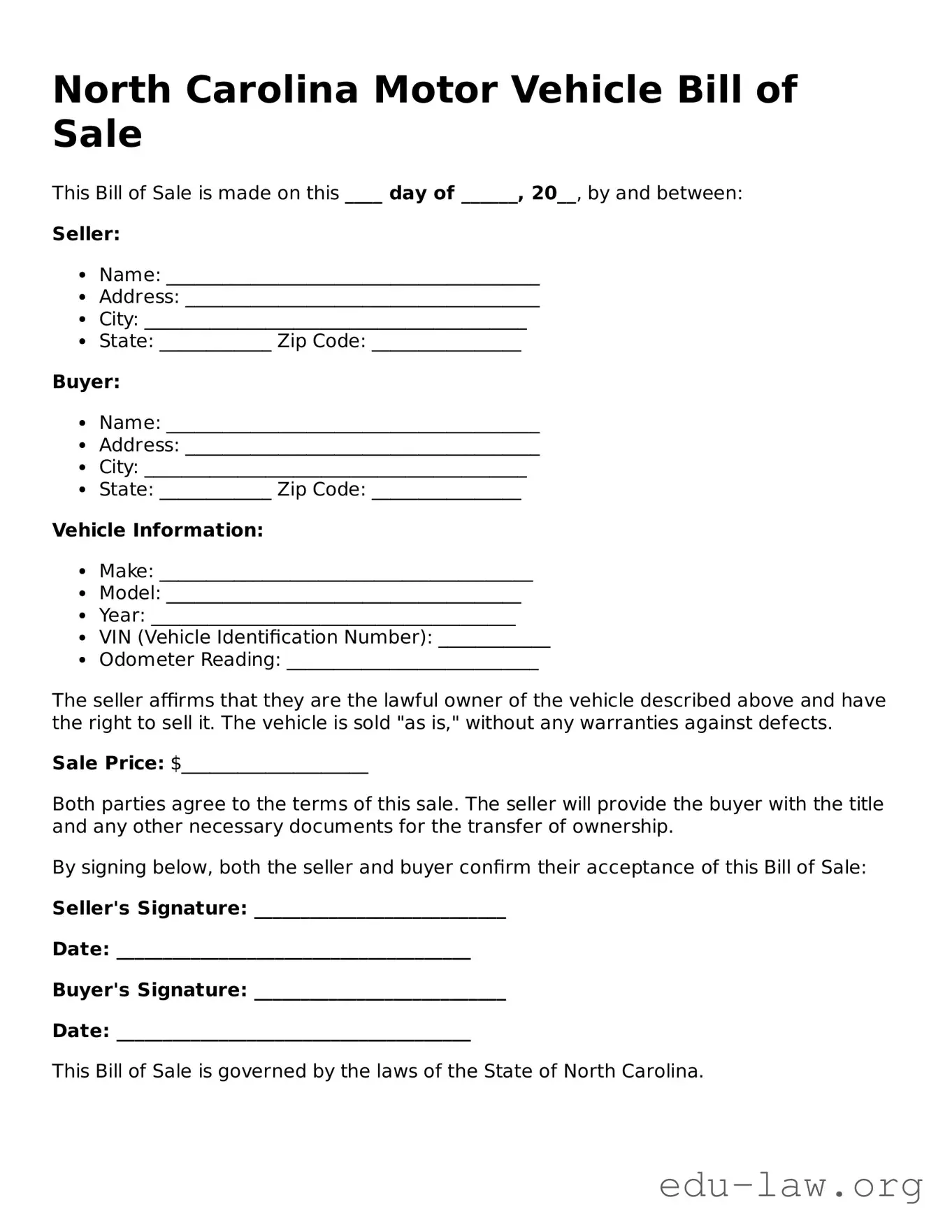
The North Carolina Motor Vehicle Bill of Sale form serves as a crucial document in the process of transferring ownership of a vehicle. This form captures essential information about the buyer, the seller, and the vehicle itself, ensuring that both parties have a clear understanding of the transaction. Key details include the vehicle's make, model, year, and Vehicle Identification Number (VIN), which are vital for identifying the specific vehicle being sold. The form also outlines the sale price and may include any terms or conditions agreed upon by the buyer and seller. Additionally, it provides a space for signatures, which signifies that both parties acknowledge and agree to the terms of the sale. This document not only protects the interests of both parties but also serves as an official record for future reference, especially when it comes to registration and title transfer with the North Carolina Division of Motor Vehicles. Understanding the importance of this form can help ensure a smooth and legally sound transaction when buying or selling a vehicle in the state.
North Carolina Motor Vehicle Bill of Sale
This Bill of Sale is made on this ____ day of ______, 20__, by and between:
Seller:
Buyer:
Vehicle Information:
The seller affirms that they are the lawful owner of the vehicle described above and have the right to sell it. The vehicle is sold "as is," without any warranties against defects.
Sale Price: $____________________
Both parties agree to the terms of this sale. The seller will provide the buyer with the title and any other necessary documents for the transfer of ownership.
By signing below, both the seller and buyer confirm their acceptance of this Bill of Sale:
Seller's Signature: ___________________________
Date: ______________________________________
Buyer's Signature: ___________________________
Date: ______________________________________
This Bill of Sale is governed by the laws of the State of North Carolina.
| Fact Name | Details |
|---|---|
| Purpose | The North Carolina Motor Vehicle Bill of Sale form serves as a legal document to record the transfer of ownership of a motor vehicle from one party to another. |
| Governing Law | This form is governed by North Carolina General Statutes, particularly Chapter 20, which covers motor vehicle regulations. |
| Required Information | The form requires essential details such as the vehicle's make, model, year, VIN (Vehicle Identification Number), and the sale price. |
| Signatures | Both the seller and buyer must sign the form to validate the transaction and confirm the transfer of ownership. |
| Notarization | While notarization is not mandatory for the Bill of Sale in North Carolina, it is highly recommended to provide additional legal protection. |
| Use for Registration | This document is often required when registering the vehicle in the buyer's name at the Department of Motor Vehicles (DMV). |
| Tax Implications | The sale price noted on the Bill of Sale may be used to calculate the sales tax owed by the buyer upon registration. |
| Record Keeping | It is advisable for both parties to keep a copy of the Bill of Sale for their records, as it can serve as proof of the transaction. |
| Availability | The North Carolina Motor Vehicle Bill of Sale form can typically be obtained online through the North Carolina DMV website or in person at local DMV offices. |
After obtaining the North Carolina Motor Vehicle Bill of Sale form, you will need to complete it accurately to ensure a smooth transaction. This document serves as proof of sale and will be important for both the buyer and the seller. Follow these steps to fill out the form correctly.
Once you have completed the form, keep a copy for your records. The buyer should also retain a copy as proof of purchase. This documentation will be useful when registering the vehicle with the DMV.
What is a Motor Vehicle Bill of Sale in North Carolina?
A Motor Vehicle Bill of Sale is a legal document that serves as proof of the sale and transfer of ownership of a vehicle. In North Carolina, this form is essential for both the buyer and seller, as it provides a record of the transaction and can be used for title transfer purposes.
Why is a Bill of Sale necessary?
The Bill of Sale is important for several reasons. It protects the interests of both parties by documenting the sale details, including the vehicle's make, model, and VIN. Additionally, it can help resolve disputes that may arise after the sale and is often required when registering the vehicle with the Department of Motor Vehicles (DMV).
What information is required on the Bill of Sale?
The form typically requires information such as the names and addresses of both the buyer and seller, the vehicle's details (make, model, year, VIN), the sale price, and the date of the transaction. Both parties should sign the document to validate the sale.
Do I need to have the Bill of Sale notarized?
In North Carolina, notarization is not a requirement for the Bill of Sale. However, having the document notarized can provide an extra layer of security and authenticity, which may be beneficial in case of disputes.
Can I use a generic Bill of Sale form?
While you can use a generic Bill of Sale form, it is advisable to use the specific North Carolina Motor Vehicle Bill of Sale form. This ensures that all necessary information is included and complies with state regulations, making the process smoother for title transfer.
Is there a fee associated with the Bill of Sale?
There is no fee for creating a Bill of Sale itself; however, there may be fees associated with the title transfer process at the DMV. It's important to check with local DMV offices for specific fee information related to vehicle registration and title transfers.
What if the vehicle has a lien on it?
If the vehicle has a lien, it is crucial to address this before completing the sale. The seller should ensure that the lien is satisfied and that the title is clear. The Bill of Sale should reflect any lien status to avoid complications for the buyer.
How does the Bill of Sale affect vehicle registration?
The Bill of Sale is a key document when registering the vehicle in the buyer's name. It serves as proof of ownership and is often required by the DMV to process the title transfer. Without it, the registration may be delayed or denied.
What should I do after completing the Bill of Sale?
After completing the Bill of Sale, both parties should keep a copy for their records. The seller should also provide the buyer with any additional documentation required for the title transfer. Finally, the buyer should visit the DMV to register the vehicle under their name as soon as possible.
Can I cancel the Bill of Sale after it has been signed?
Once the Bill of Sale has been signed by both parties, it generally becomes a binding agreement. Cancelling it may not be straightforward and could require mutual consent. If issues arise, it's advisable to consult with a legal professional to explore options.
Incomplete Information: Many individuals forget to fill out all required fields. This can include missing the vehicle identification number (VIN), the sale price, or the names and addresses of both the buyer and the seller. Without complete information, the document may not be valid.
Incorrect VIN: The VIN is crucial for identifying the vehicle. Some people mistakenly enter the wrong VIN, which can lead to complications in the registration process. Always double-check the VIN against the title or registration documents.
Not Signing the Document: A common oversight is neglecting to sign the bill of sale. Both the buyer and seller must sign the document for it to be legally binding. Failure to do so can create disputes later on.
Not Keeping Copies: After completing the bill of sale, individuals often forget to make copies. It is important to keep a copy for your records. This can be useful for future reference or in case any issues arise after the sale.
The North Carolina Motor Vehicle Bill of Sale form serves as a crucial document in the process of transferring ownership of a vehicle. However, several other forms and documents often accompany this bill of sale to ensure a smooth and legally sound transaction. Below is a list of these important documents, each described briefly for clarity.
These documents collectively ensure that the transfer of vehicle ownership is conducted legally and transparently. Each plays a vital role in protecting the interests of both the buyer and the seller, making the vehicle sale process more efficient and secure.
The North Carolina Motor Vehicle Bill of Sale form shares similarities with the Vehicle Title Transfer form. Both documents serve as crucial records in the transfer of ownership for a vehicle. While the Bill of Sale provides a detailed account of the transaction, including the sale price and buyer-seller information, the Vehicle Title Transfer form officially changes the title from the seller to the buyer. Both forms require signatures from both parties, ensuring that the transaction is legally binding and recognized by the state.
Another document that resembles the Motor Vehicle Bill of Sale is the Purchase Agreement. This agreement outlines the terms of the sale, including the vehicle's make, model, and VIN, along with the agreed-upon price. Like the Bill of Sale, it serves as proof of the transaction and can protect both the buyer and seller in case of disputes. The Purchase Agreement may also include additional terms, such as warranties or conditions of sale, providing a more comprehensive overview of the transaction.
The Odometer Disclosure Statement is another document closely related to the Motor Vehicle Bill of Sale. This form is often required when a vehicle is sold to confirm the odometer reading at the time of sale. It helps prevent odometer fraud by ensuring that the buyer is aware of the vehicle's mileage. Both documents require signatures and are essential for a complete and transparent sale, especially when registering the vehicle with the state.
Lastly, the Application for Title is similar in function to the Motor Vehicle Bill of Sale. This application is necessary when a buyer wishes to register a newly acquired vehicle. It typically requires information from the Bill of Sale, such as the sale price and the buyer's information. Both documents work together to ensure that the vehicle is legally registered in the new owner's name, providing a clear chain of ownership and facilitating future transactions.
When filling out the North Carolina Motor Vehicle Bill of Sale form, there are important guidelines to follow. Here’s a helpful list of things to do and avoid.
Following these guidelines can help ensure a smooth transaction and protect both parties involved.
Understanding the North Carolina Motor Vehicle Bill of Sale form is crucial for anyone involved in buying or selling a vehicle. However, several misconceptions often cloud this important document. Here are four common misunderstandings:
Many people believe that a Bill of Sale is optional when buying or selling a vehicle in North Carolina. This is incorrect. A Bill of Sale serves as a legal record of the transaction and is essential for both parties to protect their rights.
Some assume that only the seller’s signature is required on the Bill of Sale. In reality, both the buyer and seller should sign the document to validate the transaction. This ensures that both parties agree to the terms and conditions outlined.
It is a common misconception that the Bill of Sale serves the same purpose as the vehicle title. While the title proves ownership, the Bill of Sale documents the transaction itself. Both documents are important and serve different functions in the transfer of ownership.
Some individuals think that a Bill of Sale is only necessary for used cars. However, it is equally important for new vehicles. Regardless of the vehicle's age, having a Bill of Sale helps clarify the terms of the sale and provides a record for future reference.
By understanding these misconceptions, you can navigate the vehicle buying and selling process more effectively. Don’t overlook the importance of a Bill of Sale; it’s a small step that can save you from potential headaches down the road.
Filling out and using the North Carolina Motor Vehicle Bill of Sale form is an important process for both buyers and sellers. Here are key takeaways to ensure a smooth transaction: