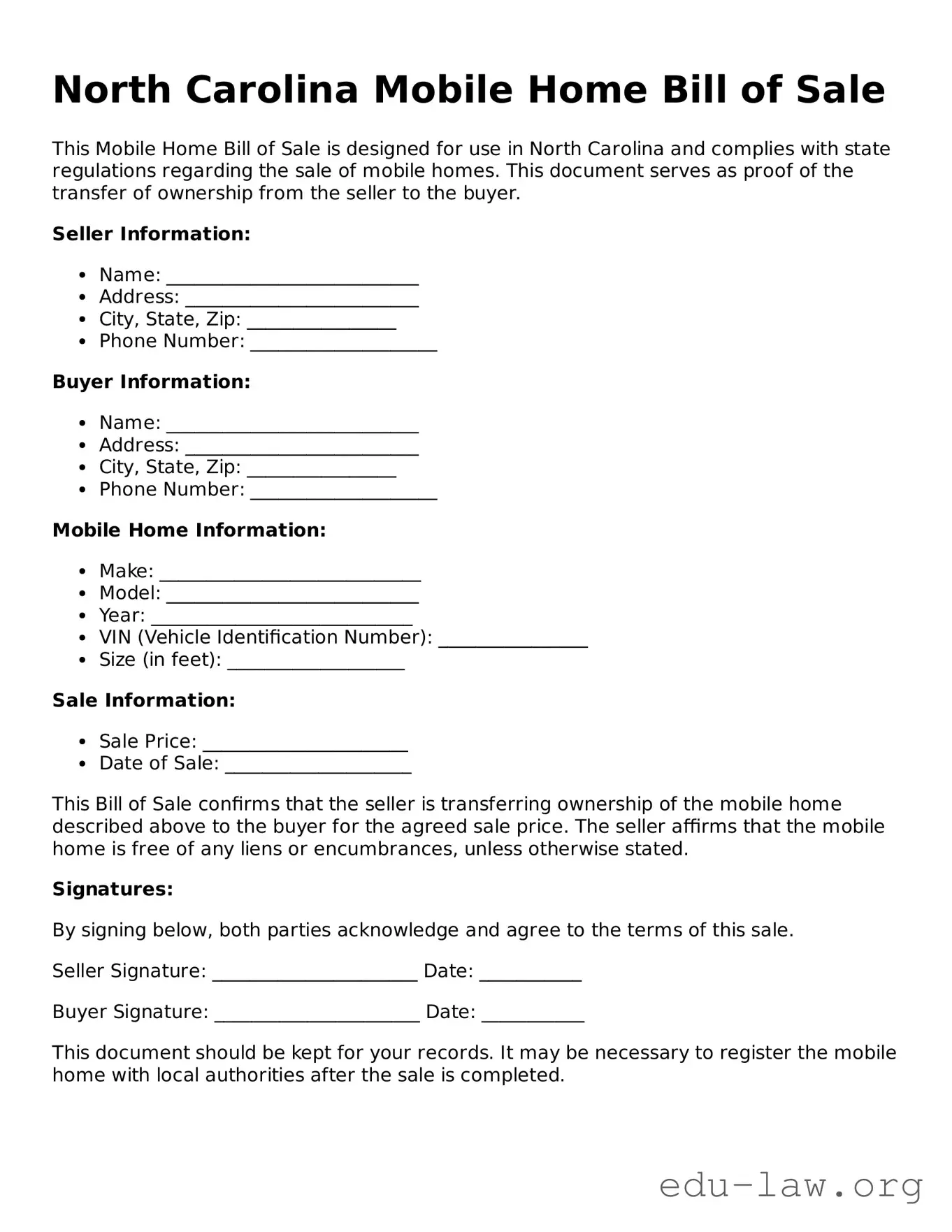
When it comes to buying or selling a mobile home in North Carolina, having the right documentation is crucial. The Mobile Home Bill of Sale form serves as a vital record of the transaction, outlining key details such as the names of the buyer and seller, the mobile home's identification number, and the sale price. This form not only protects both parties involved by providing proof of ownership transfer but also ensures compliance with state regulations. Additionally, it may include information about any liens on the property, which is essential for the buyer to know. Completing this form accurately can help prevent future disputes and facilitate a smoother transaction process. Understanding the importance of this document can make a significant difference in the overall experience of buying or selling a mobile home in North Carolina.
North Carolina Mobile Home Bill of Sale
This Mobile Home Bill of Sale is designed for use in North Carolina and complies with state regulations regarding the sale of mobile homes. This document serves as proof of the transfer of ownership from the seller to the buyer.
Seller Information:
Buyer Information:
Mobile Home Information:
Sale Information:
This Bill of Sale confirms that the seller is transferring ownership of the mobile home described above to the buyer for the agreed sale price. The seller affirms that the mobile home is free of any liens or encumbrances, unless otherwise stated.
Signatures:
By signing below, both parties acknowledge and agree to the terms of this sale.
Seller Signature: ______________________ Date: ___________
Buyer Signature: ______________________ Date: ___________
This document should be kept for your records. It may be necessary to register the mobile home with local authorities after the sale is completed.
| Fact Name | Description |
|---|---|
| Purpose | The North Carolina Mobile Home Bill of Sale form is used to transfer ownership of a mobile home from one party to another. |
| Governing Law | The form is governed by North Carolina General Statutes, specifically Chapter 105A and Chapter 47. |
| Parties Involved | The form requires the names and addresses of both the seller and the buyer for proper identification. |
| Mobile Home Details | It includes specific information about the mobile home, such as the make, model, year, and Vehicle Identification Number (VIN). |
| Purchase Price | The bill of sale must clearly state the agreed purchase price for the mobile home. |
| Signatures | Both the seller and the buyer must sign the form to validate the transaction. |
To complete the North Carolina Mobile Home Bill of Sale form, gather the necessary information about the mobile home and the parties involved. This form will be used to document the sale and transfer of ownership, ensuring that all relevant details are accurately recorded.
What is a Mobile Home Bill of Sale in North Carolina?
A Mobile Home Bill of Sale is a legal document that records the transfer of ownership of a mobile home from one party to another. This form includes essential details such as the names of the buyer and seller, the mobile home’s identification number, and the sale price. It serves as proof of the transaction and may be required for registration purposes.
Why is a Mobile Home Bill of Sale necessary?
This document is crucial for establishing ownership. It protects both the buyer and seller by providing a clear record of the transaction. In North Carolina, having a Bill of Sale may be necessary for registering the mobile home with the DMV, ensuring that the new owner can legally use and occupy the home.
What information is required on the Mobile Home Bill of Sale?
Essential details include the full names and addresses of both the buyer and seller, the mobile home’s make, model, year, and identification number (VIN). Additionally, the sale price and the date of the transaction should be documented. Both parties should sign the form to validate the sale.
Is the Mobile Home Bill of Sale required to be notarized?
In North Carolina, notarization is not typically required for a Mobile Home Bill of Sale. However, having the document notarized can add an extra layer of security and legitimacy to the transaction. It may also be beneficial if there are disputes in the future regarding the sale.
Can a Mobile Home Bill of Sale be used for any type of mobile home?
Yes, the Mobile Home Bill of Sale can be used for various types of mobile homes, including single-section and multi-section units. Regardless of the type, it is important that all relevant information is accurately recorded to ensure a smooth transfer of ownership.
What should I do after completing the Mobile Home Bill of Sale?
After completing the form, both the buyer and seller should keep a copy for their records. The buyer should take the Bill of Sale to the local DMV to register the mobile home in their name. It is also advisable to check local regulations regarding any additional paperwork that may be required.
What if the mobile home has existing liens or loans?
If there are existing liens or loans on the mobile home, it is important to address these before completing the sale. The seller should disclose any liens to the buyer, and arrangements should be made to settle any outstanding debts. Failing to do so could lead to legal complications for the new owner.
Can I create my own Mobile Home Bill of Sale?
While you can create your own Mobile Home Bill of Sale, it is recommended to use a standardized form that complies with North Carolina laws. This ensures that all necessary information is included and reduces the risk of errors. Many online resources provide templates that can be easily customized.
Where can I obtain a Mobile Home Bill of Sale form?
You can obtain a Mobile Home Bill of Sale form from various sources, including online legal document providers, local government offices, or through real estate professionals. Ensure that the form you choose is specific to North Carolina to meet state requirements.
Failing to include complete names of both the buyer and the seller. This can lead to confusion or disputes later on.
Not providing the correct address for both parties. Accurate addresses are essential for legal documentation.
Overlooking the mobile home identification number. This number is crucial for identifying the specific mobile home being sold.
Neglecting to specify the purchase price. This detail is necessary for both parties to understand the financial terms of the sale.
Forgetting to include the date of sale. This date is important for establishing the timeline of the transaction.
Not having both parties sign the document. Signatures validate the agreement and confirm consent from both sides.
Using incorrect or outdated forms. Always ensure you have the most current version of the Mobile Home Bill of Sale form.
Failing to provide any additional terms or conditions agreed upon by both parties. This can lead to misunderstandings later.
Not keeping a copy of the completed form for personal records. Having a copy can be beneficial for future reference or in case of disputes.
When completing a transaction involving a mobile home in North Carolina, several important documents may accompany the Mobile Home Bill of Sale. Each document serves a specific purpose and helps ensure that the sale is conducted smoothly and legally.
Having these documents ready can help facilitate a smooth transaction. It is important to ensure that all paperwork is completed accurately to protect the interests of both the buyer and the seller.
The North Carolina Mobile Home Bill of Sale form bears similarities to the Vehicle Bill of Sale. Both documents serve as proof of transfer of ownership from one party to another. They typically include essential details such as the names of the buyer and seller, a description of the item being sold, and the sale price. Just as with mobile homes, vehicles require a title transfer, making the Vehicle Bill of Sale a crucial document for ensuring that the new owner can register the vehicle legally.
Another document that aligns closely with the Mobile Home Bill of Sale is the Boat Bill of Sale. Like mobile homes, boats represent significant investments and require proper documentation during the transfer of ownership. This form captures the necessary details about the buyer, seller, and the boat itself, including its hull identification number and registration information. Both documents help to establish clear ownership and protect the interests of both parties involved in the transaction.
The Real Estate Purchase Agreement is also comparable to the Mobile Home Bill of Sale. While the former typically pertains to land and structures, both documents facilitate the sale of property. They outline the terms of the sale, including purchase price, contingencies, and any disclosures required by law. This agreement ensures that all parties are aware of their rights and obligations, providing a framework for a smooth transaction.
Similarly, the Personal Property Bill of Sale shares characteristics with the Mobile Home Bill of Sale. This document is used for various types of personal property transactions, including furniture, electronics, and appliances. It serves to document the sale, protect the buyer's interests, and provide proof of ownership. Both forms emphasize the importance of recording the transaction details to avoid disputes in the future.
The Lease Agreement, while primarily focused on rental arrangements, also has parallels with the Mobile Home Bill of Sale. Both documents involve property and outline the terms of use, though one is for ownership transfer and the other for temporary possession. A Lease Agreement specifies the duration of the rental, payment terms, and responsibilities of the tenant and landlord, ensuring clarity in the relationship between the parties involved.
Lastly, the Assignment of Contract can be likened to the Mobile Home Bill of Sale. This document allows one party to transfer their rights and obligations under a contract to another party. In the context of mobile homes, it may be used when a seller assigns their rights to a buyer before the actual sale takes place. Both documents emphasize the importance of clear communication and documentation in property transactions, safeguarding the interests of all parties involved.
When completing the North Carolina Mobile Home Bill of Sale form, there are several important considerations to keep in mind. Below is a list of things you should and shouldn't do to ensure a smooth transaction.
Understanding the North Carolina Mobile Home Bill of Sale form is crucial for both buyers and sellers. However, several misconceptions can lead to confusion. Here are six common misconceptions:
Being aware of these misconceptions can help ensure a smoother transaction when buying or selling a mobile home in North Carolina.
When filling out and using the North Carolina Mobile Home Bill of Sale form, it's essential to understand several key points to ensure a smooth transaction. Here are some important takeaways:
Understanding these points can help ensure that the transaction goes smoothly and that both parties are protected throughout the process.