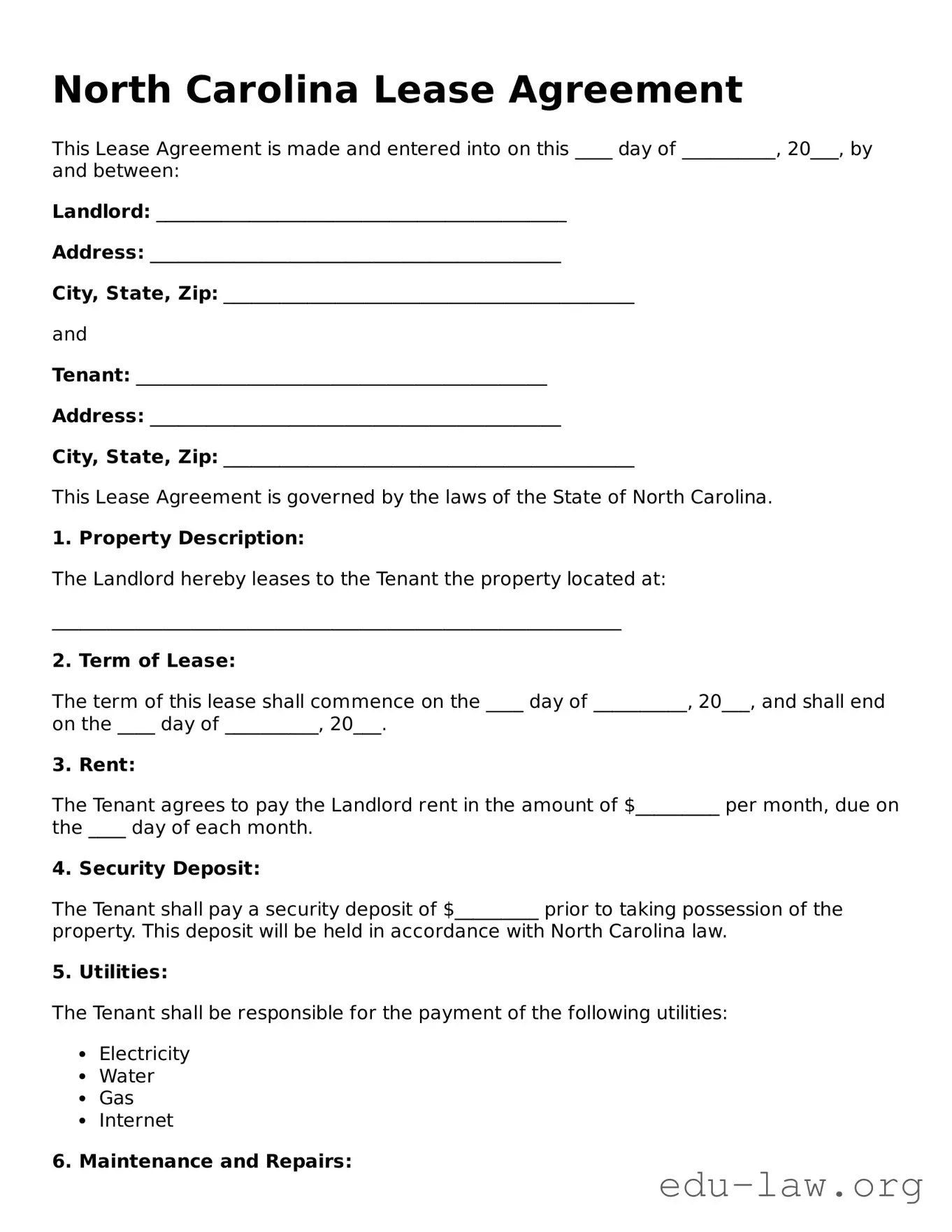
When renting a property in North Carolina, having a solid lease agreement is essential for both landlords and tenants. This document outlines the terms of the rental arrangement, ensuring that everyone understands their rights and responsibilities. Key aspects include the rental amount, payment due dates, and the duration of the lease. Additionally, it specifies any security deposits required and the conditions under which they may be withheld. The agreement also addresses maintenance responsibilities, rules regarding pets, and guidelines for terminating the lease. By clearly defining these elements, the North Carolina Lease Agreement helps prevent misunderstandings and disputes, fostering a positive rental experience for all parties involved.
North Carolina Lease Agreement
This Lease Agreement is made and entered into on this ____ day of __________, 20___, by and between:
Landlord: ____________________________________________
Address: ____________________________________________
City, State, Zip: ____________________________________________
and
Tenant: ____________________________________________
Address: ____________________________________________
City, State, Zip: ____________________________________________
This Lease Agreement is governed by the laws of the State of North Carolina.
1. Property Description:
The Landlord hereby leases to the Tenant the property located at:
_____________________________________________________________
2. Term of Lease:
The term of this lease shall commence on the ____ day of __________, 20___, and shall end on the ____ day of __________, 20___.
3. Rent:
The Tenant agrees to pay the Landlord rent in the amount of $_________ per month, due on the ____ day of each month.
4. Security Deposit:
The Tenant shall pay a security deposit of $_________ prior to taking possession of the property. This deposit will be held in accordance with North Carolina law.
5. Utilities:
The Tenant shall be responsible for the payment of the following utilities:
6. Maintenance and Repairs:
The Tenant shall maintain the property in good condition and shall notify the Landlord of any needed repairs.
7. Termination:
Either party may terminate this lease by providing written notice at least ____ days in advance.
8. Governing Law:
This Lease Agreement shall be governed by the laws of the State of North Carolina.
9. Signatures:
In witness whereof, the parties hereto have executed this Lease Agreement as of the day and year first above written.
Landlord Signature: _______________________________ Date: __________
Tenant Signature: _______________________________ Date: __________
| Fact Name | Description |
|---|---|
| Governing Law | The North Carolina Lease Agreement is governed by the North Carolina General Statutes, specifically Chapter 42, which covers landlord-tenant laws. |
| Duration of Lease | Leases can be for a fixed term or month-to-month, providing flexibility depending on the needs of both the landlord and tenant. |
| Security Deposit | In North Carolina, landlords may collect a security deposit, but it cannot exceed one and a half times the monthly rent for leases longer than one month. |
| Notice Requirements | Landlords must provide written notice to tenants for lease termination, with the notice period varying based on the lease duration. |
| Habitability Standards | Landlords are required to maintain rental properties in a habitable condition, ensuring that essential services such as water, heat, and electricity are provided. |
Filling out the North Carolina Lease Agreement form is an important step in establishing a rental relationship. Completing this form accurately ensures that both the landlord and tenant understand their rights and responsibilities. Follow these steps to fill out the form correctly.
Once the form is completed and signed, both parties should keep a copy for their records. This document serves as a reference for the terms agreed upon during the leasing process.
What is a North Carolina Lease Agreement?
A North Carolina Lease Agreement is a legal document that outlines the terms and conditions under which a landlord rents property to a tenant. This agreement typically includes details such as the rental amount, duration of the lease, and responsibilities of both parties.
What should be included in a North Carolina Lease Agreement?
Key elements of a North Carolina Lease Agreement include the names of the landlord and tenant, property address, rental amount, payment due dates, lease duration, security deposit information, and maintenance responsibilities. Additional clauses may address pets, utilities, and termination procedures.
Is a written lease required in North Carolina?
While a verbal agreement can be legally binding in North Carolina, a written lease is highly recommended. A written document provides clarity and protects the rights of both the landlord and tenant by outlining specific terms and conditions.
How long can a lease last in North Carolina?
Leases in North Carolina can vary in length. They may be short-term, such as month-to-month agreements, or long-term, lasting a year or more. The duration should be clearly stated in the lease agreement.
What is a security deposit in a lease?
A security deposit is a sum of money collected by the landlord to cover potential damages or unpaid rent. In North Carolina, the maximum amount a landlord can charge is typically equivalent to one and a half months' rent. The lease should specify the terms regarding the security deposit.
Can a lease be terminated early in North Carolina?
Yes, a lease can be terminated early under certain conditions. Both parties must agree to the termination, or it may be possible to terminate the lease for specific reasons outlined in the agreement, such as a breach of terms or a tenant's need to relocate for military service.
Are there any laws specific to North Carolina leases?
North Carolina has specific laws governing lease agreements, including regulations on security deposits, eviction processes, and tenant rights. It is important for both landlords and tenants to be aware of these laws to ensure compliance.
What happens if a tenant fails to pay rent?
If a tenant fails to pay rent, the landlord may initiate eviction proceedings. The lease agreement should outline the process for handling late payments, including any grace periods and fees that may apply.
Can a landlord enter the rental property without notice?
In North Carolina, landlords generally must provide reasonable notice before entering a tenant's property. This notice period is typically 24 hours, except in emergencies. The lease should specify the notice requirements for entry.
What are the tenant's rights in North Carolina?
Tenants in North Carolina have several rights, including the right to a habitable living environment, protection against unlawful eviction, and the right to privacy. The lease agreement should respect these rights and provide clear guidelines for both parties.
Not reading the entire lease agreement before filling it out. Understanding all terms is crucial.
Failing to include the correct names of all tenants and landlords. Accuracy here prevents future disputes.
Leaving out important dates, such as the lease start and end dates. These dates are essential for both parties.
Not specifying the rental amount clearly. Ambiguity can lead to misunderstandings about payment expectations.
Overlooking the security deposit terms. It's vital to note the amount and conditions for its return.
Ignoring maintenance responsibilities. Clearly outline who is responsible for repairs and upkeep.
Failing to mention any pet policies. If pets are allowed, specify any associated fees or restrictions.
Not including the process for terminating the lease. Clear guidelines help avoid confusion later.
Neglecting to sign and date the agreement. Without signatures, the lease may not be legally binding.
When entering into a lease agreement in North Carolina, several additional documents may be necessary to ensure a comprehensive understanding of the terms and responsibilities involved. These documents help clarify the relationship between landlords and tenants, providing legal protections and outlining specific conditions. Below is a list of commonly used forms and documents that accompany the North Carolina Lease Agreement.
These documents play a critical role in establishing clear expectations and protecting the rights of both landlords and tenants. By understanding these forms, individuals can navigate the leasing process with greater confidence and clarity.
The North Carolina Lease Agreement form shares similarities with the Rental Agreement. Both documents outline the terms and conditions under which a landlord allows a tenant to occupy a property. They typically include details such as the duration of the tenancy, rental amount, and responsibilities for maintenance. While a lease agreement usually covers a longer term, a rental agreement can be for shorter periods, often month-to-month. Both documents protect the rights of both parties and provide a framework for resolving disputes.
Another document similar to the North Carolina Lease Agreement is the Commercial Lease Agreement. This type of lease is specifically designed for business properties. Like the residential lease, it details the rental terms, including payment schedules and property use restrictions. However, commercial leases may also address additional aspects such as signage, renovations, and compliance with zoning laws. Both agreements serve to formalize the relationship between the property owner and the occupant, ensuring clear expectations are set.
The Sublease Agreement is another document that resembles the North Carolina Lease Agreement. This agreement occurs when a tenant leases out their rented space to another individual, known as the subtenant. It retains many of the same elements found in the original lease, such as rental terms and responsibilities. However, it also requires the original tenant to remain liable to the landlord for the terms of the primary lease. This document ensures that all parties understand their rights and obligations, maintaining the integrity of the original lease agreement.
The Roommate Agreement also shares characteristics with the North Carolina Lease Agreement. This document is often used when multiple tenants share a rental property. It outlines each roommate's responsibilities regarding rent payment, utilities, and household chores. While it may not replace the formal lease with the landlord, it complements it by addressing interpersonal dynamics and financial obligations among roommates. Clarity in this agreement can help prevent conflicts and misunderstandings.
Lastly, the Lease Extension Agreement is similar to the North Carolina Lease Agreement in that it modifies an existing lease. When tenants wish to continue their tenancy beyond the original lease term, they may use this document to outline new terms or extend the current ones. This agreement ensures that both parties are on the same page regarding the duration of the lease, any changes in rent, and other conditions. It serves as a formal acknowledgment of the ongoing relationship between the landlord and tenant.
When filling out the North Carolina Lease Agreement form, it is important to follow certain guidelines to ensure accuracy and compliance. Below are some recommended practices and common pitfalls to avoid.
Things You Should Do:
Things You Shouldn't Do:
Understanding the North Carolina Lease Agreement form is essential for both landlords and tenants. However, several misconceptions can lead to confusion. Here are six common misconceptions:
Many people believe that all lease agreements follow a standard format. In reality, lease agreements can vary significantly based on the terms negotiated between the landlord and tenant. Each lease should reflect the specific needs and conditions of the rental arrangement.
Some tenants think that a verbal agreement is enough to secure their rental. However, without a written lease, it can be challenging to enforce terms or resolve disputes. A written lease provides clear evidence of the agreement.
It's a common belief that only the landlord's signature is necessary for the lease to be valid. In truth, both parties must sign the lease for it to be legally binding. This ensures that both landlord and tenant agree to the terms.
Some tenants assume that signing a lease means they are committed for life. Most leases have a specified duration, and once that period ends, tenants can choose to renew or terminate the agreement. Understanding the lease duration is crucial.
There is a misconception that security deposits cannot be recovered. In North Carolina, tenants can get their security deposit back if they meet the terms of the lease and leave the property in good condition. It's important to know the rules regarding deposits.
While many terms can be negotiated, some legal requirements and standard practices must be followed. For example, rent prices and security deposits may have limits set by law. Understanding which terms are negotiable is essential for effective discussions.
When filling out and using the North Carolina Lease Agreement form, it's essential to understand several key aspects to ensure a smooth process. Here are the takeaways:
Understanding these elements will help both landlords and tenants navigate the lease process effectively, minimizing disputes and fostering a positive rental experience.