In the realm of estate planning, the North Carolina Lady Bird Deed form stands out as a versatile tool designed to facilitate the seamless transfer of property upon an individual's passing. This unique legal instrument allows property owners to retain control over their assets during their lifetime while also designating a beneficiary who will automatically inherit the property without the need for probate. One of the most significant advantages of the Lady Bird Deed is its ability to provide flexibility; property owners can modify or revoke the deed at any time, ensuring that their wishes remain aligned with their evolving circumstances. Additionally, this form can help protect the property from potential claims by creditors, making it a strategic choice for many individuals. By understanding the intricacies of the Lady Bird Deed, North Carolinians can better navigate the complexities of property transfer and estate management, ultimately ensuring that their loved ones are cared for and their legacies preserved.
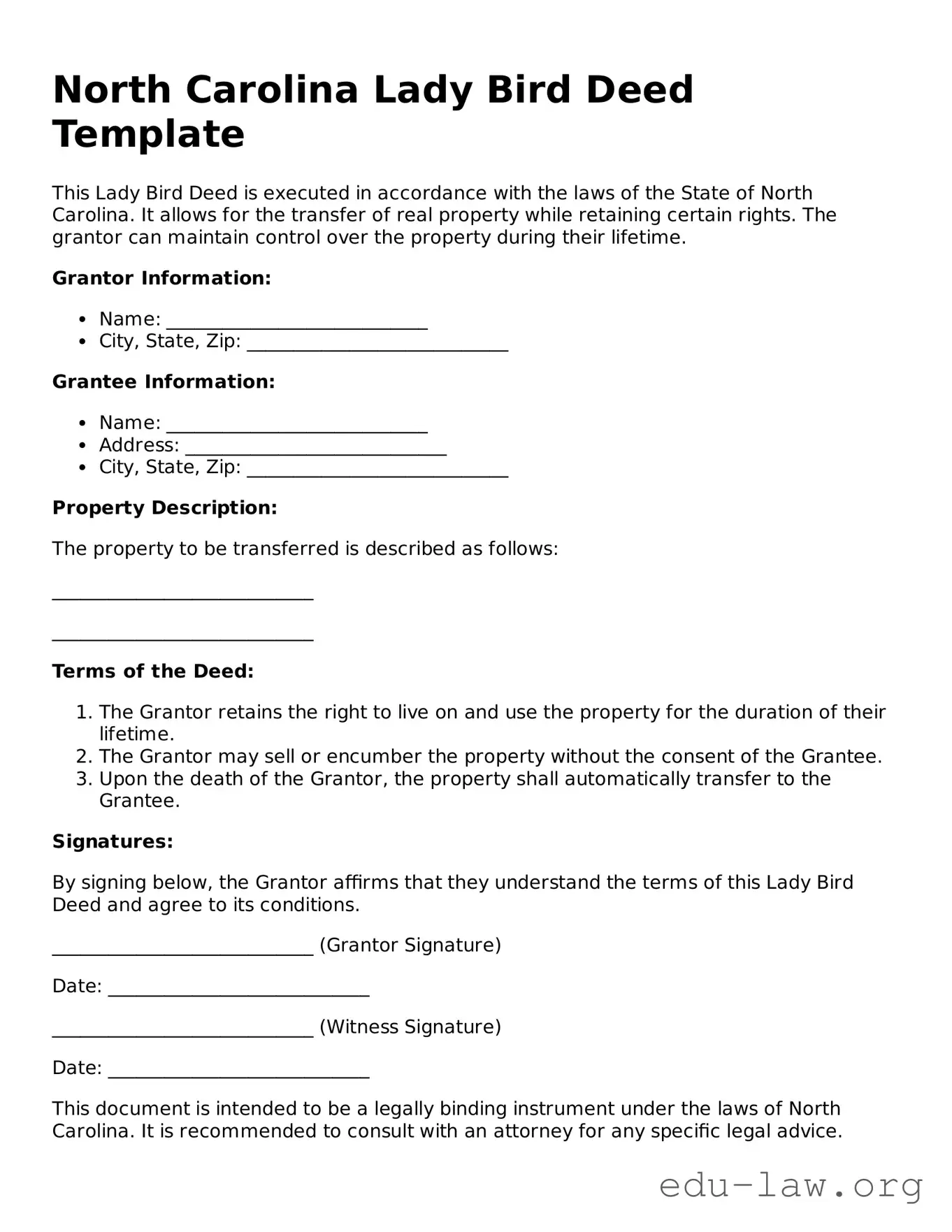
North Carolina Lady Bird Deed Template
This Lady Bird Deed is executed in accordance with the laws of the State of North Carolina. It allows for the transfer of real property while retaining certain rights. The grantor can maintain control over the property during their lifetime.
Grantor Information:
Grantee Information:
Property Description:
The property to be transferred is described as follows:
____________________________
____________________________
Terms of the Deed:
Signatures:
By signing below, the Grantor affirms that they understand the terms of this Lady Bird Deed and agree to its conditions.
____________________________ (Grantor Signature)
Date: ____________________________
____________________________ (Witness Signature)
Date: ____________________________
This document is intended to be a legally binding instrument under the laws of North Carolina. It is recommended to consult with an attorney for any specific legal advice.
| Fact Name | Description |
|---|---|
| What is a Lady Bird Deed? | A Lady Bird Deed allows property owners to transfer their property to beneficiaries while retaining the right to use and control the property during their lifetime. |
| Governing Law | The Lady Bird Deed is governed by North Carolina state law, specifically under the North Carolina General Statutes. |
| Benefits | This deed helps avoid probate, allowing a smoother transition of property upon the owner’s death. |
| Revocability | Property owners can revoke or change the terms of the deed at any time before their death. |
| Tax Implications | Using a Lady Bird Deed may help in preserving the property tax benefits for the beneficiaries. |
| Eligibility | Any individual who owns real property in North Carolina can create a Lady Bird Deed. |
| Execution Requirements | The deed must be signed by the property owner and notarized to be legally valid. |
Filling out the North Carolina Lady Bird Deed form requires careful attention to detail. This document facilitates the transfer of property while allowing the original owner to retain certain rights. Follow the steps below to ensure the form is completed accurately.
After completing these steps, the Lady Bird Deed will be officially recorded, and the property transfer process will be underway. It is advisable to keep a copy of the recorded deed for personal records and future reference.
What is a Lady Bird Deed in North Carolina?
A Lady Bird Deed, also known as an enhanced life estate deed, allows property owners in North Carolina to transfer their real estate to beneficiaries while retaining the right to live in and control the property during their lifetime. This type of deed can help avoid probate, making the transfer of property smoother and more efficient after the owner's passing.
What are the benefits of using a Lady Bird Deed?
One of the main advantages of a Lady Bird Deed is that it allows the property owner to maintain full control over the property until their death. This means they can sell, mortgage, or change their mind about the beneficiaries at any time. Additionally, because the property passes outside of probate, it can save time and money for the heirs.
Who can be named as beneficiaries in a Lady Bird Deed?
Beneficiaries can be anyone the property owner chooses, including family members, friends, or even organizations. It's essential to select individuals or entities that the owner trusts and wishes to inherit the property. However, it’s wise to consider how the transfer aligns with the owner's overall estate planning goals.
How does a Lady Bird Deed differ from a traditional life estate deed?
Unlike a traditional life estate deed, which limits the property owner's control over the property after the deed is executed, a Lady Bird Deed allows the owner to retain full rights. This means they can sell or mortgage the property without needing the consent of the beneficiaries, offering greater flexibility and security.
Is a Lady Bird Deed valid in all states?
No, the Lady Bird Deed is not recognized in every state. While it is available in North Carolina, other states may have different laws regarding property transfers and estate planning. It’s important to consult with a local attorney or estate planner to understand the options available in your state.
What are the steps to create a Lady Bird Deed?
Creating a Lady Bird Deed involves several steps. First, the property owner should gather necessary information, including the property description and details about the beneficiaries. Next, the deed must be drafted, often with the help of an attorney to ensure it complies with North Carolina law. Finally, the deed must be signed, notarized, and recorded with the local county register of deeds to be legally effective.
Can a Lady Bird Deed be revoked or changed?
Yes, a Lady Bird Deed can be revoked or modified at any time during the property owner's lifetime. This flexibility allows the owner to adjust their estate plan as circumstances change, such as the addition of new beneficiaries or changes in personal relationships. To make changes, the owner typically needs to execute a new deed or a revocation document, following the same legal process as the original deed.
Incorrect Names: One common mistake is misspelling the names of the grantor or grantee. It's essential to ensure that names match exactly as they appear on legal documents.
Missing Signatures: All required signatures must be present. Failing to sign can render the deed invalid, so double-check that everyone involved has signed.
Improper Notarization: The deed must be notarized correctly. If the notary's information is incomplete or incorrect, it may lead to issues later on.
Incorrect Property Description: A precise description of the property is crucial. Vague or incorrect descriptions can cause confusion and legal complications.
Failure to Include All Owners: If there are multiple owners of the property, all must be included in the deed. Omitting an owner can lead to disputes down the line.
Not Understanding the Terms: Some people fill out the form without fully understanding the implications of a Lady Bird Deed. It's vital to grasp how it affects property rights and inheritance.
Neglecting State Requirements: Each state has specific requirements for property deeds. Ignoring North Carolina's regulations can invalidate the deed.
Filing in the Wrong County: The deed must be filed in the correct county where the property is located. Filing it elsewhere can complicate matters.
Not Keeping Copies: After filing, it's important to keep copies of the deed for personal records. Not having a copy can lead to difficulties in the future.
A Lady Bird Deed is a useful estate planning tool in North Carolina. It allows property owners to transfer their property to beneficiaries while retaining the right to live in and control the property during their lifetime. When using a Lady Bird Deed, there are other documents that may also be necessary or helpful. Here’s a list of some commonly used forms and documents that often accompany a Lady Bird Deed:
Using these documents in conjunction with a Lady Bird Deed can help ensure that your estate planning needs are fully met. Each document plays a unique role in protecting your interests and providing clarity for your loved ones.
The North Carolina Lady Bird Deed is similar to a traditional life estate deed. Both documents allow a property owner to retain the right to live in and use the property during their lifetime. However, a traditional life estate deed typically requires the property to pass to a designated beneficiary upon the owner’s death, without the ability to change that beneficiary. In contrast, the Lady Bird Deed allows the owner to retain more control, as they can sell or change the beneficiary without the need for court involvement or the consent of the remainderman.
Another document comparable to the Lady Bird Deed is the revocable living trust. Both instruments enable property owners to manage their assets during their lifetime and dictate how those assets are distributed after death. A revocable living trust provides privacy and avoids probate, similar to a Lady Bird Deed. However, the trust requires the transfer of title into the trust, while a Lady Bird Deed allows the owner to maintain the title in their name until death, simplifying the process for some individuals.
The North Carolina Transfer on Death Deed (TODD) shares similarities with the Lady Bird Deed in that both allow property owners to designate beneficiaries who will receive the property after their death. The key difference lies in the rights retained during the owner’s lifetime. A Transfer on Death Deed does not provide the same level of control as a Lady Bird Deed, which allows the owner to sell or change the beneficiary at any time without restrictions.
A special warranty deed also bears some resemblance to the Lady Bird Deed. Both documents can be used to transfer property, but they serve different purposes. A special warranty deed guarantees that the grantor has not encumbered the property during their ownership, while a Lady Bird Deed focuses on retaining life estate rights and allowing for easy transfer upon death. The Lady Bird Deed's focus on the life estate aspect sets it apart from the special warranty deed.
The quitclaim deed is another document that shares similarities with the Lady Bird Deed. Both can be used to transfer interests in property without warranties. However, a quitclaim deed does not allow the grantor to retain any rights after the transfer, unlike the Lady Bird Deed, which enables the owner to maintain control over the property during their lifetime. This distinction is crucial for individuals who wish to ensure their continued use of the property.
Lastly, the enhanced life estate deed is closely related to the Lady Bird Deed. Both deeds allow for the transfer of property upon death while providing the grantor with the right to live in the property during their lifetime. The enhanced life estate deed, however, may not offer the same level of flexibility as the Lady Bird Deed, which allows for changes in beneficiaries and the ability to sell the property without restrictions. This flexibility is a significant advantage for many property owners.
When filling out the North Carolina Lady Bird Deed form, it’s essential to follow specific guidelines to ensure accuracy and legality. Here are four things you should and shouldn’t do:
The Lady Bird Deed, also known as an enhanced life estate deed, is a useful estate planning tool in North Carolina. However, there are several misconceptions surrounding it. Here’s a list of common misunderstandings:
Understanding these misconceptions can help individuals make informed decisions about their estate planning options. Always consider seeking professional advice to navigate the complexities of property transfers and estate planning effectively.
The North Carolina Lady Bird Deed is a unique estate planning tool that allows property owners to retain control of their property while designating beneficiaries. Here are some key takeaways regarding its use and completion:
Understanding these aspects can greatly enhance the effectiveness of the Lady Bird Deed in estate planning strategies.