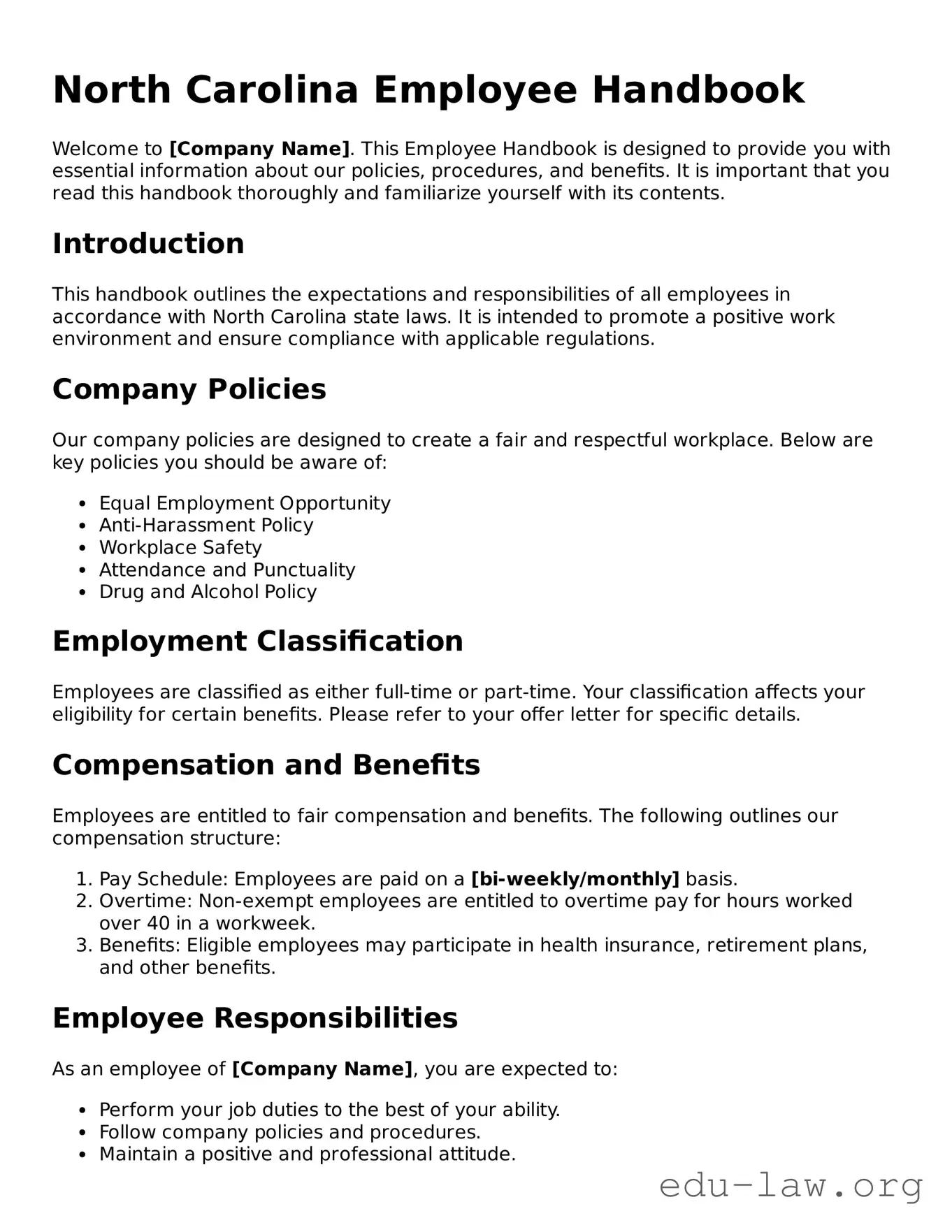
Creating a robust employee handbook is a vital step for businesses in North Carolina, as it serves not only as a guide for employees but also as a protective measure for employers. This handbook outlines essential policies, procedures, and expectations that govern the workplace environment. It typically includes sections on workplace conduct, attendance policies, and anti-discrimination measures, ensuring that all employees understand their rights and responsibilities. Additionally, the handbook may address benefits, compensation structures, and procedures for reporting grievances, fostering a transparent and fair workplace culture. By clearly communicating these aspects, employers can mitigate misunderstandings and promote a cohesive work atmosphere, ultimately contributing to the overall success of the organization.
North Carolina Employee Handbook
Welcome to [Company Name]. This Employee Handbook is designed to provide you with essential information about our policies, procedures, and benefits. It is important that you read this handbook thoroughly and familiarize yourself with its contents.
Introduction
This handbook outlines the expectations and responsibilities of all employees in accordance with North Carolina state laws. It is intended to promote a positive work environment and ensure compliance with applicable regulations.
Company Policies
Our company policies are designed to create a fair and respectful workplace. Below are key policies you should be aware of:
Employment Classification
Employees are classified as either full-time or part-time. Your classification affects your eligibility for certain benefits. Please refer to your offer letter for specific details.
Compensation and Benefits
Employees are entitled to fair compensation and benefits. The following outlines our compensation structure:
Employee Responsibilities
As an employee of [Company Name], you are expected to:
Disciplinary Procedures
In the event of policy violations, disciplinary actions may be taken. These actions may include:
Conclusion
Thank you for being a part of [Company Name]. We value your contributions and look forward to a successful working relationship. If you have any questions regarding this handbook, please contact [HR Contact Information].
| Fact Name | Details |
|---|---|
| Purpose | The North Carolina Employee Handbook serves to outline company policies, procedures, and employee rights. |
| Governing Law | This handbook is governed by North Carolina employment laws, including the North Carolina Wage and Hour Act. |
| Mandatory Inclusions | Employers are required to include information on anti-discrimination policies and workplace safety procedures. |
| Distribution Requirement | Employers must provide the handbook to all employees, ensuring accessibility and understanding of its contents. |
Filling out the North Carolina Employee Handbook form is an important step in ensuring that you have a clear understanding of workplace policies and procedures. By completing this form, you will be acknowledging receipt of the handbook and your agreement to adhere to its contents. Follow the steps below to fill out the form correctly.
What is the North Carolina Employee Handbook form?
The North Carolina Employee Handbook form is a document that outlines the policies, procedures, and expectations of an employer regarding their employees. It serves as a guide for employees to understand their rights and responsibilities within the workplace. This handbook can include information on topics such as workplace conduct, benefits, and disciplinary procedures.
Why is an Employee Handbook important?
An Employee Handbook is crucial for establishing clear communication between employers and employees. It helps ensure that all employees are aware of the company's policies and procedures, which can reduce misunderstandings and conflicts. Additionally, having a well-structured handbook can protect the employer from potential legal issues by demonstrating that they have communicated their policies effectively.
Who should receive the Employee Handbook?
All employees should receive a copy of the Employee Handbook. This includes full-time, part-time, and temporary employees. Providing the handbook to every employee ensures that everyone is informed about the company's policies and procedures from the start of their employment.
How often should the Employee Handbook be updated?
The Employee Handbook should be reviewed and updated regularly, at least once a year, or whenever there are significant changes in the law or company policies. Regular updates ensure that the information remains accurate and relevant, reflecting the current practices and legal requirements.
Can employees provide input on the Employee Handbook?
Yes, employees can provide input on the Employee Handbook. Employers may benefit from soliciting feedback from employees to ensure that the handbook is comprehensive and addresses their concerns. This collaborative approach can foster a positive workplace culture and improve employee satisfaction.
What should be included in the Employee Handbook?
Key elements to include in the Employee Handbook are the company’s mission and values, employment policies, benefits information, codes of conduct, anti-discrimination and harassment policies, and procedures for reporting grievances. Including these components helps create a clear framework for employee behavior and company expectations.
What if an employee does not receive a copy of the Employee Handbook?
If an employee does not receive a copy of the Employee Handbook, they should request one from their supervisor or the human resources department. Employers have a responsibility to ensure that all employees have access to this important document. Failure to provide the handbook may lead to confusion regarding company policies.
Is the Employee Handbook legally binding?
While the Employee Handbook serves as a guide, it is generally not considered a legally binding contract. However, certain policies within the handbook may create enforceable obligations if they are clear and specific. Employers should include a disclaimer stating that the handbook is not a contract and that employment is at-will, meaning either party can terminate the employment relationship at any time.
Failing to read the entire handbook before signing. Understanding the policies is crucial.
Not providing accurate personal information. Double-check names, addresses, and contact details.
Overlooking the acknowledgment section. This is where you confirm you’ve read and understood the handbook.
Neglecting to ask questions about unclear policies. Clarification can prevent misunderstandings later.
Forgetting to update the form after changes in personal circumstances. Life events may affect your employment status.
Ignoring deadlines for submission. Late forms may lead to delays in processing your employment.
Not keeping a copy of the signed form. It’s important to have a record for future reference.
Underestimating the importance of the handbook. It contains essential information about your rights and responsibilities.
In addition to the North Carolina Employee Handbook, several other forms and documents are commonly used in the workplace to ensure clarity and compliance with employment laws. Each of these documents serves a specific purpose, helping both employers and employees understand their rights and responsibilities. Below is a list of these documents, along with a brief description of each.
These documents, when used alongside the Employee Handbook, create a comprehensive framework for managing employment relationships. They help ensure that both employers and employees are informed and protected, fostering a positive work environment.
The North Carolina Employee Handbook form shares similarities with the Employee Manual. Both documents serve as a comprehensive guide for employees, outlining company policies, procedures, and expectations. The Employee Manual provides detailed information about workplace rules, benefits, and employee rights, ensuring that staff members understand their roles and responsibilities within the organization. Like the Employee Handbook, it aims to foster a positive work environment by setting clear standards and promoting consistent practices across the board.
Another document that resembles the North Carolina Employee Handbook is the Company Policy Manual. This manual contains specific policies regarding various workplace issues, such as attendance, dress code, and harassment. While the Employee Handbook often provides a broader overview, the Company Policy Manual dives deeper into individual policies, offering clarity and guidance on how to navigate specific situations. Both documents work together to create a well-structured framework for employee conduct and company culture.
The Orientation Guide is also similar to the North Carolina Employee Handbook. This document is typically provided to new hires during their onboarding process. It introduces them to the company’s mission, values, and operational procedures. While the Employee Handbook may serve as a long-term reference, the Orientation Guide focuses on immediate needs, helping new employees acclimate to their roles and understand their benefits and obligations from the start.
The Workplace Safety Manual is another document that parallels the Employee Handbook. This manual specifically addresses health and safety protocols within the workplace. It details emergency procedures, safety equipment usage, and reporting mechanisms for unsafe conditions. While the Employee Handbook may touch on safety policies, the Workplace Safety Manual provides in-depth guidance, ensuring that employees are well-informed about maintaining a safe work environment.
The Job Description Document is also comparable to the North Carolina Employee Handbook. Each job description outlines the specific duties, responsibilities, and qualifications required for a position. This document helps employees understand what is expected of them in their roles. Like the Employee Handbook, it serves to clarify expectations, thereby enhancing accountability and performance within the organization.
Similar to the North Carolina Employee Handbook, the Benefits Guide provides detailed information about the benefits offered by an employer. This document outlines health insurance, retirement plans, and other perks available to employees. While the Employee Handbook may provide a brief overview of benefits, the Benefits Guide goes into greater detail, helping employees make informed decisions about their options and understand how to access them.
Lastly, the Code of Conduct is another document that aligns with the North Carolina Employee Handbook. This code outlines the ethical standards and behavioral expectations for employees. It addresses issues such as conflicts of interest, confidentiality, and respect in the workplace. While the Employee Handbook provides a broader context for company policies, the Code of Conduct focuses specifically on maintaining integrity and professionalism among staff members.
When filling out the North Carolina Employee Handbook form, attention to detail is essential. Here are some important dos and don'ts to consider:
Misconceptions about the North Carolina Employee Handbook can lead to confusion and mismanagement in the workplace. Here are ten common misunderstandings:
Many believe that having an Employee Handbook is not necessary. However, it serves as a crucial tool for outlining policies and procedures, ensuring compliance with state and federal laws.
This is false. Each Employee Handbook should reflect the specific policies and culture of the organization, tailored to its unique needs.
Small businesses benefit just as much from having a handbook. It helps set clear expectations and can protect against potential legal issues.
This misconception can be harmful. Policies and laws change, so regular reviews and updates are essential to keep the handbook relevant.
While they provide guidelines, Employee Handbooks are generally not considered legal contracts unless explicitly stated otherwise.
Assuming that employees will read and understand the handbook is a mistake. Employers should encourage discussions and provide training on key policies.
In reality, handbooks should also highlight positive workplace practices, benefits, and employee rights, not just rules and consequences.
Not every policy must be documented. Focus on essential policies that govern workplace behavior and compliance.
Even in at-will employment states like North Carolina, having a handbook can clarify expectations and provide guidance for both employees and employers.
This is incorrect. Handbooks should be living documents that evolve with the organization and its workforce.
Addressing these misconceptions is vital for fostering a transparent and compliant workplace environment.
When filling out and using the North Carolina Employee Handbook form, keep the following key takeaways in mind:
By following these takeaways, you can ensure that the Employee Handbook serves its purpose effectively and supports a positive workplace culture.