When buying or selling a boat in North Carolina, having the right documentation is crucial for a smooth transaction. The Boat Bill of Sale form serves as an essential record that outlines the details of the sale, ensuring both parties are protected. This form typically includes important information such as the names and addresses of the buyer and seller, a description of the boat—including its make, model, and hull identification number—and the sale price. Additionally, it may contain details regarding any warranties or conditions of the sale, which can help clarify expectations and responsibilities. By completing this form, both the buyer and seller can establish a clear understanding of the transaction, making it easier to transfer ownership and register the boat with the state. Understanding the significance of this document can enhance the buying or selling experience and help avoid potential disputes down the road.
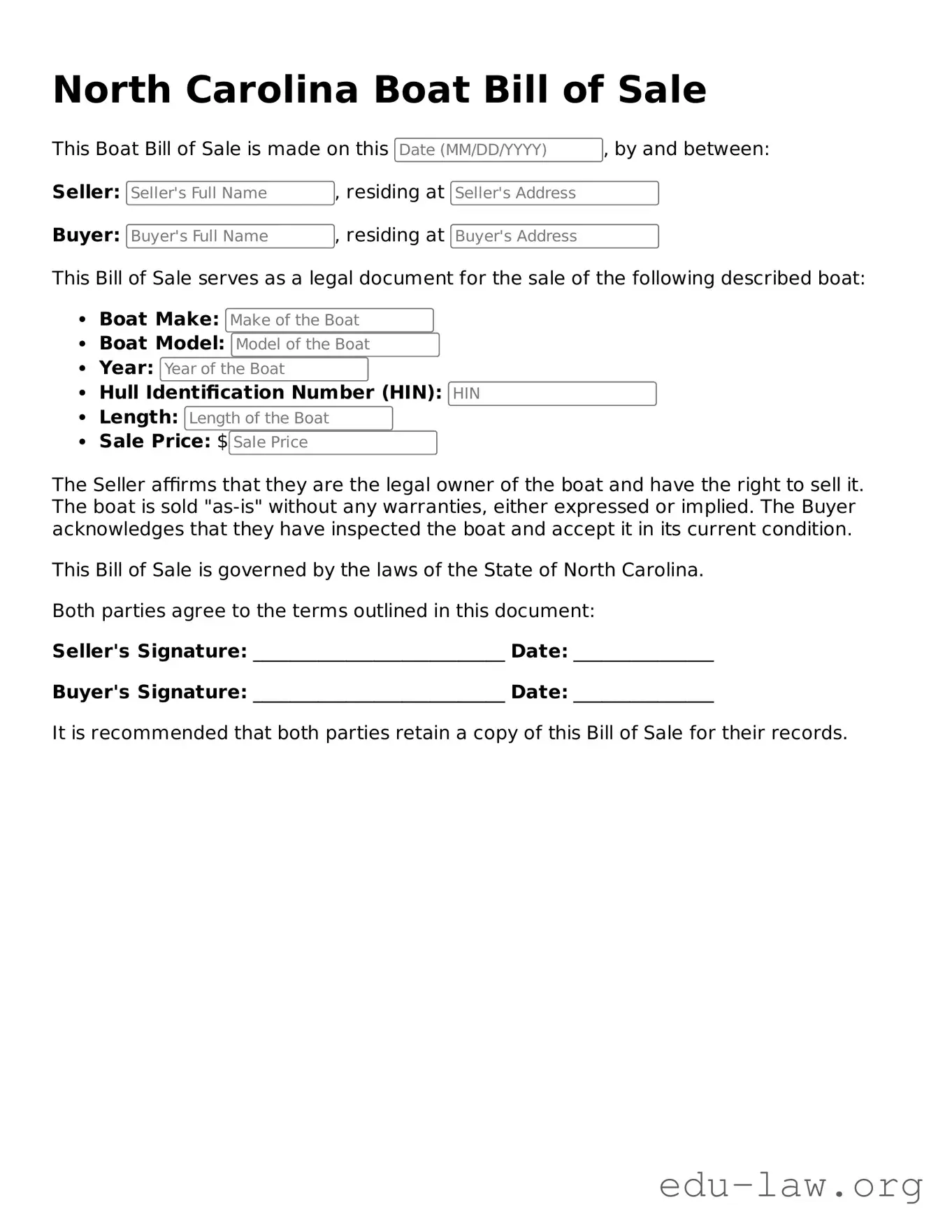
North Carolina Boat Bill of Sale
This Boat Bill of Sale is made on this , by and between:
Seller: , residing at
Buyer: , residing at
This Bill of Sale serves as a legal document for the sale of the following described boat:
The Seller affirms that they are the legal owner of the boat and have the right to sell it. The boat is sold "as-is" without any warranties, either expressed or implied. The Buyer acknowledges that they have inspected the boat and accept it in its current condition.
This Bill of Sale is governed by the laws of the State of North Carolina.
Both parties agree to the terms outlined in this document:
Seller's Signature: ___________________________ Date: _______________
Buyer's Signature: ___________________________ Date: _______________
It is recommended that both parties retain a copy of this Bill of Sale for their records.
| Fact Name | Description |
|---|---|
| Purpose | The North Carolina Boat Bill of Sale form serves as a legal document to transfer ownership of a boat from one party to another. |
| Governing Law | This form is governed by North Carolina General Statutes, specifically G.S. 75A-2 and G.S. 20-71.4. |
| Required Information | The form requires details such as the buyer's and seller's names, addresses, and the boat's description, including the hull identification number. |
| Signatures | Both the seller and buyer must sign the document to validate the sale and transfer of ownership. |
| Notarization | While notarization is not mandatory, it is recommended to enhance the document's credibility and reduce disputes. |
| Use for Registration | The completed Bill of Sale can be used to register the boat with the North Carolina Wildlife Resources Commission. |
| Tax Implications | Sales tax may apply to the sale of the boat, and it is the buyer's responsibility to pay this tax when registering the vessel. |
| Retention | Both parties should retain a copy of the Bill of Sale for their records, as it serves as proof of the transaction. |
Completing the North Carolina Boat Bill of Sale form is a straightforward process. Once the form is filled out, it will serve as a record of the transaction between the buyer and the seller. This document is essential for both parties to ensure clarity and legality in the transfer of ownership.
What is a Boat Bill of Sale in North Carolina?
A Boat Bill of Sale is a legal document that records the transfer of ownership of a boat from one party to another in North Carolina. It serves as proof of the transaction and outlines important details about the boat and the parties involved.
Is a Boat Bill of Sale required in North Carolina?
While a Boat Bill of Sale is not legally required to register a boat in North Carolina, it is highly recommended. Having a bill of sale protects both the buyer and seller by providing clear evidence of the transaction and the agreed-upon terms.
What information should be included in a Boat Bill of Sale?
A comprehensive Boat Bill of Sale should include the names and addresses of both the buyer and seller, the boat's make, model, year, and hull identification number (HIN). Additionally, it should state the sale price and the date of the transaction. Any warranties or representations made by the seller should also be noted.
Can I create my own Boat Bill of Sale?
Yes, you can create your own Boat Bill of Sale. However, it is essential to ensure that all necessary information is included and that the document is clear and unambiguous. Templates are available online, but it’s wise to review them for completeness and compliance with state requirements.
Do I need to notarize the Boat Bill of Sale?
Notarization is not required for a Boat Bill of Sale in North Carolina. However, having the document notarized can add an extra layer of authenticity and may be beneficial if any disputes arise in the future.
What happens if the Boat Bill of Sale is lost?
If the Boat Bill of Sale is lost, it may complicate proving ownership. It is advisable to keep multiple copies of the document in a safe place. If necessary, a new bill of sale can be created, and both parties can sign it again to reaffirm the transaction.
How do I register my boat after completing the sale?
To register your boat in North Carolina, you will need to present the completed Boat Bill of Sale, proof of ownership, and any other required documents to your local DMV office. Registration must be completed within 30 days of the sale to avoid penalties.
What should I do if the seller refuses to provide a Boat Bill of Sale?
If the seller refuses to provide a Boat Bill of Sale, it is advisable to reconsider the purchase. A bill of sale is an essential document for establishing ownership. If you proceed with the transaction, ensure you have other forms of documentation, such as previous registration or title, to support your claim to ownership.
Incomplete Information: Many people forget to fill out all required fields. This can include the buyer's and seller's names, addresses, and the boat's details. Missing even one piece of information can lead to delays or issues during the registration process.
Incorrect Boat Details: Some individuals mistakenly provide inaccurate details about the boat. This can involve the hull identification number, year, make, or model. Errors in these details can create confusion and may affect ownership verification.
Not Signing the Document: A common oversight is forgetting to sign the form. Both the buyer and seller must sign the Boat Bill of Sale for it to be valid. Without signatures, the document may not hold up in legal situations.
Failure to Keep Copies: After completing the form, some forget to make copies for their records. Keeping a copy of the signed Boat Bill of Sale is essential for both parties. It serves as proof of the transaction and can be useful for future reference.
When buying or selling a boat in North Carolina, several documents may accompany the Boat Bill of Sale. These documents help ensure a smooth transaction and provide necessary information for both parties. Below are some key forms that are often used in conjunction with the Boat Bill of Sale.
Having these documents ready can facilitate a seamless transaction and protect both the buyer and seller. Always ensure that all forms are filled out accurately and retained for future reference.
The North Carolina Boat Bill of Sale form is similar to a Vehicle Bill of Sale. Both documents serve as proof of transfer of ownership from one party to another. In the case of a vehicle, the seller provides details about the car, such as make, model, and VIN, while the buyer's information is also recorded. This document is important for registering the vehicle with the state and can protect both parties in case of disputes regarding ownership.
Another document akin to the Boat Bill of Sale is the Motorcycle Bill of Sale. Like the boat version, this document outlines the specifics of the motorcycle being sold, including its identification number, and ensures that the transaction is documented. It protects the seller by confirming that they are no longer responsible for the motorcycle once the sale is complete and provides the buyer with proof of ownership for registration purposes.
The Aircraft Bill of Sale also shares similarities with the Boat Bill of Sale. This document is used to transfer ownership of an aircraft and includes information about the aircraft, such as its make, model, and serial number. Just as with boats, this bill of sale is crucial for registering the aircraft with the Federal Aviation Administration (FAA) and serves as legal proof of ownership for the buyer.
A Real Estate Purchase Agreement can be compared to the Boat Bill of Sale in that both are contracts that facilitate the transfer of ownership. The real estate document includes details about the property, such as its address and legal description. Both documents require signatures from both parties to validate the transaction and protect their rights in the event of any disputes.
The Personal Property Bill of Sale is another document that resembles the Boat Bill of Sale. This form is used for the sale of various personal items, not just boats. It outlines the specifics of the item being sold, such as its condition and sale price. This document helps establish a clear record of the transaction, which can be useful for both the seller and the buyer.
A Gun Bill of Sale is similar in function to the Boat Bill of Sale, as it documents the transfer of ownership of a firearm. This document typically includes details about the gun, such as its make, model, and serial number. It is important for legal purposes, ensuring that the buyer can prove ownership and that the seller is no longer responsible for the firearm after the sale.
The Livestock Bill of Sale is another comparable document. It is used to transfer ownership of livestock, such as cattle or horses. This document includes details about the animals being sold, such as their breed and identification numbers. Both the seller and buyer sign the document, which serves as proof of the transaction and can be important for record-keeping and legal purposes.
A Business Bill of Sale can also be likened to the Boat Bill of Sale. This document is used when selling a business or its assets. It details the assets being sold, such as equipment or inventory, and includes information about the parties involved. Just like the Boat Bill of Sale, it provides legal protection for both the seller and buyer by documenting the terms of the sale.
The Mobile Home Bill of Sale is similar in that it documents the sale of a mobile home. This document includes details about the mobile home, such as its make, model, and identification number. It serves to protect both parties involved in the transaction, ensuring that the buyer has proof of ownership and the seller is no longer liable for the mobile home once the sale is finalized.
Lastly, the Trailer Bill of Sale is comparable to the Boat Bill of Sale as it documents the sale of a trailer. This document includes important details like the trailer's make, model, and VIN. Both bills of sale serve to establish a clear record of ownership transfer, which is essential for registration and legal purposes.
When filling out the North Carolina Boat Bill of Sale form, it is important to follow specific guidelines to ensure accuracy and legality. Below is a list of things you should and shouldn't do.
Understanding the North Carolina Boat Bill of Sale form is essential for anyone involved in buying or selling a boat in the state. However, several misconceptions can lead to confusion. Here are seven common misconceptions:
By addressing these misconceptions, buyers and sellers can navigate the process of transferring boat ownership more effectively.
Filling out and using the North Carolina Boat Bill of Sale form is an important step in the process of buying or selling a boat. Understanding the key elements can help ensure a smooth transaction. Here are some essential takeaways:
By understanding these key points, individuals can navigate the process of buying or selling a boat in North Carolina with greater confidence and clarity.