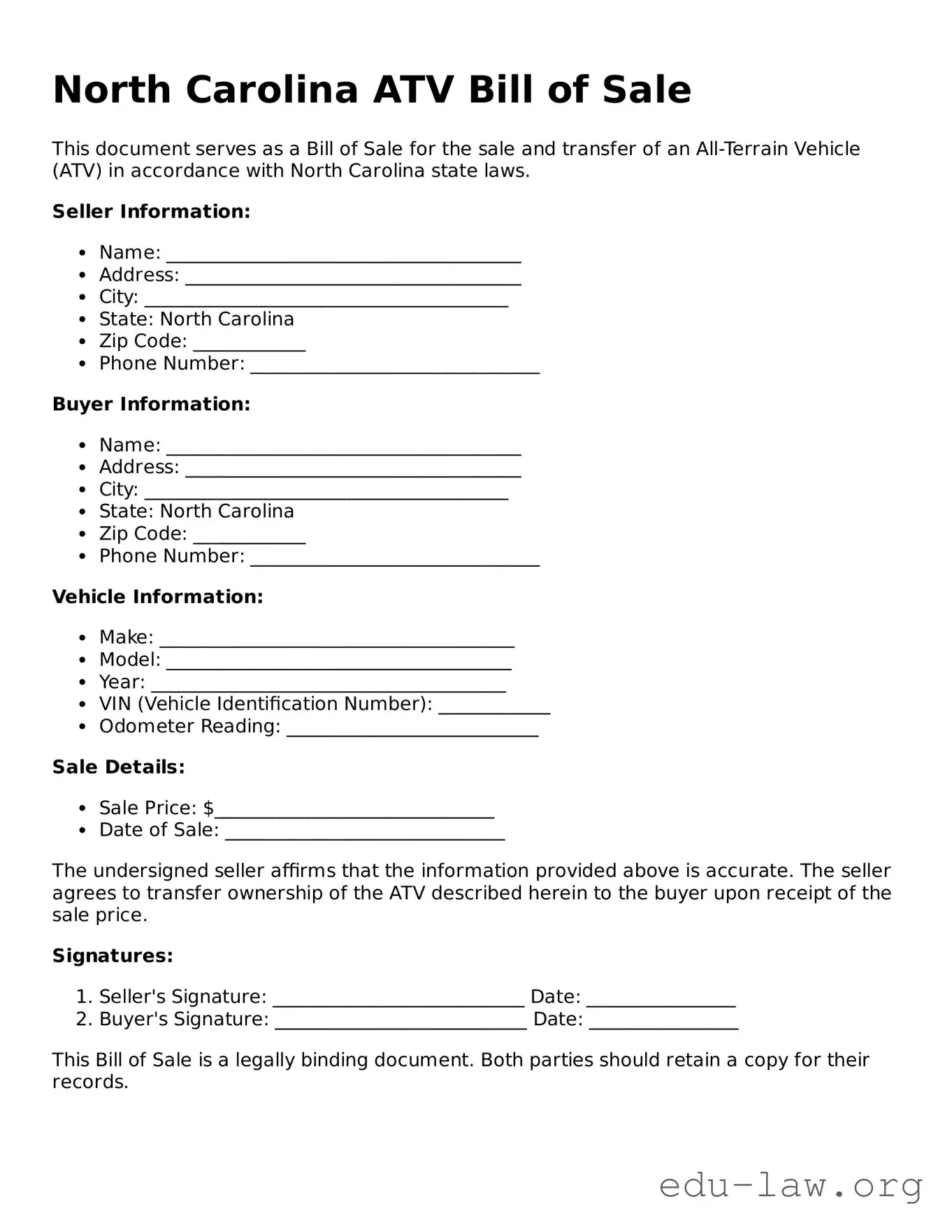
In North Carolina, the ATV Bill of Sale form plays a crucial role in the transfer of ownership for all-terrain vehicles, ensuring that both buyers and sellers have a clear record of the transaction. This document serves not only as proof of sale but also includes essential details such as the vehicle's make, model, year, and Vehicle Identification Number (VIN). Additionally, it outlines the sale price and the date of the transaction, which are critical for both parties involved. The form typically requires the signatures of both the seller and the buyer, affirming their agreement to the terms of the sale. By providing a structured format for the exchange of information, the ATV Bill of Sale helps protect the rights of both parties and facilitates a smoother transition of ownership. Understanding the significance of this document can aid individuals in navigating the often complex world of vehicle transactions in North Carolina.
North Carolina ATV Bill of Sale
This document serves as a Bill of Sale for the sale and transfer of an All-Terrain Vehicle (ATV) in accordance with North Carolina state laws.
Seller Information:
Buyer Information:
Vehicle Information:
Sale Details:
The undersigned seller affirms that the information provided above is accurate. The seller agrees to transfer ownership of the ATV described herein to the buyer upon receipt of the sale price.
Signatures:
This Bill of Sale is a legally binding document. Both parties should retain a copy for their records.
| Fact Name | Details |
|---|---|
| Purpose | The North Carolina ATV Bill of Sale form is used to document the sale and transfer of ownership of an all-terrain vehicle (ATV). |
| Governing Law | This form is governed by North Carolina General Statutes, specifically under Chapter 20, which pertains to motor vehicles. |
| Required Information | The form typically requires details such as the seller's and buyer's names, addresses, and signatures, as well as the ATV's make, model, year, and Vehicle Identification Number (VIN). |
| Notarization | While notarization is not required for the bill of sale in North Carolina, it can provide an extra layer of authenticity and protection for both parties. |
| Tax Implications | The sale of an ATV may be subject to sales tax in North Carolina, and it is the buyer's responsibility to report and pay this tax when registering the vehicle. |
| Record Keeping | Both the buyer and seller should keep a copy of the completed bill of sale for their records, as it serves as proof of the transaction. |
| Transfer of Title | The bill of sale does not replace the need for a title transfer. A separate title transfer process must be completed with the North Carolina Division of Motor Vehicles (NCDMV). |
| Usage | This form is commonly used in private sales, dealerships, and auctions to ensure a clear record of ownership change. |
| Availability | The North Carolina ATV Bill of Sale form can often be obtained online or through local government offices, making it accessible for all users. |
Once you have the North Carolina ATV Bill of Sale form in hand, you’re ready to start filling it out. This form is essential for documenting the sale of an all-terrain vehicle. Make sure to have all the necessary information at your fingertips to ensure a smooth process.
After completing the form, ensure that both parties retain their copies for future reference. This will help avoid any potential disputes down the line.
What is an ATV Bill of Sale in North Carolina?
An ATV Bill of Sale is a legal document that records the transfer of ownership of an all-terrain vehicle (ATV) from one party to another in North Carolina. This document serves as proof of purchase and includes important details about the transaction, such as the names of the buyer and seller, the vehicle's identification number (VIN), and the purchase price.
Is the ATV Bill of Sale required in North Carolina?
What information should be included in the ATV Bill of Sale?
The ATV Bill of Sale should include the following details: the full names and addresses of both the buyer and seller, the VIN of the ATV, the make and model of the vehicle, the purchase price, the date of the sale, and any warranties or conditions of the sale. Both parties should sign the document to validate it.
Do I need to have the ATV Bill of Sale notarized?
No, notarization is not a requirement for the ATV Bill of Sale in North Carolina. However, having it notarized can add an extra layer of authenticity and may be beneficial if there are any disputes in the future.
Can I use a generic Bill of Sale form for my ATV?
Yes, you can use a generic Bill of Sale form as long as it includes all necessary information specific to the ATV transaction. However, using a form specifically designed for ATVs may help ensure that all relevant details are covered and that it complies with North Carolina laws.
What should I do with the completed ATV Bill of Sale?
Once the Bill of Sale is completed and signed, both the buyer and seller should keep a copy for their records. The buyer may need to present this document when registering the ATV with the DMV to establish proof of ownership.
What if I lose my ATV Bill of Sale?
If you lose your ATV Bill of Sale, it may be difficult to prove ownership. It's advisable to keep multiple copies in a safe place. If necessary, you can recreate the Bill of Sale with the same information and have both parties sign it again to reaffirm the transaction.
Incomplete Information: One of the most common mistakes is failing to provide all necessary details. Ensure that both the seller's and buyer's names, addresses, and contact information are fully filled out. Missing this information can lead to confusion or disputes later on.
Incorrect Vehicle Identification Number (VIN): Double-check the VIN on the ATV against what is entered on the form. An incorrect VIN can complicate the transfer of ownership and may cause issues with registration.
Omitting Sale Price: Always include the sale price in the designated area. This is important not just for the transaction, but also for tax purposes. Leaving this blank can create complications when the buyer registers the ATV.
Not Signing the Document: Both parties must sign the bill of sale. A lack of signatures can render the document invalid. Ensure that each party retains a copy of the signed document for their records.
Failing to Date the Document: It’s essential to include the date of the transaction. This helps establish when the sale took place and is important for record-keeping and legal purposes.
Not Keeping Copies: After filling out the form, both the seller and buyer should keep copies of the bill of sale. This serves as proof of the transaction and can be crucial if any issues arise in the future.
When purchasing or selling an ATV in North Carolina, several additional documents may be necessary to ensure a smooth transaction. These documents help establish ownership, verify the vehicle's condition, and comply with state regulations. Below is a list of commonly used forms that accompany the North Carolina ATV Bill of Sale.
Having these documents ready can facilitate a more efficient transaction process. Each form plays a crucial role in ensuring compliance with North Carolina laws and protecting both parties involved in the sale.
The North Carolina ATV Bill of Sale form shares similarities with a Vehicle Bill of Sale. Both documents serve as proof of ownership transfer for motorized vehicles. When selling or buying an ATV, the Bill of Sale provides essential details such as the buyer's and seller's information, a description of the vehicle, and the sale price. This document protects both parties by clearly outlining the terms of the sale, ensuring that the transaction is legally recognized.
Another document similar to the ATV Bill of Sale is the Motorcycle Bill of Sale. Like the ATV version, this form documents the transfer of ownership for motorcycles. It includes pertinent details about the motorcycle, such as its make, model, year, and Vehicle Identification Number (VIN). Both documents fulfill the same purpose of providing a legal record of the sale, helping to prevent disputes in the future.
The Boat Bill of Sale also resembles the ATV Bill of Sale. This document is used when transferring ownership of a boat. It contains similar information, including the buyer and seller's details, a description of the boat, and the sale price. Both forms are crucial for establishing legal ownership and can be used for registration purposes with state authorities.
The Snowmobile Bill of Sale is another comparable document. It serves the same function as the ATV Bill of Sale but is specific to snowmobiles. This form captures the essential details of the transaction, ensuring that ownership is transferred correctly. Both documents help protect the interests of the buyer and seller, providing a clear record of the sale.
The Trailer Bill of Sale is similar as well. This document is used when selling or purchasing a trailer. It includes important information about the trailer, such as its type, size, and identification number. Like the ATV Bill of Sale, it provides legal proof of ownership transfer, which is vital for registration and title purposes.
A Farm Equipment Bill of Sale also bears similarities to the ATV Bill of Sale. This document is used for the sale of agricultural machinery and equipment. It contains details about the equipment being sold, the buyer and seller's information, and the sale price. Both documents serve to formalize the transaction, ensuring that both parties have a record of the sale.
The Personal Property Bill of Sale is another document that aligns with the ATV Bill of Sale. This form is used for the sale of various personal property items, including vehicles like ATVs. It includes similar details regarding the transaction and serves to legally document the transfer of ownership, making it a valuable tool for both buyers and sellers.
The Lease Agreement can also be compared to the ATV Bill of Sale in certain contexts. While a Lease Agreement is used for renting property or equipment, it shares the need for clear documentation of terms and conditions. Both documents provide a legal framework for the transaction, ensuring that all parties understand their rights and responsibilities.
Lastly, the Warranty Deed is somewhat similar in that it transfers ownership, but it pertains specifically to real estate. While it is not directly related to vehicles, it emphasizes the importance of having a formal document that establishes ownership. Both the Warranty Deed and the ATV Bill of Sale provide a legal record that can be referenced in case of disputes or questions about ownership.
When filling out the North Carolina ATV Bill of Sale form, it's essential to follow certain guidelines to ensure the process goes smoothly. Here’s a list of things you should and shouldn't do:
The North Carolina ATV Bill of Sale form can sometimes be misunderstood. Here are eight common misconceptions about this important document:
Understanding these misconceptions can help ensure a smoother transaction when buying or selling an ATV in North Carolina.
When filling out and using the North Carolina ATV Bill of Sale form, it’s essential to keep several key points in mind to ensure a smooth transaction. Here are some important takeaways:
By following these guidelines, both buyers and sellers can navigate the process of buying or selling an ATV in North Carolina with confidence and clarity.