When considering renting a room in New York, understanding the Room Rental Agreement form is essential for both landlords and tenants. This document outlines the terms and conditions that govern the rental relationship, ensuring that both parties are clear on their rights and responsibilities. Key aspects of the form include the rental amount, payment due dates, security deposits, and the duration of the lease. It also addresses important details such as maintenance responsibilities, rules regarding guests, and procedures for terminating the agreement. By clearly stating these elements, the Room Rental Agreement helps to prevent misunderstandings and disputes, fostering a more harmonious living arrangement. Whether you are a seasoned landlord or a first-time renter, familiarizing yourself with this form can provide valuable insights into the rental process and help protect your interests.
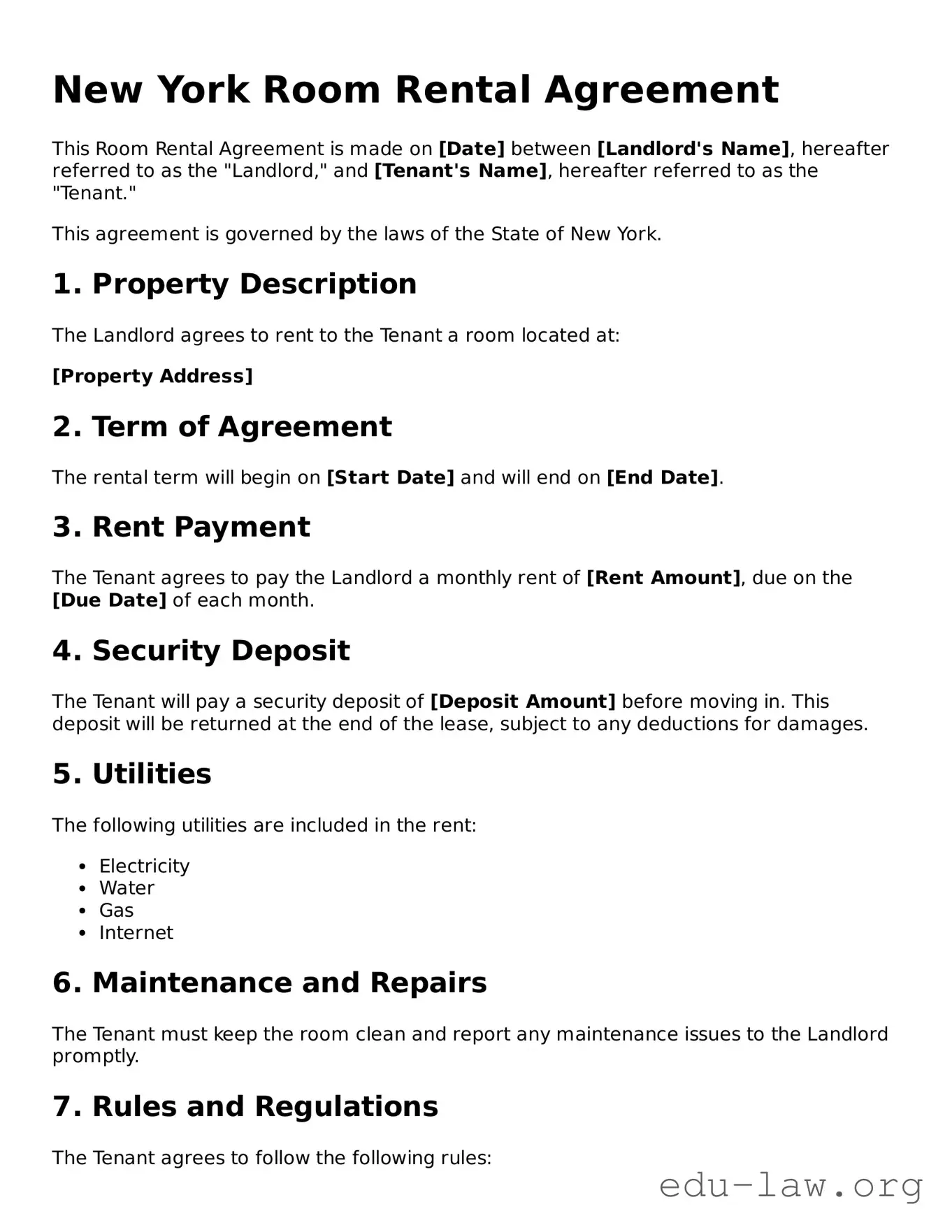
New York Room Rental Agreement
This Room Rental Agreement is made on [Date] between [Landlord's Name], hereafter referred to as the "Landlord," and [Tenant's Name], hereafter referred to as the "Tenant."
This agreement is governed by the laws of the State of New York.
1. Property Description
The Landlord agrees to rent to the Tenant a room located at:
[Property Address]
2. Term of Agreement
The rental term will begin on [Start Date] and will end on [End Date].
3. Rent Payment
The Tenant agrees to pay the Landlord a monthly rent of [Rent Amount], due on the [Due Date] of each month.
4. Security Deposit
The Tenant will pay a security deposit of [Deposit Amount] before moving in. This deposit will be returned at the end of the lease, subject to any deductions for damages.
5. Utilities
The following utilities are included in the rent:
6. Maintenance and Repairs
The Tenant must keep the room clean and report any maintenance issues to the Landlord promptly.
7. Rules and Regulations
The Tenant agrees to follow the following rules:
8. Termination
Either party may terminate this agreement by providing a written notice of [Notice Period] days.
9. Signatures
By signing below, both parties agree to the terms of this Room Rental Agreement.
Landlord Signature: _______________________ Date: _______________
Tenant Signature: ________________________ Date: _______________
| Fact Name | Details |
|---|---|
| Purpose | The New York Room Rental Agreement outlines the terms for renting a room in a residential property. |
| Governing Law | This agreement is governed by the laws of the State of New York. |
| Parties Involved | The agreement involves the landlord and the tenant renting the room. |
| Duration | The rental term can be specified as a fixed term or month-to-month. |
| Rent Payment | The form specifies the amount of rent, due date, and acceptable payment methods. |
| Security Deposit | A security deposit amount can be included, typically not exceeding one month’s rent. |
| Utilities | The agreement may outline which utilities are included in the rent and which are the tenant's responsibility. |
| Termination Clause | It includes terms for terminating the agreement, including notice periods. |
| Maintenance Responsibilities | The responsibilities for maintenance and repairs are usually detailed in the agreement. |
| Legal Recourse | The agreement may specify legal recourse in case of disputes between the landlord and tenant. |
To complete the New York Room Rental Agreement form, follow the steps below. This process will ensure that all necessary information is accurately provided, setting the foundation for your rental arrangement.
What is a Room Rental Agreement in New York?
A Room Rental Agreement is a legal document that outlines the terms and conditions under which a tenant can rent a room in a residential property. It includes important details such as the rental amount, duration of the lease, and responsibilities of both the landlord and tenant. This agreement helps protect the rights of both parties and ensures clear communication about expectations.
Who should use a Room Rental Agreement?
Anyone renting out a room in their home or apartment should use a Room Rental Agreement. This includes landlords with multiple tenants and homeowners looking to rent a spare room. It’s also beneficial for tenants who want to ensure their rights are protected and that they understand their obligations during the rental period.
What key elements should be included in the agreement?
Key elements of a Room Rental Agreement include the names of the parties involved, the rental price, the duration of the lease, payment due dates, security deposit information, and rules regarding the use of common areas. Additionally, it should address maintenance responsibilities and any policies on guests or pets. Clear terms help prevent misunderstandings later on.
How long does a Room Rental Agreement typically last?
The duration of a Room Rental Agreement can vary. Some agreements are month-to-month, allowing flexibility for both parties. Others may be for a fixed term, such as six months or a year. It’s important for both the landlord and tenant to agree on the length of the rental period and include this information in the agreement.
Can a Room Rental Agreement be modified?
Yes, a Room Rental Agreement can be modified, but both parties must agree to any changes. It’s best to document any modifications in writing and have both parties sign the updated agreement. This helps ensure that everyone is on the same page and that the changes are legally binding.
What happens if either party wants to terminate the agreement early?
If either party wants to terminate the agreement early, they must follow the terms outlined in the agreement. This usually includes providing written notice within a specific timeframe. It’s essential to check the agreement for any penalties or conditions that apply to early termination. Clear communication can help avoid disputes.
Incomplete Information: One of the most common mistakes is failing to fill out all required fields. Each section of the form is important, and leaving any part blank can lead to misunderstandings later on.
Incorrect Dates: People often make errors when entering rental start and end dates. Double-checking these dates is crucial, as they determine the duration of the rental agreement.
Neglecting Signatures: Both the landlord and tenant must sign the agreement. Forgetting to include signatures can render the agreement invalid, so it’s essential to ensure that all parties have signed before moving forward.
Not Reviewing Terms: Many individuals overlook reading the terms and conditions carefully. Understanding the obligations and rights outlined in the agreement can prevent disputes down the line.
The New York Room Rental Agreement form is often accompanied by several other documents that help clarify the terms of the rental relationship and protect the rights of both landlords and tenants. Below is a list of commonly used forms and documents that may be utilized alongside the Room Rental Agreement.
These documents work in conjunction with the New York Room Rental Agreement to establish clear expectations and legal protections for both landlords and tenants. Understanding these additional forms can enhance the rental experience and mitigate potential disputes.
The New York Lease Agreement is a comprehensive document that outlines the terms between a landlord and a tenant for renting a residential property. Similar to the Room Rental Agreement, it specifies the duration of the lease, rental amount, and responsibilities of both parties. It also addresses issues such as security deposits, maintenance obligations, and conditions for termination. Both agreements serve to protect the rights of landlords and tenants, ensuring clarity in the rental relationship.
The New York Sublease Agreement allows a tenant to rent out their leased property to another person, known as the subtenant. This document shares similarities with the Room Rental Agreement in that it details the terms of occupancy, rental payment, and responsibilities of the subtenant. Both agreements require consent from the original landlord and outline the duration of the sublease, ensuring that all parties understand their rights and obligations.
The New York Rental Application is a document used by landlords to screen potential tenants. While it does not govern the rental terms, it is similar to the Room Rental Agreement in that it collects essential information about the tenant. This includes personal details, employment history, and references. Both documents aim to establish a clear understanding of the tenant's qualifications and suitability for the rental property.
The New York Move-In Checklist is a tool used by landlords and tenants to document the condition of a rental property before occupancy. Like the Room Rental Agreement, it helps to prevent disputes by providing a record of the property's state. Both documents emphasize the importance of clear communication and mutual agreement on the condition of the premises at the start of the rental period.
The New York Eviction Notice is a formal document that a landlord may issue to a tenant to terminate their lease under specific circumstances. It is similar to the Room Rental Agreement in that it outlines the terms of the rental relationship. Both documents must comply with state laws and provide a clear understanding of the reasons for termination, ensuring that tenants are informed of their rights and the steps they need to take.
The New York Rent Receipt is a document provided by landlords to tenants as proof of rent payment. This document is similar to the Room Rental Agreement in that it serves as a record of the financial transactions between the two parties. Both documents contribute to maintaining transparency and accountability in the rental process, ensuring that both landlords and tenants have a clear understanding of payment history.
The New York Security Deposit Agreement outlines the terms regarding the collection and return of a security deposit. This document shares similarities with the Room Rental Agreement as both specify the amount of the deposit, conditions for its retention, and the timeline for its return. Both agreements aim to protect the interests of landlords while ensuring that tenants understand their financial obligations and rights regarding the deposit.
When filling out the New York Room Rental Agreement form, it is essential to approach the task with care. Here are some important dos and don'ts to keep in mind:
The New York Room Rental Agreement form is a vital document for both landlords and tenants. However, several misconceptions often arise regarding its use and implications. Here are four common misunderstandings:
Understanding these misconceptions can help both landlords and tenants navigate their rental agreements more effectively and avoid potential conflicts.
When filling out and using the New York Room Rental Agreement form, consider the following key takeaways:
Completing this form accurately is crucial for protecting the rights of both landlords and tenants.