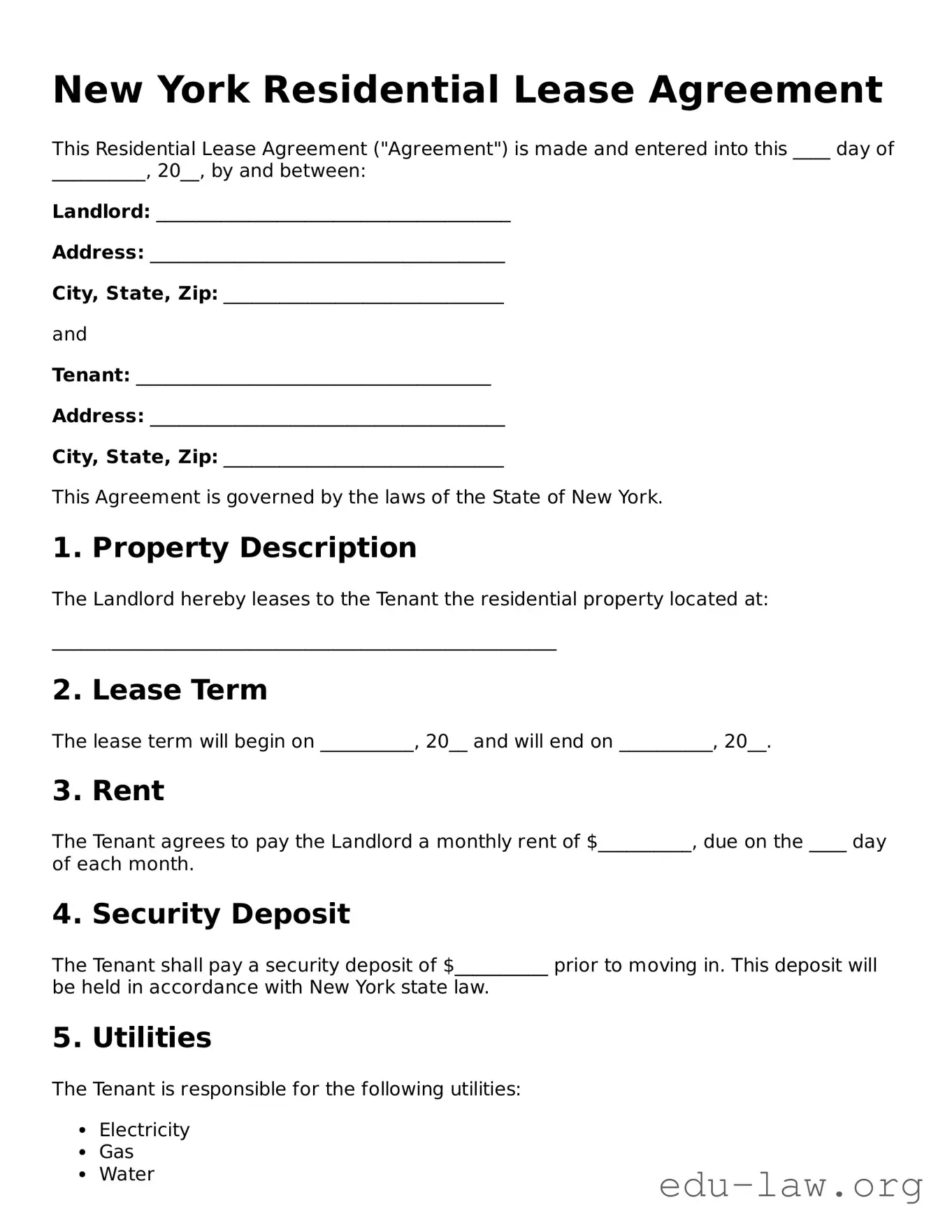
The New York Residential Lease Agreement form is a crucial document for both landlords and tenants, outlining the terms and conditions of a rental arrangement. This form typically includes important details such as the names of the parties involved, the rental property's address, and the duration of the lease. It specifies the amount of rent due, payment methods, and any late fees that may apply. Additionally, the agreement often addresses security deposits, maintenance responsibilities, and rules regarding pets or alterations to the property. By clearly defining the rights and obligations of each party, the lease agreement serves to prevent misunderstandings and disputes during the tenancy. Understanding the key components of this document can help ensure a smooth rental experience for everyone involved.
New York Residential Lease Agreement
This Residential Lease Agreement ("Agreement") is made and entered into this ____ day of __________, 20__, by and between:
Landlord: ______________________________________
Address: ______________________________________
City, State, Zip: ______________________________
and
Tenant: ______________________________________
Address: ______________________________________
City, State, Zip: ______________________________
This Agreement is governed by the laws of the State of New York.
1. Property Description
The Landlord hereby leases to the Tenant the residential property located at:
______________________________________________________
2. Lease Term
The lease term will begin on __________, 20__ and will end on __________, 20__.
3. Rent
The Tenant agrees to pay the Landlord a monthly rent of $__________, due on the ____ day of each month.
4. Security Deposit
The Tenant shall pay a security deposit of $__________ prior to moving in. This deposit will be held in accordance with New York state law.
5. Utilities
The Tenant is responsible for the following utilities:
6. Maintenance and Repairs
The Tenant agrees to keep the premises in good condition. The Landlord will be responsible for major repairs, unless damage is caused by the Tenant's negligence.
7. Use of Property
The premises shall be used solely for residential purposes. No commercial activities are permitted without prior written consent from the Landlord.
8. Pets
Pets are not allowed without written permission from the Landlord.
9. Termination
Either party may terminate this Agreement by providing written notice at least 30 days prior to the desired termination date.
10. Governing Law
This Agreement shall be governed by and construed in accordance with the laws of the State of New York.
IN WITNESS WHEREOF, the parties hereto have executed this Lease Agreement as of the date first above written.
Landlord Signature: ___________________________
Date: ______________________________________
Tenant Signature: ___________________________
Date: ______________________________________
| Fact Name | Description |
|---|---|
| Definition | The New York Residential Lease Agreement is a legal document that outlines the terms and conditions of renting residential property in New York. |
| Governing Laws | This agreement is governed by the New York Real Property Law and applicable local regulations. |
| Duration | Typically, residential leases in New York are for a term of one year, but they can vary based on the agreement between landlord and tenant. |
| Security Deposit | Landlords may require a security deposit, which cannot exceed one month's rent, and must be returned within a specified timeframe after lease termination. |
Filling out a New York Residential Lease Agreement form is an important step in securing a rental property. This document outlines the terms of the lease, including responsibilities and rights for both the landlord and tenant. Follow the steps below to ensure you complete the form accurately.
What is a New York Residential Lease Agreement?
A New York Residential Lease Agreement is a legally binding document between a landlord and a tenant. It outlines the terms and conditions under which a tenant can occupy a residential property. This agreement typically includes details such as the rental amount, duration of the lease, security deposit requirements, and responsibilities for maintenance and repairs.
What are the key components of the lease agreement?
The key components of a New York Residential Lease Agreement include the names of the parties involved, property address, lease term, rental amount, payment due dates, security deposit details, maintenance responsibilities, and any rules or restrictions regarding the use of the property. Additionally, it may specify conditions for renewal or termination of the lease.
How long is a typical lease term in New York?
Lease terms in New York can vary. The most common duration is one year, but leases can also be month-to-month or for shorter or longer periods. It’s essential to clearly state the lease term in the agreement to avoid any confusion later on.
What happens if the tenant wants to terminate the lease early?
If a tenant wishes to terminate the lease early, they must review the lease agreement for any specific clauses regarding early termination. Many agreements include a penalty or require the tenant to provide notice within a certain timeframe. Open communication with the landlord can sometimes lead to an amicable resolution.
Are there any restrictions on security deposits?
Yes, New York law regulates security deposits. A landlord may charge a security deposit of up to one month's rent. The landlord must also keep the deposit in a separate account and provide the tenant with written notice of where the deposit is held. Upon lease termination, the landlord is required to return the deposit within a specific timeframe, minus any lawful deductions.
Can a landlord raise the rent during the lease term?
Generally, a landlord cannot raise the rent during the lease term unless the lease agreement specifically allows for such an increase. Rent increases typically take effect only after the lease expires. For month-to-month leases, landlords may raise the rent with proper notice as outlined in the lease agreement.
What rights do tenants have under a lease agreement?
Tenants have several rights under a lease agreement, including the right to a habitable living environment, privacy, and protection against unlawful eviction. Tenants can also expect the landlord to fulfill their obligations, such as making necessary repairs and maintaining common areas. If these rights are violated, tenants may have legal recourse.
How can disputes be resolved between landlords and tenants?
Disputes between landlords and tenants can often be resolved through direct communication. If that fails, mediation may be an option. If necessary, legal action can be taken, which may involve going to small claims court. It's advisable to keep thorough records of all communications and agreements to support your case.
Incomplete Tenant Information: Many individuals fail to provide all required details about the tenants. This includes full names, contact information, and any additional occupants. Omitting this information can lead to confusion and disputes later on.
Incorrect Property Address: Some people mistakenly enter the wrong address for the rental property. Ensuring the address is accurate is crucial for legal purposes and to avoid potential misunderstandings.
Neglecting to Specify Lease Term: A common error is not clearly stating the duration of the lease. Whether it’s a month-to-month agreement or a fixed-term lease, clarity is essential to set expectations for both parties.
Failure to Detail Rent Payment Terms: Rent payment details, including the amount, due date, and accepted payment methods, are often not fully outlined. This can lead to payment disputes and financial strain.
Ignoring Security Deposit Provisions: Some individuals overlook the section regarding the security deposit. It is important to specify the amount, the conditions for its return, and any deductions that may apply.
Not Including Maintenance Responsibilities: Lease agreements should clearly define maintenance responsibilities for both the landlord and tenant. Failing to do so can result in disagreements over who is responsible for repairs.
When entering into a rental agreement in New York, several other forms and documents often accompany the Residential Lease Agreement. These documents help clarify the terms of the lease and protect the rights of both landlords and tenants. Here’s a list of common forms you might encounter.
These forms help create a clear understanding between landlords and tenants, ensuring a smoother rental experience. Having all necessary documents in order can prevent misunderstandings and protect the interests of both parties.
The New York Residential Lease Agreement is similar to a Rental Agreement. Both documents outline the terms under which a landlord allows a tenant to occupy a property. While a Residential Lease Agreement typically covers a longer duration, a Rental Agreement may be used for shorter periods, such as month-to-month rentals. Both documents specify the rental amount, payment due dates, and responsibilities for maintenance and repairs.
Another similar document is the Commercial Lease Agreement. This agreement is used for renting commercial properties, such as office spaces or retail locations. Like the Residential Lease Agreement, it details the terms of occupancy, including rent, duration, and maintenance responsibilities. However, it often includes additional clauses related to business operations, zoning laws, and modifications to the property.
The Sublease Agreement is also comparable. This document allows a tenant to lease their rented space to another person, known as the subtenant. It must adhere to the original lease terms and requires the landlord's consent. Both agreements outline the rental terms, payment details, and responsibilities of all parties involved.
A Lease Addendum is another related document. This is an additional agreement that modifies or adds to the existing lease. It can address specific issues such as pet policies, maintenance responsibilities, or utility payments. Both the addendum and the lease agreement must be signed by all parties to be enforceable.
The Month-to-Month Lease Agreement shares similarities as well. This type of lease allows tenants to rent a property on a monthly basis without a long-term commitment. Like the Residential Lease Agreement, it includes terms regarding rent, maintenance, and termination. However, it typically offers more flexibility for both the landlord and tenant.
Lastly, the Lease Termination Agreement is relevant. This document is used when a lease is ending or being terminated early. It outlines the conditions under which the lease will conclude, including any responsibilities for repairs or cleaning. Both this agreement and the Residential Lease Agreement provide clarity on the expectations and obligations of both parties during the termination process.
When filling out the New York Residential Lease Agreement form, there are several important do's and don'ts to keep in mind. Following these guidelines can help ensure that your lease is completed correctly and protects your rights as a tenant or landlord.
By following these do's and don'ts, you can navigate the lease agreement process with greater confidence and clarity.
Understanding the New York Residential Lease Agreement form is crucial for both landlords and tenants. However, several misconceptions can lead to confusion. Below is a list of six common misconceptions about this lease agreement.
Awareness of these misconceptions can help both landlords and tenants navigate their rights and responsibilities more effectively within the framework of New York's residential leasing laws.
When filling out and using the New York Residential Lease Agreement form, there are several important points to consider. Here are key takeaways to keep in mind:
By paying attention to these key aspects, you can create a comprehensive and clear lease agreement that serves the interests of both landlords and tenants.