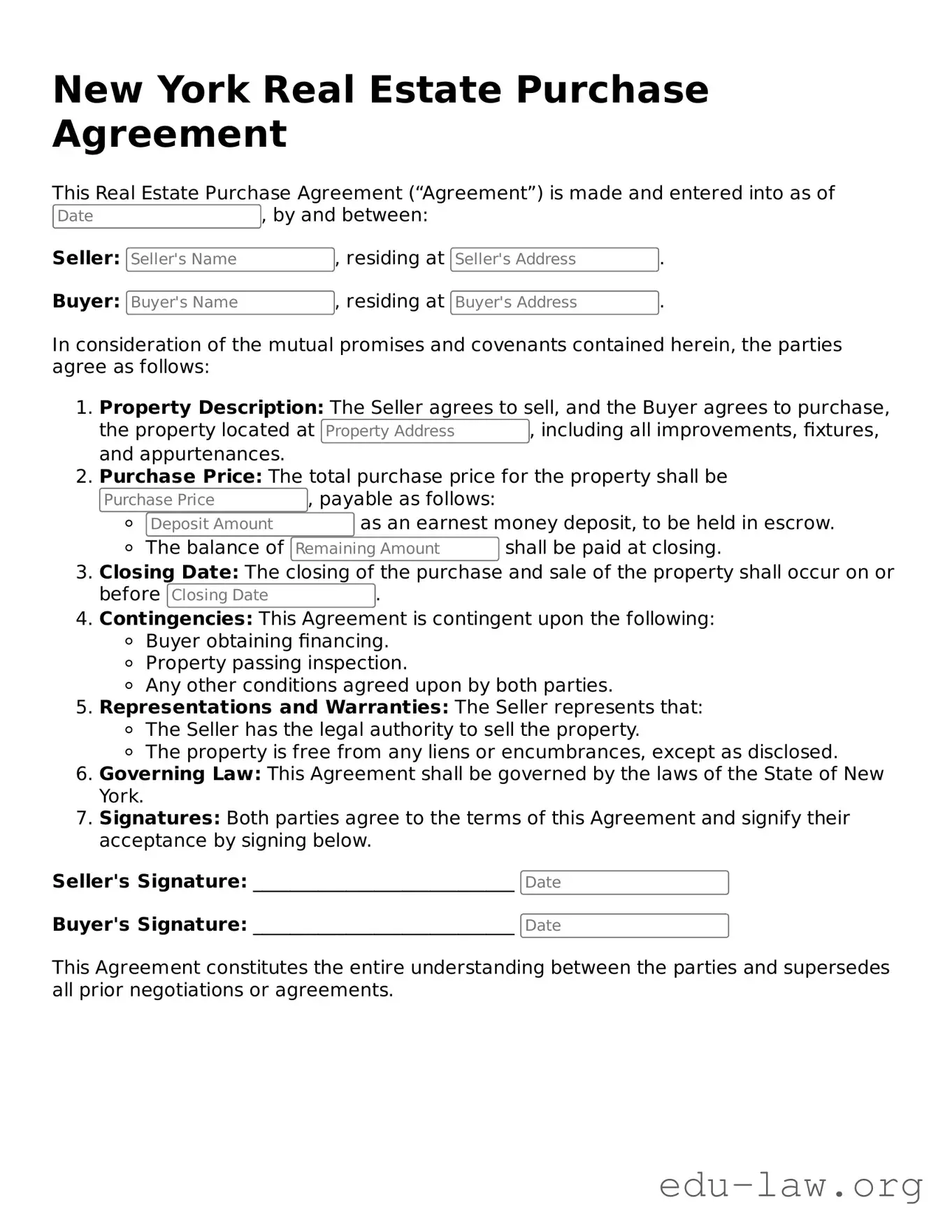
The New York Real Estate Purchase Agreement form serves as a crucial document in the process of buying or selling property in New York State. This form outlines essential terms and conditions that both buyers and sellers must agree upon before finalizing a transaction. Key aspects include the purchase price, financing details, and the closing date. The agreement also specifies the property description, which includes the address and any relevant legal identifiers. Contingencies, such as home inspections and financing approvals, are clearly stated to protect both parties. Additionally, the form addresses earnest money deposits, which demonstrate the buyer's commitment. Understanding these elements is vital for anyone involved in a real estate transaction in New York, as they establish the framework for a successful agreement and help mitigate potential disputes.
New York Real Estate Purchase Agreement
This Real Estate Purchase Agreement (“Agreement”) is made and entered into as of , by and between:
Seller: , residing at .
Buyer: , residing at .
In consideration of the mutual promises and covenants contained herein, the parties agree as follows:
Seller's Signature: ____________________________
Buyer's Signature: ____________________________
This Agreement constitutes the entire understanding between the parties and supersedes all prior negotiations or agreements.
| Fact Name | Description |
|---|---|
| Purpose | The New York Real Estate Purchase Agreement outlines the terms and conditions for buying and selling real property in New York. |
| Governing Laws | This agreement is governed by the laws of the State of New York. |
| Key Components | It typically includes details such as purchase price, closing date, and contingencies. |
| Signatures Required | Both the buyer and seller must sign the agreement to make it legally binding. |
Filling out the New York Real Estate Purchase Agreement form is an essential step in the home buying process. Once you have completed this form, you will be well on your way to formalizing the purchase of a property. Below are the steps to guide you through the process.
What is a New York Real Estate Purchase Agreement?
The New York Real Estate Purchase Agreement is a legal document that outlines the terms and conditions under which a buyer agrees to purchase a property from a seller. This agreement serves as a binding contract once both parties sign it. It includes essential details such as the purchase price, property description, and any contingencies that may apply to the sale.
What are the key components of the agreement?
A typical Real Estate Purchase Agreement in New York includes several important components. These often consist of the names of the buyer and seller, the property address, the purchase price, the closing date, and any contingencies, such as financing or inspections. Additionally, it may outline the responsibilities of both parties and any disclosures required by law.
Are there contingencies in the agreement?
Yes, contingencies are a crucial part of the agreement. They allow the buyer to back out of the deal under specific circumstances. Common contingencies include obtaining financing, passing a home inspection, and the sale of the buyer’s current home. These clauses protect the buyer and ensure that they are not obligated to proceed with the purchase if certain conditions are not met.
How is the purchase price determined?
The purchase price is typically negotiated between the buyer and seller. It may be influenced by various factors, including the current market conditions, the property’s appraised value, and any repairs or improvements needed. Both parties should feel comfortable with the agreed-upon price before signing the agreement.
What happens if one party wants to back out?
If one party wishes to back out of the agreement, they must refer to the terms outlined in the contract. If the buyer has contingencies in place and one is not met, they can withdraw without penalty. However, if a party backs out without a valid reason, they may face legal consequences or forfeit their deposit.
Is it necessary to have a lawyer review the agreement?
While it is not legally required to have a lawyer review the Real Estate Purchase Agreement, it is highly advisable. A lawyer can help ensure that the agreement protects your interests and complies with local laws. They can also clarify any terms that may be confusing and provide guidance throughout the transaction process.
How do I submit the agreement once it is signed?
Once both parties have signed the agreement, the next step is to submit it to the appropriate parties involved in the transaction. This typically includes the buyer’s and seller’s agents, as well as any legal representatives. The signed agreement should also be filed with the local county clerk's office if required. Following these steps helps ensure that the transaction proceeds smoothly toward closing.
Incomplete Information: Many buyers and sellers fail to fill out all required fields. Missing names, addresses, or contact information can delay the transaction.
Incorrect Property Details: Some people mistakenly provide wrong property descriptions or legal descriptions. This can lead to confusion and potential legal issues down the line.
Omitting Contingencies: Buyers often forget to include necessary contingencies, such as financing or inspection. Without these, they may face unexpected challenges.
Not Reviewing Terms: It’s common for individuals to overlook important terms and conditions. Failing to understand what they are agreeing to can result in future disputes.
When engaging in a real estate transaction in New York, several important documents accompany the Real Estate Purchase Agreement. Each of these documents plays a crucial role in ensuring that the process is smooth and legally binding. Understanding these forms can empower buyers and sellers alike, allowing them to navigate the complexities of real estate with confidence.
Each of these documents serves a unique purpose in the real estate transaction process. Familiarizing oneself with them can lead to a more informed and confident experience, ultimately ensuring a successful transfer of property ownership. Whether you are buying or selling, being well-prepared with the right documentation is key to a smooth transaction.
The New York Lease Agreement is similar to the Real Estate Purchase Agreement in that both documents outline the terms under which a property can be used or owned. A lease agreement typically covers rental terms, duration, and responsibilities of both the landlord and tenant. In contrast, a purchase agreement details the sale of a property, including the purchase price, closing date, and any contingencies. Both documents aim to protect the interests of the parties involved and ensure clear communication regarding property rights.
The New York Rental Application is another document that shares similarities with the Real Estate Purchase Agreement. While the purchase agreement is about buying a property, the rental application is used by potential tenants to express interest in renting a property. It collects information about the applicant's background, employment, and rental history. Both documents are essential in the real estate process, helping landlords and sellers make informed decisions about who can occupy their property.
The New York Seller Disclosure Form is akin to the Real Estate Purchase Agreement because it provides critical information about the property being sold. This form requires sellers to disclose known issues or defects with the property, ensuring buyers are fully informed before completing the purchase. Just like the purchase agreement, the seller disclosure form aims to create transparency and trust between the buyer and seller.
The New York Title Report is similar to the Real Estate Purchase Agreement in that it provides essential information about the property's ownership history. A title report outlines any liens, encumbrances, or claims against the property. Both documents work together to ensure that the buyer is aware of any potential issues before finalizing the sale, helping to protect their investment.
The New York Mortgage Agreement is closely related to the Real Estate Purchase Agreement. When a buyer finances a home, they typically enter into a mortgage agreement with a lender. This document outlines the terms of the loan, including interest rates and repayment schedules. Both agreements are crucial in the home-buying process, as they establish the financial obligations of the buyer and the lender.
The New York Closing Statement is another document that parallels the Real Estate Purchase Agreement. This statement is prepared at the closing of a real estate transaction and details all the financial aspects of the sale, including closing costs and fees. While the purchase agreement outlines the terms of the sale, the closing statement provides a final accounting of the transaction, ensuring that both parties understand their financial responsibilities.
The New York Property Management Agreement is similar to the Real Estate Purchase Agreement in that it governs the relationship between property owners and management companies. This document outlines the services provided by the management company, such as tenant screening and maintenance. Both agreements aim to clarify roles and responsibilities, ensuring that property owners and managers work together effectively.
The New York Home Inspection Report shares a connection with the Real Estate Purchase Agreement. After a buyer makes an offer, they often have the property inspected to identify any issues. The inspection report provides a detailed account of the property's condition, which can influence the terms of the purchase agreement. Both documents are integral to the home-buying process, helping buyers make informed decisions.
The New York Lease Termination Notice is another document that has similarities with the Real Estate Purchase Agreement. While the purchase agreement initiates ownership transfer, the lease termination notice ends a rental agreement. Both documents require clear communication between parties and outline specific terms and conditions, ensuring that all parties understand their rights and obligations.
Lastly, the New York Real Estate Power of Attorney can be compared to the Real Estate Purchase Agreement. This document allows one person to act on behalf of another in real estate transactions. It can be used during the purchase process when the buyer cannot be present. Both documents facilitate the transfer of property rights, ensuring that transactions proceed smoothly even when one party is not physically present.
When filling out the New York Real Estate Purchase Agreement form, it's essential to approach the task with care and attention to detail. Here’s a helpful list of things to keep in mind:
By following these guidelines, you can help ensure a smoother transaction and protect your interests throughout the process.
When it comes to buying or selling property in New York, many people have misconceptions about the Real Estate Purchase Agreement form. Understanding these misconceptions can help you navigate the process more smoothly. Here are six common misunderstandings:
Many believe that once both parties sign the agreement, it is immediately binding. However, certain conditions, like financing or inspections, may need to be met before the contract is fully enforceable.
While most terms can be negotiated, some are standard and may not be easily changed. For instance, local laws or lender requirements can limit flexibility.
Some people think it's unnecessary to have a lawyer involved. In reality, having legal counsel can help identify potential pitfalls and ensure that your interests are protected.
Many view the Purchase Agreement as a mere formality. In fact, it outlines crucial details about the transaction, including price, contingencies, and timelines, making it essential to understand.
Some believe that signing the agreement means you are locked in. However, there are contingencies that may allow a party to back out without penalty, depending on the circumstances.
While agents can assist with many aspects of the transaction, they are not responsible for legal advice. Buyers and sellers should take an active role in understanding the agreement.
Being aware of these misconceptions can empower you as you engage in the real estate market. Knowledge is key to making informed decisions.
When dealing with the New York Real Estate Purchase Agreement form, it’s essential to understand its components and implications. Here are some key takeaways to consider:
By paying attention to these key elements, both buyers and sellers can navigate the process more smoothly and ensure that their interests are protected throughout the transaction.