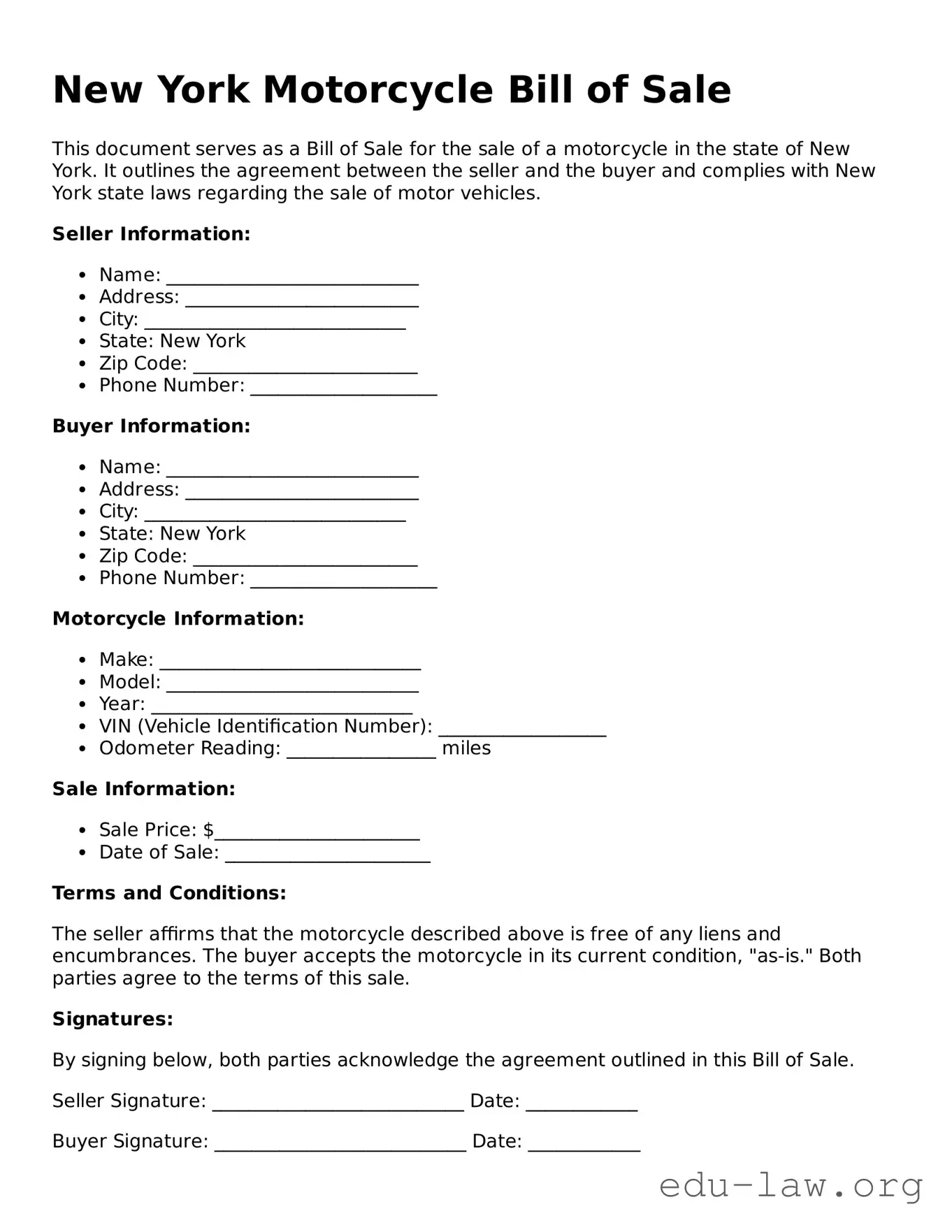
When it comes to buying or selling a motorcycle in New York, having the right documentation is crucial to ensure a smooth transaction. One of the most important documents you'll need is the Motorcycle Bill of Sale form. This form serves as a record of the sale, capturing essential details such as the names and addresses of both the buyer and seller, the motorcycle's make, model, year, and Vehicle Identification Number (VIN). Additionally, it outlines the sale price and any terms agreed upon by both parties. By using this form, you not only protect your interests but also comply with state regulations, making it easier to transfer ownership and register the motorcycle with the Department of Motor Vehicles (DMV). Whether you’re a seasoned rider or a first-time buyer, understanding the components of the Motorcycle Bill of Sale can save you time and prevent potential disputes down the road.
New York Motorcycle Bill of Sale
This document serves as a Bill of Sale for the sale of a motorcycle in the state of New York. It outlines the agreement between the seller and the buyer and complies with New York state laws regarding the sale of motor vehicles.
Seller Information:
Buyer Information:
Motorcycle Information:
Sale Information:
Terms and Conditions:
The seller affirms that the motorcycle described above is free of any liens and encumbrances. The buyer accepts the motorcycle in its current condition, "as-is." Both parties agree to the terms of this sale.
Signatures:
By signing below, both parties acknowledge the agreement outlined in this Bill of Sale.
Seller Signature: ___________________________ Date: ____________
Buyer Signature: ___________________________ Date: ____________
This Bill of Sale is governed by the laws of the State of New York.
| Fact Name | Description |
|---|---|
| Purpose | The New York Motorcycle Bill of Sale form serves as a legal document to record the sale of a motorcycle between a buyer and a seller. |
| Governing Law | This form is governed by the New York Vehicle and Traffic Law. |
| Required Information | Essential details include the motorcycle's make, model, year, VIN, and the names and addresses of both the buyer and seller. |
| Signatures | Both parties must sign the form to validate the transaction. |
| Notarization | While notarization is not mandatory, it is recommended to enhance the document's legitimacy. |
| Record Keeping | It is advisable for both parties to keep a copy of the Bill of Sale for their records. |
| Transfer of Ownership | The Bill of Sale is crucial for transferring ownership and can be used when registering the motorcycle with the DMV. |
Completing the New York Motorcycle Bill of Sale form is an important step in the transfer of ownership for a motorcycle. After filling out the form, both the seller and buyer will have a clear record of the transaction, which can be helpful for future reference or in case of any disputes.
Once the form is completed, both the seller and buyer should keep a copy for their records. This documentation serves as proof of the transaction and can assist with any future registration or title issues.
What is a Motorcycle Bill of Sale in New York?
A Motorcycle Bill of Sale is a legal document that records the transfer of ownership of a motorcycle from one person to another. This document serves as proof of the transaction and includes important details about the motorcycle and the parties involved in the sale.
Is a Motorcycle Bill of Sale required in New York?
While a Motorcycle Bill of Sale is not legally required in New York, it is highly recommended. Having this document can help protect both the buyer and the seller by providing a clear record of the transaction. It can also be useful for registration purposes and in case of any future disputes.
What information should be included in the Motorcycle Bill of Sale?
The Motorcycle Bill of Sale should include the names and addresses of both the buyer and seller, the date of the sale, the motorcycle's make, model, year, and Vehicle Identification Number (VIN). It should also specify the sale price and any conditions of the sale.
Can I create my own Motorcycle Bill of Sale?
Yes, you can create your own Motorcycle Bill of Sale. However, it is important to ensure that all required information is included and that the document is clear and accurate. Templates are available online, which can simplify the process and ensure you include all necessary details.
Do I need to have the Motorcycle Bill of Sale notarized?
In New York, notarization is not required for a Motorcycle Bill of Sale. However, having the document notarized can add an extra layer of authenticity and may be beneficial if there are any disputes in the future.
How does the Motorcycle Bill of Sale relate to registration?
The Motorcycle Bill of Sale is an important document when registering the motorcycle with the Department of Motor Vehicles (DMV). It serves as proof of ownership and is often required when applying for a new title or registration in the buyer's name.
What if the motorcycle has a lien on it?
If the motorcycle has a lien, it is crucial to address this before completing the sale. The seller should provide documentation showing that the lien has been satisfied or that arrangements have been made for its payment. The Bill of Sale should also reflect any lien information to avoid complications for the buyer.
How can I protect myself when buying a motorcycle?
To protect yourself when buying a motorcycle, ensure that you receive a properly completed Motorcycle Bill of Sale. Verify the motorcycle's VIN and check for any liens. It is also advisable to conduct a vehicle history report to confirm that the motorcycle is not stolen or has any outstanding issues.
What should I do if I lose the Motorcycle Bill of Sale?
If you lose the Motorcycle Bill of Sale, it can be challenging but not impossible to resolve. You may need to contact the seller for a duplicate or consider creating a new Bill of Sale if both parties agree. Keeping a copy of all important documents is always a good practice.
Where can I obtain a Motorcycle Bill of Sale form?
You can obtain a Motorcycle Bill of Sale form from various sources, including online legal document websites, local DMV offices, or by creating one yourself using templates available online. Ensure that the form you choose complies with New York state requirements.
Incomplete Information: One of the most common mistakes is failing to provide all necessary details. This includes the names and addresses of both the buyer and seller, as well as accurate motorcycle information such as the make, model, year, and Vehicle Identification Number (VIN). Missing any of these can lead to complications later.
Incorrect VIN: The VIN is crucial for identifying the motorcycle. Errors in transcribing this number can result in legal issues or difficulties in registering the motorcycle. Always double-check the VIN against the actual motorcycle.
Failure to Sign: Both parties must sign the bill of sale for it to be valid. A common oversight is neglecting to obtain the seller's signature or the buyer's signature. Without these signatures, the document may not hold up in legal situations.
Not Including the Sale Price: The sale price should be clearly stated on the form. Omitting this detail can lead to misunderstandings and potential disputes. It is also important for tax purposes, as the state may require this information for registration.
Ignoring State Requirements: Each state has specific requirements for a bill of sale. Failing to adhere to New York’s regulations can invalidate the document. It is essential to familiarize oneself with these requirements to ensure compliance.
When completing a motorcycle sale in New York, the Motorcycle Bill of Sale form is an essential document. However, several other forms and documents are commonly used alongside it to ensure a smooth transaction. Each of these documents serves a specific purpose and can help protect both the buyer and the seller.
Having these documents ready can facilitate a smoother transaction and help avoid any potential issues down the road. It's always a good idea to ensure that all paperwork is complete and accurate before finalizing the sale.
The Vehicle Bill of Sale is a document that serves a similar purpose to the Motorcycle Bill of Sale. It outlines the transfer of ownership for any motor vehicle, including cars and trucks. Like the motorcycle version, it includes essential details such as the buyer's and seller's information, vehicle identification number (VIN), and sale price. Both documents ensure that the transaction is documented and can be referenced for legal purposes.
The Boat Bill of Sale is another document that parallels the Motorcycle Bill of Sale. It facilitates the transfer of ownership for watercraft. Just as with motorcycles, this document captures critical information about the vessel, including its registration number, make, model, and the parties involved in the sale. This ensures a clear record of ownership, which is essential for registration and legal compliance.
When filling out the New York Motorcycle Bill of Sale form, it's essential to ensure accuracy and completeness. This document serves as proof of the transaction between the buyer and seller, so following the right steps can prevent future issues.
Here are five important things to do and avoid:
When it comes to buying or selling a motorcycle in New York, the Motorcycle Bill of Sale form is an essential document. However, several misconceptions can lead to confusion. Here are seven common misunderstandings about this important form:
Understanding these misconceptions can help ensure a smoother transaction when buying or selling a motorcycle in New York. Always consider consulting with a knowledgeable source to clarify any doubts you may have.
When filling out and using the New York Motorcycle Bill of Sale form, keep these key takeaways in mind: