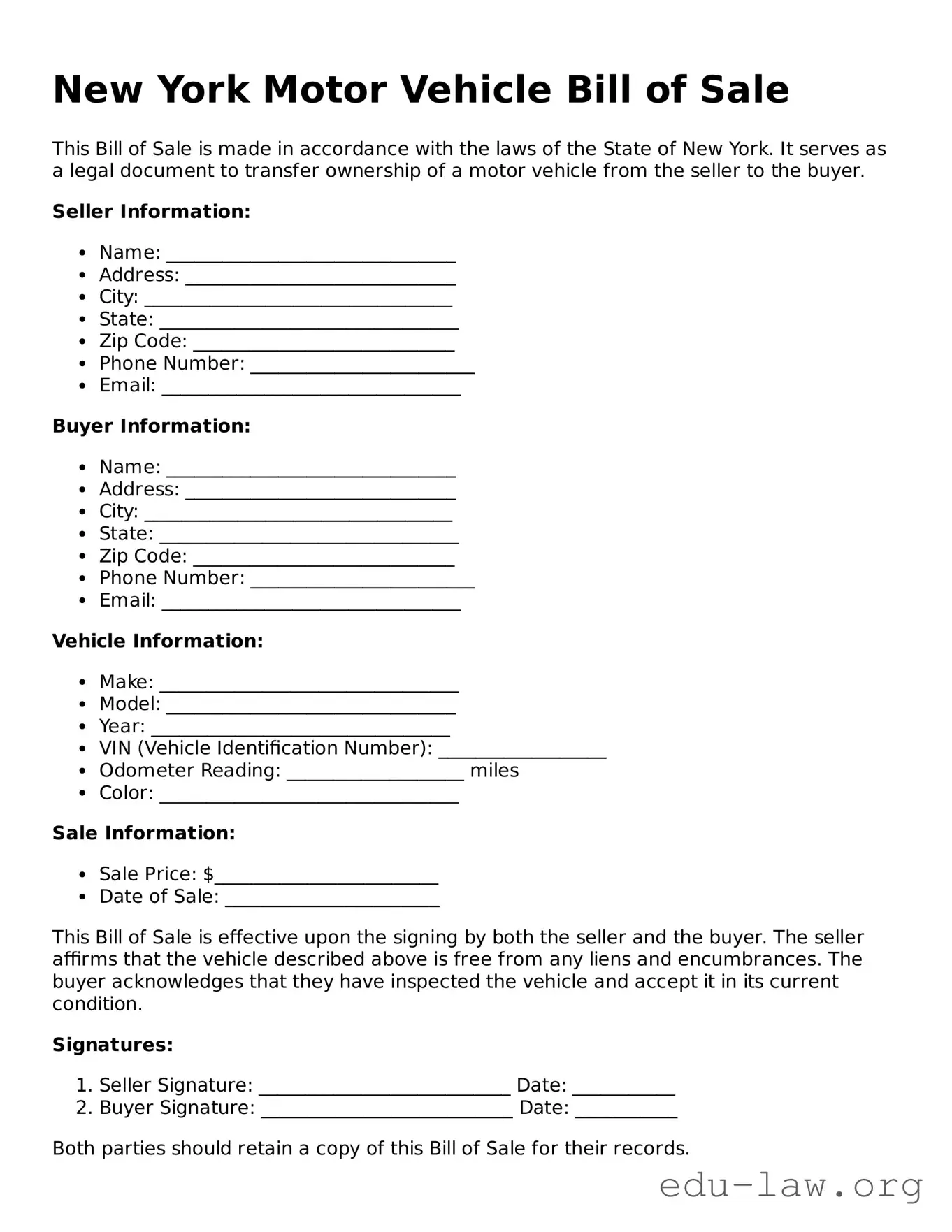
When purchasing or selling a vehicle in New York, the Motor Vehicle Bill of Sale form serves as a crucial document that outlines the transaction between the buyer and the seller. This form not only provides essential details about the vehicle, such as its make, model, year, and Vehicle Identification Number (VIN), but it also includes vital information about the parties involved in the sale. Both the buyer and seller must provide their names and addresses, ensuring that there is a clear record of ownership transfer. Additionally, the form typically captures the sale price, which is important for tax purposes and future registration. By documenting the date of the sale, the form helps establish a timeline for ownership and can protect both parties in the event of disputes. Moreover, it may include space for any warranties or disclosures, offering further clarity and peace of mind. Understanding the significance of this form is essential for anyone engaging in a vehicle transaction, as it not only facilitates a smooth transfer of ownership but also helps ensure compliance with New York state regulations.
New York Motor Vehicle Bill of Sale
This Bill of Sale is made in accordance with the laws of the State of New York. It serves as a legal document to transfer ownership of a motor vehicle from the seller to the buyer.
Seller Information:
Buyer Information:
Vehicle Information:
Sale Information:
This Bill of Sale is effective upon the signing by both the seller and the buyer. The seller affirms that the vehicle described above is free from any liens and encumbrances. The buyer acknowledges that they have inspected the vehicle and accept it in its current condition.
Signatures:
Both parties should retain a copy of this Bill of Sale for their records.
| Fact Name | Description |
|---|---|
| Purpose | The New York Motor Vehicle Bill of Sale form serves as a legal document to transfer ownership of a vehicle from one party to another. |
| Governing Law | This form is governed by the New York Vehicle and Traffic Law, specifically sections related to vehicle registration and ownership transfer. |
| Required Information | Essential details include the vehicle's make, model, year, VIN (Vehicle Identification Number), and the names and addresses of both the buyer and seller. |
| Signature Requirement | Both the seller and the buyer must sign the form to validate the sale, making it legally binding. |
After obtaining the New York Motor Vehicle Bill of Sale form, it’s essential to complete it accurately. This document serves as proof of the sale and transfer of ownership of a vehicle. Once filled out, both the buyer and seller should keep a copy for their records.
What is a New York Motor Vehicle Bill of Sale?
The New York Motor Vehicle Bill of Sale is a legal document that records the transfer of ownership of a motor vehicle from one party to another. This form includes essential details such as the vehicle's make, model, year, VIN (Vehicle Identification Number), and the names and addresses of both the seller and the buyer. It serves as proof of the transaction and can be used for registration purposes with the New York Department of Motor Vehicles (DMV).
Do I need a Bill of Sale to sell a vehicle in New York?
How do I complete a Bill of Sale for a vehicle in New York?
To complete a Bill of Sale in New York, both the seller and the buyer should fill out the form with accurate information. Key details to include are the vehicle's make, model, year, and VIN, along with the odometer reading at the time of sale. Both parties should sign and date the document. It is advisable for each party to keep a copy for their records.
Is a Bill of Sale necessary for vehicle registration in New York?
While the Bill of Sale is not a requirement for vehicle registration, it can facilitate the process. When registering a vehicle, the buyer will need to provide proof of ownership, and the Bill of Sale can serve as that proof. Additionally, it may be required if the vehicle is purchased from a private seller rather than a dealership.
Can I create my own Bill of Sale, or do I need a specific form?
You can create your own Bill of Sale as long as it includes all the necessary information. However, using a standard form can simplify the process and ensure that all required details are included. Various templates are available online, or you may obtain a form from the DMV or other legal resources.
What should I do if I lose the Bill of Sale?
If the Bill of Sale is lost, it is advisable to create a new one. Both the seller and the buyer should agree on the details and sign the new document. If possible, obtaining a copy from the original transaction can provide additional support. Keeping records of all transactions is essential for future reference.
Are there any fees associated with the Bill of Sale?
Incomplete Information: Many individuals fail to fill in all required fields, such as the vehicle identification number (VIN) or the purchase price. Omitting these details can lead to complications during the registration process.
Incorrect VIN: The VIN is a crucial identifier for the vehicle. Mistakes in transcribing this number can result in significant issues, including difficulties in tracking the vehicle's history or ownership.
Failure to Sign: Both the buyer and seller must sign the document. Neglecting to obtain signatures can render the bill of sale invalid, leaving both parties vulnerable to disputes.
Not Including Date of Sale: The absence of a sale date can create confusion regarding when the transaction occurred. This date is essential for legal and tax purposes.
Ignoring State-Specific Requirements: Different states may have unique regulations regarding the bill of sale. Failing to adhere to New York’s specific requirements could invalidate the document.
Not Keeping Copies: After completing the form, individuals often forget to make copies for their records. Retaining a copy is important for future reference and potential disputes.
Misunderstanding the Purpose: Some individuals view the bill of sale as merely a formality. In reality, it serves as a legal document that protects both parties and provides proof of the transaction.
When completing a vehicle sale in New York, the Motor Vehicle Bill of Sale form is just one of several important documents that may be required. Each of these documents serves a specific purpose, helping to ensure that the transaction is smooth and legally sound. Below are five other forms and documents that are commonly used alongside the Motor Vehicle Bill of Sale.
Gathering these documents not only facilitates a successful vehicle sale but also helps protect both the buyer and the seller. Being prepared with all necessary paperwork can streamline the process and minimize potential disputes down the line.
The New York Motor Vehicle Bill of Sale form shares similarities with the Vehicle Title Transfer form. Both documents are essential in the process of transferring ownership of a vehicle. The Vehicle Title Transfer form officially records the change in ownership, while the Bill of Sale serves as a receipt for the transaction. Together, they provide proof that the seller has relinquished ownership and that the buyer has accepted it, ensuring that both parties have a clear understanding of the sale. This dual documentation helps protect against future disputes regarding ownership and responsibilities.
Another document that resembles the New York Motor Vehicle Bill of Sale is the Purchase Agreement. This agreement outlines the terms and conditions of the sale, including the price, payment method, and any warranties. While the Bill of Sale primarily focuses on the transfer of ownership, the Purchase Agreement delves deeper into the specifics of the transaction. It serves as a binding contract that can be referred to in case of disagreements, providing both parties with a clear framework for their responsibilities and expectations.
The Odometer Disclosure Statement is yet another document that aligns closely with the Motor Vehicle Bill of Sale. This statement is crucial when selling a vehicle, as it records the mileage at the time of sale. In many states, including New York, federal law requires sellers to disclose the odometer reading to prevent fraud. While the Bill of Sale confirms the transaction, the Odometer Disclosure Statement ensures that buyers are fully informed about the vehicle’s condition, which can significantly impact its value.
Lastly, the Vehicle Registration Application is similar in that it is part of the overall process of vehicle ownership transfer. After a sale is completed, the new owner must register the vehicle in their name, which requires filling out this application. The Bill of Sale acts as a supporting document for this process, proving that the buyer has legally acquired the vehicle. Both documents work together to ensure that the vehicle is properly registered and that the new owner is recognized by the state, thereby fulfilling legal obligations and protecting the interests of all parties involved.
When filling out the New York Motor Vehicle Bill of Sale form, it is important to follow certain guidelines to ensure the document is accurate and valid. Below is a list of things you should and shouldn't do.
By adhering to these guidelines, you can help ensure that your transaction goes smoothly and is legally recognized.
When dealing with the New York Motor Vehicle Bill of Sale form, several misconceptions can lead to confusion. It is important to clarify these misunderstandings to ensure a smooth transaction process. Below are five common misconceptions:
Many people believe that a verbal agreement is sufficient when buying or selling a vehicle. However, having a Bill of Sale is crucial. This document serves as proof of the transaction and protects both the buyer and seller in case of disputes.
Some assume that only the seller's signature is required on the Bill of Sale. In reality, both the buyer and seller should sign the document. This ensures that both parties acknowledge the terms of the sale.
While it may seem convenient to write the Bill of Sale by hand, this is not advisable. A printed form is preferred to ensure clarity and professionalism. Handwritten documents can lead to misunderstandings due to unclear handwriting or missing information.
Some individuals think that notarization is unnecessary for the Bill of Sale. Although notarization is not a requirement in New York, having the document notarized adds an extra layer of security and can be beneficial if any disputes arise later.
Many believe that signing the Bill of Sale finalizes the sale. However, it is important to also complete the title transfer and notify the Department of Motor Vehicles (DMV). Failing to do so can result in legal complications or issues with registration.
Understanding these misconceptions can help ensure that your vehicle transaction goes smoothly. Always take the time to prepare and review the necessary documents carefully.
When dealing with the New York Motor Vehicle Bill of Sale form, it's essential to understand the following key points: