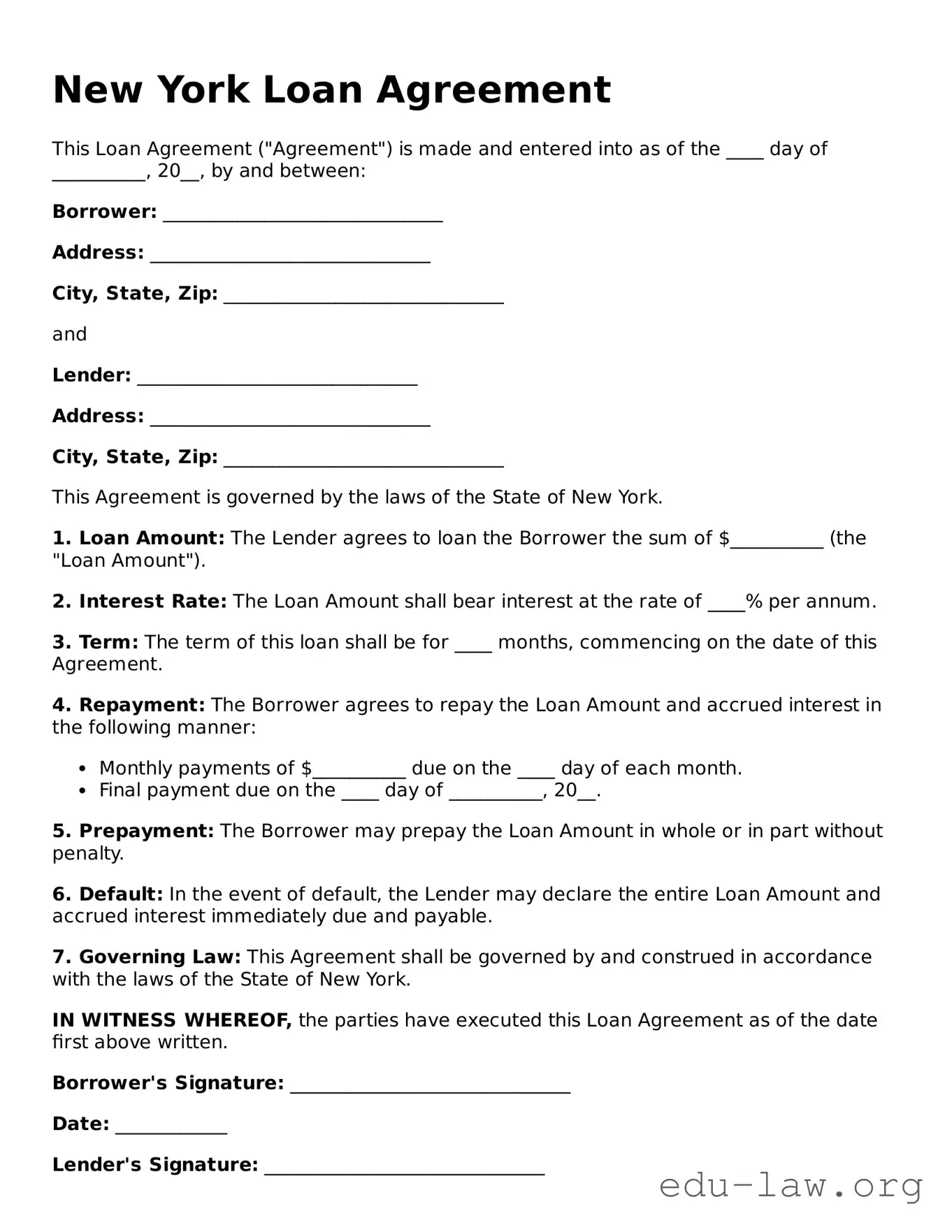
When borrowing or lending money in New York, having a clear and detailed Loan Agreement form is essential. This document outlines the terms and conditions of the loan, ensuring that both parties understand their rights and responsibilities. Key aspects include the loan amount, interest rate, repayment schedule, and any collateral involved. Additionally, the agreement specifies what happens in case of default, providing a roadmap for resolving disputes. By using a Loan Agreement, borrowers can secure necessary funds while lenders protect their investment. It’s a straightforward way to formalize the lending process, fostering trust and transparency between the parties involved.
New York Loan Agreement
This Loan Agreement ("Agreement") is made and entered into as of the ____ day of __________, 20__, by and between:
Borrower: ______________________________
Address: ______________________________
City, State, Zip: ______________________________
and
Lender: ______________________________
Address: ______________________________
City, State, Zip: ______________________________
This Agreement is governed by the laws of the State of New York.
1. Loan Amount: The Lender agrees to loan the Borrower the sum of $__________ (the "Loan Amount").
2. Interest Rate: The Loan Amount shall bear interest at the rate of ____% per annum.
3. Term: The term of this loan shall be for ____ months, commencing on the date of this Agreement.
4. Repayment: The Borrower agrees to repay the Loan Amount and accrued interest in the following manner:
5. Prepayment: The Borrower may prepay the Loan Amount in whole or in part without penalty.
6. Default: In the event of default, the Lender may declare the entire Loan Amount and accrued interest immediately due and payable.
7. Governing Law: This Agreement shall be governed by and construed in accordance with the laws of the State of New York.
IN WITNESS WHEREOF, the parties have executed this Loan Agreement as of the date first above written.
Borrower's Signature: ______________________________
Date: ____________
Lender's Signature: ______________________________
Date: ____________
| Fact Name | Description |
|---|---|
| Governing Law | The New York Loan Agreement is governed by the laws of the State of New York. |
| Purpose | This form is used to outline the terms and conditions of a loan between a lender and a borrower. |
| Parties Involved | The agreement typically involves at least two parties: the lender and the borrower. |
| Loan Amount | The specific amount of money being loaned is clearly stated in the agreement. |
| Repayment Terms | Details regarding the repayment schedule, including interest rates and due dates, are included. |
Filling out the New York Loan Agreement form requires attention to detail. Each section must be completed accurately to ensure clarity between the parties involved. After you finish filling out the form, it is advisable to review it for any errors before signing.
What is a New York Loan Agreement form?
A New York Loan Agreement form is a legal document that outlines the terms and conditions of a loan between a lender and a borrower in New York. This form typically includes details such as the loan amount, interest rate, repayment schedule, and any collateral involved. It serves to protect both parties by clearly defining their rights and obligations under the loan arrangement.
Who can use the New York Loan Agreement form?
Any individual or business looking to borrow or lend money in New York can use this form. This includes personal loans between friends or family, as well as more formal agreements between businesses or financial institutions. It is important for both parties to understand the terms before signing the agreement.
What are the key components of a New York Loan Agreement?
The key components typically include the names and addresses of the lender and borrower, the principal amount of the loan, the interest rate, the repayment schedule, and any penalties for late payments. Additionally, the agreement may outline the consequences of default and any collateral that secures the loan. Clear and precise language helps to avoid misunderstandings.
Is the New York Loan Agreement form legally binding?
Yes, once both parties sign the New York Loan Agreement form, it becomes a legally binding contract. This means that both the lender and the borrower are obligated to adhere to the terms outlined in the agreement. If either party fails to fulfill their obligations, the other party may have legal recourse to enforce the agreement.
Can the terms of the New York Loan Agreement be modified after signing?
Yes, the terms can be modified, but both parties must agree to any changes. It is advisable to document any amendments in writing and have both parties sign the revised agreement. This helps to maintain clarity and prevent disputes in the future.
Where can I obtain a New York Loan Agreement form?
A New York Loan Agreement form can be obtained from various sources, including legal websites, financial institutions, or through a legal professional. Many online platforms provide templates that can be customized to fit specific needs. It is crucial to ensure that the form complies with New York state laws.
Incomplete Information: One of the most common mistakes is leaving sections blank. Every field is important, and missing information can delay the loan process.
Incorrect Personal Details: People often make errors in their names, addresses, or Social Security numbers. Double-checking these details can prevent future complications.
Wrong Loan Amount: Miscalculating the loan amount needed is a frequent issue. It's crucial to have a clear understanding of your financial needs before filling out the form.
Neglecting to Read Terms: Some individuals skip the fine print. Understanding the terms and conditions is vital, as they outline your obligations and rights.
Failing to Sign: It may seem simple, but forgetting to sign the agreement can render it invalid. Ensure that all required signatures are present before submission.
Not Providing Supporting Documents: Many forget to attach necessary documents, such as proof of income or identification. These documents are often required to process the loan.
Ignoring Deadline: Submitting the form after the deadline can lead to rejection. It’s important to be aware of all timelines associated with the loan application.
Overlooking Contact Information: Providing outdated or incorrect contact information can hinder communication. Always ensure your phone number and email are current.
When entering into a loan agreement in New York, several other forms and documents may be necessary to ensure a smooth transaction. Each of these documents serves a specific purpose and helps protect the interests of both the lender and the borrower. Here are five commonly used forms that accompany the New York Loan Agreement:
These documents work together to create a comprehensive framework for the loan transaction. Understanding each form's role can help borrowers navigate the process more effectively and ensure that all parties are protected.
The Promissory Note is a document that outlines a borrower's promise to repay a loan. Similar to the New York Loan Agreement, it specifies the amount borrowed, interest rate, and repayment terms. However, the Promissory Note is more straightforward and focuses solely on the borrower's obligation, while the Loan Agreement may include additional terms and conditions related to the loan's use and collateral.
A Security Agreement is another document that often accompanies a loan. It details the collateral that secures the loan. Like the New York Loan Agreement, it provides protection to the lender in case the borrower defaults. The Security Agreement will specify the assets that the lender can claim if the borrower fails to repay, ensuring both parties understand their rights and responsibilities.
The Loan Disclosure Statement is designed to inform borrowers about the terms of their loan. This document is similar to the New York Loan Agreement in that it outlines key details like interest rates and fees. However, the Loan Disclosure Statement focuses on transparency, ensuring that borrowers fully understand what they are agreeing to before signing any contracts.
An Installment Agreement is a payment plan that allows borrowers to repay their loans in scheduled payments over time. This document shares similarities with the New York Loan Agreement, particularly in the structure of repayment terms. However, the Installment Agreement is more specific about the payment schedule and may not include as many conditions or stipulations as a full loan agreement.
The Loan Modification Agreement is used when borrowers need to change the terms of their existing loan. Similar to the New York Loan Agreement, it requires mutual consent from both parties. The key difference is that this document modifies existing terms rather than establishing a new loan, making it crucial for borrowers who face financial difficulties.
A Mortgage Agreement is a specific type of loan agreement used when purchasing real estate. Like the New York Loan Agreement, it outlines the terms of the loan, including the amount borrowed and repayment terms. However, the Mortgage Agreement also includes details about the property being financed and the lender's rights in case of default, providing a more comprehensive view of the transaction.
An Equity Loan Agreement allows homeowners to borrow against the equity in their property. This document shares similarities with the New York Loan Agreement in terms of outlining the loan amount and repayment terms. However, it specifically addresses the use of home equity as collateral, making it unique to homeowners looking to leverage their property value.
A Personal Loan Agreement is used for unsecured loans between individuals. This document resembles the New York Loan Agreement in that it sets forth the terms of the loan, including repayment and interest. However, personal loans typically do not involve collateral, which makes them riskier for lenders and requires clear communication of terms to protect both parties.
A Business Loan Agreement is tailored for business financing. Like the New York Loan Agreement, it outlines the terms of the loan, including interest rates and repayment schedules. The main difference is that it may include specific clauses related to business operations, ensuring that the loan is used for its intended purpose and that the lender's interests are safeguarded.
When filling out the New York Loan Agreement form, attention to detail is crucial. Here’s a list of dos and don’ts to help ensure your form is completed correctly.
By following these guidelines, you can help ensure that your New York Loan Agreement form is completed properly and processed without unnecessary delays.
Understanding the New York Loan Agreement form can be challenging, especially with the many misconceptions surrounding it. Here’s a list of ten common misunderstandings, along with clarifications to help you navigate this important document.
By clarifying these misconceptions, individuals can better understand the New York Loan Agreement form and its implications. This knowledge empowers borrowers and lenders alike to make informed decisions.
When filling out and using the New York Loan Agreement form, keep these key takeaways in mind: