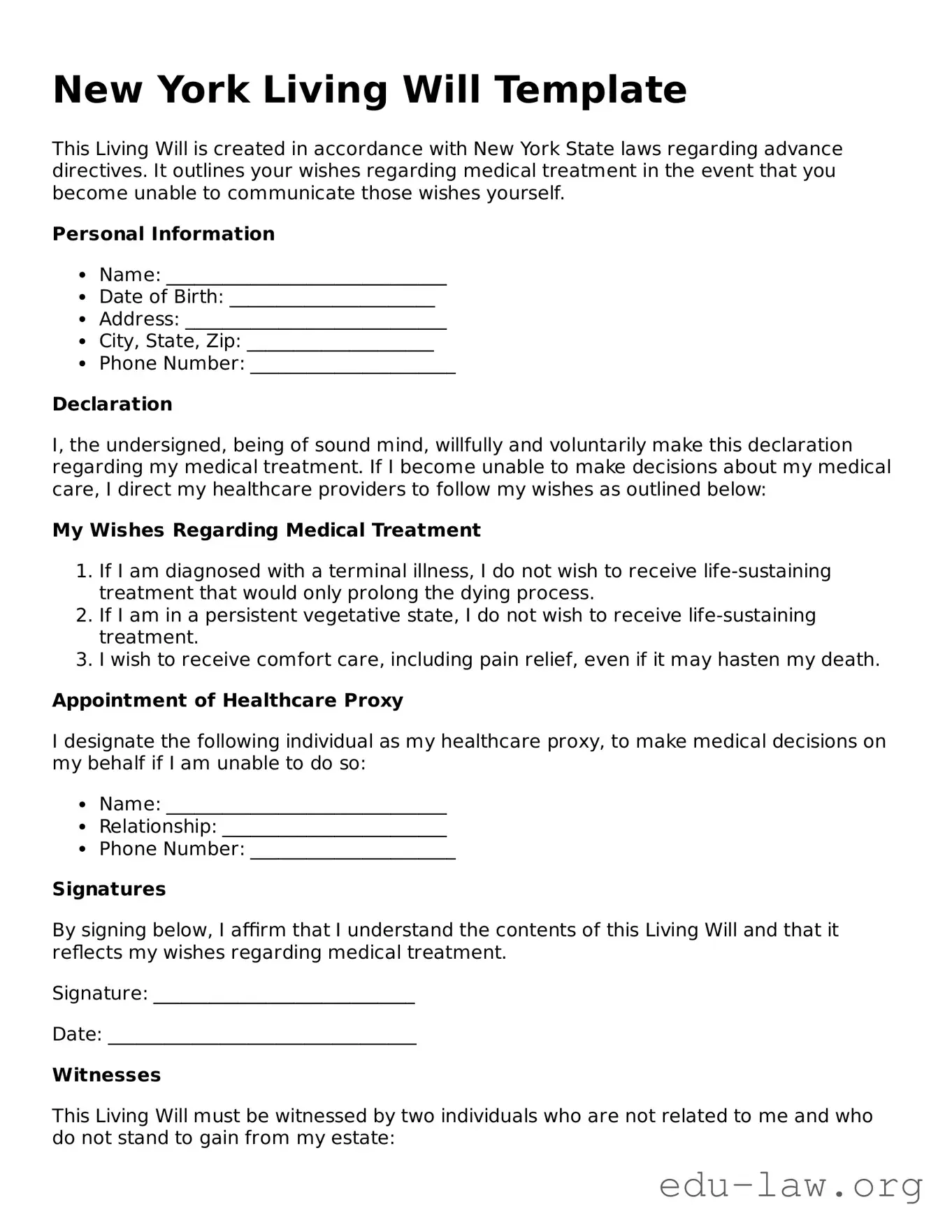
The New York Living Will form serves as a critical document for individuals who wish to outline their healthcare preferences in the event they become unable to communicate their wishes. This form enables individuals to specify the types of medical treatments they would or would not want, particularly in situations involving terminal illness or irreversible conditions. It is designed to provide clear guidance to healthcare providers and loved ones, alleviating the burden of decision-making during emotionally challenging times. Key components of the Living Will include directives about life-sustaining treatment, resuscitation efforts, and palliative care options. By completing this form, individuals can ensure their values and preferences are respected, while also promoting discussions among family members and healthcare professionals about end-of-life care. Understanding the importance of this document can empower individuals to take control of their healthcare decisions and foster peace of mind for themselves and their families.
New York Living Will Template
This Living Will is created in accordance with New York State laws regarding advance directives. It outlines your wishes regarding medical treatment in the event that you become unable to communicate those wishes yourself.
Personal Information
Declaration
I, the undersigned, being of sound mind, willfully and voluntarily make this declaration regarding my medical treatment. If I become unable to make decisions about my medical care, I direct my healthcare providers to follow my wishes as outlined below:
My Wishes Regarding Medical Treatment
Appointment of Healthcare Proxy
I designate the following individual as my healthcare proxy, to make medical decisions on my behalf if I am unable to do so:
Signatures
By signing below, I affirm that I understand the contents of this Living Will and that it reflects my wishes regarding medical treatment.
Signature: ____________________________
Date: _________________________________
Witnesses
This Living Will must be witnessed by two individuals who are not related to me and who do not stand to gain from my estate:
Thank you for taking the time to express your wishes clearly. Your voice matters, even when you cannot speak for yourself.
| Fact Name | Details |
|---|---|
| Definition | A Living Will is a legal document that outlines a person's wishes regarding medical treatment in situations where they are unable to communicate their preferences. |
| Governing Law | The New York Living Will is governed by the New York Public Health Law, specifically Section 2981. |
| Eligibility | Any adult who is of sound mind can create a Living Will in New York. |
| Signature Requirements | The document must be signed by the individual creating the Living Will and witnessed by at least two adults who are not related to the individual. |
| Revocation | A Living Will can be revoked at any time, either verbally or in writing, as long as the individual is competent. |
| Healthcare Proxy | A Living Will can be used alongside a Healthcare Proxy, which designates someone to make medical decisions on behalf of the individual. |
| Scope of Document | The Living Will specifically addresses end-of-life care and medical treatments, such as life support and resuscitation efforts. |
| Advance Directive | A Living Will is a type of advance directive, which is a broader category that includes various documents outlining healthcare preferences. |
| Storage | It is advisable to keep the Living Will in a safe place and provide copies to family members and healthcare providers. |
| Legal Standing | New York courts recognize Living Wills as legally binding documents, provided they meet the necessary requirements. |
Filling out a New York Living Will form is an important step in expressing your healthcare preferences. After completing the form, it should be signed and dated in the presence of a witness or notary. This ensures that your wishes are documented and legally recognized.
What is a New York Living Will?
A New York Living Will is a legal document that outlines your preferences regarding medical treatment in the event that you become unable to communicate your wishes. It specifically addresses situations where you may be terminally ill or in a persistent vegetative state. This document helps ensure that your healthcare providers and loved ones understand your desires regarding life-sustaining treatments.
Who should have a Living Will?
Anyone who is an adult and wants to express their healthcare preferences should consider having a Living Will. This includes individuals with chronic illnesses, those approaching advanced age, or anyone who simply wants to ensure their wishes are known. It's a proactive step in planning for the future and can provide peace of mind for both you and your family.
How do I create a Living Will in New York?
Creating a Living Will in New York involves a few key steps. First, you should consider your healthcare preferences and discuss them with your family and healthcare providers. Next, you can obtain a Living Will form, which is available online or through legal offices. After filling out the form, it must be signed in the presence of at least two witnesses who are not related to you and do not stand to gain from your estate. Once completed, keep the document in a safe place and share copies with your healthcare proxy and family members.
Can I change or revoke my Living Will?
Yes, you can change or revoke your Living Will at any time, as long as you are still mentally competent. To revoke it, you can destroy the document or create a new one that explicitly states your current wishes. It’s important to inform your healthcare proxy and family members about any changes to ensure that everyone is aware of your latest preferences.
Is a Living Will the same as a Healthcare Proxy?
No, a Living Will and a Healthcare Proxy are not the same, although they are related. A Living Will specifies your medical treatment preferences, while a Healthcare Proxy designates a person to make healthcare decisions on your behalf if you cannot do so. It is often recommended to have both documents to provide comprehensive guidance regarding your healthcare wishes.
What happens if I don’t have a Living Will?
If you do not have a Living Will, medical decisions may be made by your family members or healthcare providers based on what they believe you would want. This can lead to confusion or disagreements among loved ones during a difficult time. Having a Living Will helps to clarify your wishes, reducing the burden on your family and ensuring that your preferences are honored.
Not Being Specific Enough: When filling out a Living Will, individuals often fail to clearly express their wishes regarding medical treatment. It’s important to specify what types of treatments one does or does not want in different situations.
Forgetting to Sign and Date: A common oversight is neglecting to sign and date the form. Without a signature, the document may not be considered valid, which can lead to complications when it is needed.
Not Discussing Wishes with Family: Many people fill out the form without discussing their wishes with family members. This can lead to confusion and conflict when decisions need to be made. Open communication can ease the burden on loved ones.
Using Outdated Forms: Some individuals mistakenly use outdated versions of the Living Will form. It’s crucial to ensure that the most current form is being used to comply with New York laws.
Failing to Review and Update: Life circumstances change. People often forget to review and update their Living Will. Regularly revisiting the document ensures it accurately reflects current wishes and situations.
A New York Living Will is an essential document for individuals who wish to outline their preferences for medical treatment in the event they become unable to communicate their wishes. However, it is often used alongside other important documents that help ensure a person's healthcare decisions are respected. Below is a list of forms and documents that complement the Living Will.
By utilizing these documents in conjunction with a New York Living Will, individuals can create a robust framework for their healthcare decisions. This not only provides clarity for medical providers but also alleviates potential stress for family members during difficult times.
The New York Health Care Proxy is a document that allows individuals to appoint someone to make medical decisions on their behalf if they become unable to do so. Similar to a Living Will, it focuses on health care preferences but emphasizes the appointment of a trusted person, known as a health care agent. This agent can interpret the individual's wishes in real-time, ensuring that decisions reflect the individual's values and desires when faced with medical emergencies.
The Advance Directive is another important document that shares similarities with the Living Will. It encompasses both a Living Will and a Health Care Proxy, providing a comprehensive approach to end-of-life care. An Advance Directive outlines specific medical treatments an individual wishes to receive or refuse, while also designating an agent to make decisions if the individual is incapacitated. This dual function allows for a more thorough expression of one’s health care preferences.
The Do Not Resuscitate (DNR) Order is a specific type of medical order that indicates an individual’s wish not to receive cardiopulmonary resuscitation (CPR) in the event of cardiac arrest. Like a Living Will, a DNR reflects personal choices regarding life-sustaining treatment. However, it is more focused on a single aspect of care, whereas a Living Will can address a broader range of medical interventions and end-of-life decisions.
The POLST (Physician Orders for Life-Sustaining Treatment) form is designed for individuals with serious illnesses or those nearing the end of life. It translates the patient's wishes regarding treatment into actionable medical orders. Similar to a Living Will, the POLST ensures that health care providers are aware of and respect the patient's preferences. However, it is typically used in conjunction with ongoing medical care, making it more immediate and actionable in clinical settings.
The Durable Power of Attorney for Health Care is another related document that allows an individual to designate someone to make health care decisions on their behalf. While a Living Will specifies what treatments an individual does or does not want, a Durable Power of Attorney focuses on the authority granted to another person to make those decisions. This document is particularly useful when preferences are not explicitly stated or when circumstances change, allowing the appointed agent to adapt to new medical situations.
Filling out a New York Living Will form is an important step in ensuring your healthcare wishes are respected. Here are some essential do's and don'ts to keep in mind as you complete this document:
By following these guidelines, you can help ensure that your Living Will accurately reflects your desires and is legally valid. It is crucial to take this process seriously, as it can significantly impact your medical care in the future.
Many people have misunderstandings about the New York Living Will form. These misconceptions can lead to confusion and may prevent individuals from making informed decisions about their healthcare preferences. Here are four common misconceptions:
This is not true. A Living Will is a document that allows anyone, regardless of age or health status, to express their wishes regarding medical treatment in case they become unable to communicate. It’s a proactive step that can benefit individuals of all ages.
While consulting a lawyer can be helpful, it is not a requirement. New York provides a standardized form that individuals can complete on their own. However, it is advisable to discuss your wishes with family members and healthcare providers.
These documents serve different purposes. A Living Will outlines your preferences for medical treatment in various situations, while a DNR specifically instructs medical personnel not to perform CPR if your heart stops. Both are important, but they are not interchangeable.
This misconception is incorrect. A Living Will can be updated or revoked at any time as long as the individual is competent. It’s essential to review your Living Will periodically and make adjustments as your preferences or circumstances change.
Understanding these misconceptions can help individuals better navigate their healthcare choices and ensure their wishes are respected. Taking the time to create a Living Will is an important step in planning for the future.
Filling out a New York Living Will form is an important step in ensuring that your healthcare wishes are respected in the event that you are unable to communicate them. Here are some key takeaways to keep in mind:
By taking the time to complete a Living Will, you empower yourself and relieve your loved ones of the burden of making difficult decisions during challenging times.