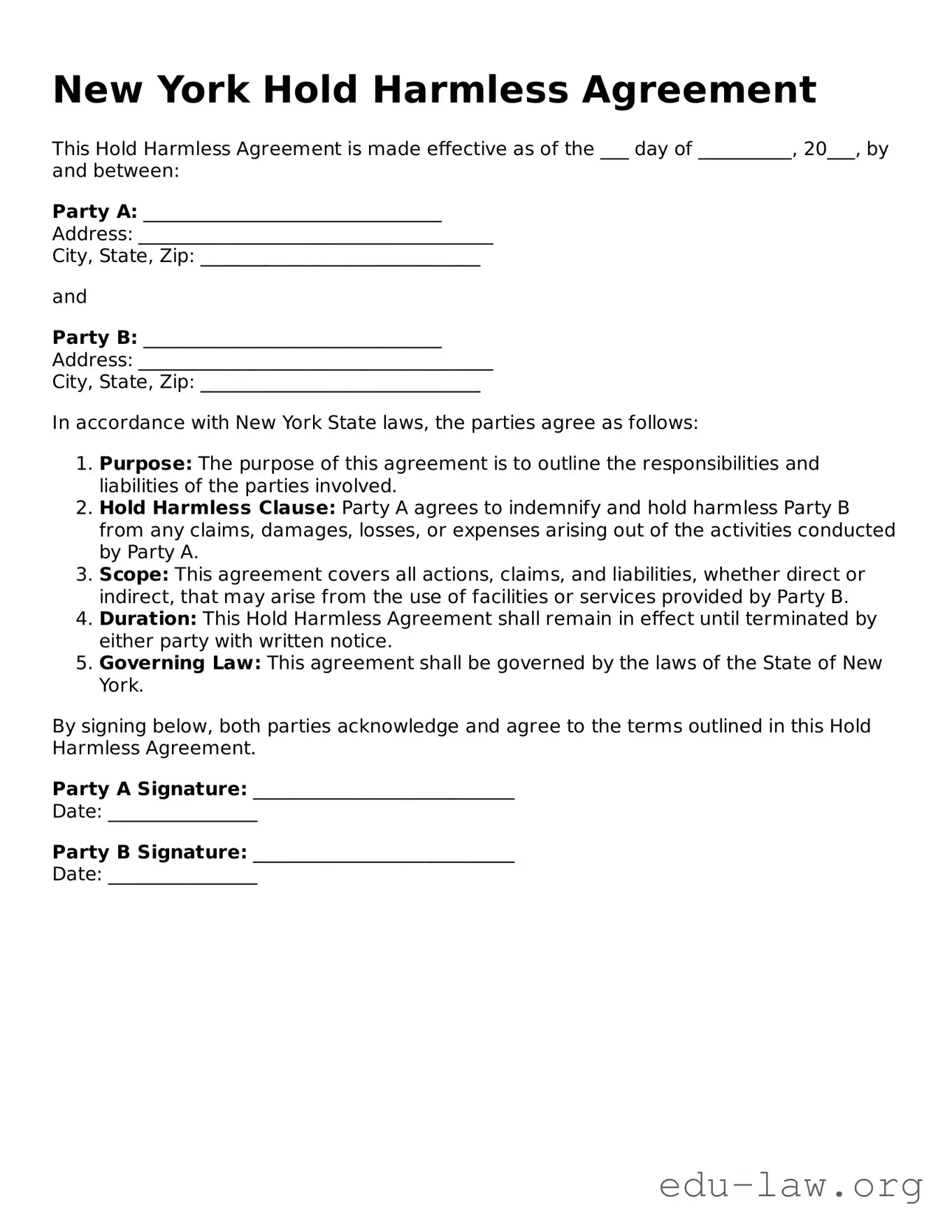
The New York Hold Harmless Agreement form is a crucial document designed to protect parties involved in various activities, from construction projects to recreational events. This form serves as a legal safeguard, ensuring that one party agrees not to hold the other liable for any injuries, damages, or losses that may occur during the specified activity. By clearly outlining the responsibilities and expectations of each party, the agreement fosters a sense of security and trust. It typically includes essential details such as the names of the parties involved, a description of the activity, and the specific risks associated with it. Additionally, the form may stipulate any exceptions to the hold harmless provision, offering a balanced approach to liability. Understanding this document is vital for anyone engaging in activities where potential risks exist, as it helps clarify rights and responsibilities while promoting safety and accountability.
New York Hold Harmless Agreement
This Hold Harmless Agreement is made effective as of the ___ day of __________, 20___, by and between:
Party A: ________________________________
Address: ______________________________________
City, State, Zip: ______________________________
and
Party B: ________________________________
Address: ______________________________________
City, State, Zip: ______________________________
In accordance with New York State laws, the parties agree as follows:
By signing below, both parties acknowledge and agree to the terms outlined in this Hold Harmless Agreement.
Party A Signature: ____________________________
Date: ________________
Party B Signature: ____________________________
Date: ________________
| Fact Name | Description |
|---|---|
| Purpose | The New York Hold Harmless Agreement is designed to protect one party from legal liability for any injuries or damages incurred by another party during a specific activity or event. |
| Governing Law | This agreement is governed by the laws of the State of New York, which outlines the legal framework for liability waivers and indemnification agreements. |
| Parties Involved | Typically, the agreement involves two parties: the indemnitor (the party providing the hold harmless protection) and the indemnitee (the party receiving the protection). |
| Scope of Protection | The agreement can cover a wide range of activities, including recreational events, construction work, and other situations where risk is present. |
| Enforceability | For the agreement to be enforceable, it must be clear, unambiguous, and signed voluntarily by both parties, ensuring that both understand the implications. |
Filling out the New York Hold Harmless Agreement form is an important step in ensuring that you understand the responsibilities and protections involved in your agreement. Once completed, this form will need to be submitted according to the requirements set forth by the relevant parties involved.
What is a Hold Harmless Agreement?
A Hold Harmless Agreement is a legal document that protects one party from liability or claims that may arise from specific activities or actions. In New York, these agreements are often used in various contexts, such as construction projects, rental agreements, and events. By signing this document, one party agrees not to hold the other party responsible for any damages or injuries that may occur during the agreed-upon activities.
Who typically uses a Hold Harmless Agreement in New York?
This type of agreement is commonly used by property owners, contractors, event organizers, and businesses. For example, a property owner may require a contractor to sign a Hold Harmless Agreement to protect against potential claims related to accidents that occur on the property during construction. Similarly, an event organizer may ask participants to sign one to limit liability for injuries sustained during the event.
What are the key components of a Hold Harmless Agreement?
A typical Hold Harmless Agreement includes several important elements. It identifies the parties involved, outlines the scope of the agreement, and specifies the activities covered. Additionally, it may include definitions of terms, a statement of intent, and any relevant limitations or exclusions. Clear language is essential to ensure all parties understand their rights and obligations.
Is a Hold Harmless Agreement legally binding in New York?
Yes, a Hold Harmless Agreement can be legally binding in New York, provided it meets certain requirements. The agreement must be clear and unambiguous, and both parties should voluntarily agree to its terms. It's important to note that while these agreements can limit liability, they may not be enforceable in cases of gross negligence or intentional misconduct.
Can a Hold Harmless Agreement be modified?
Yes, a Hold Harmless Agreement can be modified if both parties agree to the changes. It’s advisable to document any modifications in writing and have both parties sign the revised agreement. This helps avoid misunderstandings and ensures that the terms reflect the current intentions of both parties.
What happens if one party does not comply with the Hold Harmless Agreement?
If one party fails to comply with the terms of the Hold Harmless Agreement, the other party may seek legal recourse. This could involve filing a lawsuit for breach of contract. The injured party may be entitled to compensation for damages or losses incurred due to the non-compliance. It’s always best to consult with a legal professional in such situations.
Are there any limitations to a Hold Harmless Agreement?
While Hold Harmless Agreements can offer significant protection, they do have limitations. For instance, they may not protect against claims arising from willful misconduct or gross negligence. Additionally, certain statutory provisions may limit the enforceability of these agreements in specific contexts, such as residential leases or public spaces.
How can I ensure my Hold Harmless Agreement is enforceable?
To enhance the enforceability of a Hold Harmless Agreement, it is crucial to use clear and precise language. The agreement should be specific about the activities covered and the responsibilities of each party. Consulting with a legal professional during the drafting process can also help ensure that the agreement complies with New York law and adequately protects your interests.
Do I need a lawyer to create a Hold Harmless Agreement?
While it is possible to create a Hold Harmless Agreement without a lawyer, it is highly recommended to seek legal advice. An attorney can help ensure that the document is properly drafted, enforceable, and tailored to your specific needs. This can save time and potential legal complications down the road.
Where can I find a template for a Hold Harmless Agreement in New York?
Templates for Hold Harmless Agreements can be found online, but it’s important to choose one that is specific to New York law. Many legal websites offer customizable templates. However, using a template should not replace professional legal advice. Tailoring the agreement to your unique situation is crucial for its effectiveness.
Failing to read the entire agreement before signing. It's essential to understand all terms and conditions.
Not providing accurate personal information. Ensure your name, address, and contact details are correct.
Leaving out necessary signatures. Both parties should sign the agreement to make it valid.
Using vague language. Clearly state the activities or events covered by the agreement.
Neglecting to specify the duration of the agreement. Indicate how long the hold harmless clause will be in effect.
Overlooking the inclusion of specific risks. Identify potential risks associated with the activity.
Not consulting a legal professional. It's wise to seek advice to ensure the agreement is enforceable.
Assuming the agreement protects against all liabilities. Understand that some liabilities may still apply.
Failing to keep a copy of the signed agreement. Always retain a copy for your records.
Relying on verbal agreements. Written documentation is crucial for clarity and enforcement.
A New York Hold Harmless Agreement is a useful document designed to protect one party from liability for certain actions or events. When preparing this agreement, it is often beneficial to accompany it with other forms and documents that provide additional legal clarity and protection. Below is a list of commonly used documents that may complement a Hold Harmless Agreement.
Incorporating these documents alongside a Hold Harmless Agreement can help clarify the roles and responsibilities of each party involved. By ensuring all necessary forms are in place, individuals and organizations can better protect themselves from potential liabilities and misunderstandings.
The Indemnity Agreement is similar to the Hold Harmless Agreement in that both documents aim to protect one party from liability. An Indemnity Agreement typically involves one party agreeing to compensate another for any losses or damages that may arise from specific actions or events. This document often outlines the scope of indemnification, specifying what types of claims or damages are covered. Like the Hold Harmless Agreement, it is commonly used in contracts where risk allocation is necessary, ensuring that one party bears the financial burden of potential liabilities.
The Waiver of Liability is another document that shares similarities with the Hold Harmless Agreement. This waiver is often used in situations where individuals voluntarily participate in activities that carry inherent risks, such as sports or recreational events. By signing a Waiver of Liability, participants agree not to hold the organizers responsible for injuries or damages that may occur. Both documents serve to limit liability, but a Waiver of Liability typically requires the participant's acknowledgment of risk before engaging in the activity.
The Release of Liability form also resembles the Hold Harmless Agreement. This document is used when one party wants to release another from any future claims or legal actions related to a specific event or activity. It is often signed before participating in activities that could lead to injury or loss. While the Hold Harmless Agreement focuses on protecting a party from claims made by third parties, the Release of Liability usually pertains to claims made by the signer against the released party.
The Service Agreement can be compared to the Hold Harmless Agreement in that it often includes provisions that address liability and risk management. In many service agreements, the service provider may agree to hold the client harmless for any damages that arise from the services provided. This document outlines the responsibilities and expectations of both parties, helping to clarify liability issues and protect against potential legal disputes that may arise during the course of service delivery.
The Construction Contract often incorporates elements similar to those found in the Hold Harmless Agreement. In construction projects, contractors and subcontractors frequently agree to indemnify one another for claims arising from their work. These contracts typically include clauses that protect one party from liability for injuries or damages that occur on the job site. By including hold harmless provisions, parties in construction contracts can better manage risks associated with the project and ensure that liability is appropriately allocated among them.
When filling out the New York Hold Harmless Agreement form, it is important to approach the task with care. Here are five things you should and shouldn't do:
The New York Hold Harmless Agreement form is often misunderstood. Here are four common misconceptions about this legal document:
Understanding these misconceptions can help individuals navigate the complexities of liability and ensure that they are adequately protected in various situations.
When considering the New York Hold Harmless Agreement form, it is important to understand its purpose and implications. Here are some key takeaways to keep in mind:
Understanding these points can help ensure that the Hold Harmless Agreement serves its intended purpose effectively.