In the realm of healthcare, the New York Do Not Resuscitate (DNR) Order form serves as a critical document for individuals wishing to express their preferences regarding emergency medical interventions. This form allows patients to make their wishes known about resuscitation efforts in the event of a cardiac arrest or respiratory failure. A properly executed DNR Order ensures that medical personnel respect the patient's desire to avoid life-saving measures such as CPR or intubation, which can sometimes lead to unwanted suffering. The form requires the signature of both the patient and a physician, confirming that the decision is informed and voluntary. Additionally, it is essential for patients and families to understand that the DNR Order is specific to emergency situations and does not affect other aspects of medical care. By completing this form, individuals take an important step in asserting their autonomy and ensuring that their end-of-life wishes are honored, providing peace of mind for both themselves and their loved ones.
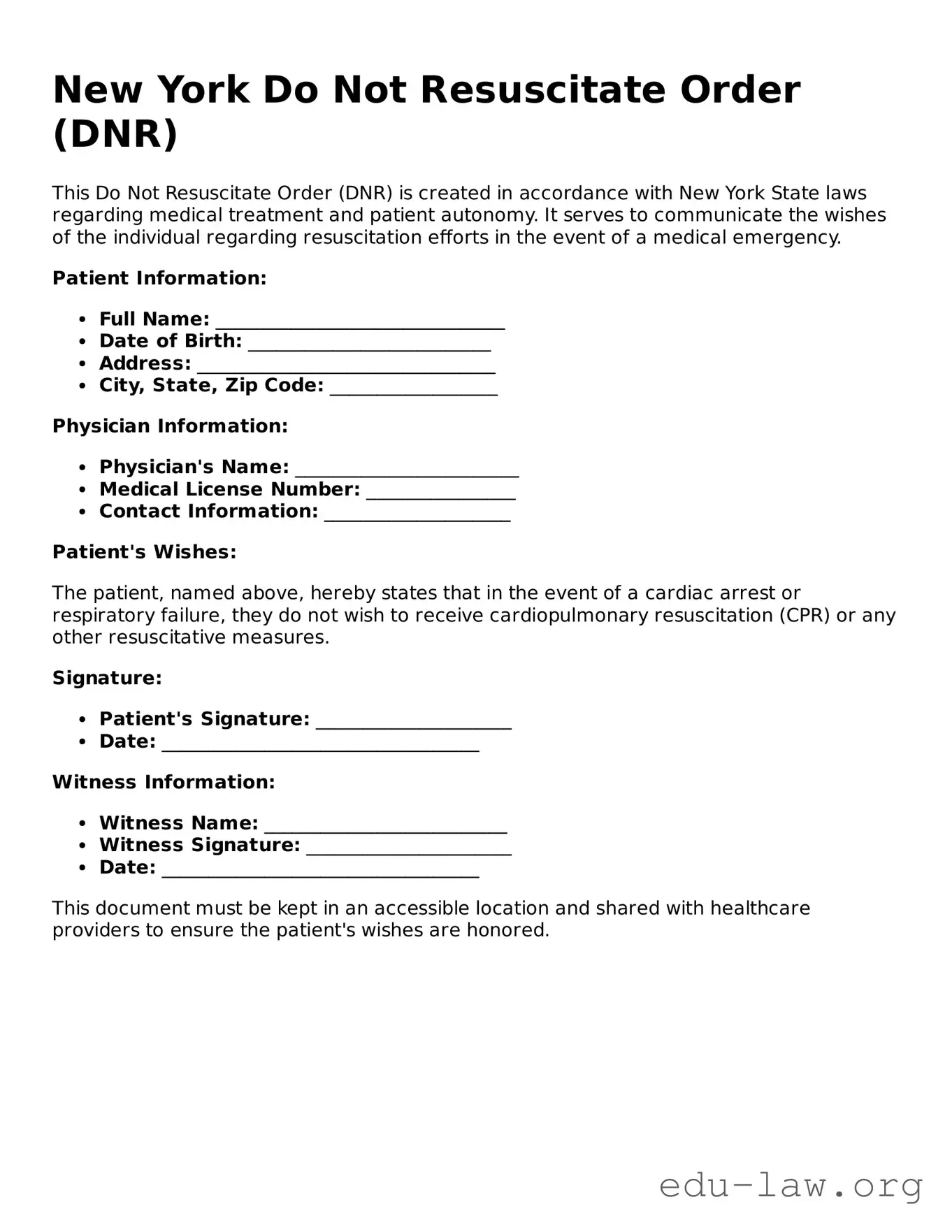
New York Do Not Resuscitate Order (DNR)
This Do Not Resuscitate Order (DNR) is created in accordance with New York State laws regarding medical treatment and patient autonomy. It serves to communicate the wishes of the individual regarding resuscitation efforts in the event of a medical emergency.
Patient Information:
Physician Information:
Patient's Wishes:
The patient, named above, hereby states that in the event of a cardiac arrest or respiratory failure, they do not wish to receive cardiopulmonary resuscitation (CPR) or any other resuscitative measures.
Signature:
Witness Information:
This document must be kept in an accessible location and shared with healthcare providers to ensure the patient's wishes are honored.
| Fact Name | Details |
|---|---|
| Purpose | The New York Do Not Resuscitate Order (DNR) form allows individuals to refuse resuscitation efforts in case of cardiac arrest. |
| Governing Law | The DNR form is governed by New York Public Health Law, Article 29-B. |
| Eligibility | Any competent adult can complete a DNR form. It can also be completed by a legally authorized representative. |
| Signature Requirement | The form must be signed by the patient or their representative and a physician. |
| Form Availability | The DNR form is available through hospitals, healthcare providers, and online resources. |
| Revocation | A DNR order can be revoked at any time by the patient or their representative. |
| Emergency Medical Services | Emergency medical personnel must honor a valid DNR order when responding to a medical emergency. |
| Notification | Patients should inform their healthcare providers and family members about their DNR status. |
| Form Storage | The DNR form should be kept in an easily accessible location, such as with medical records or on the refrigerator. |
| Limitations | The DNR order only applies to resuscitation efforts and does not affect other medical treatments. |
Filling out the New York Do Not Resuscitate Order form is an important step in making your healthcare wishes known. Once the form is completed, it should be signed and dated. Ensure that copies are distributed to your healthcare provider and any family members involved in your care.
What is a Do Not Resuscitate (DNR) Order in New York?
A Do Not Resuscitate Order is a legal document that allows individuals to refuse resuscitation efforts in the event of cardiac or respiratory arrest. In New York, this order is typically used by patients who have a terminal illness or are in a state where recovery is unlikely. It ensures that medical personnel respect the individual's wishes regarding life-saving measures.
How do I obtain a DNR Order in New York?
To obtain a DNR Order, you must first have a conversation with your healthcare provider. They will assess your medical condition and discuss your wishes regarding resuscitation. If you and your provider agree that a DNR is appropriate, they will help you complete the official DNR form. It is important to ensure that the form is signed by both you and your physician to make it legally valid.
Is a DNR Order valid in all healthcare settings?
Yes, a DNR Order is valid across all healthcare settings in New York, including hospitals, nursing homes, and at home. However, it is essential that the DNR form is properly filled out and readily available to medical personnel. Keeping a copy of the DNR Order in a visible location can help ensure that your wishes are honored in an emergency situation.
Can I change or revoke my DNR Order?
Absolutely. You have the right to change or revoke your DNR Order at any time. If you decide to make changes, it is crucial to inform your healthcare provider and complete a new DNR form. Additionally, you should ensure that any previous versions of the DNR Order are destroyed or marked as invalid to prevent confusion.
What should I do if I have questions about the DNR process?
If you have questions or concerns about the DNR process, it is best to speak with your healthcare provider. They can provide guidance and clarify any uncertainties you may have. You can also reach out to legal professionals or patient advocacy groups for additional support and information regarding your rights and options.
Failing to provide complete personal information. It is essential to include full name, date of birth, and contact details. Incomplete information can lead to confusion during critical moments.
Not having the form signed by a physician. A valid Do Not Resuscitate Order requires a physician’s signature to be legally recognized. Without it, the order may not be honored.
Overlooking the need for witnesses. Some versions of the form may require witnesses to validate the order. Neglecting this step can render the document ineffective.
Using outdated forms. Ensure that the most current version of the Do Not Resuscitate Order form is being used. Outdated forms may not comply with current regulations.
Not discussing the order with family members. It is crucial to communicate your wishes to family and loved ones. This discussion can prevent misunderstandings during emergencies.
Forgetting to keep copies of the form. After filling out the order, it is important to make copies for personal records and to share with healthcare providers. This ensures that your wishes are known.
Neglecting to review the order periodically. Life circumstances can change, and so can your wishes. Regularly reviewing and updating the order is necessary to ensure it reflects your current preferences.
Not understanding the implications of the order. It is vital to fully comprehend what a Do Not Resuscitate Order entails. Misunderstanding can lead to decisions that do not align with personal values.
Failing to inform healthcare providers. Once the order is completed, it should be shared with all relevant healthcare providers. This ensures that everyone involved in care is aware of your wishes.
Assuming that the order is permanent. A Do Not Resuscitate Order can be revoked or modified at any time. It is important to remember that personal choices can evolve.
In New York, a Do Not Resuscitate (DNR) Order is an important document that allows individuals to express their wishes regarding resuscitation efforts in the event of a medical emergency. However, it is often accompanied by other forms and documents that help clarify a person's healthcare preferences. Below is a list of related documents that are commonly used alongside the New York DNR Order.
Understanding these documents is crucial for individuals and families when making healthcare decisions. Each form plays a vital role in ensuring that a person's wishes are honored and respected, especially during critical moments. Being informed can provide peace of mind and clarity for both patients and their loved ones.
The New York Do Not Resuscitate (DNR) Order form shares similarities with the Advance Directive. An Advance Directive allows individuals to outline their healthcare preferences in advance, including decisions about resuscitation and other life-sustaining treatments. Both documents ensure that a person's wishes are respected when they cannot communicate them, providing clarity to medical professionals and family members during critical moments.
Another document akin to the DNR Order is the Physician Orders for Life-Sustaining Treatment (POLST) form. The POLST is designed for patients with serious illnesses or those nearing the end of life. Like the DNR, it specifies the types of medical interventions a patient wishes to receive or forego. It serves as a medical order, translating a patient’s preferences into actionable instructions for healthcare providers.
The Living Will is also comparable to the DNR Order. A Living Will details a person's preferences regarding medical treatment in scenarios where they are unable to express their wishes. While a DNR focuses specifically on resuscitation efforts, a Living Will can cover a broader range of medical interventions, ensuring that individuals receive care aligned with their values and desires.
The Medical Power of Attorney (POA) is another related document. A Medical POA designates an individual to make healthcare decisions on behalf of someone else when they are incapacitated. Similar to the DNR, it prioritizes the patient’s wishes, allowing the appointed agent to make choices that reflect the individual’s values and preferences during medical emergencies.
In addition, the Do Not Intubate (DNI) Order is closely related to the DNR Order. A DNI specifically instructs healthcare providers not to place a patient on a ventilator in the event of respiratory failure. This document, like the DNR, allows patients to express their wishes regarding life-sustaining measures, focusing on a particular aspect of medical intervention.
The Comfort Care Order is another document that aligns with the DNR. This order emphasizes palliative care and comfort measures rather than aggressive treatments. It ensures that patients receive compassionate care focused on quality of life rather than prolonging life through invasive procedures. Both the Comfort Care Order and the DNR reflect a patient’s desire to prioritize comfort over life-sustaining interventions.
Finally, the Health Care Proxy is similar to the DNR Order in that it allows individuals to appoint someone to make healthcare decisions on their behalf. This document empowers a designated person to act in the patient’s best interest, ensuring that their preferences are honored, particularly in situations where the patient is unable to communicate their wishes, including resuscitation decisions.
When filling out the New York Do Not Resuscitate (DNR) Order form, it’s important to approach the task with care. Here are some things you should and shouldn’t do:
Understanding the New York Do Not Resuscitate (DNR) Order form is crucial for making informed healthcare decisions. Here are six common misconceptions that people often have about this important document:
This is not true. A DNR order specifically addresses resuscitation efforts in the event of cardiac arrest. Patients with a DNR can still receive other forms of medical treatment and care.
While many people with terminal illnesses choose to have a DNR, anyone can request one. The decision is personal and can be made by individuals with various health conditions.
This is a misconception. A DNR order can be revoked or modified at any time by the patient or their healthcare proxy. It’s important to communicate any changes to your healthcare providers.
In New York, a DNR order is valid in both hospital and out-of-hospital settings, provided it is properly completed and signed. This means it applies in emergencies outside of medical facilities as well.
This is a common misconception. A DNR order reflects a patient’s wishes regarding resuscitation, not a desire to end life. It can be part of a broader plan for quality of life and comfort care.
While many healthcare professionals understand DNR orders, not all may be familiar with the specific requirements or implications. It’s essential to discuss your wishes with your entire healthcare team to ensure they are honored.
By clearing up these misconceptions, individuals can make more informed choices about their healthcare preferences and ensure that their wishes are respected.
Filling out a Do Not Resuscitate (DNR) Order form in New York is an important step for individuals who wish to make their end-of-life care preferences clear. Here are some key takeaways to consider:
Understanding these key points can help ensure that your healthcare wishes are respected and honored. Always consult with a healthcare professional or legal advisor if you have questions about the process.