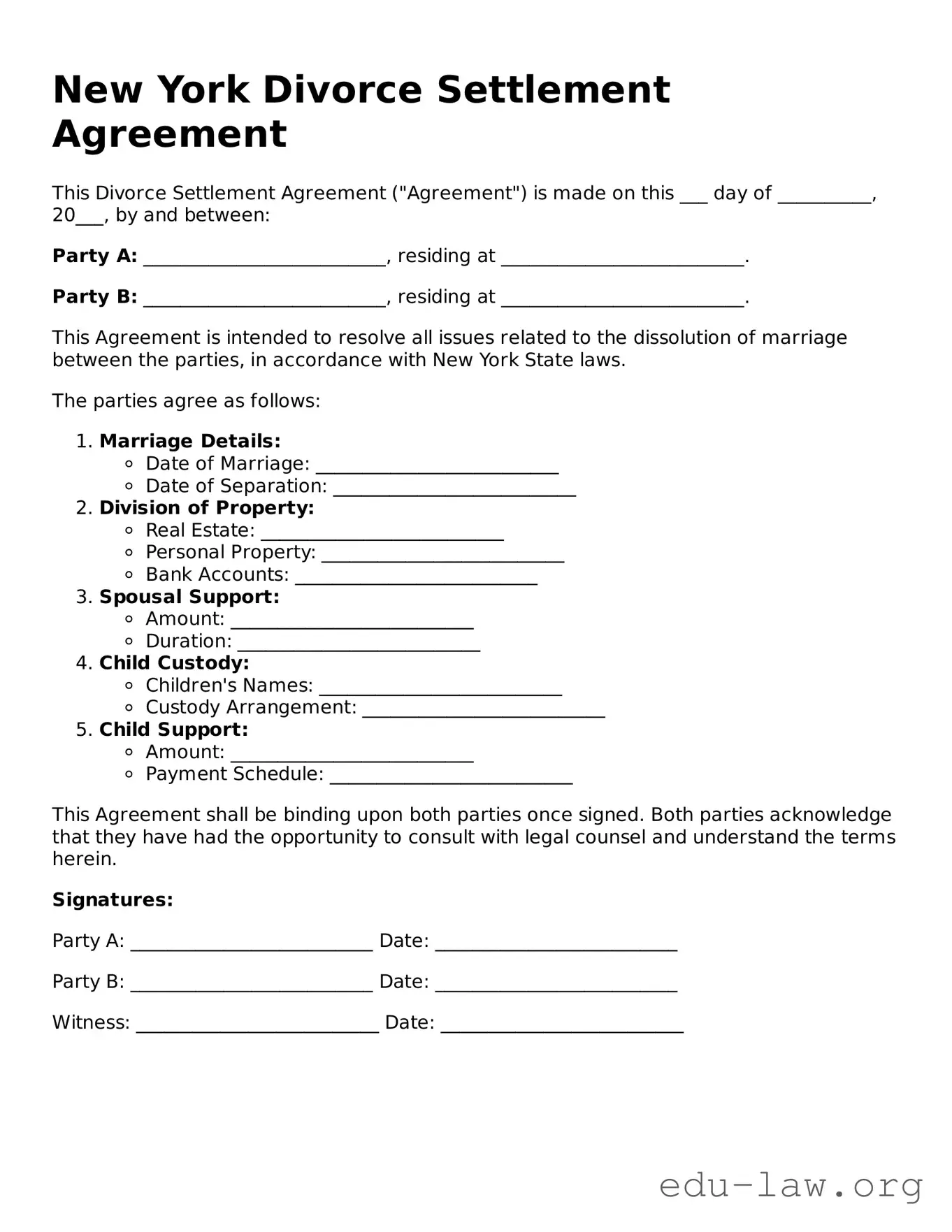
When navigating the emotional and often complex process of divorce, having a clear and comprehensive Divorce Settlement Agreement form is essential for both parties involved. This document serves as a vital tool in outlining the terms of the separation, addressing crucial aspects such as the division of marital property, spousal support, and child custody arrangements. By detailing each party's rights and responsibilities, the agreement aims to minimize potential conflicts and misunderstandings in the future. It also provides a framework for how financial matters, including debts and assets, will be handled post-divorce. Additionally, the form can include provisions for child support, ensuring that the needs of any children involved are met. With careful attention to detail, a well-prepared Divorce Settlement Agreement can pave the way for a smoother transition into the next chapter of life, allowing both individuals to move forward with clarity and confidence.
New York Divorce Settlement Agreement
This Divorce Settlement Agreement ("Agreement") is made on this ___ day of __________, 20___, by and between:
Party A: __________________________, residing at __________________________.
Party B: __________________________, residing at __________________________.
This Agreement is intended to resolve all issues related to the dissolution of marriage between the parties, in accordance with New York State laws.
The parties agree as follows:
This Agreement shall be binding upon both parties once signed. Both parties acknowledge that they have had the opportunity to consult with legal counsel and understand the terms herein.
Signatures:
Party A: __________________________ Date: __________________________
Party B: __________________________ Date: __________________________
Witness: __________________________ Date: __________________________
| Fact Name | Description |
|---|---|
| Purpose | The New York Divorce Settlement Agreement form outlines the terms agreed upon by both spouses regarding the division of assets, debts, and other relevant matters during a divorce. |
| Governing Law | This form is governed by New York State Domestic Relations Law, which provides the legal framework for divorce proceedings in the state. |
| Mutual Agreement | Both parties must voluntarily agree to the terms in the settlement agreement for it to be valid and enforceable. |
| Filing Requirement | The signed agreement must be submitted to the court as part of the divorce proceedings to finalize the divorce. |
| Modification | Once filed, the agreement can be modified only if both parties consent to the changes in writing. |
| Legal Representation | While not required, it is advisable for each party to seek independent legal advice to ensure their rights are protected during the negotiation process. |
Once you have the New York Divorce Settlement Agreement form in hand, you will need to fill it out carefully. This document serves as a crucial part of the divorce process, laying out the terms agreed upon by both parties. Follow these steps to complete the form accurately.
After completing the form, ensure that both parties have copies for their records. The next step involves submitting the agreement to the court for approval, which will finalize the divorce process.
What is a New York Divorce Settlement Agreement?
A New York Divorce Settlement Agreement is a legally binding document that outlines the terms of a divorce between two parties. It covers various aspects such as asset division, child custody, visitation rights, and spousal support. This agreement is crucial for ensuring that both parties are on the same page and helps to facilitate a smoother divorce process.
Why is a Divorce Settlement Agreement important?
This agreement is essential because it provides clarity and structure to the divorce proceedings. It helps to prevent misunderstandings and disputes in the future by clearly defining each party's rights and responsibilities. Additionally, having a well-drafted agreement can expedite the divorce process and make it more amicable.
What should be included in a Divorce Settlement Agreement?
A comprehensive Divorce Settlement Agreement should include details about the division of marital property, debts, child custody arrangements, child support, spousal support, and any other relevant issues. It’s important to be thorough, as this document will serve as the foundation for the divorce decree.
How do I create a Divorce Settlement Agreement?
Creating a Divorce Settlement Agreement typically involves negotiation between both parties. It’s advisable to consult with a legal professional to ensure that the agreement complies with New York laws and adequately protects your interests. Once both parties agree on the terms, the document should be signed and notarized.
Can a Divorce Settlement Agreement be modified?
Yes, a Divorce Settlement Agreement can be modified, but only under certain circumstances. If there are significant changes in circumstances, such as a change in income or relocation, either party may request a modification. It’s important to follow the proper legal procedures for making changes to ensure they are enforceable.
What happens if one party does not comply with the agreement?
If one party fails to comply with the terms of the Divorce Settlement Agreement, the other party may seek legal recourse. This could involve filing a motion in court to enforce the agreement. Courts take these matters seriously, and non-compliance can lead to penalties or modifications of the original terms.
Is legal representation necessary for drafting a Divorce Settlement Agreement?
While it is not strictly necessary to have legal representation when drafting a Divorce Settlement Agreement, it is highly recommended. An attorney can provide valuable guidance, ensure that your rights are protected, and help you navigate the complexities of divorce law. Having professional assistance can lead to a more equitable and enforceable agreement.
Failing to provide complete information. Many individuals leave out essential details such as income, assets, and liabilities. This omission can lead to complications later in the divorce process.
Not being specific about asset division. Some people use vague language when describing how they want to divide property. Clear and precise terms are necessary to avoid misunderstandings.
Ignoring tax implications. Individuals often overlook how asset division and alimony may affect their tax situation. Understanding these implications can help in making informed decisions.
Not considering future needs. Many fail to account for future expenses, such as education costs for children or changes in living situations. Planning for the long term is crucial for financial stability.
When navigating the divorce process in New York, several forms and documents accompany the Divorce Settlement Agreement. Each of these documents serves a specific purpose, helping to clarify the terms of the divorce and ensure that both parties understand their rights and obligations.
Understanding these forms can help individuals approach their divorce with greater confidence. Each document plays a vital role in ensuring that the divorce process is conducted fairly and transparently.
The Marital Settlement Agreement is a document that outlines the terms of a divorce, including the division of property, debts, and child custody arrangements. Similar to the New York Divorce Settlement Agreement, it serves to clarify the expectations of both parties and can be submitted to the court for approval. This agreement helps ensure that both spouses understand their rights and obligations post-divorce.
The Separation Agreement is another document that bears similarities to the Divorce Settlement Agreement. This document is typically used when a couple decides to live apart but is not yet ready to divorce. It addresses issues such as financial support, property division, and child custody, much like the Divorce Settlement Agreement. Both documents aim to provide a clear framework for the couple’s future arrangements.
The Child Custody Agreement focuses specifically on the custody and visitation arrangements for children involved in a divorce. While the Divorce Settlement Agreement covers a broader range of topics, including property division, the Child Custody Agreement ensures that the best interests of the children are prioritized. Both documents require mutual consent from both parents to be effective.
The Child Support Agreement is essential for detailing the financial support one parent will provide to the other for the upbringing of their children. Similar to the Divorce Settlement Agreement, this document outlines specific amounts and payment schedules. Both agreements are crucial for ensuring that children’s needs are met after the divorce.
The Property Settlement Agreement specifically addresses the division of marital assets and debts. Like the Divorce Settlement Agreement, it ensures that both parties understand how their property will be divided. This document can help prevent future disputes by clearly defining ownership and responsibilities related to shared property.
The Spousal Support Agreement, also known as alimony, outlines the financial support one spouse will provide to the other following a divorce. This agreement is similar to the Divorce Settlement Agreement in that it aims to provide financial clarity and stability for both parties. It can specify the duration and amount of support, helping to avoid misunderstandings later.
The Parenting Plan is a comprehensive document that details how parents will raise their children after a divorce. It includes schedules for visitation, decision-making responsibilities, and communication methods. Like the Divorce Settlement Agreement, it emphasizes cooperation and mutual respect between parents, focusing on the well-being of the children.
The Financial Disclosure Statement is a document that requires both parties to disclose their financial information during the divorce process. This is similar to the Divorce Settlement Agreement in that it provides transparency regarding each party’s financial situation. Accurate financial disclosures are critical for fair negotiations regarding property division and support obligations.
The Final Judgment of Divorce is the court's official decision that finalizes the divorce process. While the Divorce Settlement Agreement outlines the terms agreed upon by both parties, the Final Judgment incorporates these terms into a legally binding court order. Both documents serve to formalize the end of the marriage and the agreements made between the spouses.
When filling out the New York Divorce Settlement Agreement form, attention to detail is crucial. Here’s a list of important dos and don’ts to guide you through the process.
Completing the Divorce Settlement Agreement form accurately is essential for a smooth divorce process. Adhering to these guidelines will help ensure that all necessary information is included and that both parties are clear on the terms of the agreement.
Divorce can be a complex process, and misunderstandings about the Divorce Settlement Agreement form are common. Below are seven misconceptions that individuals may have regarding this important document.
This is not true. While the agreement often addresses child custody and support, it is also essential for couples without children. It outlines the division of assets, debts, and other important matters.
While it is true that the agreement is legally binding, it can be modified if both parties agree to the changes and file the appropriate paperwork with the court.
Both parties must sign the agreement for it to be valid. A unilateral decision does not suffice; mutual consent is necessary.
While the agreement can outline custody arrangements, the court must still approve these terms. The best interest of the child is the primary consideration.
For the agreement to be enforceable, it must be in writing and signed by both parties. Verbal agreements lack legal standing in divorce proceedings.
These are not the same. The Divorce Settlement Agreement details the terms of the divorce, while the divorce decree is the final court order that officially ends the marriage.
Filing the agreement with the court is generally required to ensure that the terms are enforceable. It is a crucial step in the divorce process.
Understanding these misconceptions can help individuals navigate the divorce process more effectively and ensure that their rights and interests are protected.
Filling out the New York Divorce Settlement Agreement form can seem overwhelming, but understanding the process can make it much easier. Here are some key takeaways to keep in mind:
By keeping these points in mind, you can navigate the process of completing the New York Divorce Settlement Agreement with greater confidence and clarity.