In the complex landscape of real estate and mortgage agreements, homeowners facing financial difficulties often seek alternatives to foreclosure. One such option is the New York Deed in Lieu of Foreclosure form, a legal document that allows property owners to voluntarily transfer their property title back to the lender in exchange for the cancellation of their mortgage debt. This process can provide a more amicable solution for both parties, potentially avoiding the lengthy and costly foreclosure process. By utilizing this form, homeowners can mitigate the impact on their credit score and may even be able to negotiate terms that allow them to remain in their homes for a period of time. The form outlines essential details, including the property description, the parties involved, and any specific conditions tied to the transfer. It is crucial for homeowners to understand the implications of signing this document, as it represents a significant decision that can affect their financial future. Knowing the key aspects of the New York Deed in Lieu of Foreclosure form can empower individuals to make informed choices during challenging times.
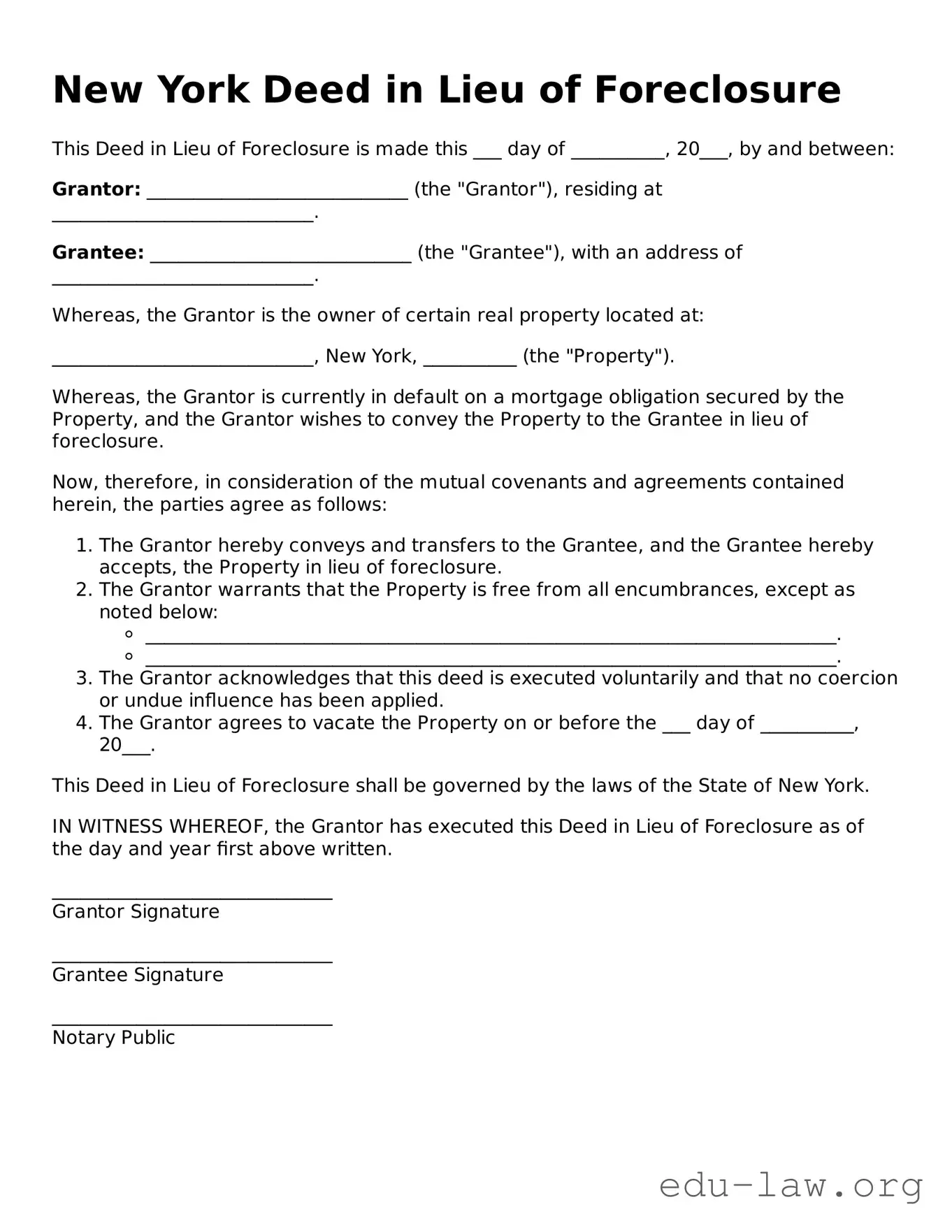
New York Deed in Lieu of Foreclosure
This Deed in Lieu of Foreclosure is made this ___ day of __________, 20___, by and between:
Grantor: ____________________________ (the "Grantor"), residing at ____________________________.
Grantee: ____________________________ (the "Grantee"), with an address of ____________________________.
Whereas, the Grantor is the owner of certain real property located at:
____________________________, New York, __________ (the "Property").
Whereas, the Grantor is currently in default on a mortgage obligation secured by the Property, and the Grantor wishes to convey the Property to the Grantee in lieu of foreclosure.
Now, therefore, in consideration of the mutual covenants and agreements contained herein, the parties agree as follows:
This Deed in Lieu of Foreclosure shall be governed by the laws of the State of New York.
IN WITNESS WHEREOF, the Grantor has executed this Deed in Lieu of Foreclosure as of the day and year first above written.
______________________________
Grantor Signature
______________________________
Grantee Signature
______________________________
Notary Public
| Fact Name | Description |
|---|---|
| Purpose | A Deed in Lieu of Foreclosure allows a borrower to voluntarily transfer property ownership to the lender to avoid foreclosure proceedings. |
| Governing Law | This form is governed by New York State law, specifically under New York Real Property Actions and Proceedings Law (RPAPL). |
| Eligibility | Borrowers must be facing financial hardship and unable to continue mortgage payments to qualify for this option. |
| Benefits | It can help borrowers avoid the lengthy foreclosure process and may have a less severe impact on their credit score. |
| Process | The borrower must negotiate with the lender and complete the necessary paperwork to finalize the deed transfer. |
After completing the New York Deed in Lieu of Foreclosure form, you will need to submit it to the appropriate parties involved in the foreclosure process. This typically includes the lender and any relevant county office. Ensure you keep copies of all documents for your records.
What is a Deed in Lieu of Foreclosure?
A Deed in Lieu of Foreclosure is a legal process that allows a homeowner to voluntarily transfer the ownership of their property to the lender in order to avoid foreclosure. This option is often pursued when the homeowner can no longer afford their mortgage payments and wishes to settle their debt without going through the lengthy and costly foreclosure process.
How does the Deed in Lieu of Foreclosure process work?
The process typically begins when a homeowner contacts their lender to discuss their financial situation. If both parties agree, the homeowner will sign the Deed in Lieu of Foreclosure document, transferring the property title to the lender. In exchange, the lender may agree to forgive any remaining mortgage debt. It is crucial for homeowners to ensure that all terms are clearly understood before proceeding.
What are the benefits of a Deed in Lieu of Foreclosure?
One of the primary benefits is that it allows homeowners to avoid the negative impact of a foreclosure on their credit score. Additionally, the process is generally faster and less expensive than a traditional foreclosure. Homeowners may also find that they can negotiate better terms with their lender, such as debt forgiveness or relocation assistance.
Are there any drawbacks to using a Deed in Lieu of Foreclosure?
Yes, there are potential drawbacks. For instance, not all lenders accept Deeds in Lieu of Foreclosure, so homeowners may not have this option available. Additionally, homeowners may still face tax implications if the lender forgives a portion of the debt, as this could be considered taxable income. It is advisable to consult with a tax professional before proceeding.
Can I still qualify for a Deed in Lieu of Foreclosure if I have other liens on my property?
Having other liens on the property can complicate the process. Lenders typically prefer properties that are free of additional claims. If there are existing liens, the lender may require those to be resolved before accepting the Deed in Lieu of Foreclosure. Each situation is unique, so it is important to discuss this with the lender early in the process.
What should I do if my lender denies my request for a Deed in Lieu of Foreclosure?
If a lender denies the request, homeowners have several options. They can ask for a detailed explanation of the denial and seek to address any issues raised. Alternatively, homeowners may explore other options such as loan modification, short sale, or bankruptcy. Consulting with a housing counselor or legal professional can provide valuable guidance in these situations.
Is a Deed in Lieu of Foreclosure the same as a short sale?
No, a Deed in Lieu of Foreclosure and a short sale are not the same. In a short sale, the homeowner sells the property for less than the amount owed on the mortgage, with the lender's approval. In contrast, a Deed in Lieu of Foreclosure involves the homeowner transferring ownership directly to the lender without a sale. Each option has its own implications and processes, so homeowners should carefully consider which is best for their situation.
Not providing accurate property information. It's crucial to include the correct address and legal description of the property. Double-check these details to avoid delays.
Failing to sign the document. All required parties must sign the deed. Without signatures, the form is incomplete and cannot be processed.
Omitting necessary dates. Ensure that you include the date of signing. This helps establish the timeline of the transaction.
Not including the correct names of the parties involved. Use full legal names as they appear on official documents. This prevents confusion and potential legal issues.
Ignoring the requirement for witnesses or notarization. Some deeds require witnesses or a notary public to validate the signatures. Check local requirements to ensure compliance.
Not understanding the implications of the deed. A deed in lieu of foreclosure can have significant effects on your credit and future homeownership. Make sure you are fully informed.
Submitting the form without consulting a professional. It’s wise to seek advice from a legal expert or a housing counselor before proceeding. They can help you avoid costly mistakes.
Failing to keep copies of the submitted documents. Always retain a copy for your records. This can be helpful for future reference or if any disputes arise.
A Deed in Lieu of Foreclosure is a useful tool for homeowners facing foreclosure. However, it often requires additional forms and documents to ensure a smooth process. Below is a list of related documents that are commonly used alongside the New York Deed in Lieu of Foreclosure form. Understanding these documents can help clarify your obligations and rights throughout the process.
These documents play a crucial role in the process of executing a Deed in Lieu of Foreclosure. Being familiar with each one can help facilitate a smoother transaction and provide peace of mind during a challenging time.
A short sale agreement is similar to a deed in lieu of foreclosure because it involves the homeowner selling their property for less than what they owe on their mortgage. In both cases, the lender agrees to accept a loss rather than going through the lengthy foreclosure process. The homeowner benefits by avoiding the negative impact of foreclosure on their credit score, while the lender saves time and money by not having to take possession of the property.
A loan modification agreement also shares similarities with a deed in lieu of foreclosure. This document allows homeowners to change the terms of their existing mortgage to make payments more manageable. Like a deed in lieu, a loan modification aims to prevent foreclosure. Both options require the lender’s approval, and they provide homeowners with alternatives to losing their homes.
A foreclosure settlement agreement can be compared to a deed in lieu of foreclosure in that it often involves negotiations between the homeowner and the lender. In this case, the homeowner may agree to vacate the property in exchange for certain concessions from the lender, such as waiving any deficiency judgment. Both documents aim to resolve the situation without the lengthy process of a formal foreclosure.
A bankruptcy filing can also be similar to a deed in lieu of foreclosure. When a homeowner files for bankruptcy, they may be able to keep their home while reorganizing their debts. In both scenarios, the homeowner seeks relief from financial distress, although bankruptcy involves a court process and can have long-lasting effects on credit. A deed in lieu provides a more straightforward way to transfer property back to the lender without the complications of bankruptcy.
Finally, a quitclaim deed can be likened to a deed in lieu of foreclosure. While a quitclaim deed typically transfers ownership between private parties, it can also be used in situations where a homeowner voluntarily transfers their property to the lender to avoid foreclosure. Both documents facilitate the transfer of property ownership, but a quitclaim deed does not necessarily involve a mortgage default, making it a more general tool for property transfers.
When filling out the New York Deed in Lieu of Foreclosure form, it's important to follow certain guidelines to ensure everything goes smoothly. Here’s a helpful list of what to do and what to avoid:
When it comes to the New York Deed in Lieu of Foreclosure form, there are several misconceptions that can lead to confusion for homeowners facing financial difficulties. Understanding these myths can help individuals make informed decisions about their options. Here are four common misconceptions:
By dispelling these misconceptions, homeowners can better navigate their options and make choices that align with their financial goals.
Filling out and using the New York Deed in Lieu of Foreclosure form requires careful consideration. Here are five key takeaways to keep in mind: