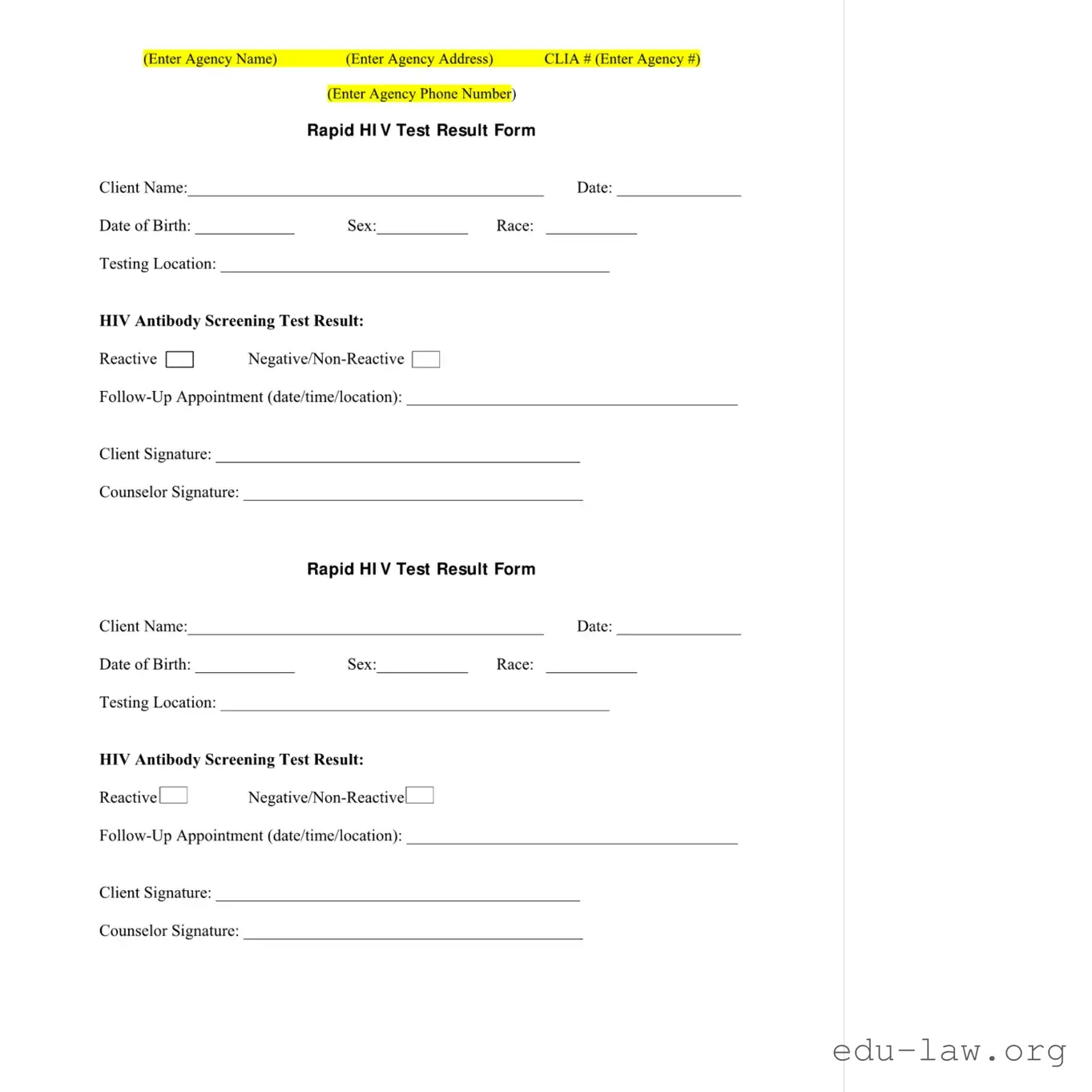
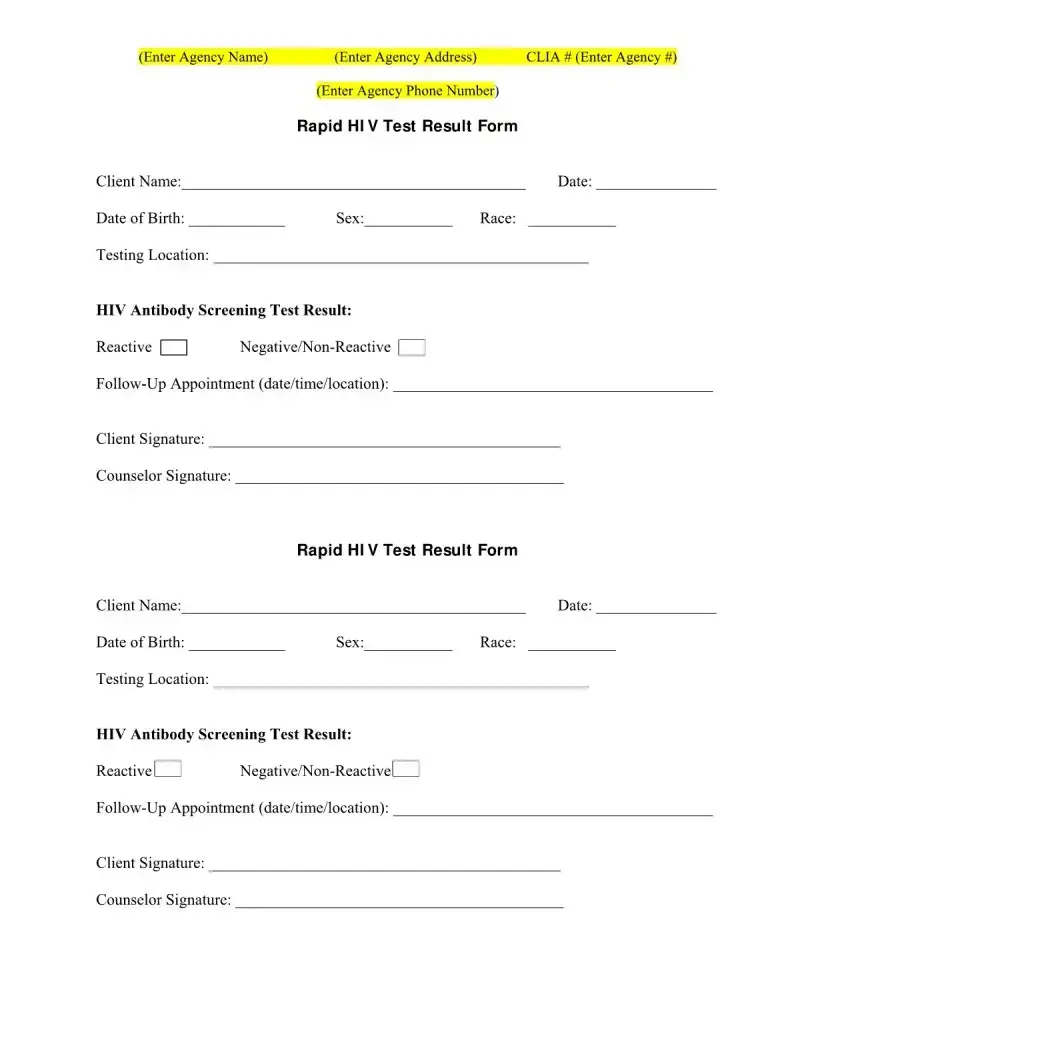
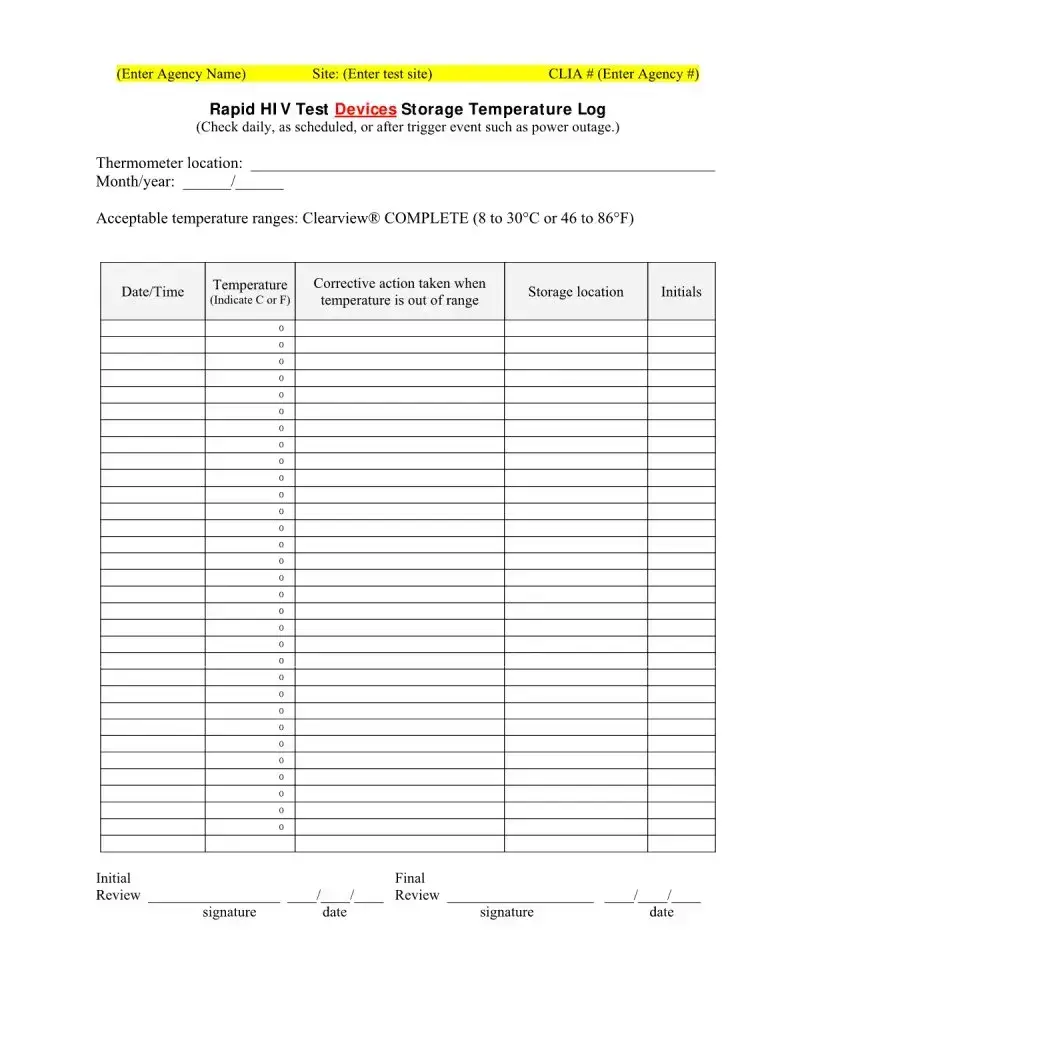
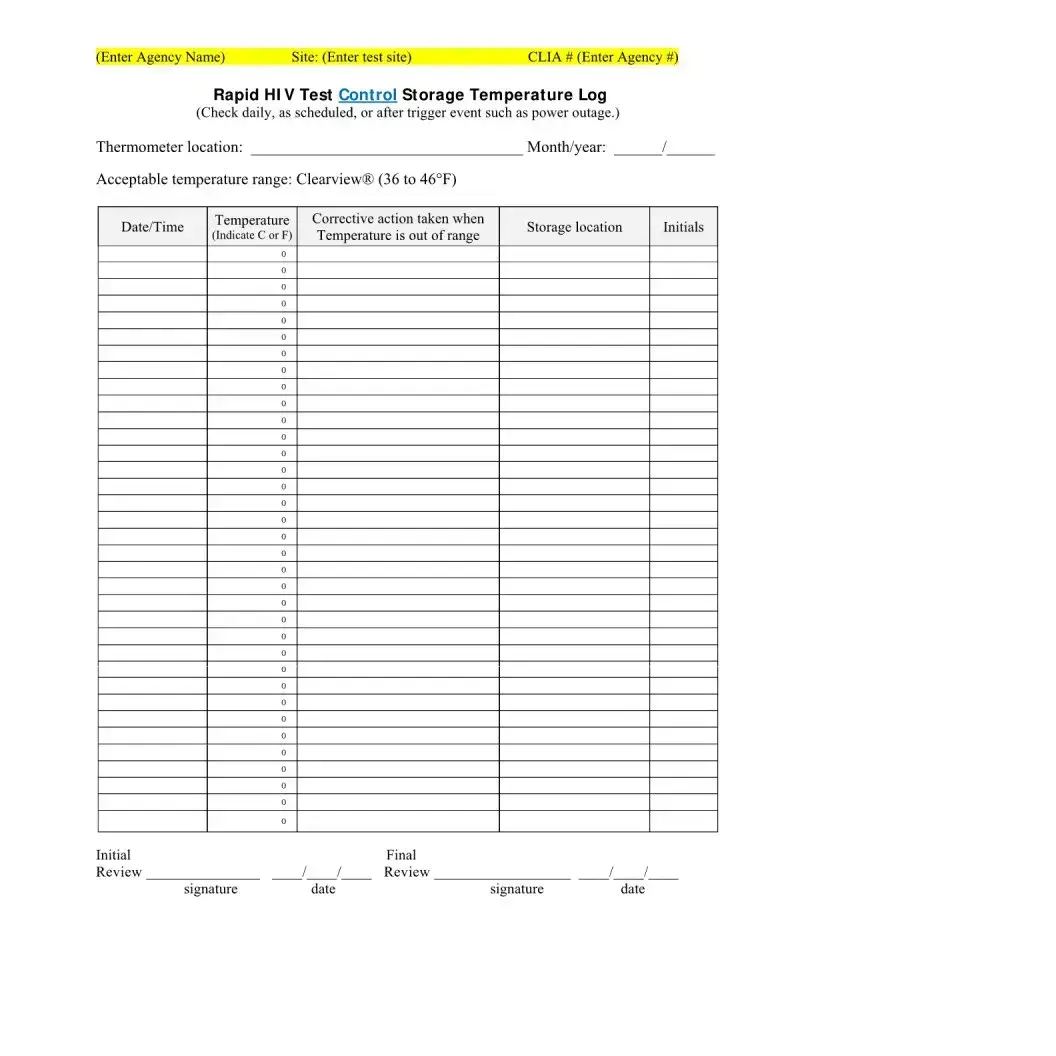
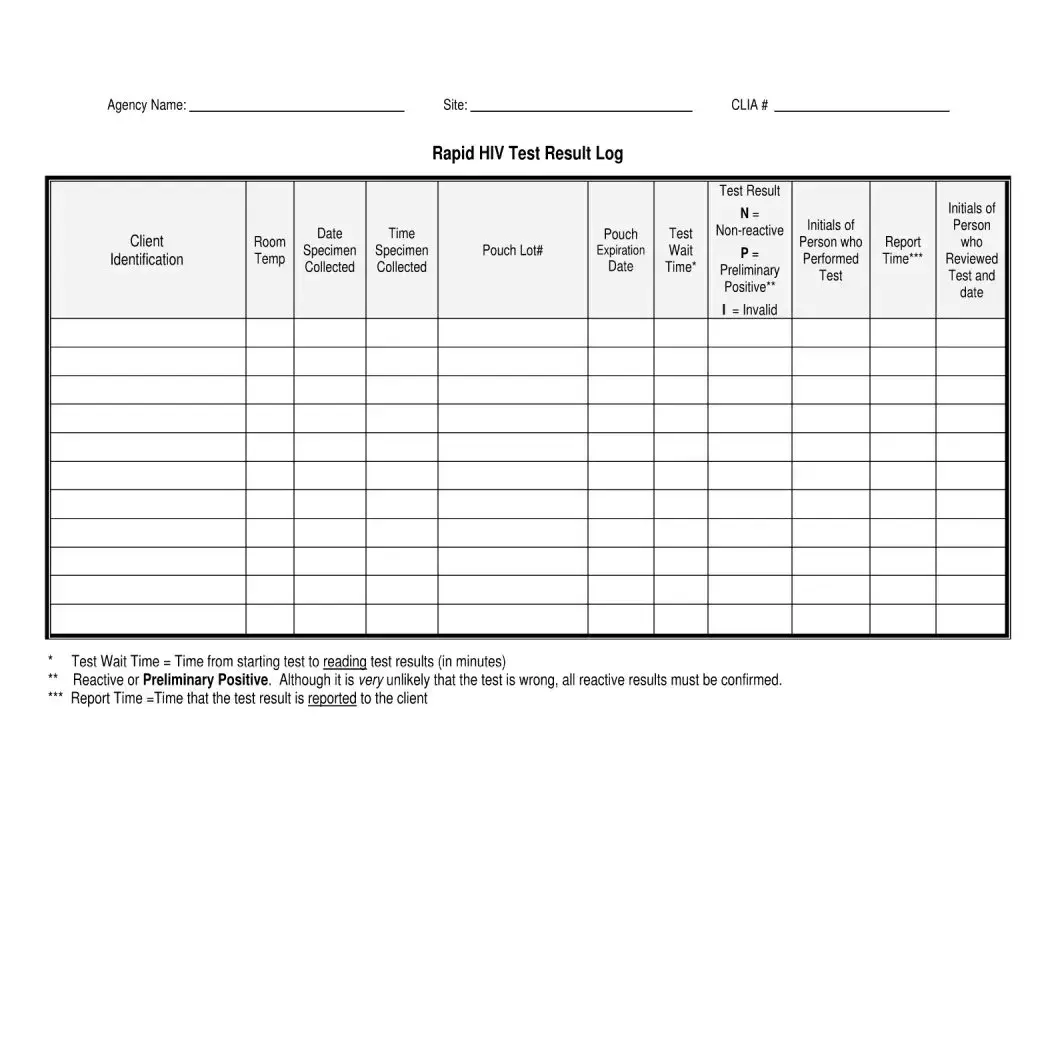
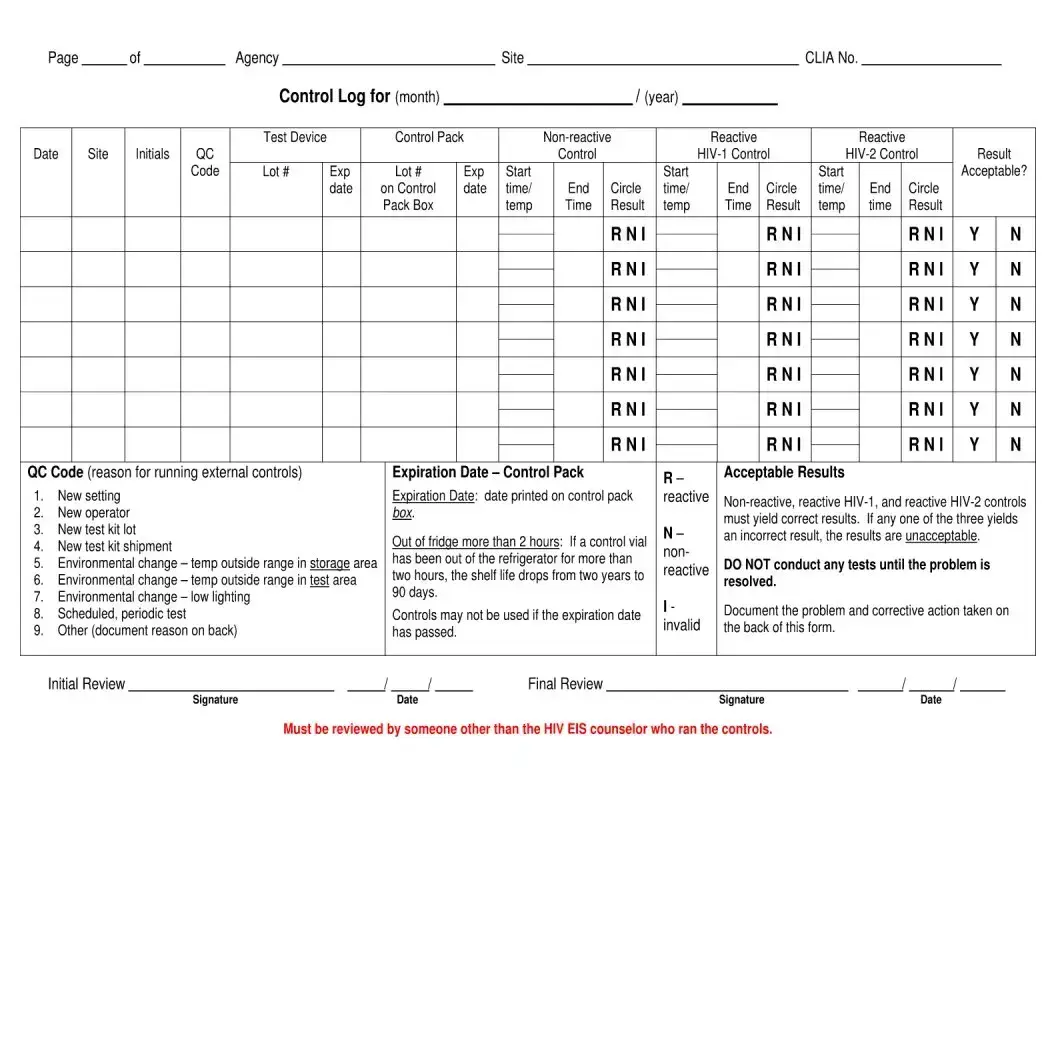
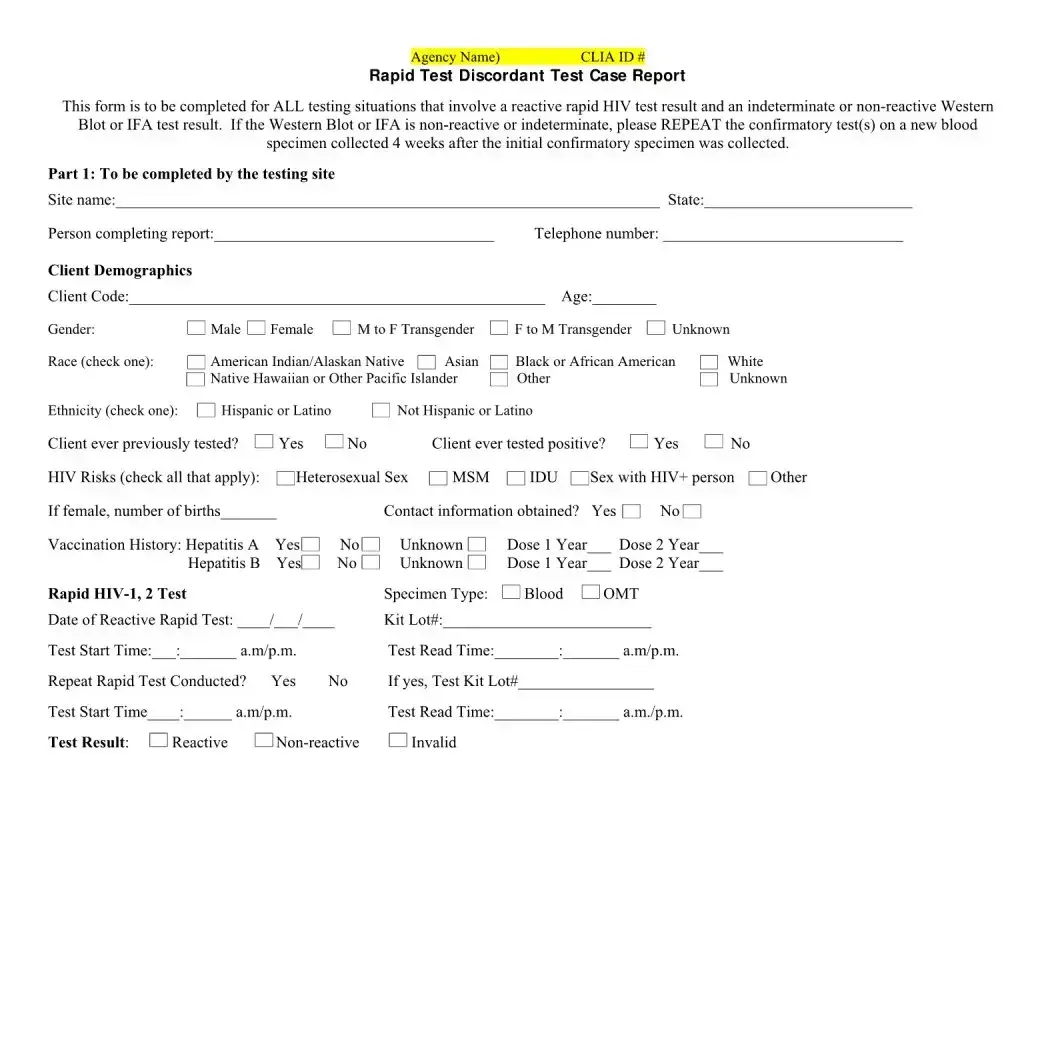
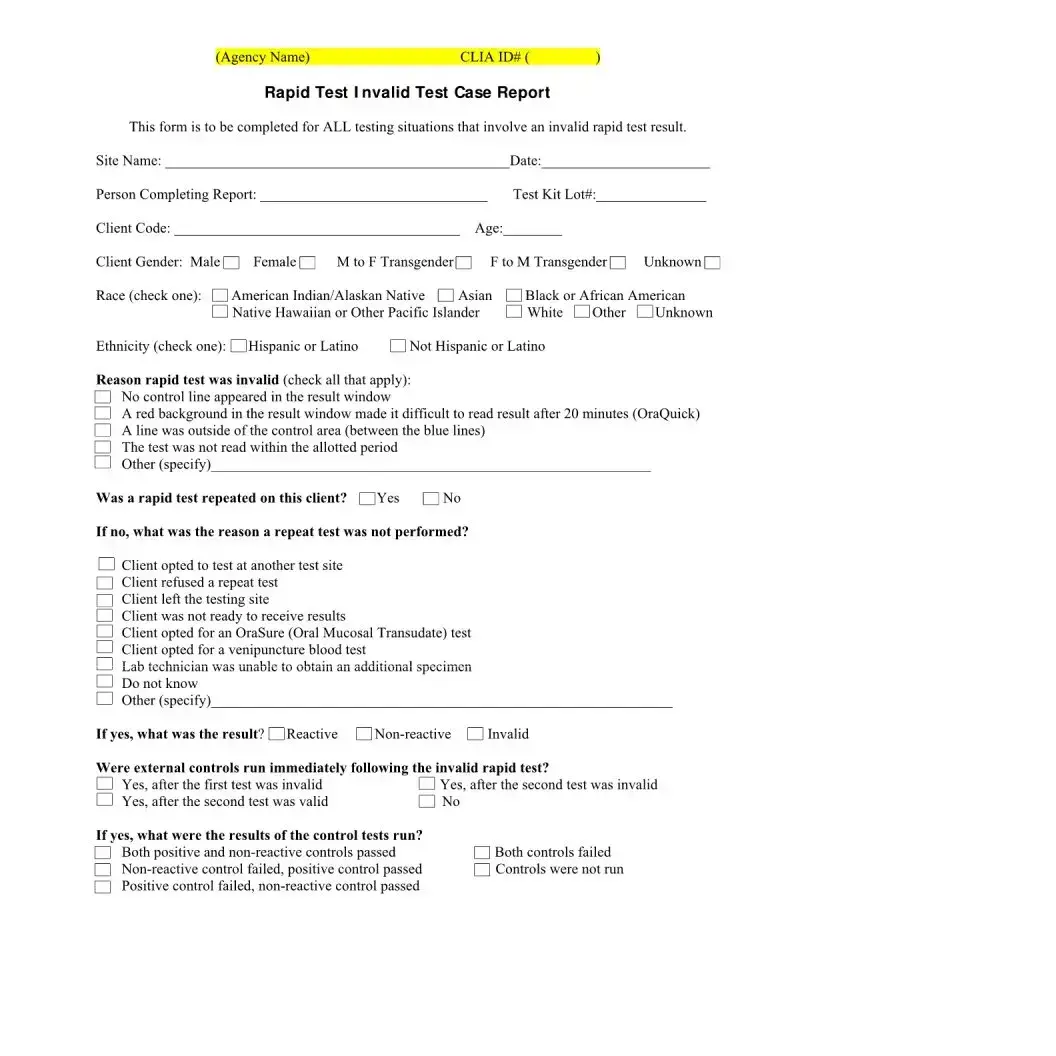
The Negative HIV Test Form serves as a crucial document in the process of HIV testing, encapsulating essential information that ensures both clarity and accuracy for clients and healthcare providers alike. This form includes vital details such as the client’s name, date of birth, race, and the testing location, providing a comprehensive snapshot of the individual undergoing testing. The form clearly indicates the results of the HIV antibody screening, categorizing them as either reactive or negative/non-reactive. Additionally, it outlines the necessity for follow-up appointments, emphasizing the importance of ongoing care and support. Counselors and clients are required to sign the form, ensuring accountability and consent. Furthermore, the document incorporates temperature logs for both test devices and controls, highlighting the importance of maintaining appropriate storage conditions to guarantee the validity of the test results. By meticulously documenting each aspect of the testing process, the Negative HIV Test Form plays a vital role in promoting transparency and fostering trust between clients and healthcare providers.

| Fact Name | Description |
|---|---|
| Client Information | The form requires essential client details, including the client's name, date of birth, sex, race, and testing location. This information helps in identifying the individual and tracking test results accurately. |
| Test Results | The HIV Antibody Screening Test Result section indicates whether the result is reactive or negative/non-reactive. It is crucial for determining the next steps in client care. |
| Follow-Up Appointment | A designated area for scheduling a follow-up appointment is included. This ensures that clients receive appropriate care based on their test results. |
| Governing Law | In many states, the use of the Rapid HIV Test Result Form is governed by public health laws, including the CDC guidelines and state-specific regulations that mandate reporting and confidentiality of HIV testing. |
After completing the Negative HIV Test form, you will need to ensure that all information is accurate and legible. This form is essential for documenting the results of the test and for any necessary follow-up appointments. Make sure to keep a copy for your records.
What is a Negative HIV Test form?
The Negative HIV Test form is a document that records the results of an HIV antibody screening test. It indicates whether the test result is negative (non-reactive) or positive (reactive). This form is typically provided to clients after testing and includes essential information such as client details, testing location, and follow-up appointment information.
What information is required on the form?
The form requires several key pieces of information, including the client's name, date of birth, race, testing location, and the result of the HIV antibody screening test. It also includes spaces for signatures from both the client and the counselor, as well as details about any follow-up appointments.
What does a Negative result mean?
A Negative result indicates that no HIV antibodies were detected in the client’s blood at the time of testing. This means the client is not currently infected with HIV. However, it is important to note that if the client has had recent exposure to HIV, they may need to be retested after a certain period.
How is the test conducted?
The HIV test is typically conducted using a rapid test device that can provide results in a short amount of time. A healthcare professional will collect a sample, usually through a finger prick or a blood draw, and then follow the test instructions to determine the result.
What should I do if my result is Reactive?
If the test result is Reactive, it is essential to schedule a follow-up appointment for confirmatory testing. Reactive results can sometimes be false positives, so further testing is necessary to confirm the diagnosis. The form will usually provide information on how to arrange this follow-up.
How long does it take to get results?
Results from a rapid HIV test are generally available within 20 minutes. The exact time may vary depending on the testing site and the specific procedures in place. The report time is noted on the form to inform clients when they can expect to receive their results.
What if I have questions about my results?
If you have questions or concerns about your HIV test results, it is important to discuss them with the counselor or healthcare provider who administered the test. They can provide clarity and guidance based on your specific situation.
Is my information kept confidential?
Yes, all personal information and test results are kept confidential. Testing sites follow strict privacy laws to protect your information. Only authorized personnel will have access to your test results.
Can I request a copy of my Negative HIV Test form?
Yes, you can request a copy of your Negative HIV Test form for your records. It is advisable to keep a copy for future reference, especially if you need to provide proof of testing.
What should I do if I lose my Negative HIV Test form?
If you lose your form, contact the testing site where you received your test. They should be able to assist you in retrieving your results or issuing a new copy of the form.
Failing to accurately fill in personal information. Ensure that the client's name, date of birth, and other identifying details are correct. Inaccurate information can lead to confusion and miscommunication.
Not checking the HIV Antibody Screening Test Result box properly. It’s crucial to mark either 'Reactive' or 'Negative/Non-Reactive' clearly. Ambiguous markings can delay follow-up procedures.
Ignoring the Follow-Up Appointment details. Always include the date, time, and location for any necessary follow-up. This ensures that the client receives appropriate care and guidance.
Neglecting to obtain signatures. Both the client and counselor must sign the form. Without these signatures, the form may not be considered valid or complete.
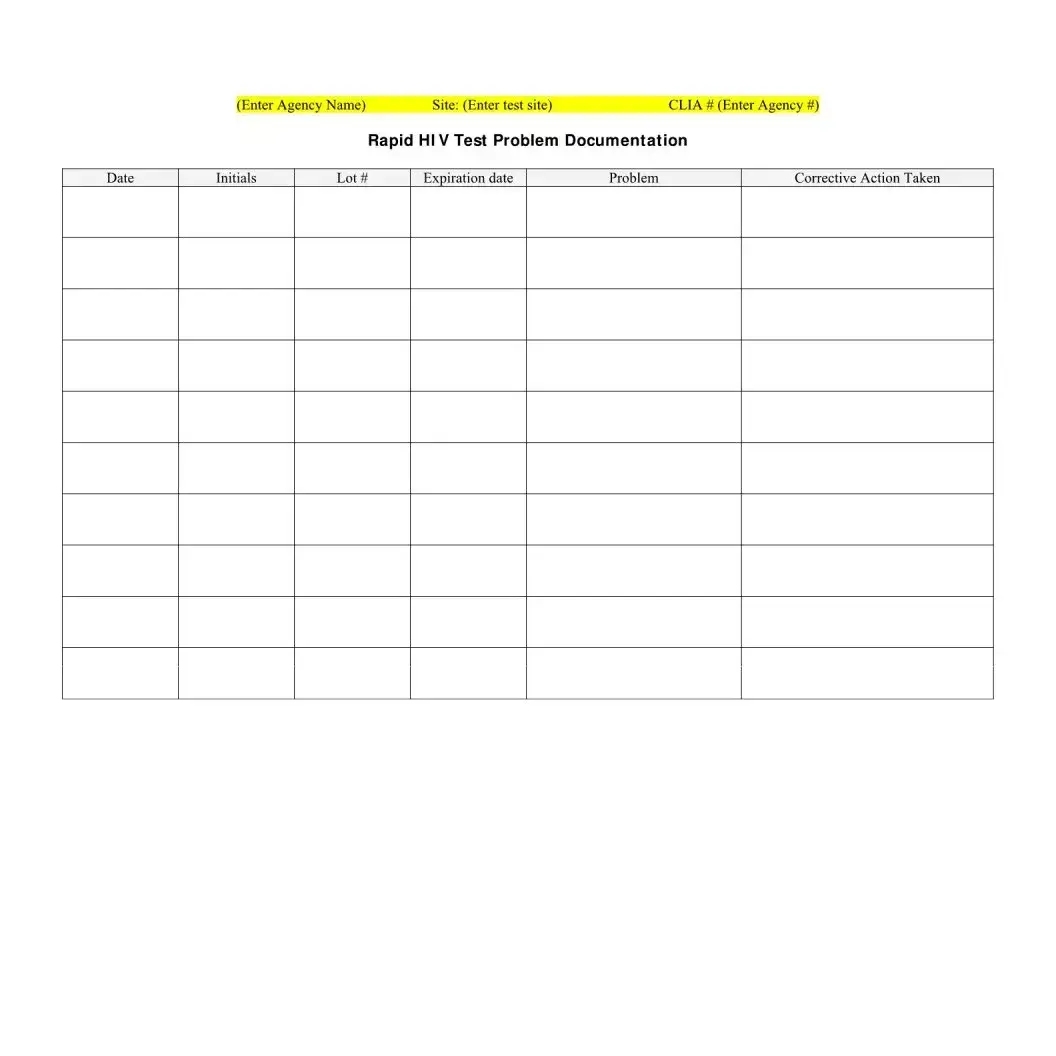
Overlooking the temperature logs for test devices. Proper storage conditions are essential for accurate results. Ensure all temperature readings are recorded and any corrective actions are noted.
When dealing with HIV testing and related procedures, several forms and documents are essential for ensuring proper record-keeping, compliance, and follow-up care. Below is a list of documents often used in conjunction with the Negative HIV Test form. Each document serves a specific purpose in the testing process.
Each of these documents plays a critical role in the overall process of HIV testing and follow-up care. They help maintain a structured approach, ensuring clients receive the support and information they need throughout their experience.
The Negative HIV Test form shares similarities with the Medical History Form. Both documents are essential in healthcare settings, as they collect vital information about the individual being tested. The Medical History Form typically includes personal details such as the client’s name, date of birth, and medical background. This information helps healthcare providers assess risk factors and determine the appropriate tests or treatments. Just as the Negative HIV Test form requires signatures from both the client and counselor, the Medical History Form often requires the client’s acknowledgment of the information provided, ensuring accuracy and transparency in the healthcare process.
Another document akin to the Negative HIV Test form is the Consent Form for Testing. This form is critical in ensuring that clients understand the purpose and implications of the HIV test. Similar to the Negative HIV Test form, it contains personal identifiers, such as the client’s name and testing location. Both documents also require signatures, which serve as confirmation that the client has consented to the testing process. The Consent Form emphasizes the client's right to make informed decisions about their health, paralleling the importance of the Negative HIV Test form in communicating test results.
The Patient Referral Form also resembles the Negative HIV Test form in its function to facilitate communication between healthcare providers. This document typically includes patient details and the reason for referral, mirroring the information collection found in the HIV test form. Both forms aim to ensure continuity of care, allowing the receiving provider to understand the patient's history and the context of their current health status. The Patient Referral Form may also include follow-up appointment information, similar to the follow-up details noted in the Negative HIV Test form.
Similarly, the Lab Result Report is another document that aligns closely with the Negative HIV Test form. Both documents serve to convey critical health information to clients. The Lab Result Report details the findings of various tests, including HIV, and typically includes personal identifiers and test results. Just as the Negative HIV Test form indicates whether the result is reactive or non-reactive, the Lab Result Report provides clear outcomes that inform the patient’s next steps. The clarity and structure of both documents are vital for effective communication between healthcare providers and patients.
The Incident Report can also be compared to the Negative HIV Test form, particularly in the context of documenting specific events related to patient care. While the Negative HIV Test form records test results, the Incident Report captures any unusual occurrences during the testing process. Both documents require detailed information, such as the date and location of the event, and may involve signatures from involved parties. This ensures accountability and thorough documentation, which is essential for maintaining high standards of care in healthcare settings.
Lastly, the Follow-Up Care Plan bears similarities to the Negative HIV Test form in that it outlines the next steps for clients after receiving their test results. This document typically includes recommendations for further testing, treatment options, and follow-up appointments. Like the Negative HIV Test form, it emphasizes the importance of continued care and support for the individual. Both documents aim to empower clients with knowledge and resources, ensuring they are well-informed about their health and available services.
When filling out the Negative HIV Test form, it is essential to ensure accuracy and clarity. Here is a list of things you should and shouldn’t do:
Here are ten common misconceptions about the Negative HIV Test form, along with clarifications for each:
A negative result does not always mean you are free of HIV. If you were recently exposed, the virus may not be detectable yet. Follow-up testing may be necessary.
This form can be used in various settings, including clinics, hospitals, and community health organizations. It is not limited to one type of facility.
Providing accurate client information is crucial. It helps ensure proper follow-up and record-keeping.
A reactive result indicates the need for further testing. It does not confirm an HIV infection without additional confirmation tests.
Maintaining proper storage temperatures for test devices is essential. It ensures the accuracy and reliability of the test results.
While trained personnel should conduct the tests, clients can assist in completing their personal information on the form.
Follow-up appointments are highly recommended. They provide an opportunity to discuss results and any necessary next steps.
A negative test does not mean you should stop practicing safe sex. Regular testing and safe practices are important for ongoing health.
Some tests may require a waiting period before results are available. It is essential to understand the specific test being used.
This form can be used for individuals of all ages, including minors, with appropriate consent from guardians when necessary.
When filling out and using the Negative HIV Test form, it’s important to keep several key points in mind. These takeaways can help ensure that the process goes smoothly and that all necessary information is accurately recorded.
By keeping these points in mind, you can help facilitate a clear and effective testing process. Each detail matters in providing the best care and support for clients undergoing HIV testing.