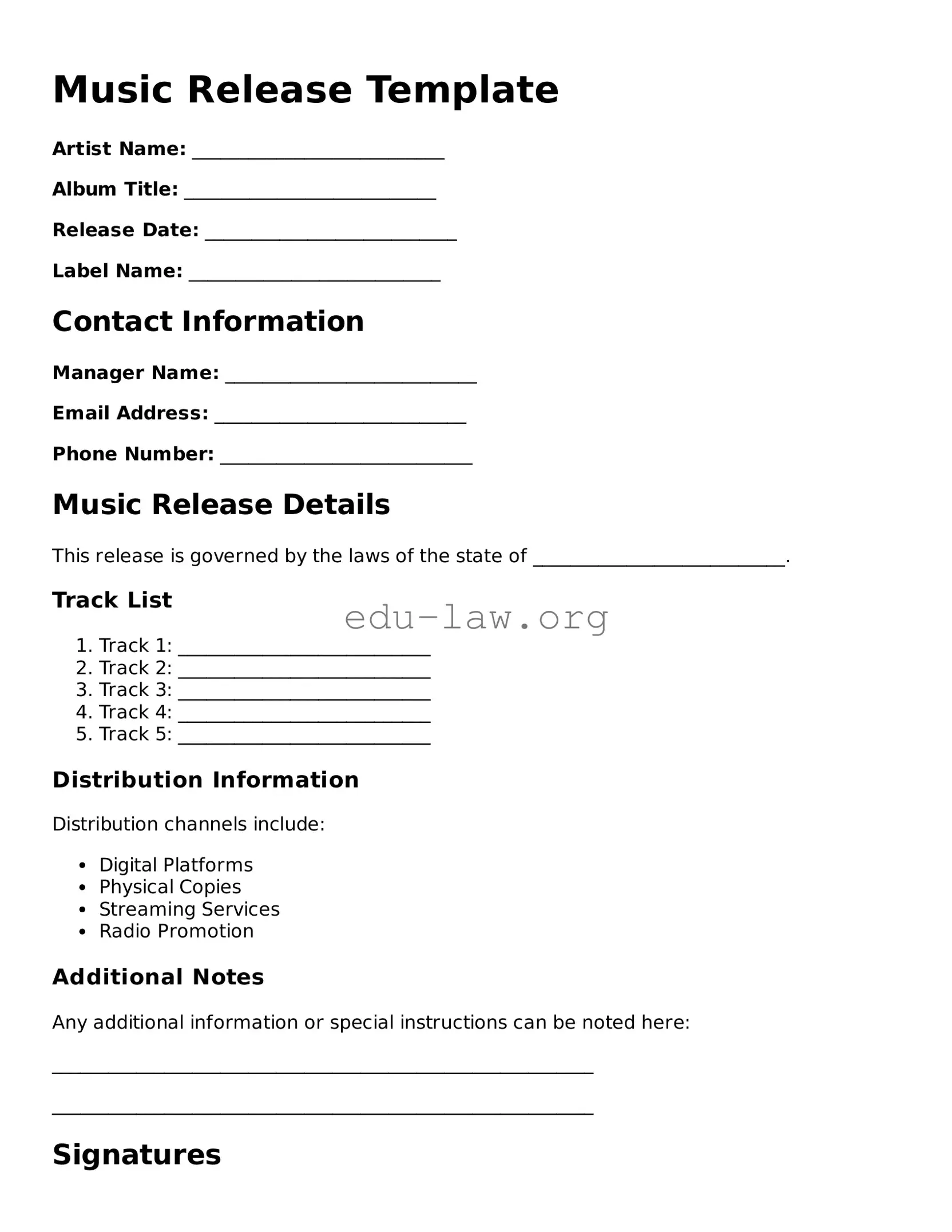
The Music Release form serves as a crucial document in the music industry, ensuring that artists, producers, and record labels are protected while fostering creativity and collaboration. This form typically outlines the rights and permissions granted by the artist to the producer or label, allowing for the distribution and promotion of a musical work. It addresses key aspects such as ownership of the music, royalties, and the scope of usage, which can range from online streaming to physical distribution. Additionally, the form may stipulate whether the artist will retain any rights to their work after the release, ensuring clarity on both sides. By clearly defining these elements, the Music Release form helps to prevent disputes and misunderstandings, allowing artists to focus on their craft while ensuring that their contributions are legally recognized and compensated. Furthermore, this document can include provisions for crediting the artist, which is essential for maintaining their reputation and integrity within the industry.
Music Release Template
Artist Name: ___________________________
Album Title: ___________________________
Release Date: ___________________________
Label Name: ___________________________
Contact Information
Manager Name: ___________________________
Email Address: ___________________________
Phone Number: ___________________________
Music Release Details
This release is governed by the laws of the state of ___________________________.
Track List
Distribution Information
Distribution channels include:
Additional Notes
Any additional information or special instructions can be noted here:
__________________________________________________________
__________________________________________________________
Signatures
Artist Signature: ___________________________
Date: ___________________________
Manager Signature: ___________________________
Date: ___________________________
| Fact Name | Description |
|---|---|
| Purpose | The Music Release form is used to obtain permission from artists or copyright holders to use their music in various projects. |
| Parties Involved | Typically involves the music creator (licensor) and the party seeking to use the music (licensee). |
| Governing Law | In California, the governing law is the California Civil Code, particularly sections related to intellectual property. |
| Compensation | The form may outline any compensation terms for the use of the music, including royalties or flat fees. |
| Scope of Use | The release form specifies how the music can be used, such as for commercial, non-commercial, or promotional purposes. |
| Duration | It may state the duration for which the music can be used, which can be limited or perpetual. |
| Revocation | The form should clarify whether the rights granted can be revoked and under what circumstances. |
Once you have the Music Release form in hand, it's time to provide the necessary information. Completing this form accurately is essential for ensuring that all parties are on the same page regarding the use of the music. Follow these steps carefully to fill out the form correctly.
After completing the form, ensure that all parties involved receive a copy for their records. This will help maintain clarity and prevent any misunderstandings in the future.
What is a Music Release form?
A Music Release form is a legal document that grants permission for the use of a piece of music. It outlines the rights and responsibilities of both the music creator and the party seeking to use the music. This form is crucial for protecting the interests of the artist while ensuring that the music can be legally used in various projects, such as films, commercials, or online content.
Why do I need a Music Release form?
Having a Music Release form is essential to avoid any potential legal disputes over copyright infringement. This document ensures that the creator of the music has authorized its use and that the user has the necessary rights to use it. Without this form, you may face legal challenges, which can lead to costly litigation or the removal of your project from distribution platforms.
Who should sign the Music Release form?
Typically, the Music Release form should be signed by the music creator, such as a songwriter or composer, and the individual or organization that wishes to use the music. This ensures that both parties agree to the terms outlined in the document. If the music is produced by a group, all members may need to sign to avoid any future disputes.
What information is included in a Music Release form?
A Music Release form generally includes the names and contact information of both parties, a description of the music being released, the specific uses allowed (such as commercial or non-commercial), and any compensation terms. It may also specify the duration of the agreement and any limitations on the use of the music.
Can I modify the Music Release form?
Yes, you can modify the Music Release form to suit your specific needs. However, any changes should be agreed upon by both parties and documented in writing. It’s advisable to consult with a legal professional to ensure that any modifications still protect your rights and interests adequately.
Is a Music Release form necessary for all types of music use?
While not every situation requires a Music Release form, it is highly recommended whenever music is used in a public or commercial context. If you are using music for personal projects that won’t be shared publicly, a release may not be necessary. However, when in doubt, it’s best to obtain a release to safeguard against potential issues.
What happens if I don’t use a Music Release form?
If you choose not to use a Music Release form, you risk infringing on the copyright of the music creator. This can lead to legal action, including cease and desist orders, financial penalties, or even lawsuits. Additionally, your project may be removed from distribution platforms, impacting your reputation and financial investment.
How do I obtain a Music Release form?
You can find Music Release forms online through various legal template websites, or you may choose to work with a legal professional to draft a custom form tailored to your needs. It’s important to ensure that the form you use complies with local laws and adequately addresses your specific situation.
What should I do if I have more questions about the Music Release form?
If you have further questions about the Music Release form, consider reaching out to a legal professional who specializes in intellectual property or entertainment law. They can provide guidance specific to your situation and help ensure that your rights are protected.
Incomplete Information: Many individuals forget to fill out all required fields. Leaving sections blank can delay the processing of the release.
Incorrect Contact Details: Providing wrong or outdated contact information can lead to communication issues. Always double-check phone numbers and email addresses.
Failure to Sign: Some people neglect to sign the form. A signature is crucial for the release to be valid and enforceable.
Missing Dates: Forgetting to include the date can create confusion about when the release was executed. Always date the document when signing.
Not Reading the Terms: Skimming over the terms and conditions can lead to misunderstandings. It's important to fully understand what rights you are granting.
Using Incorrect Versions: Submitting an outdated version of the form can result in rejection. Always ensure you are using the latest version available.
When working in the music industry, several forms and documents complement the Music Release form. Each of these documents plays a vital role in ensuring that rights, permissions, and responsibilities are clearly defined. Here’s a list of some commonly used documents:
Understanding these documents helps artists, producers, and other industry professionals navigate their relationships and protect their creative works. Each form serves a unique purpose, and having them in place can prevent misunderstandings and legal issues down the line.
The Music Release form shares similarities with the Talent Release form. Both documents serve to secure the rights of creators and performers. A Talent Release form is used when an individual’s image or voice is captured in a project, such as a film or advertisement. It grants permission for the use of that individual’s likeness in promotional materials or distribution. Just like the Music Release form, the Talent Release ensures that the creators are protected from legal claims regarding the unauthorized use of their personal attributes.
Another document akin to the Music Release form is the Licensing Agreement. This agreement outlines the terms under which one party can use another party’s work. For example, a Licensing Agreement may allow a filmmaker to use a song in their movie. Similar to the Music Release, it delineates the scope of use, duration, and any compensation involved. Both documents aim to clarify the rights and responsibilities of each party involved in the creative process.
The Sync License is also comparable to the Music Release form. A Sync License specifically permits the use of a musical composition in synchronization with visual media, such as movies, TV shows, or commercials. This document ensures that the songwriter or composer is compensated for their work while allowing producers to legally use the music. Like the Music Release, it protects the rights of the original creator and outlines the terms of use.
The Work-for-Hire Agreement is another document that resembles the Music Release form. In a Work-for-Hire Agreement, a creator agrees that the work they produce will be owned by the employer or commissioning party. This type of agreement is common in the music industry when an artist is hired to create a specific piece of music. Both forms establish clear ownership rights and ensure that the creator is compensated for their contributions, protecting both parties involved.
Lastly, the Copyright Assignment Agreement is similar to the Music Release form in that it transfers ownership of a creative work from one party to another. When an artist assigns their copyright to a publisher or record label, they are essentially allowing that entity to control the distribution and use of their music. This agreement often includes terms regarding royalties and usage rights. Like the Music Release, it is designed to protect the interests of the original creator while enabling others to use the work under specified conditions.
When filling out the Music Release form, attention to detail is crucial. Here’s a list of things to do and avoid:
The Music Release form is an essential document in the music industry, yet several misconceptions surround its purpose and function. Understanding these misconceptions can help artists and producers navigate the complexities of music rights and releases more effectively.
This is false. Independent artists and those working with small labels also need this form. It protects the rights of all parties involved, regardless of the size of the label.
This is not accurate. The form typically outlines specific rights being granted while allowing the artist to retain ownership of their work. Understanding the terms is crucial.
This is misleading. While the form is a legal document, amendments can be made if all parties agree. It's important to communicate any changes clearly.
This is incorrect. The form is also important for live performances, music videos, and any other use of the artist's work. It ensures that rights are protected in various contexts.
This is not true. Each form can vary based on the specific needs of the project and the parties involved. Customization is often necessary to address unique circumstances.
When filling out and using the Music Release form, keep these key takeaways in mind: