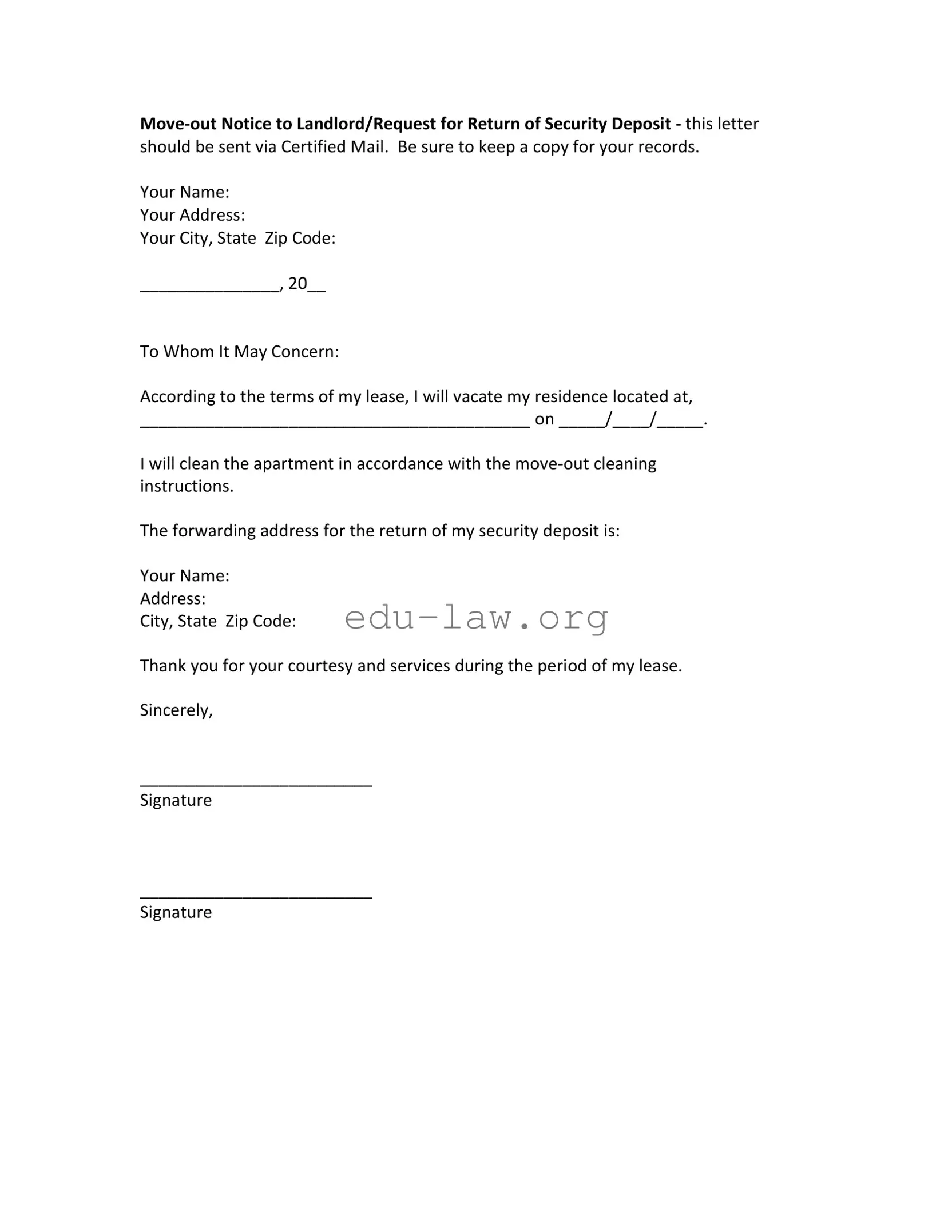
When the time comes to move out of a rental property, a Move Out Notice Letter serves as an essential communication tool between tenants and landlords. This letter not only informs the landlord of the tenant's intention to vacate the premises but also outlines important details, such as the expected move-out date and the forwarding address for the return of the security deposit. Sending the letter via Certified Mail ensures that there is a record of the notice, providing peace of mind for the tenant. It is crucial to keep a copy of this letter for personal records, as it may be needed for future reference. The letter typically includes the tenant's name, address, and a polite expression of gratitude towards the landlord for their services during the lease period. By adhering to these guidelines, tenants can navigate the moving process smoothly while protecting their rights and interests.
should be sent via Certified Mail. Be sure to keep a copy for your records.
Your Name:
Your Address:
Your City, State Zip Code:
_______________, 20__
To Whom It May Concern:
According to the terms of my lease, I will vacate my residence located at,
__________________________________________ on _____/____/_____.
I will clean the apartment in accordance with the
The forwarding address for the return of my security deposit is:
Your Name:
Address:
City, State Zip Code:
Thank you for your courtesy and services during the period of my lease.
Sincerely,
_________________________
Signature
_________________________
Signature
| Fact Name | Details |
|---|---|
| Purpose | The Move Out Notice Letter informs your landlord of your intention to vacate the property and requests the return of your security deposit. |
| Delivery Method | This letter should be sent via Certified Mail to ensure proof of delivery. |
| Record Keeping | It is important to keep a copy of the letter for your records after sending it. |
| State-Specific Laws | The governing laws regarding move-out notices and security deposits vary by state. For example, in California, the law requires landlords to return the security deposit within 21 days after the tenant vacates. |
Once you have decided to move out of your rental property, it's essential to notify your landlord formally. Completing the Move Out Notice Letter form is a crucial step in this process. After submitting this letter, you can expect your landlord to acknowledge your notice and provide further instructions regarding your security deposit.
What is a Move Out Notice Letter?
A Move Out Notice Letter is a formal communication sent to a landlord, informing them of a tenant's intention to vacate the rental property. This letter typically includes the tenant's name, address, move-out date, and a request for the return of the security deposit.
Why should I send the Move Out Notice Letter via Certified Mail?
Sending the Move Out Notice Letter via Certified Mail provides proof of delivery. This is important in case there are any disputes regarding the notice or the return of the security deposit. Keeping a copy for your records is also advisable for future reference.
What information do I need to include in the letter?
The letter should include your name, current address, the date you plan to vacate, and your forwarding address for the return of the security deposit. Additionally, it’s courteous to thank the landlord for their services during your lease.
How much notice do I need to give my landlord?
The notice period typically depends on the terms of your lease agreement. Most leases require a 30-day notice, but some may require more or less time. Always refer to your lease for specific requirements.
What should I do if I have not received my security deposit after moving out?
If you have not received your security deposit within the timeframe specified in your lease or state law, contact your landlord to inquire about the delay. If necessary, you may need to escalate the issue by sending a follow-up letter or seeking legal advice.
Can I request a walk-through inspection before moving out?
Yes, it is advisable to request a walk-through inspection with your landlord prior to your move-out date. This allows you to address any potential issues that could affect the return of your security deposit, such as cleaning or repairs.
What happens if I do not send a Move Out Notice Letter?
Failing to send a Move Out Notice Letter can lead to misunderstandings regarding your lease termination. Your landlord may assume you intend to continue your tenancy, which could result in additional rent charges or legal complications.
Is it necessary to clean the apartment before moving out?
Yes, cleaning the apartment according to the move-out cleaning instructions is essential. A clean apartment can help ensure the return of your security deposit and avoid any deductions for cleaning costs.
Neglecting to Send the Letter via Certified Mail: Many individuals forget that sending the Move Out Notice Letter via certified mail is crucial. This method provides proof of delivery, which can be important in case of disputes.
Failing to Keep a Copy: It is essential to retain a copy of the notice for personal records. Without this, it may be difficult to prove that the notice was sent or to reference its contents later.
Incorrectly Filling Out Personal Information: Errors in your name, address, or other personal details can lead to confusion. Ensure all information is accurate and matches what is on your lease agreement.
Not Specifying the Move-Out Date: Leaving the move-out date blank or unclear can create misunderstandings. Clearly state the exact date you plan to vacate the premises.
Ignoring Move-Out Cleaning Instructions: Failing to mention that you will clean the apartment according to the specified instructions can lead to disputes over the security deposit. Always confirm your intention to follow these guidelines.
Omitting the Forwarding Address: Without providing a forwarding address for the return of your security deposit, you risk not receiving your funds. Always include this information to facilitate a smooth transaction.
Inadequate Closing Remarks: While it may seem minor, neglecting to express gratitude or provide a polite closing can leave a negative impression. A courteous note can help maintain a positive relationship with your landlord.
When preparing to move out, several important documents may accompany your Move Out Notice Letter. Each of these forms serves a specific purpose and helps ensure a smooth transition. Here’s a list of commonly used documents:
Being organized and having the right documents can make your move-out process much easier. Each of these forms plays a role in protecting your rights and ensuring a smooth transition to your next home.
The Lease Termination Letter serves a similar purpose to the Move Out Notice Letter. This document is used by tenants to formally notify their landlord that they intend to end their lease agreement. It includes essential details such as the tenant's name, the property address, and the intended move-out date. Like the Move Out Notice, it should be sent well in advance of the lease expiration to comply with any notice requirements outlined in the lease agreement.
A Notice to Quit is another document that shares similarities with the Move Out Notice Letter. This legal notice is typically used by landlords to inform tenants that they must vacate the property, often due to lease violations or non-payment of rent. While the Move Out Notice is initiated by the tenant, the Notice to Quit is initiated by the landlord. Both documents emphasize the need for clear communication regarding the tenant's intention to leave the property.
The Security Deposit Return Request is closely related to the Move Out Notice Letter. After a tenant has given notice and vacated the property, they may send this request to ensure the return of their security deposit. This document typically includes the tenant's forwarding address and a reminder of the timeline for the deposit return, similar to how the Move Out Notice specifies the forwarding address for the deposit.
The Eviction Notice is a document that landlords use to formally notify tenants of their eviction. While the Move Out Notice is a voluntary action by the tenant, an eviction notice is a legal requirement when a landlord seeks to remove a tenant from the property. Both documents require clear communication and specify important dates, but they arise from different circumstances and intentions.
The Move-Out Checklist is another document that can complement the Move Out Notice Letter. This checklist outlines the tasks a tenant should complete before vacating the property, such as cleaning and repairs. While the Move Out Notice formally communicates the intent to leave, the checklist serves as a practical guide to ensure that the tenant leaves the property in good condition, which may affect the return of the security deposit.
The Rental Agreement or Lease is a foundational document that relates to the Move Out Notice Letter. It outlines the terms and conditions of the tenancy, including the notice period required for moving out. Understanding the lease agreement is essential for tenants when preparing their move-out notice, as it dictates the timeline and procedures for vacating the property.
A Forwarding Address Letter is similar to the Move Out Notice Letter in that it provides the landlord with a new address for the tenant. This document is often sent separately or included within the Move Out Notice. It ensures that the landlord knows where to send any future correspondence, including the return of the security deposit.
The Change of Address Notification is another related document. This is typically sent to various institutions, such as banks and utility companies, to inform them of a tenant's new address after moving out. While it does not directly relate to the landlord, it is part of the overall process of transitioning from one residence to another, similar to the Move Out Notice's role in the moving process.
Lastly, the Tenant's Rights Letter can be seen as related to the Move Out Notice Letter. This document outlines a tenant's rights regarding their lease and the moving-out process. It may provide information on security deposits, eviction procedures, and other legal aspects of tenancy. Understanding these rights can help tenants navigate the move-out process more effectively, ensuring compliance with legal requirements.
When filling out the Move Out Notice Letter form, there are important steps to follow. Below is a list of things you should and shouldn't do.
When it comes to the Move Out Notice Letter form, there are several misconceptions that can lead to confusion for tenants. Here are six common misunderstandings:
Understanding these misconceptions can help tenants navigate the moving process more smoothly and protect their rights. Being proactive and informed can save time, money, and stress.
When preparing to move out of a rental property, filling out the Move Out Notice Letter form is an essential step. Here are some key takeaways to consider: