The Mortgage Lien Release form is an important document in the realm of real estate transactions. It serves to officially remove a lien from a property once the mortgage has been paid off. This form is crucial for homeowners who wish to clear their title and ensure that their property is free from any encumbrances. Typically, the lender or mortgage holder completes the form, indicating that the debt has been satisfied. The release must then be recorded with the appropriate local government office to provide public notice of the lien's removal. This process not only protects the homeowner's rights but also facilitates the sale or transfer of the property in the future. Understanding the key elements of the Mortgage Lien Release form, including the parties involved, property details, and necessary signatures, is essential for anyone navigating the complexities of homeownership and financing.
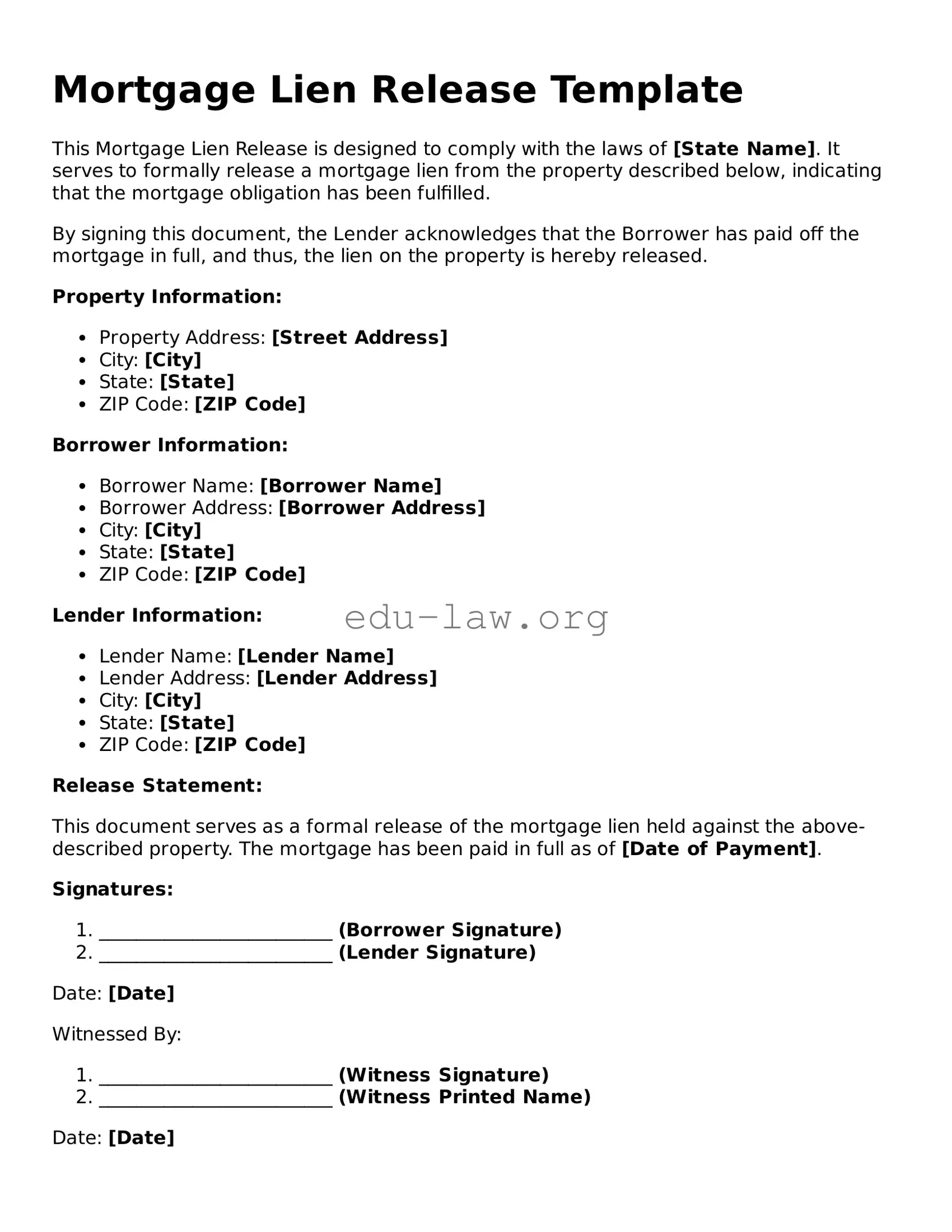
Mortgage Lien Release Template
This Mortgage Lien Release is designed to comply with the laws of [State Name]. It serves to formally release a mortgage lien from the property described below, indicating that the mortgage obligation has been fulfilled.
By signing this document, the Lender acknowledges that the Borrower has paid off the mortgage in full, and thus, the lien on the property is hereby released.
Property Information:
Borrower Information:
Lender Information:
Release Statement:
This document serves as a formal release of the mortgage lien held against the above-described property. The mortgage has been paid in full as of [Date of Payment].
Signatures:
Date: [Date]
Witnessed By:
Date: [Date]
This release should be recorded in the appropriate county office to ensure public notice of the lien release.
| Fact Name | Description |
|---|---|
| Purpose | The Mortgage Lien Release form is used to officially remove a mortgage lien from a property once the loan has been paid in full. |
| Governing Law | Each state has specific laws governing the release of mortgage liens, often found in state property or real estate laws. |
| Who Signs? | The lender or mortgage holder must sign the release form to validate that the debt has been satisfied. |
| Recording | After signing, the form must be recorded with the appropriate county office to ensure public notice of the lien release. |
| Timeframe | Many states require the lien release to be filed within a specific timeframe after the mortgage is paid off, often within 30 days. |
| Importance | Filing the release is crucial for the property owner, as it clears the title and allows for future transactions without complications. |
| State-Specific Forms | Some states provide specific forms that must be used for the lien release, so it is essential to check local requirements. |
Once you have gathered all necessary information and documentation, you are ready to proceed with filling out the Mortgage Lien Release form. This document serves to officially release a mortgage lien, indicating that the debt has been paid or settled. Completing the form accurately is crucial for ensuring that the release is recognized legally.
Once the form is completed, it should be filed with the appropriate local government office, often the county recorder or clerk’s office, to ensure that the release is officially recognized. Be sure to keep a copy for your records as well.
What is a Mortgage Lien Release form?
A Mortgage Lien Release form is a legal document that indicates the removal of a lien from a property. When a borrower pays off their mortgage, the lender must file this form to officially release their claim on the property. This document serves as proof that the borrower has fulfilled their obligations under the mortgage agreement.
Why is it important to obtain a Mortgage Lien Release?
Obtaining a Mortgage Lien Release is crucial for property owners. Without it, the lien remains on the property, which can complicate future transactions, such as selling or refinancing. A clear title is necessary for potential buyers or lenders to feel secure in their investment. The release also protects the owner's rights to the property free of any claims by the lender.
How do I request a Mortgage Lien Release?
To request a Mortgage Lien Release, the borrower should contact their lender after paying off the mortgage. The lender will typically prepare the release form and may require a written request. Once completed, the lender must file the form with the appropriate county office where the property is located. It is advisable to follow up to ensure the filing is completed.
What happens if the Mortgage Lien Release is not filed?
If the Mortgage Lien Release is not filed, the lien will remain on the property’s title. This can lead to difficulties in selling the property, obtaining new financing, or even issues with property taxes. It is the borrower's responsibility to ensure that the release is filed. If the lender fails to do so, the borrower may need to take additional steps to rectify the situation.
Can I file a Mortgage Lien Release myself?
While it is possible for a borrower to file a Mortgage Lien Release themselves, it is generally recommended to have the lender handle this process. Lenders are familiar with the requirements and procedures for filing the release correctly. If a borrower chooses to file independently, they must ensure all necessary information is included and that it is submitted to the correct county office.
Failing to include all necessary information. It’s crucial to provide complete details about the mortgage, including the loan number and property address.
Not signing the form. A signature is required to validate the release. Without it, the form is incomplete.
Using incorrect names. Ensure that the names on the form match those on the original mortgage documents.
Neglecting to date the form. A date is essential for establishing when the lien was released.
Submitting the form to the wrong authority. Make sure to send the release to the appropriate county recorder’s office.
Overlooking any required attachments. If additional documents are needed, ensure they are included with the form.
Failing to keep copies. Always make copies of the completed form for your records before submitting it.
Not checking for errors. Review the form carefully for any typos or inaccuracies that could delay processing.
Ignoring local requirements. Different states or counties may have specific rules for filing a Mortgage Lien Release.
When dealing with the Mortgage Lien Release form, several other documents often come into play. These forms help clarify the terms of the mortgage, protect the rights of the parties involved, and ensure that all legal requirements are met. Below is a list of related documents that you may encounter in the mortgage process.
Understanding these documents can make the mortgage process smoother and help ensure that all parties are on the same page. Being informed about each form's purpose will empower you to navigate your mortgage journey with confidence.
The Satisfaction of Mortgage document serves a similar purpose to the Mortgage Lien Release form. Both documents signify that a borrower has fulfilled their obligation under the mortgage agreement. Once the mortgage is paid in full, the lender issues a Satisfaction of Mortgage. This document is then recorded with the county to formally remove the lien from the property. It provides clear proof that the mortgage debt has been settled, similar to how a Mortgage Lien Release indicates the release of the lender's claim on the property.
The Deed of Reconveyance is another document that parallels the Mortgage Lien Release. This document is used primarily in states that follow a deed of trust system instead of a mortgage system. When a borrower pays off their loan, the lender or trustee issues a Deed of Reconveyance. This document transfers the property title back to the borrower, thereby removing the lender's interest. Like the Mortgage Lien Release, it serves to clear the property of any claims from the lender, confirming that the borrower is the sole owner.
A Release of Lien document also shares similarities with the Mortgage Lien Release form. This document is used when a lien is placed on a property for reasons other than a mortgage, such as unpaid taxes or contractor fees. Once the obligation is satisfied, the lienholder files a Release of Lien. This action formally removes the lien from public records, just as a Mortgage Lien Release does for a mortgage. Both documents are essential for ensuring that the property is free of encumbrances.
The Quitclaim Deed is another document that can be compared to the Mortgage Lien Release. Although primarily used to transfer ownership interests in property, it can also serve to clear up claims on a property. If a person who has a claim on a property signs a Quitclaim Deed, they relinquish their interest. This effectively removes any potential claims, similar to how a Mortgage Lien Release removes the lender's lien. Both documents ensure that the property is clear of any competing interests, providing peace of mind to the current owner.
Filling out a Mortgage Lien Release form is an important step in ensuring that your property records accurately reflect your financial obligations. Here are some helpful guidelines to follow, as well as some common pitfalls to avoid.
Things You Should Do:
Things You Shouldn't Do:
By following these guidelines, you can help ensure a smoother process in releasing your mortgage lien. Attention to detail is key, and taking the time to do it right will benefit you in the long run.
Understanding the Mortgage Lien Release form is crucial for homeowners and borrowers. However, several misconceptions can lead to confusion. Here are seven common misunderstandings about this important document:
Being aware of these misconceptions can help homeowners navigate the process more effectively and ensure that their rights are protected. Always consult with a qualified professional if you have specific questions or concerns regarding your mortgage and the lien release process.
Filling out and using a Mortgage Lien Release form is an important step in ensuring that property ownership is clear and unencumbered. Here are some key takeaways to keep in mind: