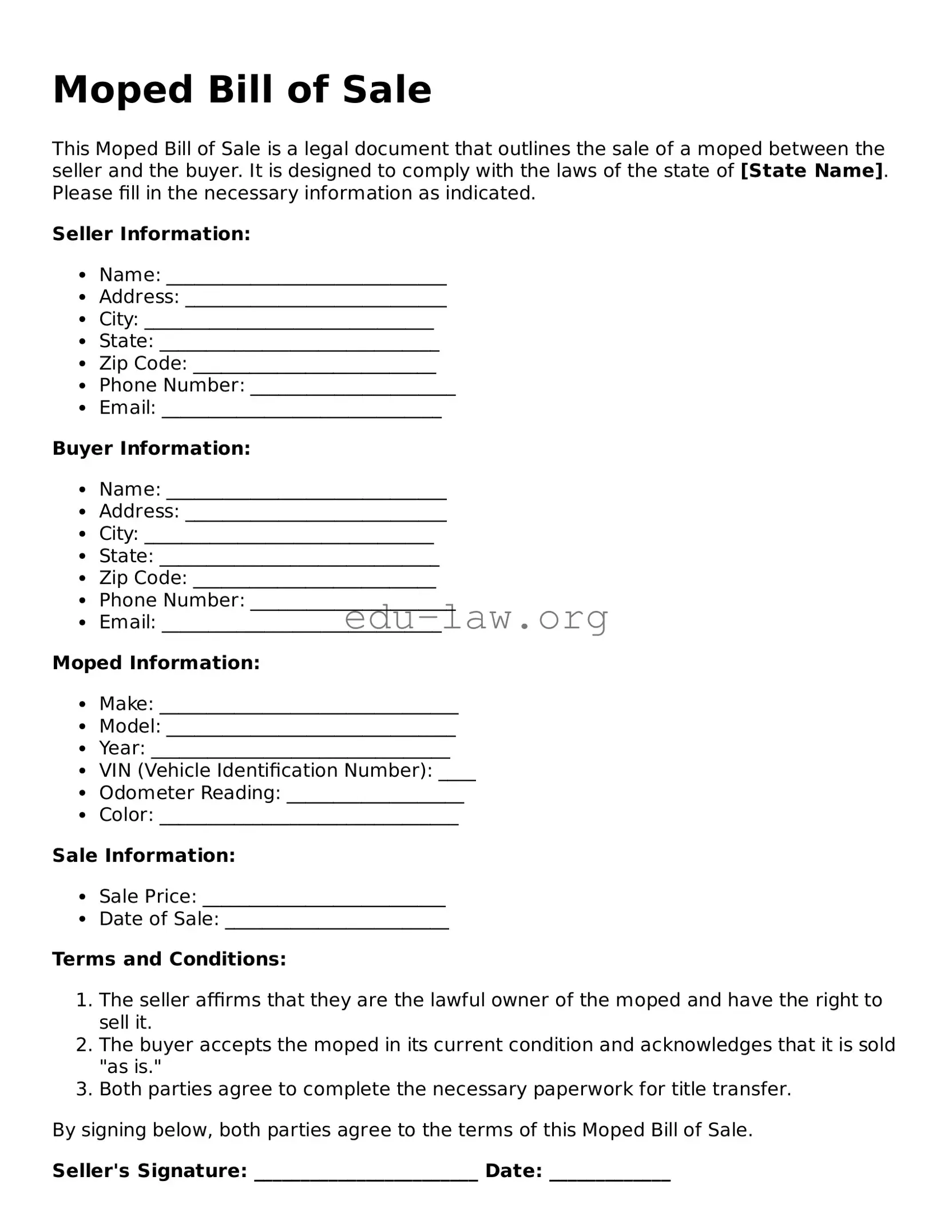
When buying or selling a moped, having a Moped Bill of Sale form is essential for both parties involved. This document serves as a legally binding record of the transaction, detailing key information such as the buyer's and seller's names, addresses, and contact information. It also outlines the moped's make, model, year, and Vehicle Identification Number (VIN), ensuring clarity about the specific vehicle being sold. Additionally, the form should include the sale price and the date of the transaction, which helps establish the transfer of ownership. Both the buyer and seller should sign the document, confirming their agreement to the terms. By using a Moped Bill of Sale, individuals can protect themselves from potential disputes and provide proof of ownership, making it a crucial step in the buying or selling process.
Moped Bill of Sale
This Moped Bill of Sale is a legal document that outlines the sale of a moped between the seller and the buyer. It is designed to comply with the laws of the state of [State Name]. Please fill in the necessary information as indicated.
Seller Information:
Buyer Information:
Moped Information:
Sale Information:
Terms and Conditions:
By signing below, both parties agree to the terms of this Moped Bill of Sale.
Seller's Signature: ________________________ Date: _____________
Buyer's Signature: ________________________ Date: _____________
| Fact Name | Description |
|---|---|
| Purpose | The Moped Bill of Sale serves as a legal document that records the transfer of ownership of a moped from one party to another. |
| Requirements | Typically, the form requires the seller's and buyer's names, addresses, and signatures, along with the moped's details. |
| State-Specific Forms | Some states have specific forms that must be used. Always check local regulations to ensure compliance. |
| Governing Law | In most states, the sale of mopeds is governed by the Uniform Commercial Code (UCC) and local motor vehicle laws. |
| Registration | After the sale, the new owner must register the moped with the appropriate state agency to obtain a title. |
| Notarization | Some states may require the Bill of Sale to be notarized to validate the transaction. |
| Tax Implications | Sales tax may apply to the transaction, depending on state laws. The buyer should be aware of these potential costs. |
| Record Keeping | Both parties should retain a copy of the Bill of Sale for their records, as it may be needed for future reference. |
After obtaining the Moped Bill of Sale form, you will need to fill it out carefully to ensure all necessary information is included. This document is essential for transferring ownership and should be completed accurately to avoid any issues in the future.
What is a Moped Bill of Sale form?
A Moped Bill of Sale form is a legal document that records the sale and transfer of ownership of a moped from one person to another. This form typically includes details such as the seller's and buyer's names and addresses, the moped's make, model, year, and Vehicle Identification Number (VIN). It serves as proof of the transaction and can be useful for both parties in case of future disputes or for registration purposes.
Why is it important to have a Moped Bill of Sale?
Having a Moped Bill of Sale is important for several reasons. Firstly, it provides legal protection for both the buyer and seller. The document serves as evidence that the transaction took place, which can be crucial if any issues arise later, such as disputes over ownership or condition. Additionally, many states require a bill of sale for registration purposes, making it essential for the buyer to properly register the moped in their name.
What information should be included in a Moped Bill of Sale?
A comprehensive Moped Bill of Sale should include several key pieces of information. This includes the full names and addresses of both the seller and the buyer. It should detail the moped's make, model, year, and VIN, as well as the sale price. Any warranties or conditions of the sale, such as whether the moped is sold "as is," should also be clearly stated. Lastly, both parties should sign and date the document to validate the transaction.
Do I need to have the Moped Bill of Sale notarized?
Whether a Moped Bill of Sale needs to be notarized depends on the laws of your state. In many cases, notarization is not required, but it can add an extra layer of authenticity to the document. If either party feels more comfortable having the bill of sale notarized, it is a simple process that can help ensure that the document is legally binding. Always check your local regulations to understand what is required in your area.
Failing to include complete buyer and seller information. It’s essential to provide full names, addresses, and contact details for both parties. Missing this information can lead to confusion later.
Not specifying the moped's details accurately. Make sure to include the make, model, year, and Vehicle Identification Number (VIN). Inaccuracies can cause issues with registration.
Leaving out the sale price. Clearly stating the sale price is crucial for both parties. It helps establish the value of the transaction and is important for tax purposes.
Neglecting to include date of sale. This date is vital for record-keeping and may be necessary for legal reasons.
Not having witness signatures when required. Some states may require a witness to sign the bill of sale. Check local regulations to ensure compliance.
Overlooking the condition of the moped. Be honest about any defects or damages. This protects both the buyer and seller from future disputes.
Forgetting to make copies of the completed form. Both parties should retain a copy for their records. This step is often overlooked but is essential for future reference.
When purchasing or selling a moped, several forms and documents may accompany the Moped Bill of Sale. These documents help ensure a smooth transaction and provide necessary information for both parties involved. Below is a list of commonly used forms.
Each of these documents plays a vital role in the transaction process. Having them prepared can facilitate a smoother sale and provide peace of mind for both the buyer and seller.
The Motorcycle Bill of Sale is a document that serves a similar purpose to the Moped Bill of Sale. Both forms record the transfer of ownership from the seller to the buyer. They include essential details such as the vehicle's make, model, year, and Vehicle Identification Number (VIN). Additionally, both documents require the signatures of both parties to validate the transaction and provide proof of ownership for the buyer.
The Vehicle Bill of Sale is another document akin to the Moped Bill of Sale. This form is used for the sale of various types of vehicles, including cars and trucks. Like the Moped Bill of Sale, it contains information about the vehicle and the parties involved in the transaction. It serves as a legal record that can be used for registration and title transfer purposes, ensuring that both the buyer and seller have a clear understanding of the terms of the sale.
A Boat Bill of Sale is also similar, as it documents the sale of a watercraft. This form includes details about the boat, such as its make, model, and registration number. Similar to the Moped Bill of Sale, it protects both parties by providing a written record of the transaction. It can be used for registration with state authorities and helps establish ownership for the buyer.
The ATV Bill of Sale is another comparable document. It is used when transferring ownership of an All-Terrain Vehicle. This form includes important details about the ATV, including its VIN and any relevant specifications. Just like the Moped Bill of Sale, it requires signatures from both the buyer and seller, ensuring that the sale is legally binding and recognized by authorities.
The Trailer Bill of Sale is similar in function, as it is used to document the sale of a trailer. This document includes information about the trailer, such as its size, type, and identification number. It serves to protect both parties by providing a clear record of the transaction, much like the Moped Bill of Sale, and can be used for registration and title transfer.
Lastly, the Personal Property Bill of Sale can be compared to the Moped Bill of Sale. This document is broader in scope and can be used for the sale of various personal items, including vehicles. It outlines the details of the item being sold and the terms of the sale. While it may not be vehicle-specific, it shares the same purpose of providing a written record that protects both the buyer and seller during the transaction.
When filling out the Moped Bill of Sale form, it is essential to ensure accuracy and clarity. Here are seven important dos and don'ts to keep in mind:
The Moped Bill of Sale form is an important document for anyone buying or selling a moped. However, there are several misconceptions surrounding this form that can lead to confusion. Below is a list of common misconceptions and explanations to clarify them.
Understanding these misconceptions can help ensure that the buying and selling process of a moped goes smoothly and legally. Always check your state’s specific requirements to ensure compliance.
When filling out and using the Moped Bill of Sale form, keep these key takeaways in mind: