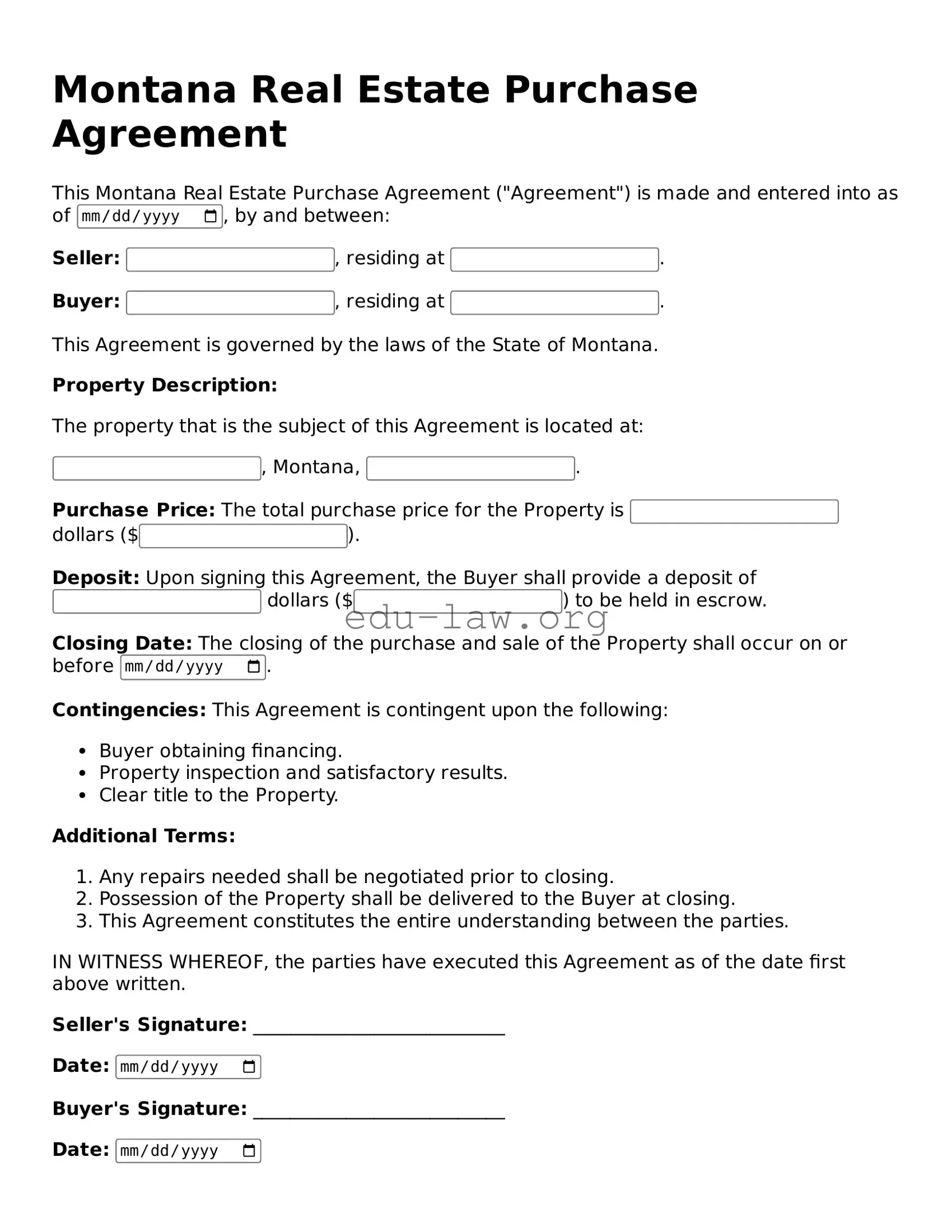
The Montana Real Estate Purchase Agreement is a crucial document in the home buying and selling process, providing a clear framework for the transaction between the buyer and seller. This form outlines essential details such as the purchase price, financing arrangements, and the closing date, ensuring that both parties have a mutual understanding of their obligations. It includes provisions regarding contingencies, which may address issues like inspections and appraisals, allowing buyers to protect their interests. Additionally, the agreement specifies the property description and any included fixtures or personal property, minimizing potential disputes. By detailing the responsibilities of each party, the Montana Real Estate Purchase Agreement promotes transparency and fosters trust, serving as a foundation for a successful real estate transaction.
Montana Real Estate Purchase Agreement
This Montana Real Estate Purchase Agreement ("Agreement") is made and entered into as of , by and between:
Seller: , residing at .
Buyer: , residing at .
This Agreement is governed by the laws of the State of Montana.
Property Description:
The property that is the subject of this Agreement is located at:
, Montana, .
Purchase Price: The total purchase price for the Property is dollars ($).
Deposit: Upon signing this Agreement, the Buyer shall provide a deposit of dollars ($) to be held in escrow.
Closing Date: The closing of the purchase and sale of the Property shall occur on or before .
Contingencies: This Agreement is contingent upon the following:
Additional Terms:
IN WITNESS WHEREOF, the parties have executed this Agreement as of the date first above written.
Seller's Signature: ___________________________
Date:
Buyer's Signature: ___________________________
Date:
| Fact Name | Details |
|---|---|
| Governing Law | The Montana Real Estate Purchase Agreement is governed by Montana state law. |
| Purpose | This form outlines the terms and conditions under which a buyer agrees to purchase real estate from a seller. |
| Key Components | The agreement typically includes purchase price, financing details, contingencies, and closing date. |
| Signature Requirement | Both the buyer and seller must sign the agreement for it to be legally binding. |
Filling out the Montana Real Estate Purchase Agreement form is an important step in the process of buying or selling property. Once completed, this form will facilitate the next steps in your real estate transaction, ensuring that all parties are on the same page regarding the terms and conditions of the sale.
After completing the form, it’s essential to review it thoroughly. Any mistakes or omissions could lead to complications down the line. Once verified, you can proceed with the next steps in your real estate journey.
What is the Montana Real Estate Purchase Agreement form?
The Montana Real Estate Purchase Agreement form is a legally binding document that outlines the terms and conditions under which a buyer agrees to purchase real estate from a seller. This form serves as a crucial tool in real estate transactions, providing clarity and protection for both parties involved in the sale.
Who should use the Montana Real Estate Purchase Agreement form?
This form is intended for use by individuals or entities involved in the buying and selling of real estate in Montana. It is typically utilized by home buyers, sellers, real estate agents, and attorneys to ensure that all necessary details of the transaction are documented and agreed upon.
What key elements are included in the agreement?
The Montana Real Estate Purchase Agreement includes several essential components. These typically consist of the purchase price, property description, contingencies, closing date, and any special provisions. Additionally, it may outline the responsibilities of both the buyer and the seller, as well as any disclosures required by law.
Is the Montana Real Estate Purchase Agreement form customizable?
Yes, the form can be customized to meet the specific needs of the transaction. Parties involved may add clauses or modify existing ones to reflect unique agreements or conditions. However, it is advisable to consult with a legal professional to ensure that any modifications comply with state laws and regulations.
What contingencies can be included in the agreement?
Contingencies are conditions that must be met for the sale to proceed. Common contingencies in the Montana Real Estate Purchase Agreement may include financing approval, home inspections, and the sale of the buyer's current home. These provisions protect both parties and provide an exit strategy if certain conditions are not satisfied.
How is the purchase price determined in the agreement?
The purchase price is typically negotiated between the buyer and the seller. Factors influencing this price may include the property's market value, condition, location, and comparable sales in the area. The agreed-upon price is then documented in the purchase agreement.
What happens after the agreement is signed?
Once both parties have signed the Montana Real Estate Purchase Agreement, the document becomes legally binding. The next steps usually involve fulfilling any contingencies, conducting inspections, and preparing for the closing process. It is essential for both parties to adhere to the timelines and obligations outlined in the agreement.
Can the agreement be terminated?
Yes, the Montana Real Estate Purchase Agreement can be terminated under certain circumstances. If a contingency is not met, either party may have the right to cancel the agreement. Additionally, mutual consent from both parties can lead to termination. It is important to review the specific terms of the agreement to understand the conditions under which it can be terminated.
What should be done if a dispute arises?
In the event of a dispute arising from the Montana Real Estate Purchase Agreement, the parties should first attempt to resolve the issue through negotiation. If that fails, they may consider mediation or arbitration as alternative dispute resolution methods. Legal action may also be pursued, but it is generally advisable to seek resolution outside of court to save time and resources.
Incomplete Information: One of the most common mistakes is failing to fill out all required fields. Essential details such as the buyer's and seller's names, property address, and purchase price must be clearly stated. Leaving any of these blank can lead to confusion or delays in the transaction.
Incorrect Dates: Another frequent error involves the use of incorrect or missing dates. It's crucial to specify the date of the agreement and any deadlines for inspections, financing, or closing. Misunderstandings can arise if these dates are not accurately noted.
Neglecting Contingencies: Many buyers overlook the importance of including contingencies. These are conditions that must be met for the sale to proceed, such as securing financing or passing a home inspection. Failing to outline these can leave parties vulnerable.
Not Understanding the Terms: Some individuals rush through the agreement without fully understanding the terms. Key elements, like earnest money and closing costs, should be carefully reviewed. Misinterpretations can lead to disputes later on.
Forgetting Signatures: Lastly, a common oversight is neglecting to sign the document. Both parties must provide their signatures for the agreement to be legally binding. Without signatures, the entire agreement is rendered invalid.
When navigating the real estate market in Montana, several forms and documents complement the Montana Real Estate Purchase Agreement. Each of these documents plays a crucial role in ensuring a smooth transaction, protecting the interests of both buyers and sellers. Here’s a list of commonly used forms:
Having these documents prepared and understood can significantly enhance the buying or selling experience. Each form serves a specific purpose, ensuring that all parties are informed and protected throughout the real estate transaction process.
The Montana Real Estate Purchase Agreement form shares similarities with the Residential Purchase Agreement, which is commonly used in many states. Both documents outline the terms and conditions under which a buyer agrees to purchase a residential property from a seller. They typically include details such as the purchase price, financing terms, and contingencies related to inspections or appraisals. The clarity and structure of these agreements help protect the interests of both parties, ensuring that everyone understands their rights and obligations throughout the transaction.
Another document that resembles the Montana Real Estate Purchase Agreement is the Commercial Purchase Agreement. While the focus is on commercial properties rather than residential ones, the core elements remain similar. Both agreements define the terms of sale, including price, closing date, and any conditions that must be met before the sale can proceed. The commercial version may also incorporate additional clauses related to zoning laws or business operations, reflecting the complexities of commercial real estate transactions.
The Lease Purchase Agreement is another document that parallels the Montana Real Estate Purchase Agreement. This type of agreement allows a tenant to rent a property with the option to buy it later. Like the purchase agreement, it specifies terms such as the purchase price and the duration of the lease. It also outlines the responsibilities of both the tenant and the landlord, creating a clear framework for the arrangement. This can be particularly appealing for buyers who may need time to secure financing or improve their credit before making a purchase.
The Option to Purchase Agreement is also quite similar. This document grants a potential buyer the exclusive right to purchase a property at a predetermined price within a specified timeframe. Like the Montana Real Estate Purchase Agreement, it includes essential details about the property and the terms of the sale. However, the option agreement does not obligate the buyer to complete the purchase, providing flexibility in the decision-making process while still protecting the seller's interests.
Lastly, the Seller Financing Agreement has notable similarities with the Montana Real Estate Purchase Agreement. In this case, the seller acts as the lender, allowing the buyer to make payments directly to them instead of a bank. This document outlines the purchase price, interest rate, payment schedule, and any penalties for late payments. Both agreements serve to clarify the terms of the sale, but the seller financing aspect adds a layer of complexity regarding how the buyer will finance the purchase, which can be beneficial for those who may struggle to secure traditional financing.
When filling out the Montana Real Estate Purchase Agreement form, it is important to approach the task with care. Here are some guidelines to help you navigate the process effectively.
By following these guidelines, you can help ensure that the process goes smoothly and that all parties are protected. Attention to detail is crucial in real estate transactions.
The Montana Real Estate Purchase Agreement form is an important document in real estate transactions. However, there are several misconceptions surrounding it. Here is a list of ten common misconceptions, along with clarifications:
Understanding these misconceptions can help individuals navigate the real estate process more effectively and ensure a smoother transaction.
When filling out and using the Montana Real Estate Purchase Agreement form, it is important to keep several key points in mind:
Following these guidelines can help facilitate a smoother transaction and protect the interests of all parties involved.