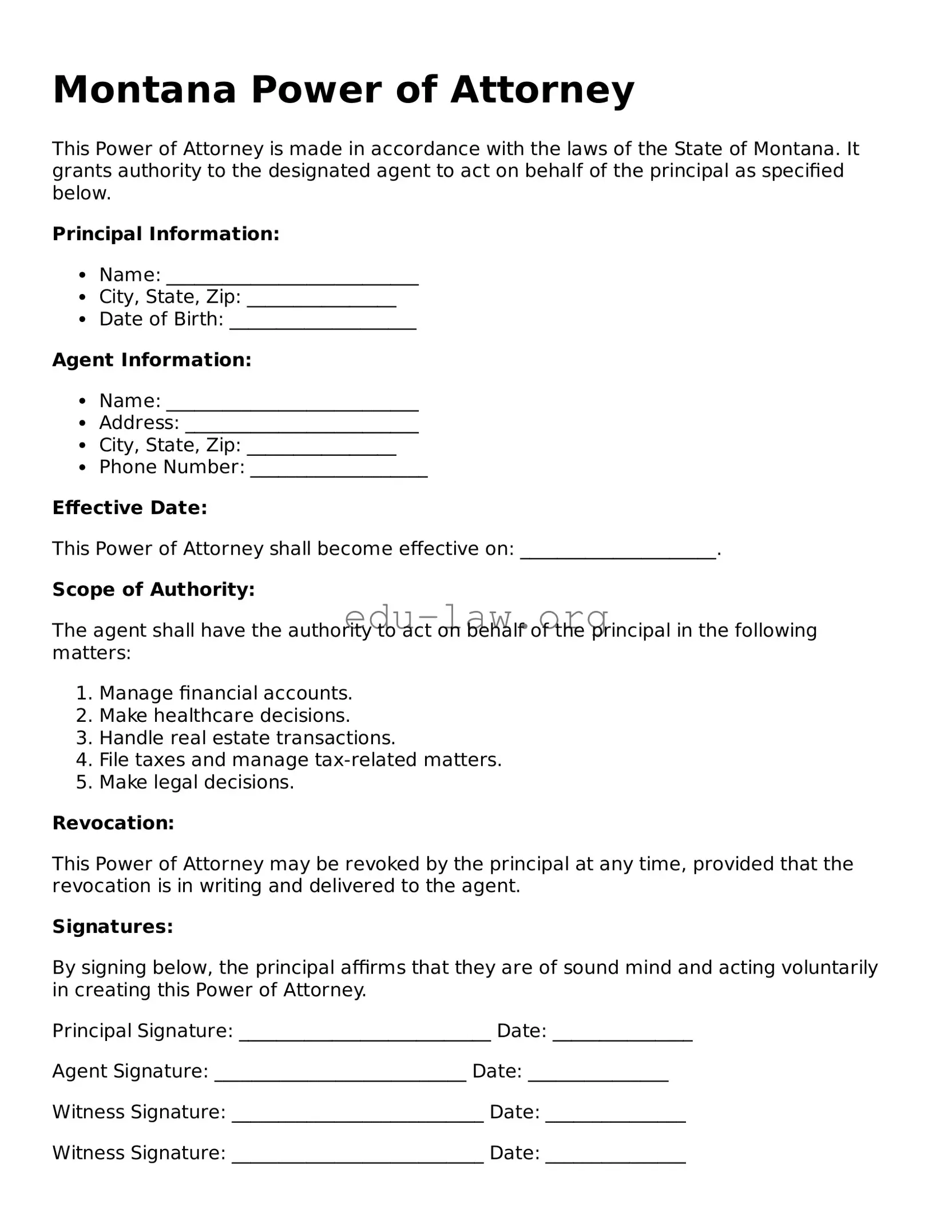
The Montana Power of Attorney form serves as an essential legal document that allows individuals to designate someone else to make decisions on their behalf. This form can cover a wide range of powers, from managing financial matters to making healthcare decisions, ensuring that the appointed person can act in the best interest of the individual who created the document. It is important to understand that the authority granted can be broad or limited, depending on the preferences of the person granting the power. Additionally, the form must be properly signed and witnessed to ensure its validity. In Montana, specific guidelines outline how the Power of Attorney should be executed, including requirements for notarization. Understanding these key aspects can help individuals navigate the process effectively, ensuring that their wishes are honored when they may not be able to communicate them directly.
Montana Power of Attorney
This Power of Attorney is made in accordance with the laws of the State of Montana. It grants authority to the designated agent to act on behalf of the principal as specified below.
Principal Information:
Agent Information:
Effective Date:
This Power of Attorney shall become effective on: _____________________.
Scope of Authority:
The agent shall have the authority to act on behalf of the principal in the following matters:
Revocation:
This Power of Attorney may be revoked by the principal at any time, provided that the revocation is in writing and delivered to the agent.
Signatures:
By signing below, the principal affirms that they are of sound mind and acting voluntarily in creating this Power of Attorney.
Principal Signature: ___________________________ Date: _______________
Agent Signature: ___________________________ Date: _______________
Witness Signature: ___________________________ Date: _______________
Witness Signature: ___________________________ Date: _______________
| Fact Name | Details |
|---|---|
| Definition | A Montana Power of Attorney form allows an individual (the principal) to designate another person (the agent) to make decisions on their behalf. |
| Governing Law | The Montana Power of Attorney is governed by Title 72, Chapter 31 of the Montana Code Annotated. |
| Durability | The Power of Attorney can be durable, meaning it remains effective even if the principal becomes incapacitated, unless specified otherwise. |
| Revocation | The principal can revoke the Power of Attorney at any time, provided they are mentally competent to do so. |
Filling out the Montana Power of Attorney form is an important step in designating someone to act on your behalf. It’s essential to complete this form accurately to ensure your wishes are followed. Below are the steps to guide you through the process.
Once you have completed the form, it is ready for use. Ensure that your agent understands their responsibilities and that you both keep copies of the document for reference.
What is a Power of Attorney in Montana?
A Power of Attorney (POA) is a legal document that allows one person to authorize another to act on their behalf in financial or medical matters. In Montana, a POA can be tailored to fit specific needs, whether it's for a limited period or for broader, ongoing responsibilities. This tool can be particularly useful for individuals who may become incapacitated or who simply want someone else to handle their affairs for a time. The person granting the authority is known as the principal, while the person receiving the authority is called the agent or attorney-in-fact.
How do I create a Power of Attorney in Montana?
Creating a Power of Attorney in Montana involves a few straightforward steps. First, you should determine what type of POA you need—general, limited, or durable. Next, you can obtain a POA form from a legal resource or create one that meets your specific needs. It is essential to clearly outline the powers you wish to grant to your agent. After completing the form, the principal must sign it in the presence of a notary public. This notarization adds a layer of authenticity and can help prevent disputes later on.
Can I revoke a Power of Attorney in Montana?
Yes, you can revoke a Power of Attorney in Montana at any time, as long as you are mentally competent. To do this, you should draft a revocation document that clearly states your intention to cancel the existing POA. Once you have signed this document, it is advisable to notify your agent and any institutions that may have relied on the original POA. This ensures that everyone is aware of the change and helps prevent any unauthorized actions by the former agent.
What happens if I become incapacitated and have a Power of Attorney?
If you become incapacitated and have a valid Power of Attorney in place, your designated agent can step in to manage your affairs according to the powers granted in the document. This could include making medical decisions, handling financial transactions, or managing your property. The agent must act in your best interest and follow any specific instructions you provided. If no POA exists, the court may need to appoint a guardian, which can be a more complicated and time-consuming process.
Failing to specify the powers granted. It is crucial to clearly outline what authority is being given. Vague language can lead to confusion and potential disputes.
Not including a successor agent. If the primary agent is unable to act, having a designated successor ensures that someone can step in without delay.
Overlooking the need for witnesses or notarization. Montana law requires that certain Power of Attorney documents be signed in front of a notary or witnesses to be valid.
Using outdated forms. Laws can change, and using an old version of the Power of Attorney form may lead to complications or invalidation of the document.
Neglecting to discuss the document with the agent. Clear communication about expectations and responsibilities is essential to ensure the agent understands their role.
Failing to review the document periodically. Life circumstances change, and so may the need for the Power of Attorney. Regular reviews can help keep the document relevant.
Not considering the implications of the powers granted. Understanding the potential consequences of granting certain powers is vital to avoid unwanted outcomes.
When preparing a Montana Power of Attorney, several other forms and documents may be beneficial to ensure comprehensive legal coverage. Each document serves a specific purpose and can complement the Power of Attorney in various situations.
Understanding these additional documents can help individuals make informed decisions about their legal arrangements. Each serves a unique function and can enhance the effectiveness of a Power of Attorney in managing personal, financial, and health-related matters.
The Montana Power of Attorney form shares similarities with the Durable Power of Attorney. Both documents grant an individual the authority to make decisions on behalf of another person. The key difference lies in the durability; a Durable Power of Attorney remains effective even if the principal becomes incapacitated, while a standard Power of Attorney may become void in such circumstances. This ensures that important financial and medical decisions can still be made when the principal is unable to act for themselves.
Another document that resembles the Montana Power of Attorney is the Medical Power of Attorney. This specific type of power of attorney focuses solely on healthcare decisions. It allows the designated agent to make medical choices for the principal if they are unable to communicate their wishes. Both forms require clear designation of authority and trust between the principal and the agent, emphasizing the importance of choosing someone who understands the principal's values and preferences.
The Limited Power of Attorney is also comparable to the Montana Power of Attorney. This document grants authority for specific tasks or time periods, rather than broad powers. For instance, a Limited Power of Attorney might allow someone to handle a real estate transaction while the principal is out of town. Both documents require careful consideration about the extent of authority being granted, making it essential to outline the specific powers clearly.
The Springing Power of Attorney is another similar document. It becomes effective only upon the occurrence of a specified event, such as the principal's incapacitation. Like the Montana Power of Attorney, it allows for the management of financial or legal matters but introduces a conditional element. This ensures that the principal maintains control until they truly need assistance, providing peace of mind.
A Trust is also akin to the Montana Power of Attorney in that both can manage assets and make decisions for the benefit of another. A Trust involves a designated trustee who manages the assets according to the terms set forth by the trustor. While a Power of Attorney is typically more straightforward and temporary, a Trust can provide long-term management and distribution of assets, reflecting the principal's wishes even after their passing.
The Guardianship document bears similarities to the Montana Power of Attorney as well. Both involve the delegation of authority to another person, but Guardianship is typically established through a court process when an individual is deemed unable to manage their own affairs. While the Power of Attorney is often a voluntary arrangement, Guardianship is a legal intervention designed to protect those who cannot protect themselves.
Lastly, the Advance Healthcare Directive is comparable to the Montana Power of Attorney. This document combines a living will with a Medical Power of Attorney, allowing individuals to specify their healthcare preferences and appoint an agent to make decisions on their behalf. Both documents emphasize the importance of making one’s wishes known regarding medical treatment, ensuring that personal values are respected even when one cannot voice them directly.
When filling out the Montana Power of Attorney form, it is essential to be careful and thorough. Here’s a list of things you should and shouldn’t do to ensure the document is valid and meets your needs.
Understanding the Montana Power of Attorney form is essential for anyone looking to designate someone to make decisions on their behalf. However, several misconceptions can lead to confusion. Here are six common misunderstandings:
All Power of Attorney forms are the same. Many people believe that a Power of Attorney is a one-size-fits-all document. In reality, each state has its own requirements and specific forms. The Montana Power of Attorney form has unique provisions that comply with state laws.
Once a Power of Attorney is signed, it cannot be revoked. Some individuals think that signing a Power of Attorney is a permanent decision. However, you can revoke it at any time, as long as you are mentally competent. A written revocation should be provided to the agent and any institutions that may have a copy of the original document.
Only lawyers can create a Power of Attorney. While it is advisable to consult a lawyer for complex situations, many people can create a valid Power of Attorney form on their own. Montana provides a template that individuals can fill out, ensuring that they meet the legal requirements.
A Power of Attorney is only for financial matters. Many assume that this document is limited to financial decisions. However, the Montana Power of Attorney can also grant authority over healthcare decisions, making it a versatile tool for managing various aspects of life.
Agents must act in the best interest of the principal. While agents are expected to act in good faith, some people think that this is legally binding. In Montana, agents have a fiduciary duty, but the specific obligations can vary based on the language in the Power of Attorney document.
A Power of Attorney is only needed for elderly individuals. This misconception suggests that only seniors require a Power of Attorney. In truth, anyone over the age of 18 can benefit from having one, especially in situations where they may be unable to make decisions due to illness, travel, or unexpected emergencies.
By clearing up these misconceptions, individuals can make informed decisions about using the Montana Power of Attorney form effectively.
Understanding the Montana Power of Attorney form is essential for ensuring your wishes are respected. Here are some key takeaways:
These takeaways can help you navigate the process with confidence and clarity.