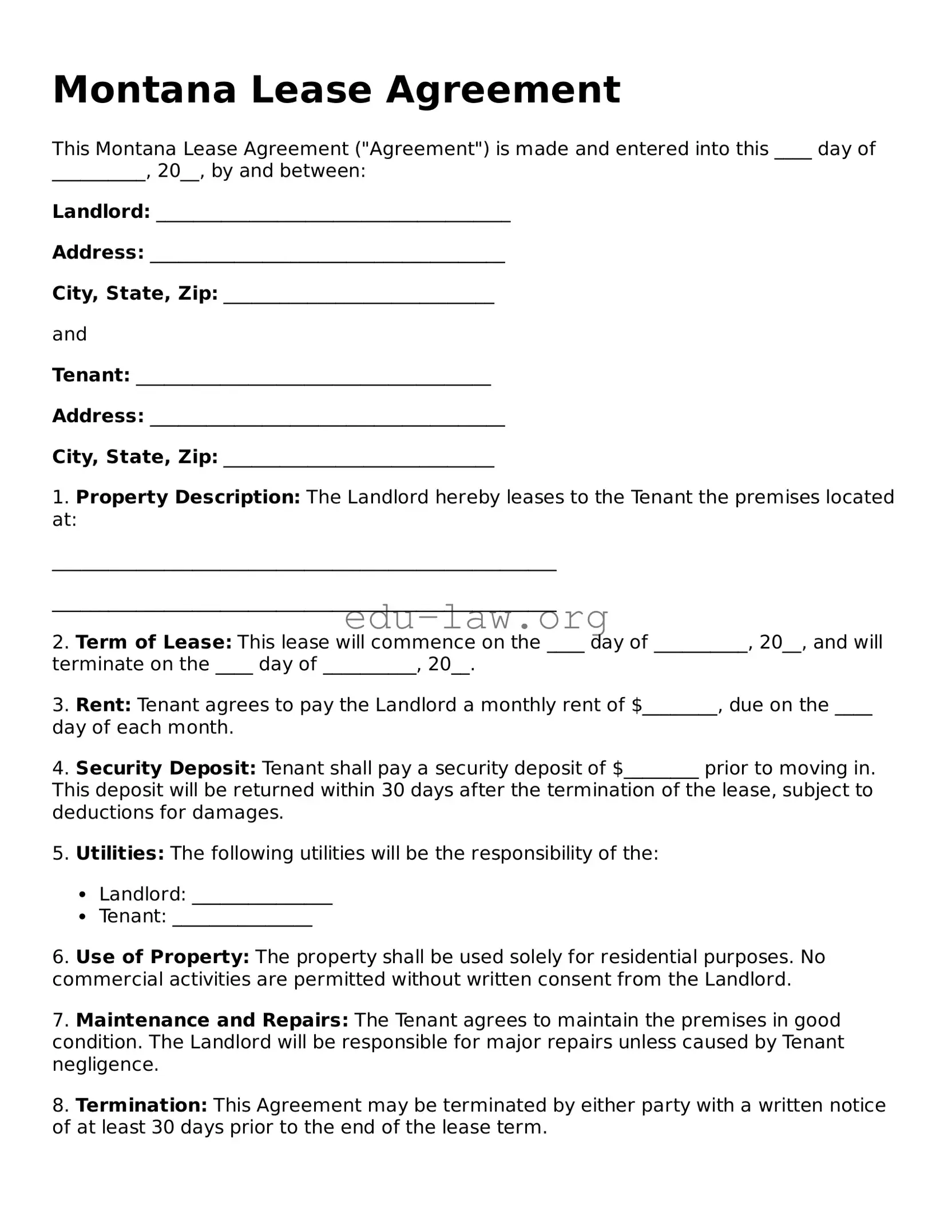
When entering into a rental arrangement in Montana, understanding the Lease Agreement form is essential for both landlords and tenants. This document outlines the terms and conditions that govern the rental relationship, ensuring clarity and protection for both parties involved. Key aspects of the form include the duration of the lease, the amount of rent due, and the responsibilities of each party regarding property maintenance and repairs. Additionally, it addresses security deposits, late payment penalties, and rules regarding pets or alterations to the property. By outlining these crucial details, the Lease Agreement helps to prevent misunderstandings and disputes, fostering a positive living experience. Familiarity with this form can empower individuals to negotiate terms that best suit their needs while adhering to Montana's legal standards.
Montana Lease Agreement
This Montana Lease Agreement ("Agreement") is made and entered into this ____ day of __________, 20__, by and between:
Landlord: ______________________________________
Address: ______________________________________
City, State, Zip: _____________________________
and
Tenant: ______________________________________
Address: ______________________________________
City, State, Zip: _____________________________
1. Property Description: The Landlord hereby leases to the Tenant the premises located at:
______________________________________________________
______________________________________________________
2. Term of Lease: This lease will commence on the ____ day of __________, 20__, and will terminate on the ____ day of __________, 20__.
3. Rent: Tenant agrees to pay the Landlord a monthly rent of $________, due on the ____ day of each month.
4. Security Deposit: Tenant shall pay a security deposit of $________ prior to moving in. This deposit will be returned within 30 days after the termination of the lease, subject to deductions for damages.
5. Utilities: The following utilities will be the responsibility of the:
6. Use of Property: The property shall be used solely for residential purposes. No commercial activities are permitted without written consent from the Landlord.
7. Maintenance and Repairs: The Tenant agrees to maintain the premises in good condition. The Landlord will be responsible for major repairs unless caused by Tenant negligence.
8. Termination: This Agreement may be terminated by either party with a written notice of at least 30 days prior to the end of the lease term.
9. Governing Law: This Agreement shall be governed by the laws of the State of Montana.
IN WITNESS WHEREOF, the parties hereto have executed this Lease Agreement as of the date first above written.
Landlord Signature: ___________________________
Date: ______________________________________
Tenant Signature: ____________________________
Date: ______________________________________
| Fact Name | Description |
|---|---|
| Purpose | The Montana Lease Agreement form is used to outline the terms and conditions for leasing residential or commercial property in Montana. |
| Governing Law | The agreement is governed by the laws of the State of Montana, specifically Title 70, Chapter 24 of the Montana Code Annotated. |
| Parties Involved | The form must clearly identify the landlord and tenant, including their legal names and contact information. |
| Duration | The lease duration must be specified, whether it is a fixed-term lease or a month-to-month agreement. |
Filling out the Montana Lease Agreement form is a straightforward process that requires attention to detail. Completing this form accurately is essential for establishing a clear understanding between landlords and tenants. Follow the steps below to ensure you fill out the form correctly.
What is a Montana Lease Agreement?
A Montana Lease Agreement is a legal document that outlines the terms and conditions under which a landlord rents property to a tenant. This agreement specifies the rights and responsibilities of both parties and typically includes details such as rental amount, duration of the lease, and maintenance obligations.
What should be included in a Montana Lease Agreement?
The agreement should include essential details such as the names of the landlord and tenant, property address, lease term (start and end dates), rent amount, payment due dates, security deposit requirements, and any rules regarding pets or maintenance. It's also advisable to include clauses about termination and renewal options.
Is a Montana Lease Agreement required to be in writing?
While oral agreements can be legally binding in Montana, it is highly recommended to have a written lease agreement. A written document provides clarity and serves as evidence in case of disputes. Most landlords and tenants prefer to have a formal agreement for protection.
How long can a lease last in Montana?
In Montana, leases can be for any duration agreed upon by both parties. Common terms are month-to-month or fixed-term leases, which typically last for six months to a year. If the lease is for a longer period, it may need to be in writing to be enforceable.
What is a security deposit in a Montana Lease Agreement?
A security deposit is a sum of money paid by the tenant to the landlord before moving in. This deposit acts as a financial safeguard for the landlord against potential damages or unpaid rent. Montana law limits the amount of security deposit to one month's rent for residential leases.
Can a landlord increase rent during the lease term in Montana?
Generally, a landlord cannot increase the rent during the term of a fixed lease unless the lease specifically allows for it. For month-to-month leases, landlords must provide proper notice, typically 30 days, before increasing rent.
What happens if a tenant wants to break the lease early?
If a tenant wishes to break the lease early, they should review the lease agreement for any early termination clauses. Often, tenants may be required to give notice or pay a penalty. Open communication with the landlord may lead to a mutual agreement to end the lease without penalties.
Are there any laws specific to Montana regarding lease agreements?
Yes, Montana has specific laws governing lease agreements, including rules about security deposits, tenant rights, and eviction processes. It is important for both landlords and tenants to be aware of these laws to ensure compliance and protect their rights.
What should a tenant do if the landlord does not fulfill their obligations?
If a landlord fails to meet their obligations, such as making necessary repairs, the tenant should document the issues and communicate them to the landlord in writing. If the landlord does not respond, tenants may have the right to withhold rent or pursue legal action, depending on the circumstances.
Can a lease agreement be modified after it is signed?
Yes, a lease agreement can be modified after it is signed, but both parties must agree to the changes. It is best to put any modifications in writing and have both parties sign the updated agreement to avoid misunderstandings in the future.
Not providing complete information. It’s important to fill out all sections of the form. Missing details can lead to misunderstandings or disputes later.
Failing to read the terms carefully. Many people overlook specific clauses that could affect their rights and responsibilities. Understanding these terms is crucial.
Ignoring signatures. Both the landlord and tenant must sign the lease for it to be valid. Without signatures, the agreement may not hold up in court.
Not keeping a copy. After filling out the form, it’s essential to keep a signed copy for personal records. This ensures that both parties have access to the same information.
When entering into a lease agreement in Montana, several additional documents can enhance clarity and protect the interests of both landlords and tenants. Understanding these forms can help ensure a smooth leasing process.
Utilizing these documents alongside the Montana Lease Agreement can help create a clear and fair leasing experience for both landlords and tenants. Proper documentation is key to maintaining positive relationships and ensuring compliance with local laws.
The Montana Rental Agreement is similar to the Lease Agreement as it establishes the terms under which a landlord allows a tenant to occupy a property. Both documents outline essential details such as the duration of the tenancy, rental payments, and responsibilities of both parties. While a lease typically covers a longer period, a rental agreement may be more flexible, often used for month-to-month arrangements. This flexibility can cater to tenants who may not want to commit long-term.
The Commercial Lease Agreement shares similarities with the Montana Lease Agreement in that it governs the rental of commercial properties. Both documents detail the terms of occupancy, including rent, duration, and maintenance responsibilities. However, a commercial lease often includes additional clauses specific to business operations, such as zoning regulations and permitted uses of the property, which are less relevant in residential leases.
A Residential Lease Agreement is akin to the Montana Lease Agreement, focusing specifically on residential properties. Both documents outline similar terms, including the rental amount, security deposit, and duration of the lease. However, the residential lease may include provisions specific to tenants' rights and landlord obligations under state housing laws, ensuring that both parties are aware of their rights and responsibilities.
The Sublease Agreement resembles the Montana Lease Agreement by allowing a tenant to lease their rented space to another individual. Both documents detail the terms of the arrangement, including rent and duration. However, a sublease typically requires the original landlord's consent and may contain specific conditions regarding the original tenant's responsibilities, differentiating it from a standard lease.
The Month-to-Month Rental Agreement is similar to the Montana Lease Agreement in that it governs the rental of a property but offers greater flexibility in terms of duration. Both agreements outline rent, responsibilities, and terms of termination. However, a month-to-month agreement allows either party to terminate the arrangement with minimal notice, making it ideal for those seeking short-term housing solutions.
The Farm Lease Agreement is comparable to the Montana Lease Agreement, particularly in rural areas where agricultural land is involved. Both documents specify the terms under which land is rented, including duration and payment terms. However, a farm lease may include clauses related to crop management, livestock care, and land maintenance, reflecting the unique needs of agricultural operations.
The Lease Purchase Agreement has similarities with the Montana Lease Agreement, as both establish terms for occupying a property. However, a lease purchase agreement includes an option for the tenant to buy the property at the end of the lease term. This document combines elements of leasing and buying, providing a pathway for tenants who wish to invest in homeownership.
The Roommate Agreement is similar to the Montana Lease Agreement in that it outlines the terms of shared living arrangements. Both documents address rent, utilities, and responsibilities of each party. However, a roommate agreement often focuses on the dynamics of sharing a space, including guest policies and common area maintenance, which may not be as relevant in traditional lease agreements.
When filling out the Montana Lease Agreement form, it’s essential to approach the task with care and attention. Here are some important dos and don’ts to keep in mind:
When it comes to the Montana Lease Agreement form, several misconceptions can lead to confusion for both landlords and tenants. Here are five common misunderstandings:
While it's highly recommended to have a written lease for clarity and legal protection, oral agreements can also be valid in Montana. However, proving the terms of an oral agreement can be challenging.
In Montana, there are limits on how much a landlord can charge for a security deposit. Typically, it cannot exceed one month's rent unless otherwise agreed upon in writing.
Landlords must provide reasonable notice before entering a tenant's property, usually 24 hours, except in emergencies. This protects tenants' rights to privacy.
Many leases do not automatically renew unless specifically stated. It's important for both parties to understand the terms regarding renewal or termination.
While landlords are generally responsible for major repairs and maintenance, tenants may be responsible for minor repairs or maintaining cleanliness. This should be clearly outlined in the lease.
When filling out and using the Montana Lease Agreement form, keep these key takeaways in mind:
By following these guidelines, you can create a clear and effective lease agreement that protects both parties involved.